
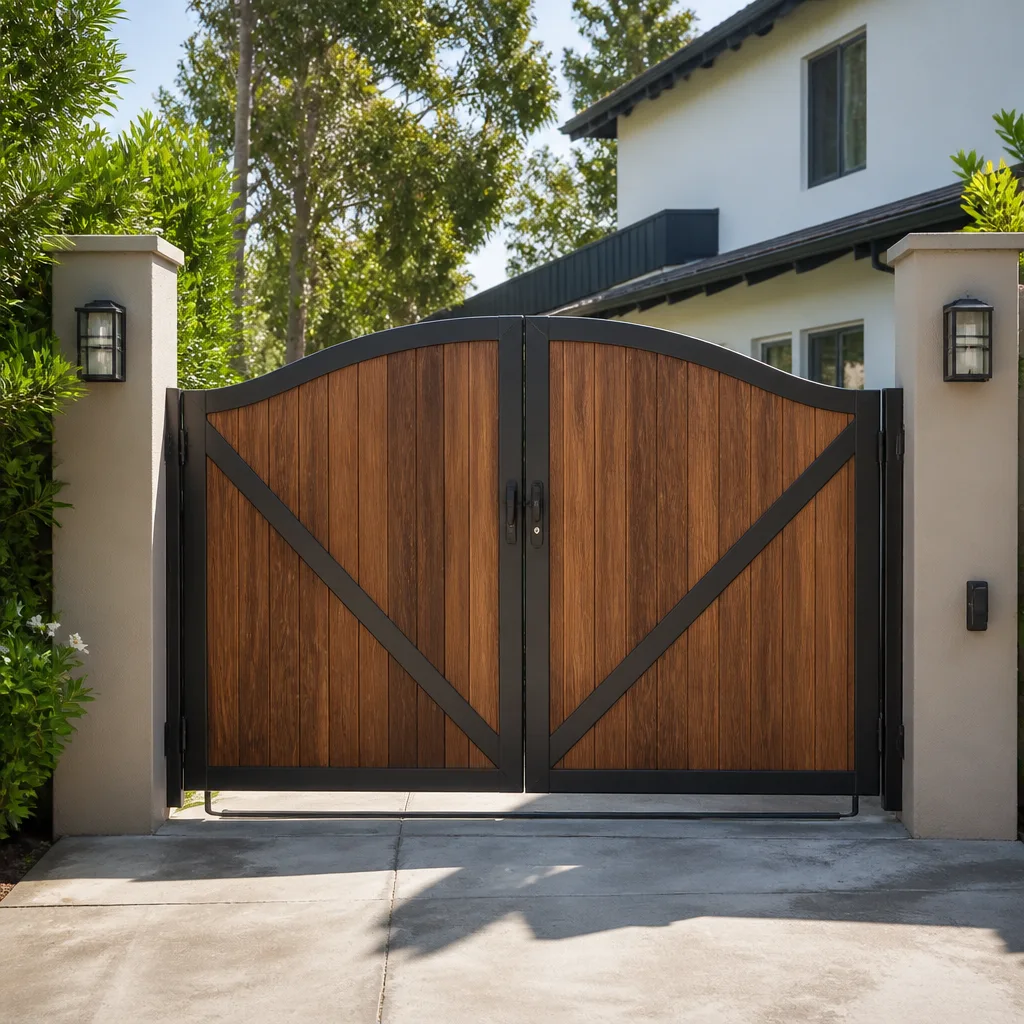
 Wood & steel frame
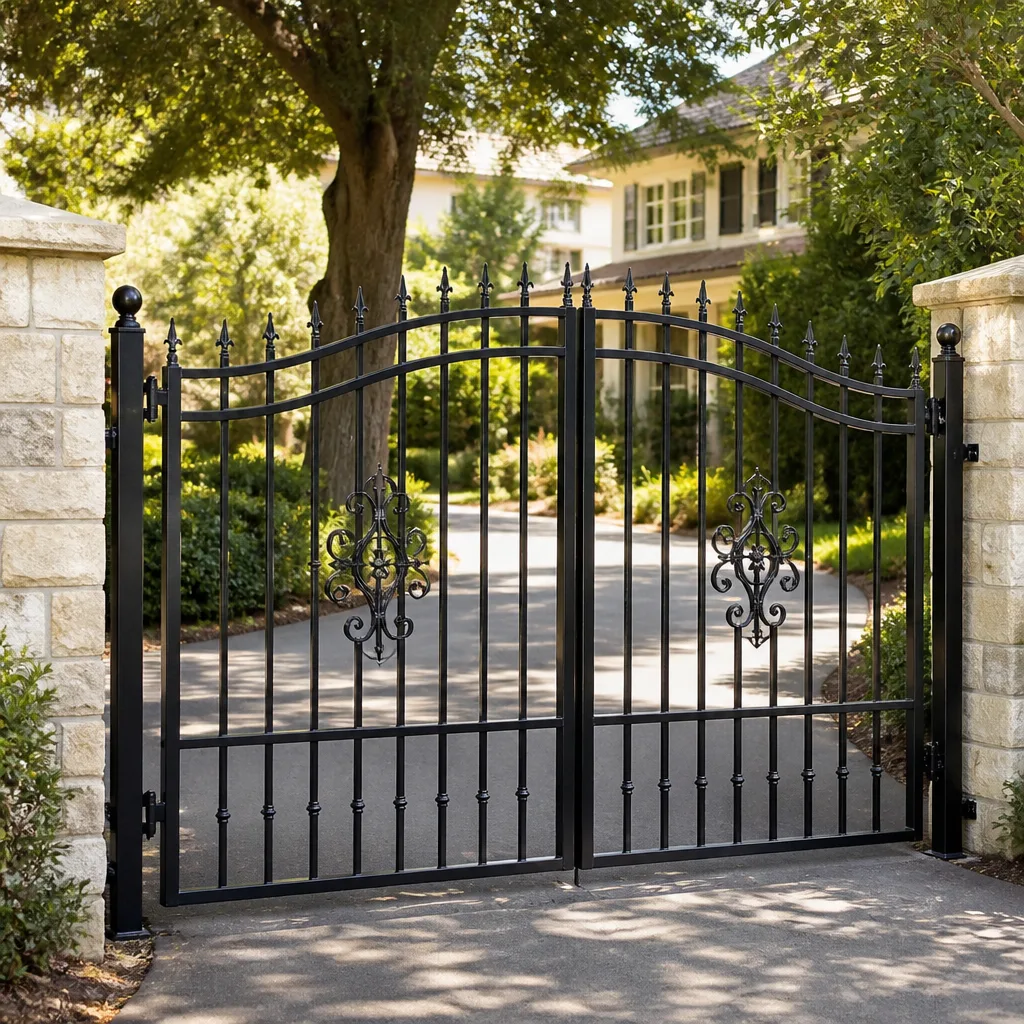 Wrought iron
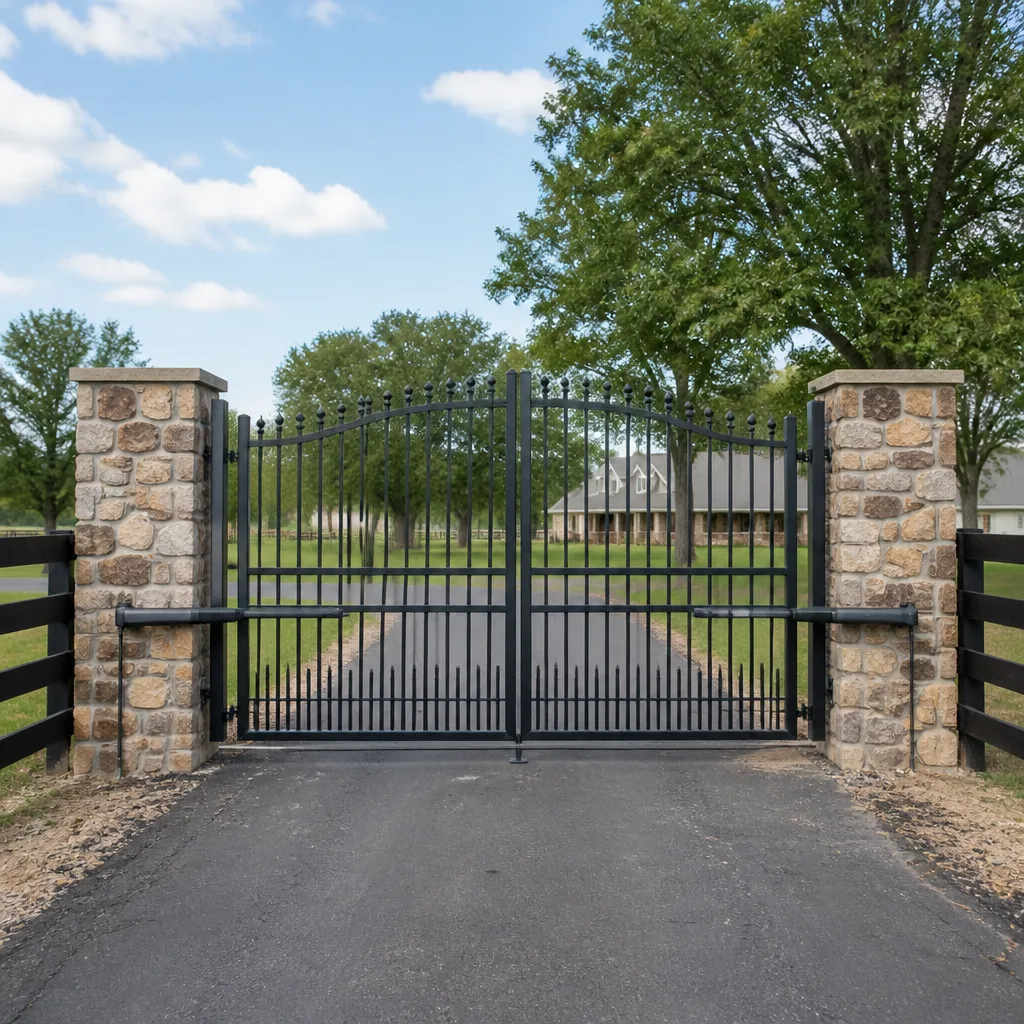 Farm & ranch
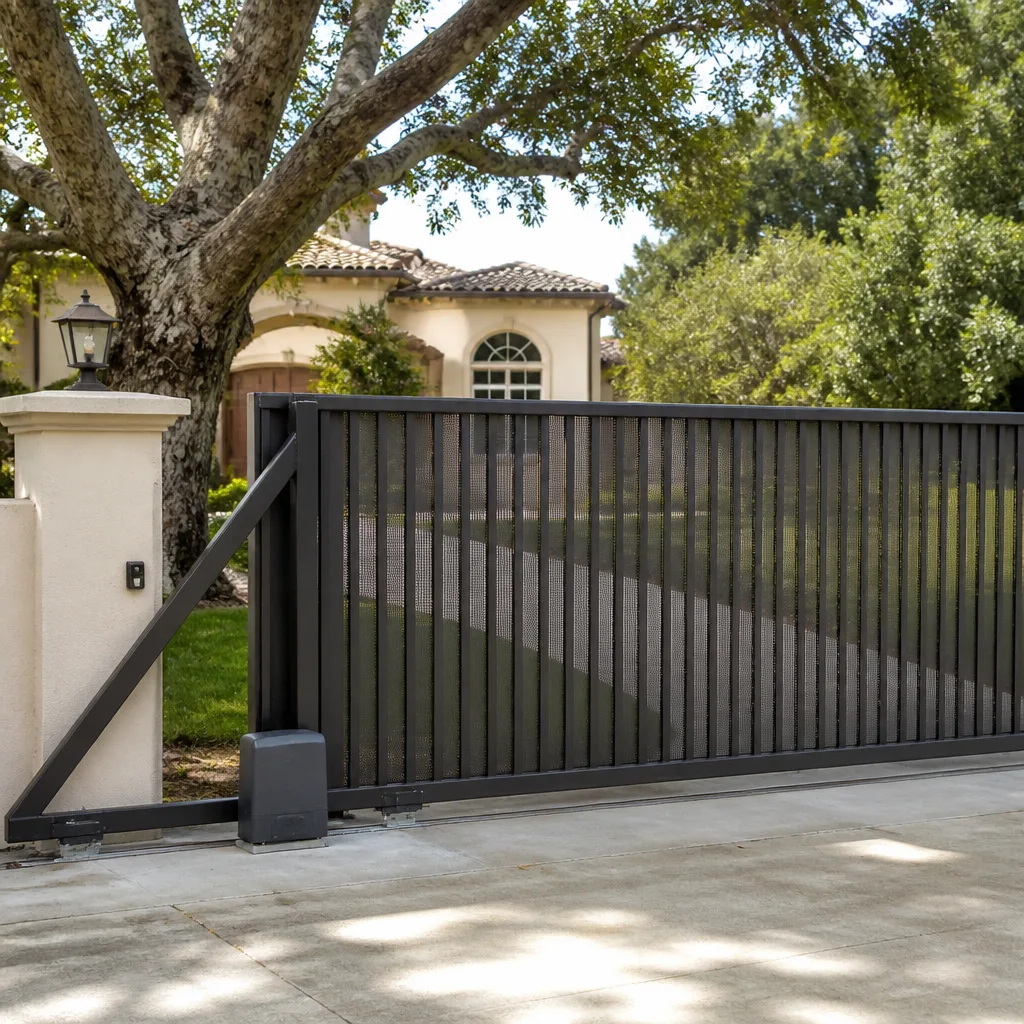 Sliding driveway gates
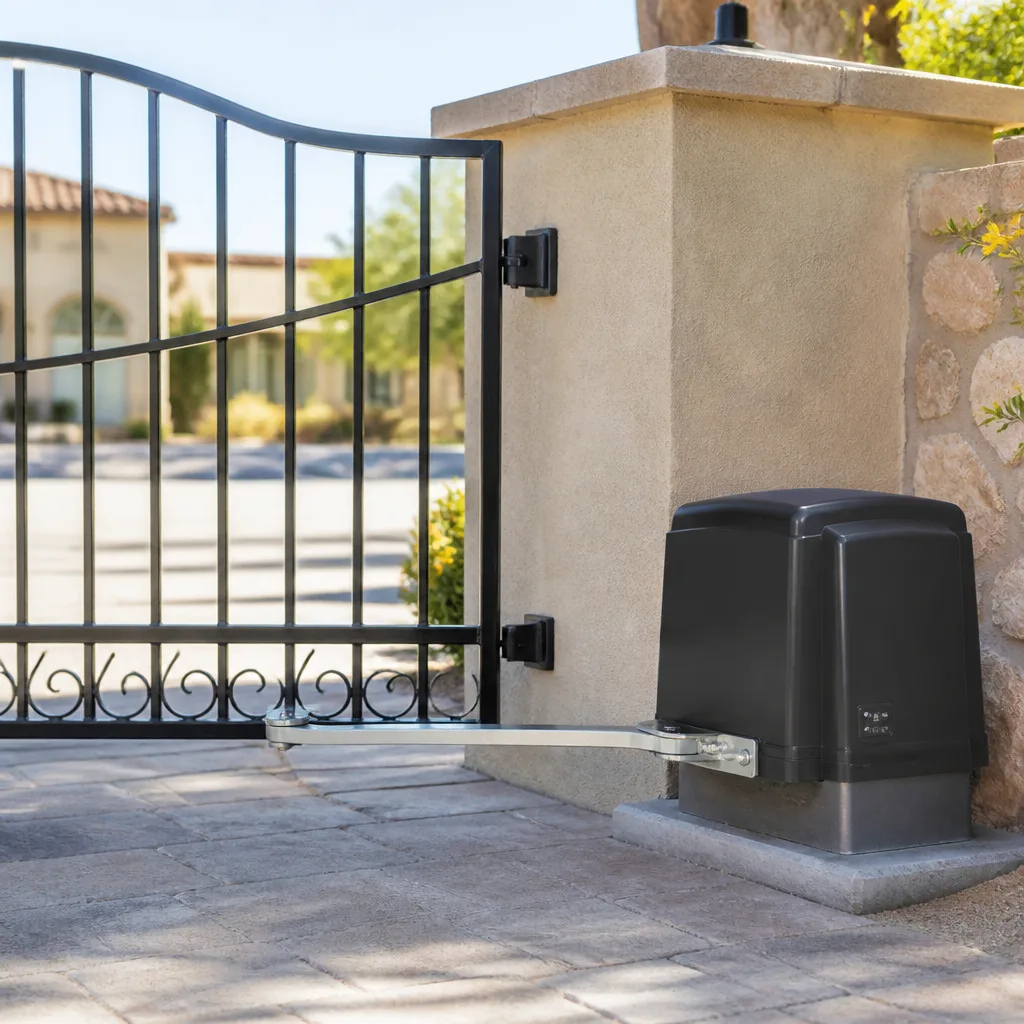 LiftMaster operators
Free on-site gate assessment - hinges, posts, and your LiftMaster or Nice gate operator checked before anything is quoted
The assessment is free and the quote is the invoice.
Get your free estimateStyles & brands we work with
- Wrought iron
- Wood & steel frame
- Farm & ranch
- Sliding driveway gates
- LiftMaster operators
See the difference
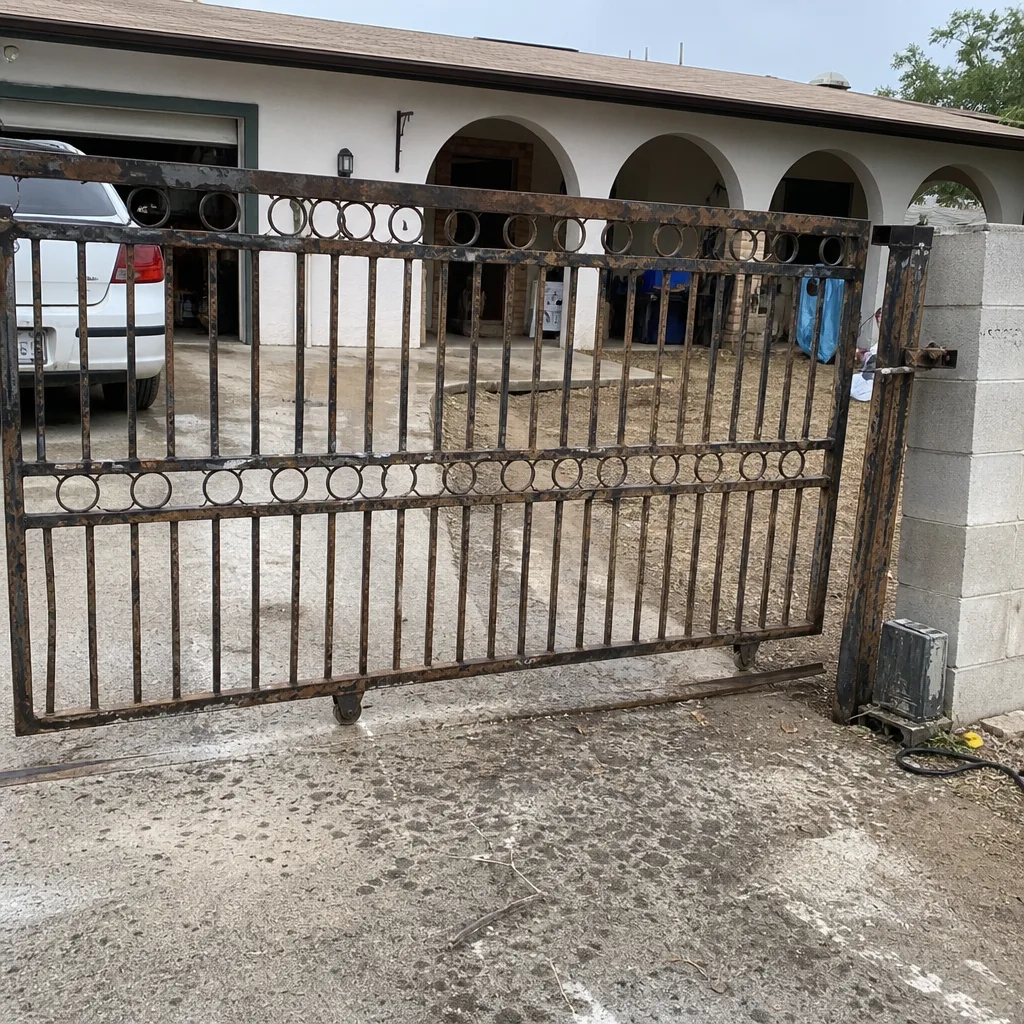 Before
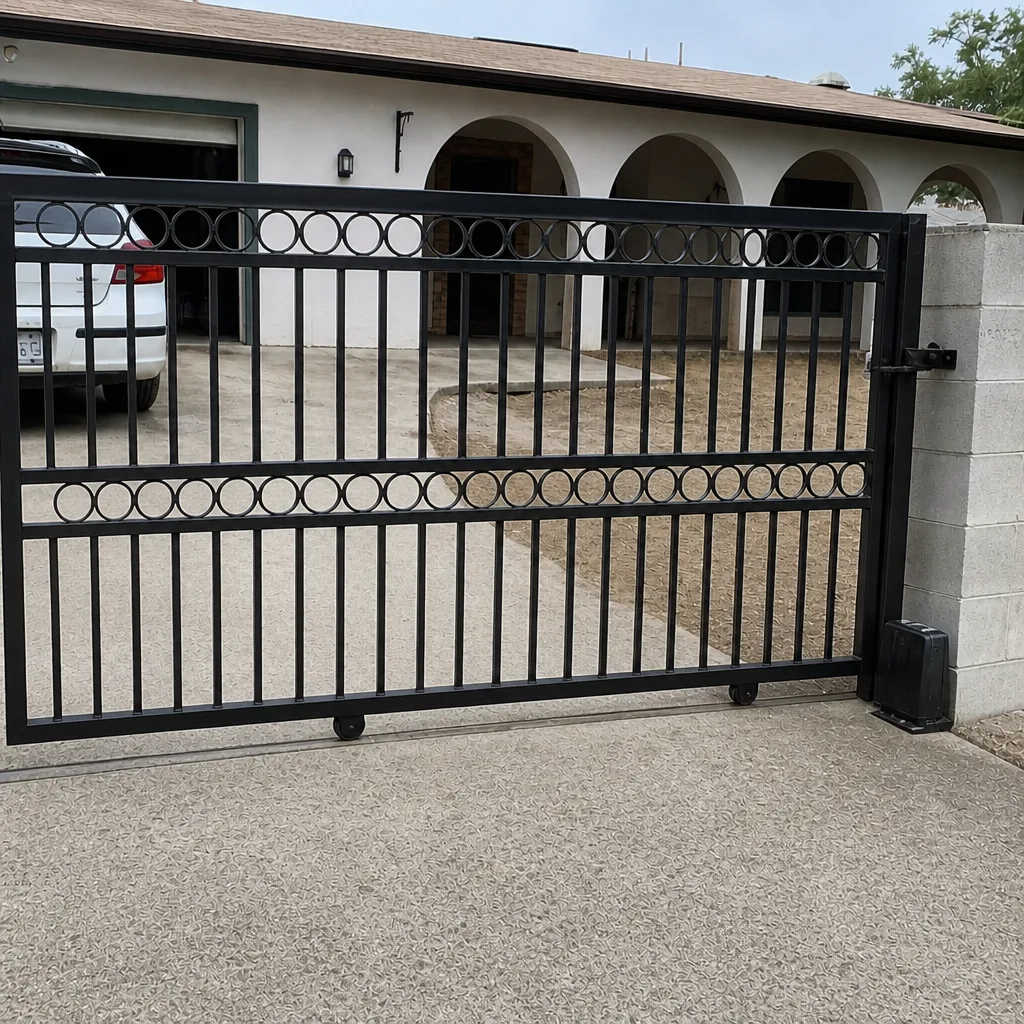 After
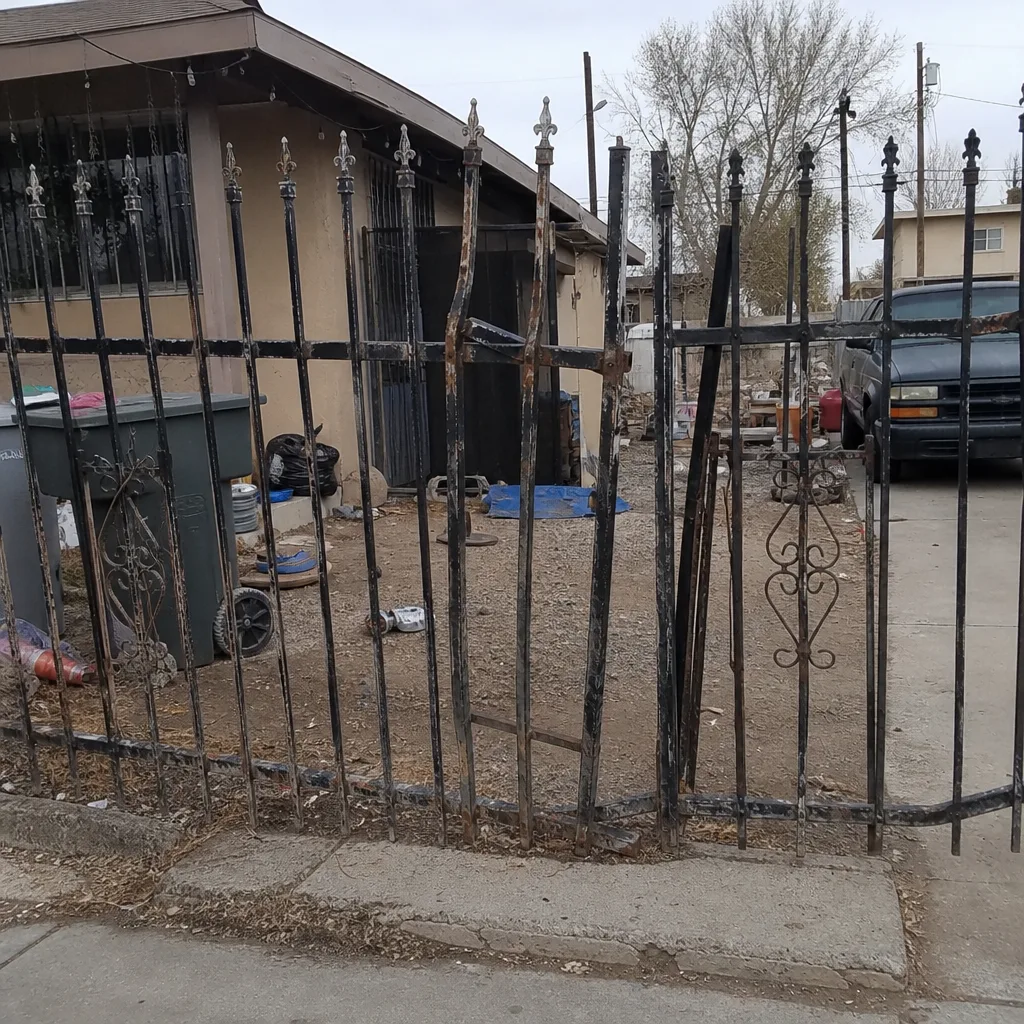 Before
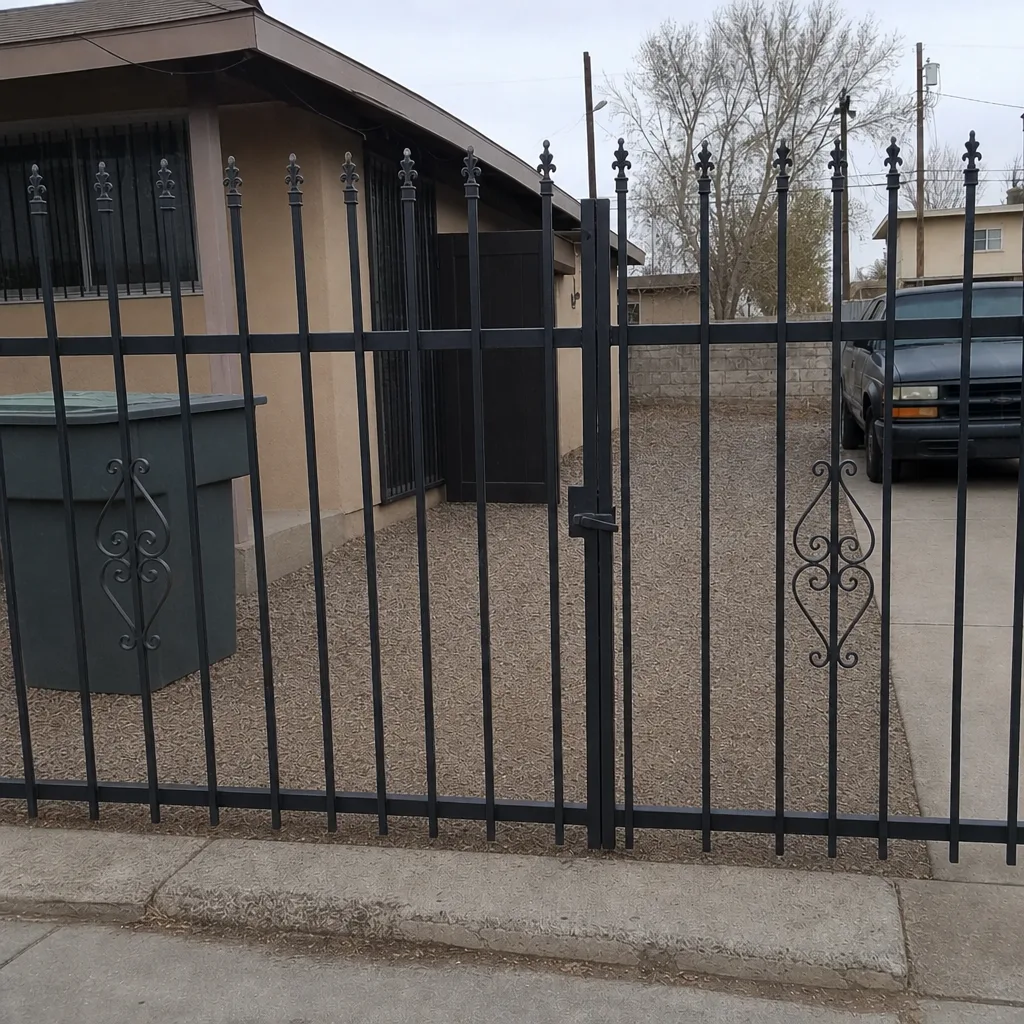 After
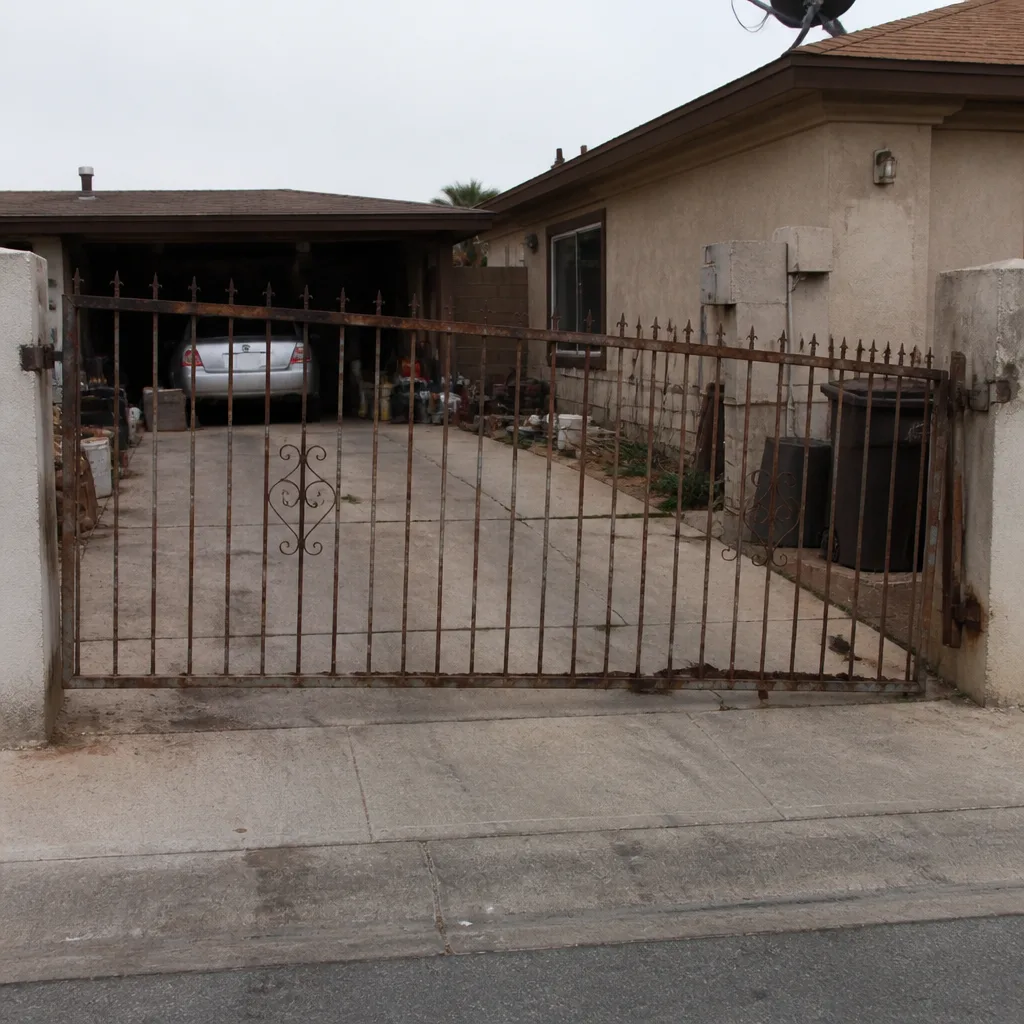 Before
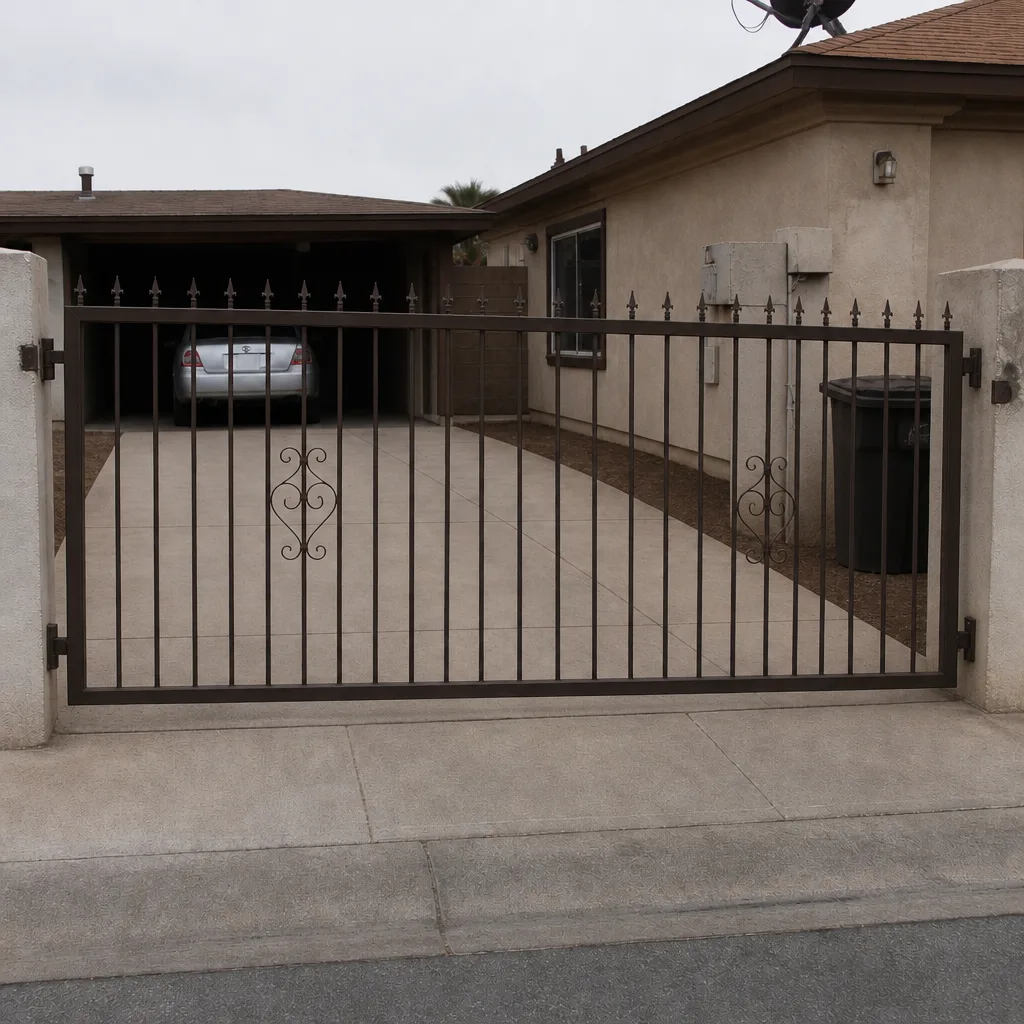 After
Why Won’t My Automatic Gate Open in North Las Vegas, NV?
The most likely cause is the control board, not the battery. In North Las Vegas, a gate that quits on a July afternoon with no warning is usually sitting in an enclosure that’s been baking in direct western sun all day, and the board has tripped its thermal protection circuit or failed outright. If the box is too hot to hold your hand on, you’ve probably found your answer. Call (844) 761-9351 and a live person picks up, day or night, and we’ll tell you what to check before anyone rolls a truck.
Why Heat Kills Gate Operators Here More Than Anywhere Else
This is the part most repair quotes skip. Builder-grade control enclosures installed across the valley in the 2000s weren’t designed for an afternoon sun load that pushes internal temperatures well past the board’s rated operating range. When the temp climbs, the board either shuts down to protect itself or cooks a component for good. We’ve opened boxes on west-facing walls where the plastic was soft to the touch and the board had a visible scorch line across the relay.
That failure pattern is the one we see most in North Las Vegas, and it’s why a gate can work fine every morning for a month and then quit at 3 p.m. on the hottest day of the year. The board doesn’t care that the outlet has power. It’s protecting itself.
The bigger picture lines up with that. The rapid build-out of master-planned communities like Aliante and Eldorado in the 2000s left thousands of homes with original builder-grade operators, and those units are all hitting the same wall around the same time. Gate repair in North Las Vegas right now is mostly a wave of 15-to-20-year-old operator and hinge replacements, not new installs. When a whole neighborhood was built in the same three-year window, everything fails in the same three-year window too.
The Diagnostic Sequence, In Order
Before you call anyone, walk through this in sequence. It’s the same order we use on a service call, and it’ll tell you whether you’re looking at a five-minute fix or a real repair. Start with the simple stuff and don’t skip ahead.
- Power at the outlet. Plug a lamp or a phone charger into the outlet feeding the operator. If the outlet is dead, the problem isn’t the gate.
- Breaker. Check the panel for a tripped breaker on the circuit that feeds the gate. Reset it once. If it trips again immediately, stop and call – that’s a wiring issue, not a gate issue.
- Battery backup. If your operator has a backup battery, the gate may run sluggishly or not at all on a dead battery after a power blip. Most units have an indicator light that tells you the battery state.
- Manual release. Find the manual disconnect key or lever on the operator. Nearly every builder-grade swing operator has one, and using it lets you open the gate by hand without damaging anything. Knowing where it lives prevents a lot of panicked after-hours calls.
- Limit switch. If the gate moves partway and stops, the limit switch that tells the operator where “open” and “closed” are may be out of adjustment or worn. This one usually shows up as a gate that opens fine but won’t close, or vice versa.
- Sensor eye. The safety beam across the gate opening has to be clear. Blowing desert dust coats those lenses with fine silt fast, and a haboob can break the beam in an afternoon, which locks the gate in safety mode. Wipe both eyes with a soft cloth – that’s a legitimate first step and it solves a surprising share of “dead gate” calls.
- Control board. This is where North Las Vegas heat comes back into the picture. Look at the board for burn marks, a bulged capacitor, or a smell. Too hot to touch means thermal shutdown. Scorched means it’s done.
If you get through that list and the gate still won’t budge, the problem is inside the operator and it’s time to have it looked at. Our Gate Repair service covers the whole sequence above on every call, and our technicians have up to 25 years of experience between them.
When It’s Safe to Use the Manual Release
The manual release exists so you can get your car out and operate the gate by hand when the operator is down. It’s safe to use on a swing gate when the gate is at rest and the power is off. What it’s not for is forcing a gate that’s mid-travel or fighting a gate that’s clearly jammed – that’s how hinge posts get tweaked. If the gate won’t move freely by hand after you release it, stop. Something mechanical is binding, and forcing it makes the repair bigger.
Most builder-grade swing operators have a keyed release on the arm or a lever on the housing. If you don’t know where yours is, that’s worth five minutes today, before you need it. A gate you can open by hand beats a gate you can’t move at all.
How Blowing Dust Takes Out Sensor Eyes
Sensor eyes are the two small lenses on either side of the gate opening, and they work as a pair – if the beam breaks, the gate won’t close, and on many systems it won’t open either. A haboob rolls through and coats both lenses with a layer of fine silt that looks harmless but scatters the beam. The operator reads that as an obstruction and stays put in safety mode.
Wiping the lenses with a soft cloth is the single most useful thing a homeowner can do after a dust event, and it’s the first thing we check on any “dead gate” call because it costs nothing and it’s right so often. If your gate works after a wipe and quits again a week later, the dust is the problem, not the operator.
Local Scenarios We See in North Las Vegas
These are the specific patterns that show up again and again on this side of the valley, and knowing them helps you figure out which one you’re looking at.
- A gate that dies on a July afternoon with no warning. Almost always the control board in a west-facing enclosure, running too hot. Thermal shutdown is common, permanent damage is possible, and a scorched board needs replacement – not a reset.
- A gate that quits after a windstorm. Sensor eye silt or a track full of sand. Clean the eyes, sweep the track, see if it comes back.
- A gate that works but sags and drags. Hinge post wear, which is common in tract homes built in the 1990s and 2000s where the original steel-frame gates with vinyl or wrought-iron infill are now 15 to 20 years old. A gate sags in the hinge post, not in the middle, and that’s where we start.
- A gate that won’t match the neighbors. In Aliante and similar HOAs, repairs have to match the community’s uniform style and color, and we handle that as part of the quote so nothing gets kicked back by the architectural committee.
- A gate that lurches and stops rather than failing silently. That’s usually a mechanical bind or a limit switch, not a board. Lurching is a sign the fix is beyond a reset.
Signs You Should Stop and Call Instead of Reset
Some failures are past the do-it-yourself stage, and pushing through them can cost you more. Stop and call if:
- There’s a burning smell coming from the control box.
- The board shows visible burn marks, scorching, or a bulged component.
- The gate lurches and stops instead of failing quietly.
- The breaker trips again as soon as you reset it.
- The gate won’t move freely by hand after you use the manual release.
High-voltage wiring inside the operator and any repair that involves the control board or the electrical panel are jobs for a trained professional. We’re licensed and insured, and we’re not going to talk you into a DIY step that could hurt you. That’s not caution for its own sake – it’s knowing where the line is.
Two more things worth knowing before you call anyone. Hal Gatewood started this shop in 2001 and has been at it since, and when something goes wrong within 90 days of a job, one call brings him back to make it right – that’s the 90-Day Done Right Promise, in plain writing on every job. And the pricing is upfront, no haggling at the door: $40 off any repair over $200, no trip charge inside the county, a free second opinion on any written estimate, and a permanent 10% discount for seniors and veterans. If you’d rather start with the diagnostic overview, our Gate Repair in North Las Vegas page covers the whole service, and our home page has the rest.
FAQs
In North Las Vegas, the most common reason a gate quits suddenly is a control board that overheated in a sun-baked enclosure and tripped its thermal protection circuit or failed for good. Touch the control box – if it’s too hot to hold your hand on, that’s your likely culprit. Call (844) 761-9351 and we’ll help you rule it out before anyone comes out.
No, a dead battery is one of the less common causes, and many operators don’t have a backup battery at all. If your unit does have one, a dead backup battery after a power blip can leave the gate sluggish or stuck, but a properly powered gate that fails at peak heat is far more often a thermal or board problem. The diagnostic sequence above checks the battery before the board so you don’t skip it.
Yes, on most builder-grade swing operators the manual release lets you operate the gate by hand without damaging anything. Turn off the power first, then use the keyed release on the arm or housing – never force a gate that’s still bound up, because that’s how hinge posts get tweaked. If you can’t find the release, that’s worth a five-minute check today.
It depends on the failure, and we’ll give you a clear number before anything starts. A sensor-eye clean and reset is quick, a limit switch adjustment runs low, and a control board replacement runs higher because of the part. Under our standing offers you get $40 off any repair over $200, no trip charge inside the county, a free second opinion on any written estimate, and a permanent 10% discount for seniors and veterans. Call (844) 761-9351 for an exact quote – it’s free.
Yes, we take same-day calls and a live person answers every call 24 hours a day, seven days a week, so there’s no voicemail and no dispatch queue. Call (844) 761-9351 and describe what the gate is doing – we’ll tell you what to check first and get someone out if it needs a look.
If you’d rather have it looked at, Gatewood Fence & Gate North Las Vegas offers a no-pressure assessment in North Las Vegas – call (844) 761-9351. The name is on the shop and the shop is down the road, which is the oldest accountability there is. We’re certified across LiftMaster, FAAC, BFT, and Mighty Mule, and we fix the gate in your driveway rather than hauling it off.
Written by the team at Gatewood Fence & Gate North Las Vegas, serving North Las Vegas, NV.