
Last updated November 17, 2026
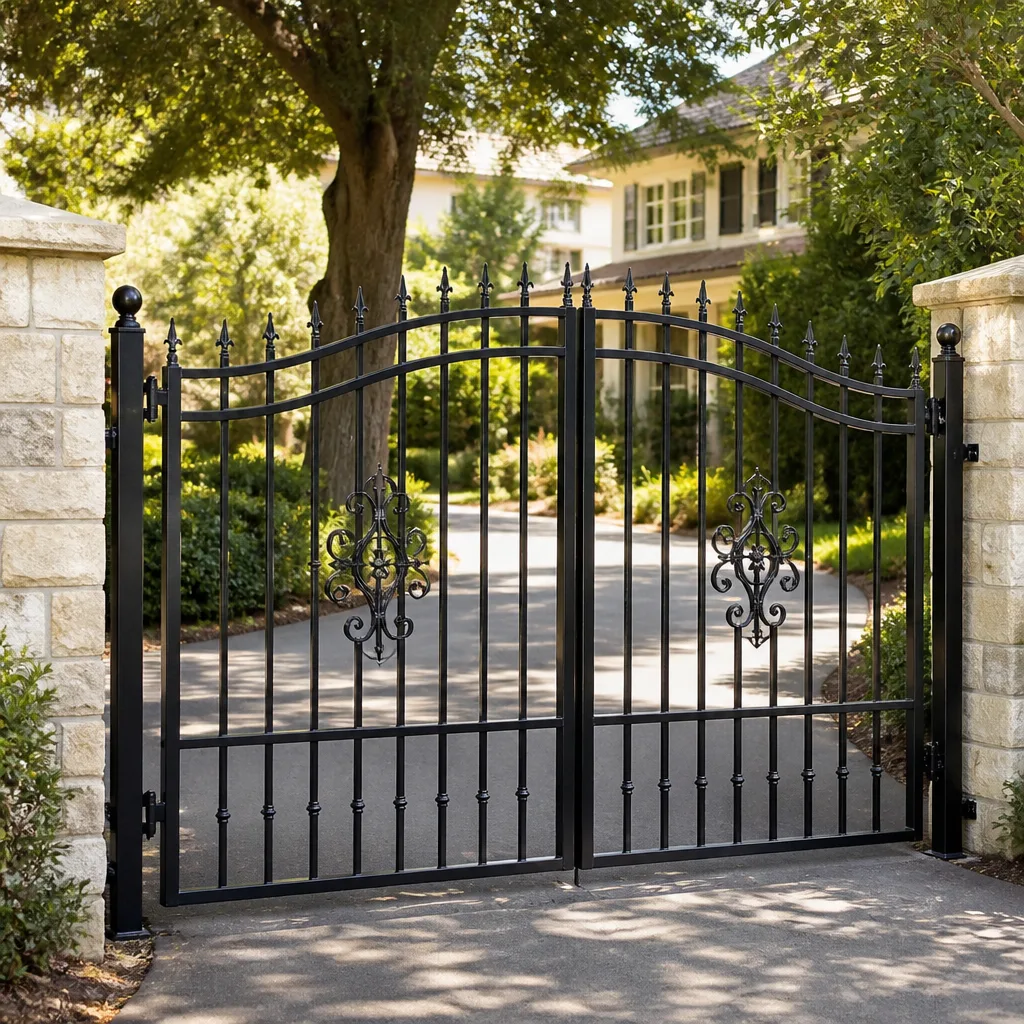 Wrought iron
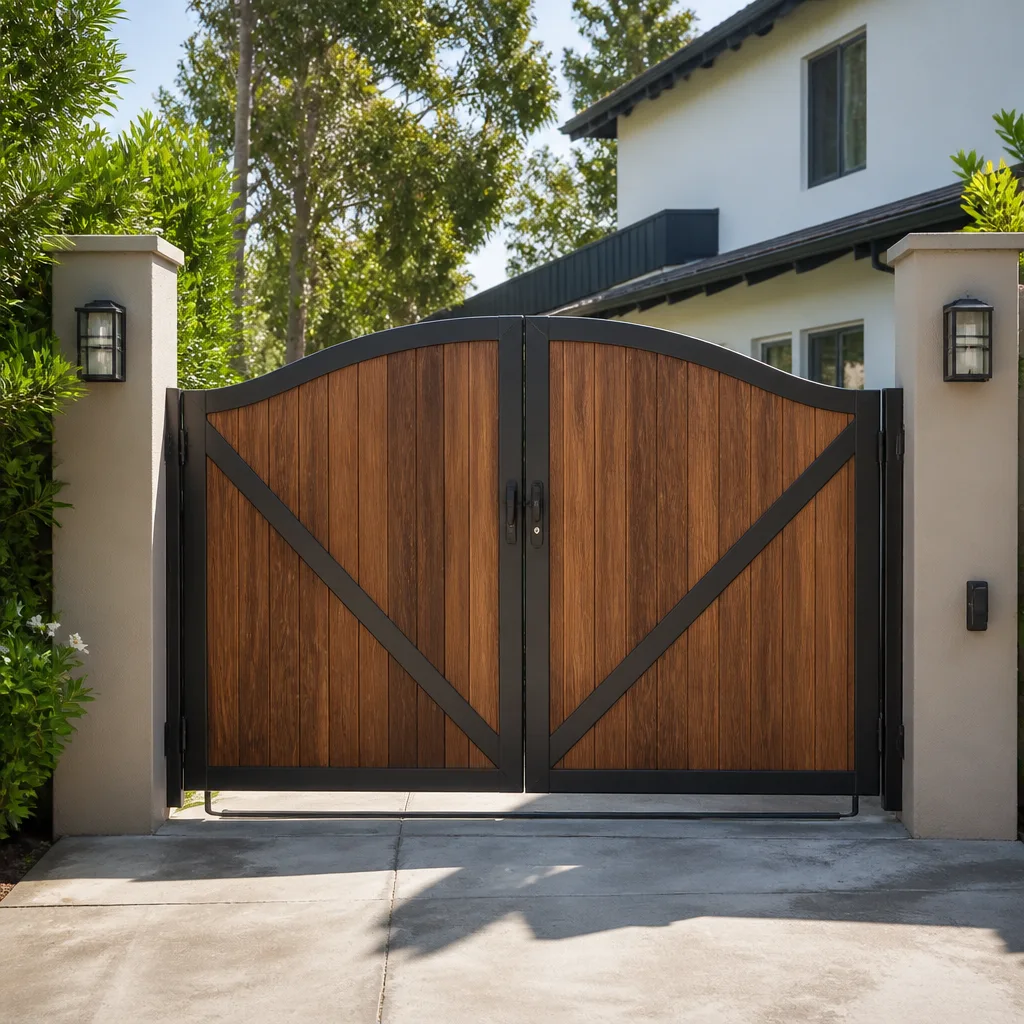 Wood & steel frame
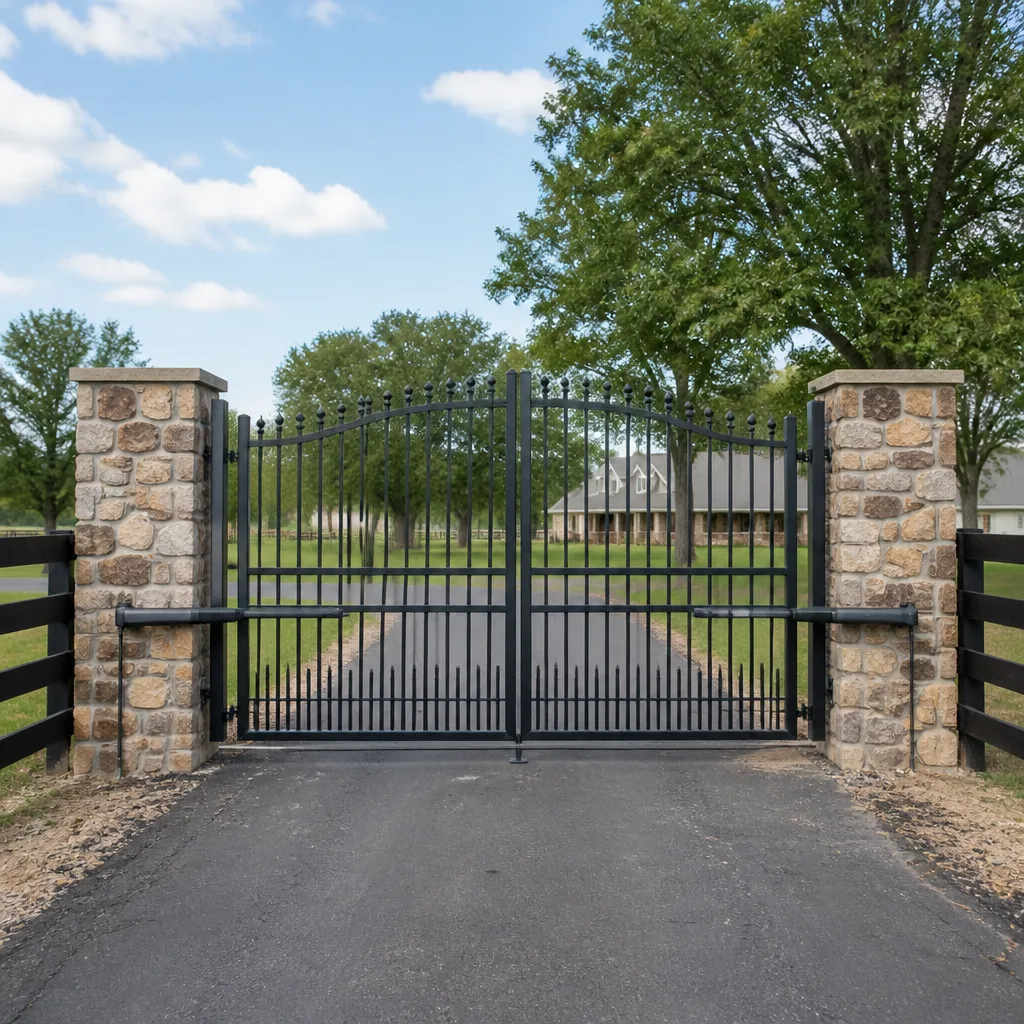 Farm & ranch
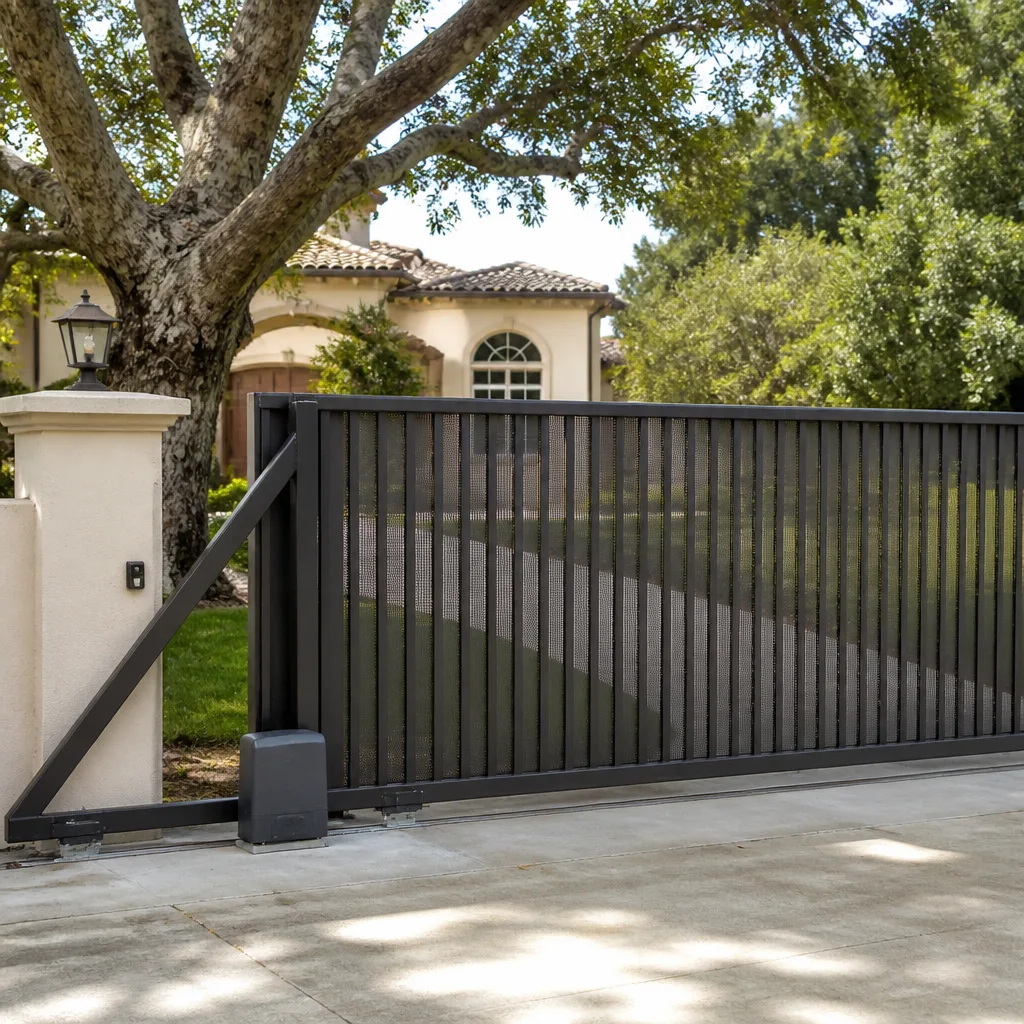 Sliding driveway gates
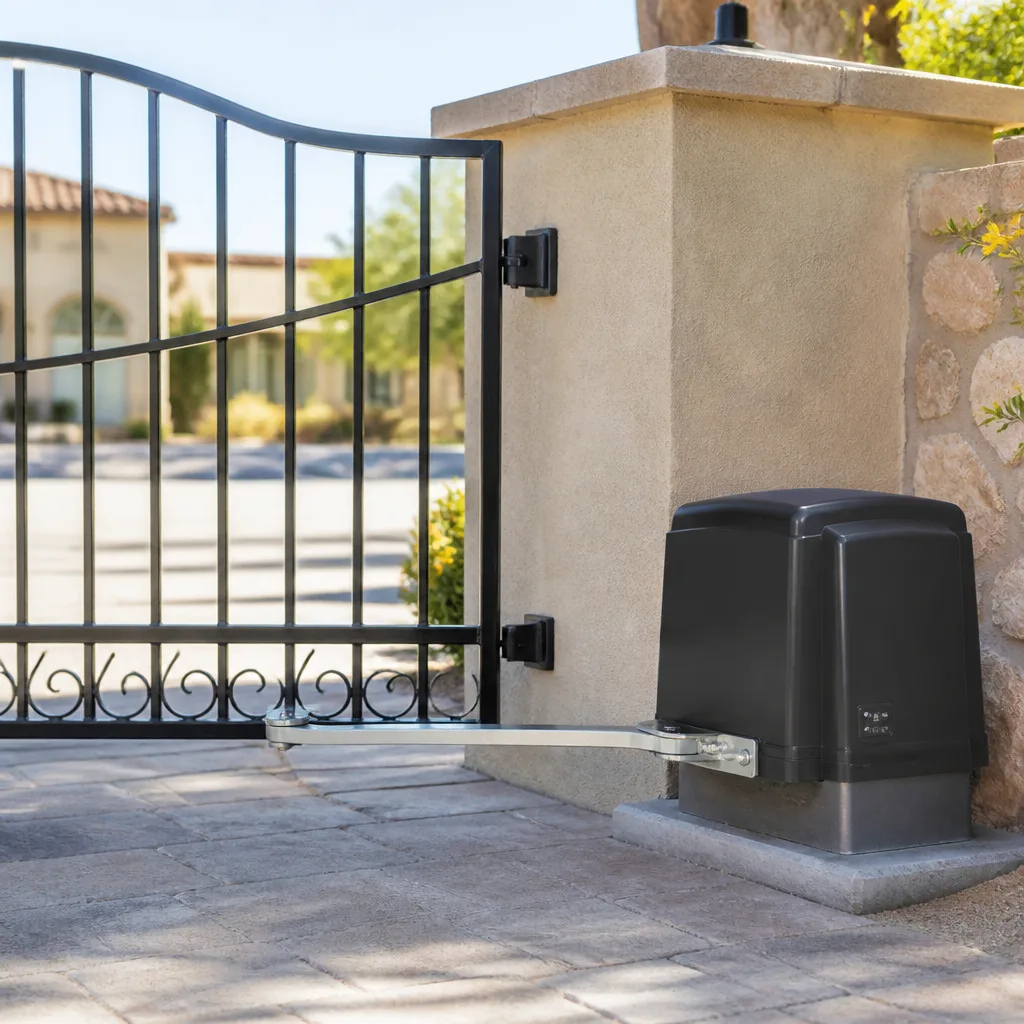 LiftMaster operators
Free on-site gate assessment - hinges, posts, and your LiftMaster or Nice gate operator checked before anything is quoted
The assessment is free and the quote is the invoice.
Get your free estimateThe Complete Gate Installation Guide for North Las Vegas Homeowners
The number one installation mistake we see in this area, by homeowners and by contractors who should know better, is undersized footings in caliche soil. Caliche looks solid. It isn’t. It moves with the summer heat and the winter rain, and if you didn’t get your post below it, your gate is sitting on a raft instead of a foundation. That’s why installing a gate in North Las Vegas isn’t really a construction project. It’s a site engineering problem, and caliche, wind load, and Clark County setback rules decide whether your gate is still plumb in five years or whether you’re calling someone to fix a leaning post and a racked frame. This guide covers what you need to know before anything gets dug.
Quick Answer
A gate installation in North Las Vegas typically runs $2,400 to $6,800 for a driveway gate including footings and hardware, with automatic operators adding $950 to $2,600 on top depending on weight class. The three things that determine whether it lasts are getting footings below the caliche layer, matching the operator to the gate’s actual weight and duty cycle, and pulling the right permits before the first shovel hits dirt. Everything else is cosmetic.
Styles & brands we work with
- Wrought iron
- Wood & steel frame
- Farm & ranch
- Sliding driveway gates
- LiftMaster operators
Table of Contents
- Do You Need a Permit for a Gate in North Las Vegas?
- Footing Depth and Caliche: What’s Actually Underground in 89030 – 89084
- Specifying Gate Width, Weight, and Swing Direction
- Wind Load and the Prevailing Winds at Your Property
- Matching the Operator to the Gate, Not the Opening
- What to Ask an Installation Contractor Before They Dig
- Common Mistakes to Avoid
- When to Call a Professional
Do You Need a Permit for a Gate in North Las Vegas?
Yes, in most cases. North Las Vegas requires a building permit for any residential driveway gate that’s over 6 feet tall, that’s supported by masonry or structural posts, or that includes an electrical connection for an automatic operator. A simple pedestrian gate under 6 feet with no power run often doesn’t need one, but the rules change based on HOA covenants and zoning overlays, and those usually govern more strictly than the city does.
Where homeowners get tripped up is the licensed-contractor question. Nevada law allows a homeowner to pull an owner-builder permit for work on their own primary residence, which sounds like a way to save money until you read the fine print. Owner-builder permits don’t cover anyone but the person living there, they shift all liability to you if a neighbor’s car gets damaged, and many HOAs in North Las Vegas won’t accept an owner-builder permit for a shared-property gate at all.
If the gate ties into an existing fence line, backs up to a block wall, or sits anywhere near a utility easement, you’ll want a licensed contractor pulling the permit. That’s not upselling. That’s what protects you when the city inspector comes out and finds a footing poured in the wrong spot.
The other piece most people miss is HOA setback. Clark County and North Las Vegas HOAs frequently require gates to sit a specific distance from the property line, from the sidewalk, or from the corner of the lot on a corner property. Those numbers live in your CC&Rs, not in the city building code, and they can override a perfectly legal municipal permit. Read the CC&R gate section before you sign anything.
Footing Depth and Caliche: What’s Actually Underground in 89030 – 89084
Caliche is a calcium carbonate layer that forms in desert soils, and it’s common across the 89030 through 89084 ZIP codes. It forms a hard crust six inches to several feet below grade that feels like concrete when you hit it with a shovel. That’s the trap. Caliche looks like a foundation because it’s hard, but it’s brittle, and it expands and contracts with moisture.
The minimum footing for a residential driveway gate post is 24 inches deep and 12 inches in diameter, but that’s the bare minimum and it assumes soil that isn’t caliche. On this side of the valley, we’re usually pouring 30 to 36 inches deep and 10 to 12 inches in diameter for steel posts, and deeper for masonry pillars that carry a gate leaf over 12 feet. What matters is getting the base of the footing below the caliche layer, not just into it. If the footing base sits on top of a caliche shelf, water pools there, the whole assembly shifts, and you’re rebuilding in three seasons.
Before you pour, do these two things:
- Dig a test hole at the planned post location and note at what depth you hit caliche. That’s the number your footing needs to beat.
- Call 811 to mark utilities. Irrigation lines, low-voltage landscape wire, and gas laterals run shallower here than most homeowners expect, and a post hole through a gas line is a very expensive afternoon.
Concrete mix matters too. High-desert swings from 110°F summer to below-freezing winter nights punish a weak mix. A 3,000 PSI mix at minimum, cured for 5 to 7 days before the gate gets hung, is what keeps a post from cracking within the first year. Poured on Friday and loaded on Sunday is how you get a gate that never closes right.
Specifying Gate Width, Weight, and Swing Direction
A driveway gate has to be sized to the driveway, not to what looks good in a catalog. The standard residential driveway is 12 to 16 feet wide, which means a single-leaf gate over 14 feet becomes too heavy and too much of a lever arm for reliable operation. Past 14 feet, dual gates are the practical answer, and past 16 feet they’re mandatory.
Weight is the number nobody calculates and everybody should. Steel frame gates with mesh come in around 8 to 12 pounds per linear foot. Ornamental iron runs 12 to 20 pounds per linear foot. Wood gates can be lighter but they flex, and a gate that flexes puts lateral stress on the hinge post that footings have to resist. A 14-foot iron gate is roughly 180 to 240 pounds of moving mass swinging on two hinges. That mass determines everything that comes after: operator size, hinge selection, and post diameter.
Swing direction depends on your driveway grade. North Las Vegas has plenty of sloped driveways where an opening gate will scrape if it swings uphill, and a flood-prone apron if it swings into a low spot. The rule of thumb is that a gate should open away from the street on a sloped driveway so gravity helps hold it in the open position, and it should never swing over a sidewalk or into the public right-of-way. If your driveway grade is above roughly 8 percent, a swing gate may not be the right choice at all, and a sliding gate is the better engineering answer even though it costs more to install.
Get these numbers right on paper before the post holes get dug. Changing the swing direction after the concrete cures is essentially a full reinstall.
Wind Load and the Prevailing Winds at Your Property
A solid gate is a sail. This matters more in North Las Vegas than most homeowners realize because of the wind regime in the valley, where sustained 20 to 30 mph gusts and 50 mph+ events happen several times a year. A solid privacy gate 6 feet tall and 14 feet wide presents roughly 84 square feet of surface area. In a 40 mph gust, that’s more than 1,100 pounds of lateral force against the gate and the hinge post. Feet, not pounds of gate weight.
Two things absorb that force:
- The hinge post, which needs to be heavier gauge and set deeper than the latch post. Most residential installs get this backward, treating the two posts as a matched pair. They’re not. The hinge post carries the load.
- Operator gearing and the latch mechanism. A gate that slams in the wind will beat up the operator’s clutch system, and cheap operators fail within two seasons in this climate.
Fence line orientation matters too. A gate facing north-south gets more lateral stress from the west wind than one facing east-west, and a gate at the bottom of a slope or between two buildings acts as a wind funnel. If you’re near the edge of the valley where the gusts pick up, we usually recommend a gate with vertical pickets or mesh infill rather than a solid privacy panel. The look changes, but the gate stops fighting the wind every time it kicks up.
If you want the privacy of a solid gate, expect to spend more on the post and operator, not less. It’s not a cost you can skip.
Matching the Operator to the Gate, Not the Opening
This is where the most expensive mistake happens. An operator is rated by two things: the gate’s weight and the gate’s duty cycle, meaning how many cycles per hour and per day it’s designed to run. The opening width is nearly irrelevant to the mechanical spec. A 12-foot gate at 200 pounds and a 20-foot gate at 200 pounds need the same operator if they cycle the same number of times per day.
A standard residential LiftMaster or FAAC swing operator handles gates up to around 16 feet and up to 800 to 1,000 pounds. That’s plenty for most North Las Vegas driveways. But if you’re on a corner lot with a circular drive, or you have regular service traffic, your cycle count goes up and the duty cycle rating has to match. Continuous-duty operators cost more upfront and last far longer than a standard-duty unit pushed past its rating.
Three more specs that get skipped:
- Battery backup. North Las Vegas summer outages are real, and a gate you can’t open in a power cut is a gate you can’t use. Operators from LiftMaster and BFT that support battery backup cost a bit more but pay for themselves the first time the grid blinks.
- Safety edges and photo eyes. Required by code on any automatic operator. Don’t let anyone tell you otherwise.
- Hardware compatibility. If the operator brand doesn’t support your arm geometry, you’re buying adapters and hoping. Match the operator to the gate’s hinge layout from the start.
Choose a brand that service techs can actually find parts for. LiftMaster, FAAC, BFT, and Linear are all serviceable in this market. Rarer import brands can leave you stuck waiting weeks for a replacement receiver board.
What to Ask an Installation Contractor Before They Dig
You can learn a lot about a contractor by asking five questions before the first shovel moves. The answers tell you whether they’ve installed gates in this valley before or whether they’re running a checklist from a different climate.
- “How deep will you pour the footings and how are you handling the caliche?” A good answer includes a specific depth, a specific diameter, and a mention of the caliche layer. A bad answer is “standard depth” with no number.
- “Are you pulling the permit or am I?” A licensed contractor pulls the permit in their name. If they say you can pull an owner-builder permit for their work, walk away.
- “What’s the PSI on the concrete mix and how many days cure?” Anything under 3,000 PSI or “we hang it the next day” is a shortcut that will show up as a sagging gate inside a year.
- “Which operator do you recommend and why that one for this gate?” The answer should mention weight and duty cycle, not just opening width. If they can only talk about inches, they don’t do this often.
- “What’s your written guarantee and what’s the response window if something fails?” Every job we run here at Gatewood Fence & Gate carries the 90-Day Done Right Promise stamped in writing. Not buried in fine print, not “up to” something. One call brings us back.
If the contractor can’t answer all five without leaving to check, that’s your answer. The people who do this well answer them in their sleep. If you want the full walkthrough on who we are and how we work, our Gatewood Fence & Gate North Las Vegas home page spells it out.
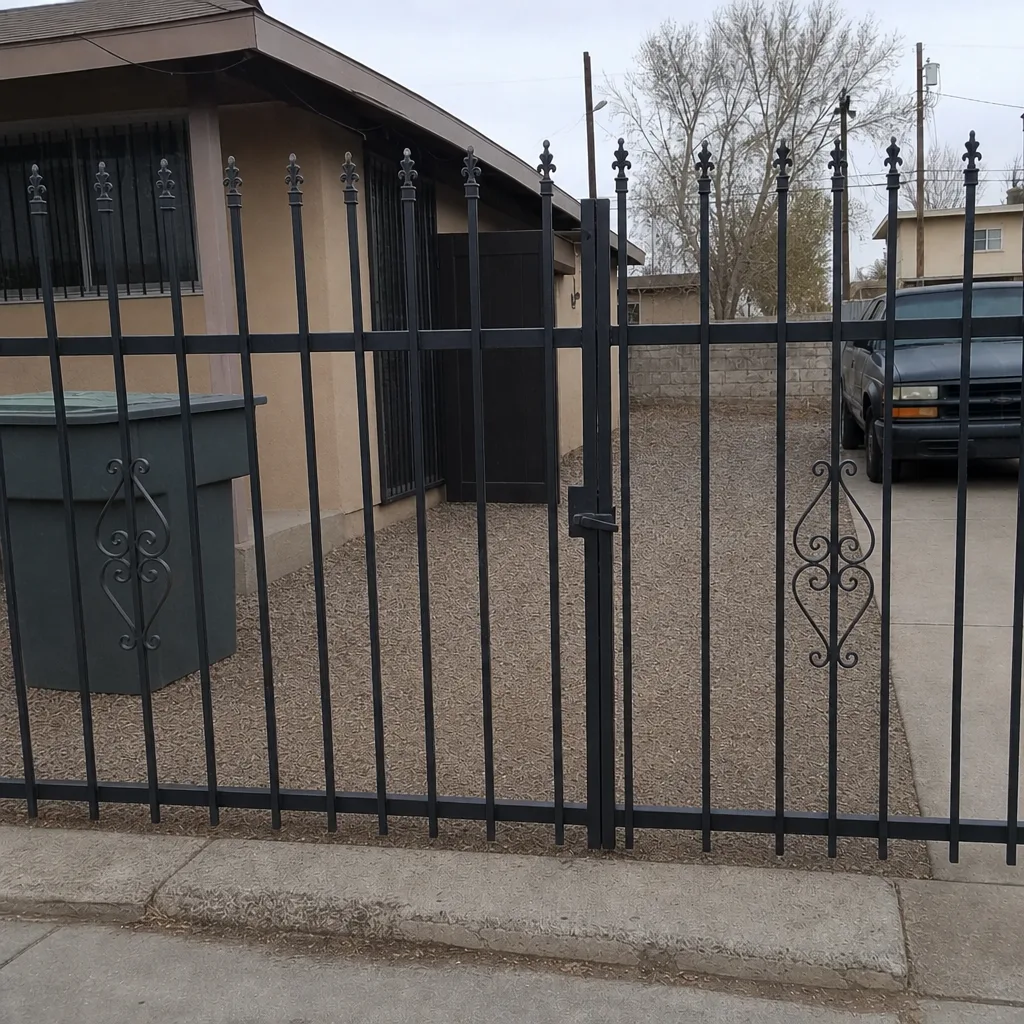
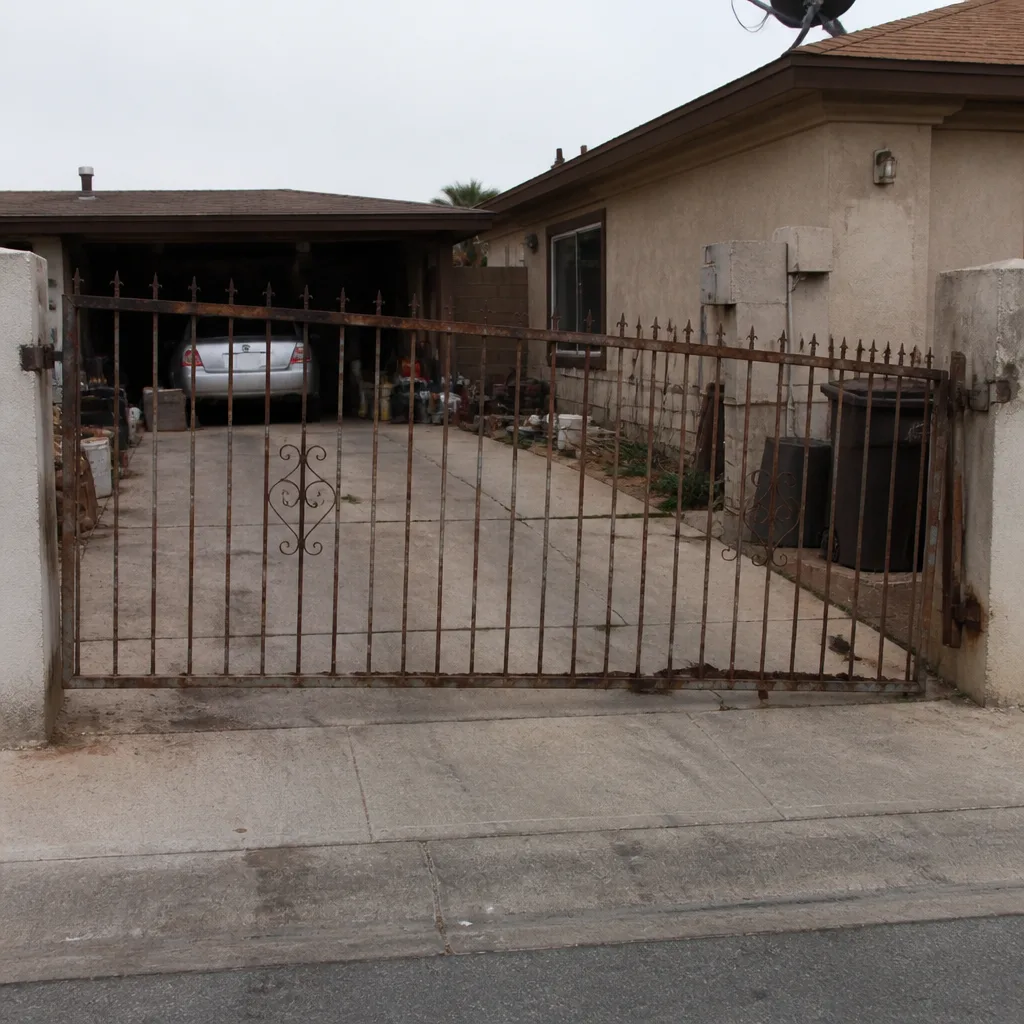
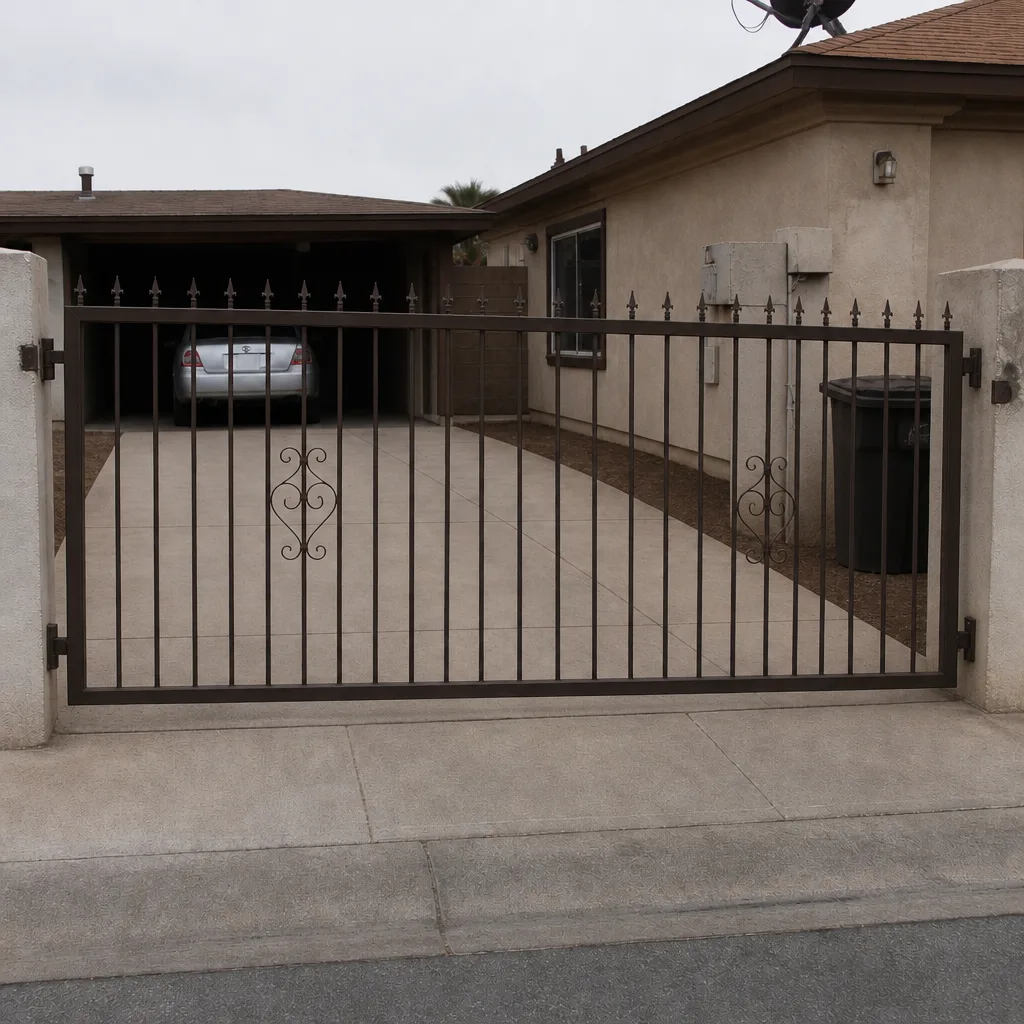
See the difference
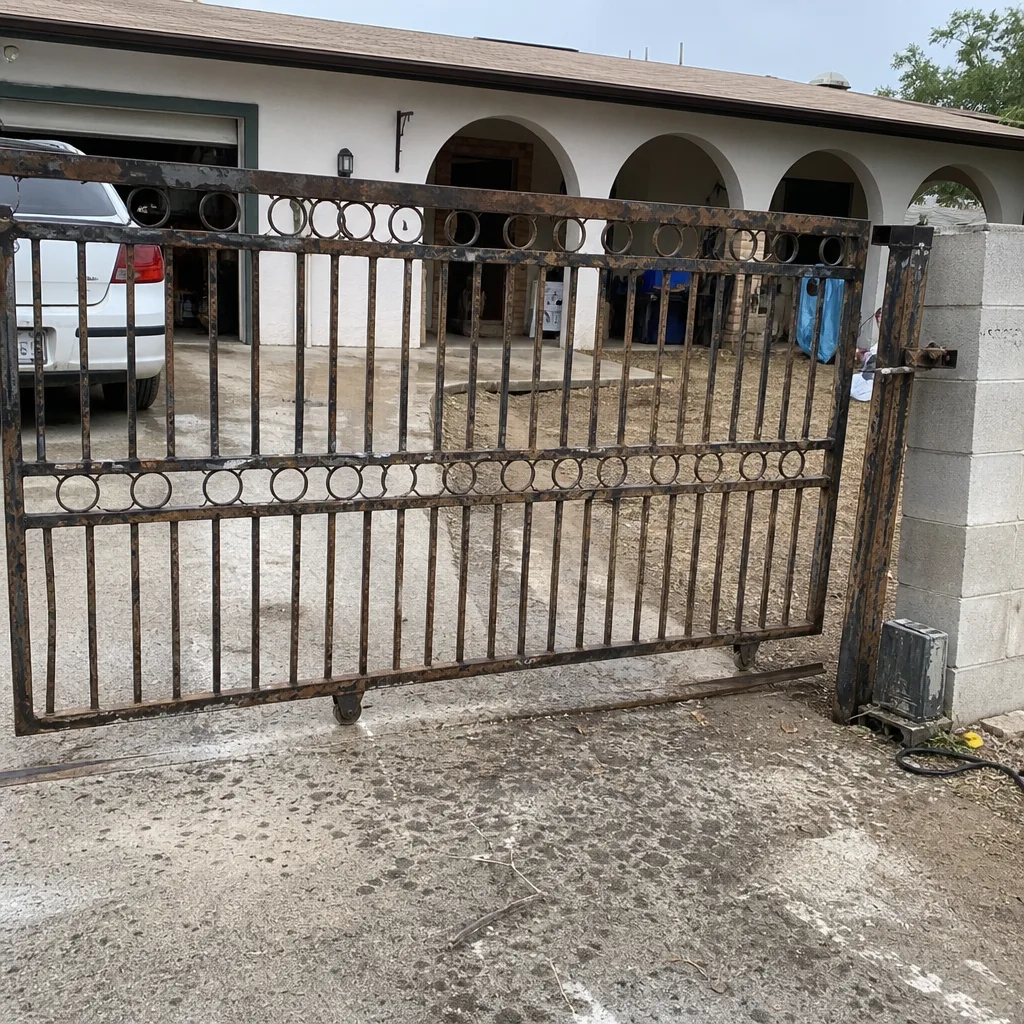 Before
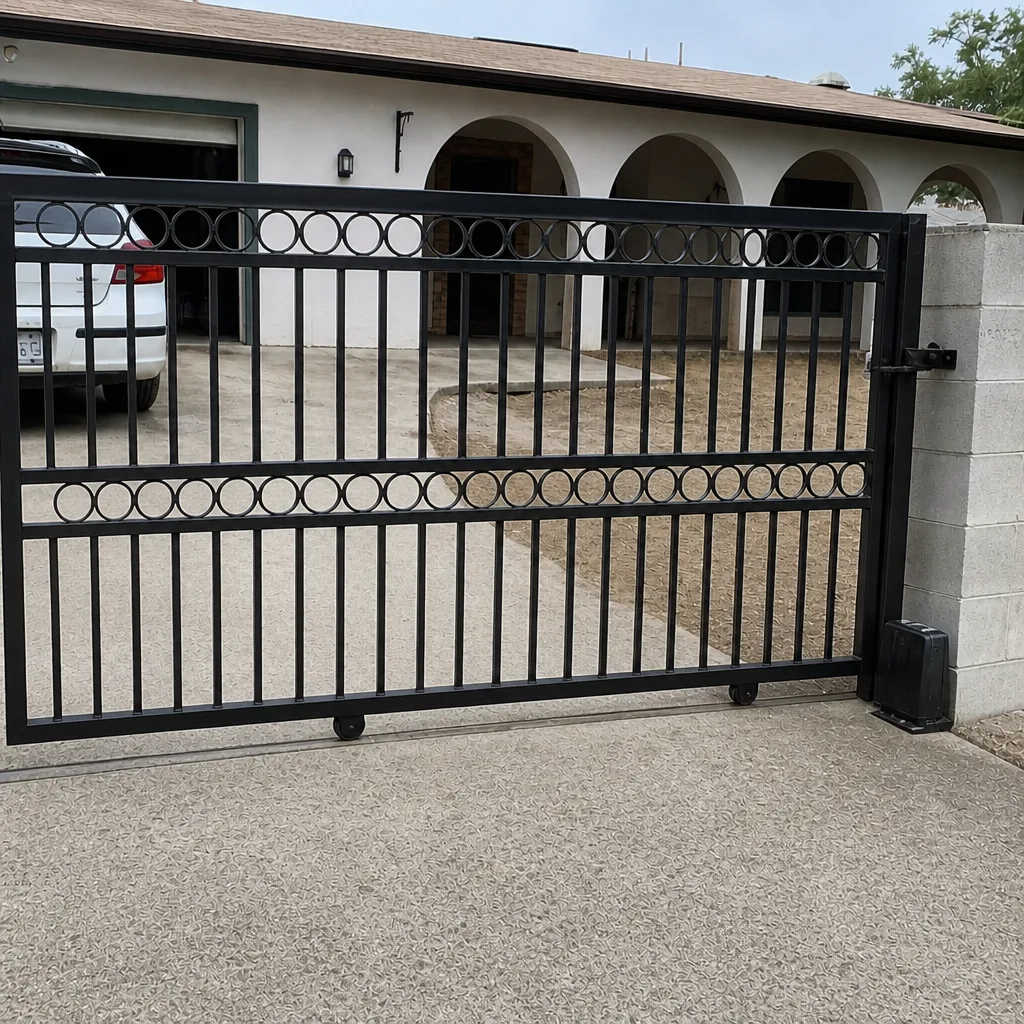 After
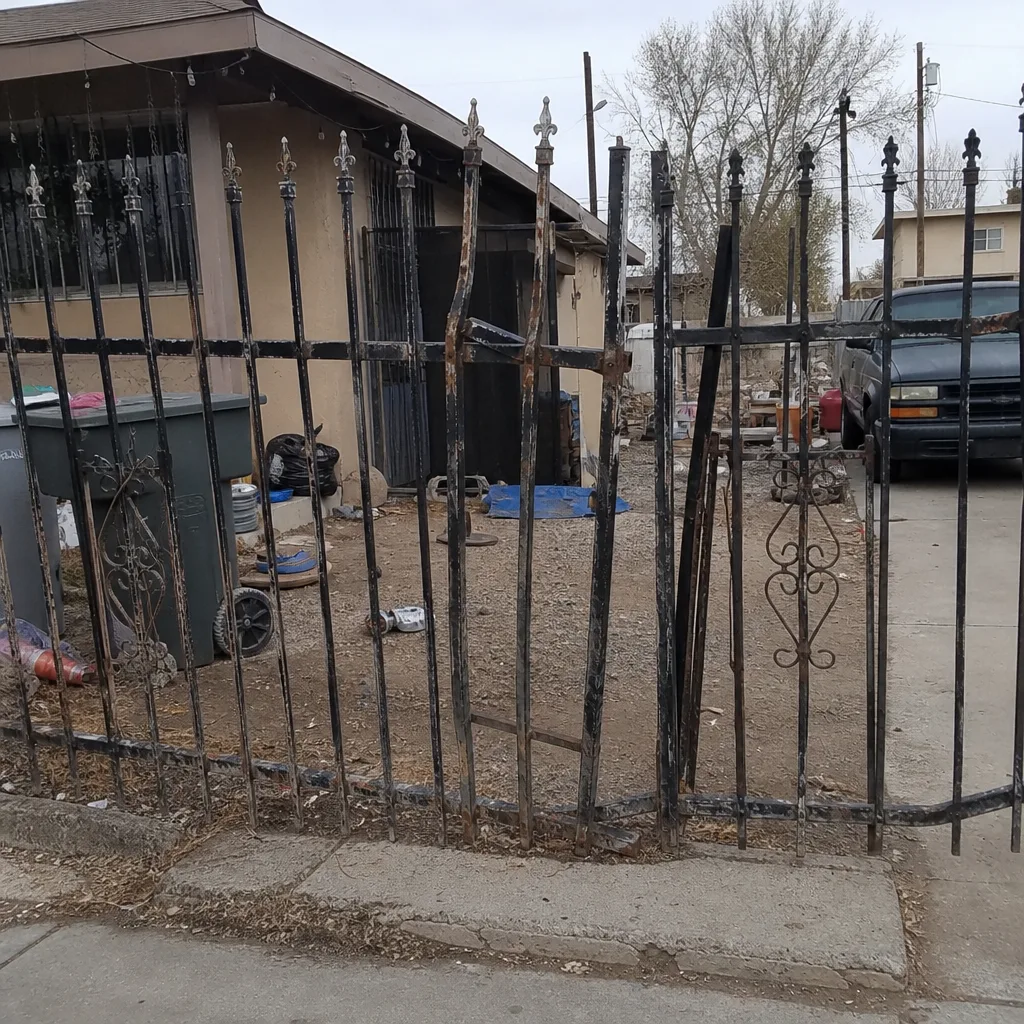 Before
 After
 Before
 After
Common Mistakes to Avoid
- Undersized footings in caliche. A 24-inch footing that stops at the caliche shelf instead of below it will shift within two summers. The post looks fine in month three and leans by year two.
- Skipping the permit. Unpermitted gates block home sales, fail during refi appraisals, and get flagged by HOA inspectors. Pull the permit even when it feels annoying.
- Hanging a heavy gate on light-duty hinges. Iron gates on the wrong hinges wear out the hinge pin and wallow the post in a year. Hinge rating is a load calculation, not a style choice.
- Picking an operator for the opening width only. A 12-foot gate cycle rating is not the same as a 12-foot gate weight rating. Every operator spec sheet lists both, and most quotes only mention the width.
- Pouring on Friday and hanging on Sunday. Concrete in this heat is still green at 48 hours. Five to seven days cure is the floor. A gate hung on green concrete is a gate that never sits square.
- Ignoring HOA CC&Rs on setbacks. In North Las Vegas, plenty of installs have been legally permitted by the city and still hit an HOA violation because the setback number was in the CC&Rs, not the code.
- No safety edge or photo eye on the operator. Automatic gates without proper obstruction sensing are both a code violation and a safety hazard, especially with kids, pets, and delivery drivers in the driveway.
When to Call a Professional
Call a professional the moment any of these come into play: caliche that turns out to be a shelf rather than a layer, a driveway grade above 8 percent, an automatic operator that ties into household power, masonry pillars or columns that need structural rating, or any gate that pulls a permit. Those aren’t weekend homeowner projects, and the failure mode isn’t “it looks a bit off.” It’s a gate that falls over onto a car or a person.
There’s also a whole tier of situations where the answer is a repair, not a replacement. If the post is sound and the hinges are shot, the right move is to weld new hardware in place, not tear out and start over. When we’re on a site, we start with the hinges and the post, because a gate sags in the hinge post, not in the middle. That’s where the fix lives. You can read more on how we handle that in our Gate Repair in North Las Vegas guide.
Gatewood Fence & Gate North Las Vegas offers free estimates in North Las Vegas. Call (844) 761-9351.
Frequently Asked Questions
A residential driveway gate installation in North Las Vegas typically runs $2,400 to $6,800 including footings, posts, and hardware, with automatic operators adding $950 to $2,600 depending on weight class and duty cycle. Pedestrian gates are lower, usually $900 to $2,200. Cost is quoted upfront and in writing before any work starts, and it does not change at the door. Call (844) 761-9351 for an exact quote.
You can pull an owner-builder permit for a gate on your primary residence if it’s small and unpowered, but you cannot legally install an automatic operator on the public side of a property line or pull a permit for work you intend to hire out. For anything with electrical connections, masonry posts, or gates taller than 6 feet, the permitting and liability usually point to a licensed contractor. Call (844) 761-9351 and we’ll tell you honestly whether your project fits a DIY scope.
For a residential driveway gate in the North Las Vegas valley, plan on footings 30 to 36 inches deep and 10 to 12 inches in diameter so the base sits below the caliche layer rather than on top of it. Masonry pillars carrying heavy iron gates often go deeper. The exact number depends on what the test hole at your specific post location shows. Call (844) 761-9351 and we can talk through what we usually see on your side of town.
Yes, in most North Las Vegas subdivisions. HOA CC&Rs commonly govern gate setback from the property line and sidewalk, gate height, and material, and those rules can be stricter than the city code. Get written HOA approval before you apply for the permit. If your HOA and city requirements conflict, the stricter one wins. Call (844) 761-9351 if you want a second opinion on what your CC&Rs actually require.
A swing gate pivots on hinge posts and opens inward or outward, while a sliding gate travels along a track parallel to the fence line. Swing gates are cheaper and simpler for flat driveways under 14 feet. Sliding gates cost more to install but are the better answer for steep grades, tight setbacks, and driveways where a swinging leaf would block a sidewalk. If your driveway grade is above 8 percent, sliding is usually the right call. Call (844) 761-9351 for a walkthrough of which fits your property.
Only if the operator has battery backup. A standard AC-only operator stops dead in a power cut, which in North Las Vegas can mean several hours a year and much longer during storm-season outages. Operators with battery backup from LiftMaster and BFT keep the gate cycling through short outages and give you a manual release for longer ones. Every automatic install we quote includes a manual release key regardless. Call (844) 761-9351 and we’ll spec the right operator for your gate.
The Bottom Line
A gate installation in North Las Vegas comes down to a short list of engineering decisions: get the footings below the caliche, size the post and hinges for the actual weight of the leaf, match the operator to the gate’s weight and duty cycle rather than the opening width, and pull the permit before the shovel moves. Do those four things and the gate is still plumb and closing on its own a decade from now. Skip any of them and you’re calling someone to fix a leaning post within two summers. The cheapest install is the one you do once.
If you want a gate that’s engineered for this valley instead of copied from a climate that isn’t ours, we’re the people to call. Our Gate Installation in North Las Vegas service handles the full job from permit to operator, and our Gate Motor & Opener in North Las Vegas team can spec the automation so the gate, not the opener, is doing the work. Reach out at (844) 761-9351 for a free estimate. Call us today and we’ll walk your property, look at what’s under the surface, and give you a written price before anything gets dug.
Written by the team at Gatewood Fence & Gate North Las Vegas.