
Last updated November 17, 2026
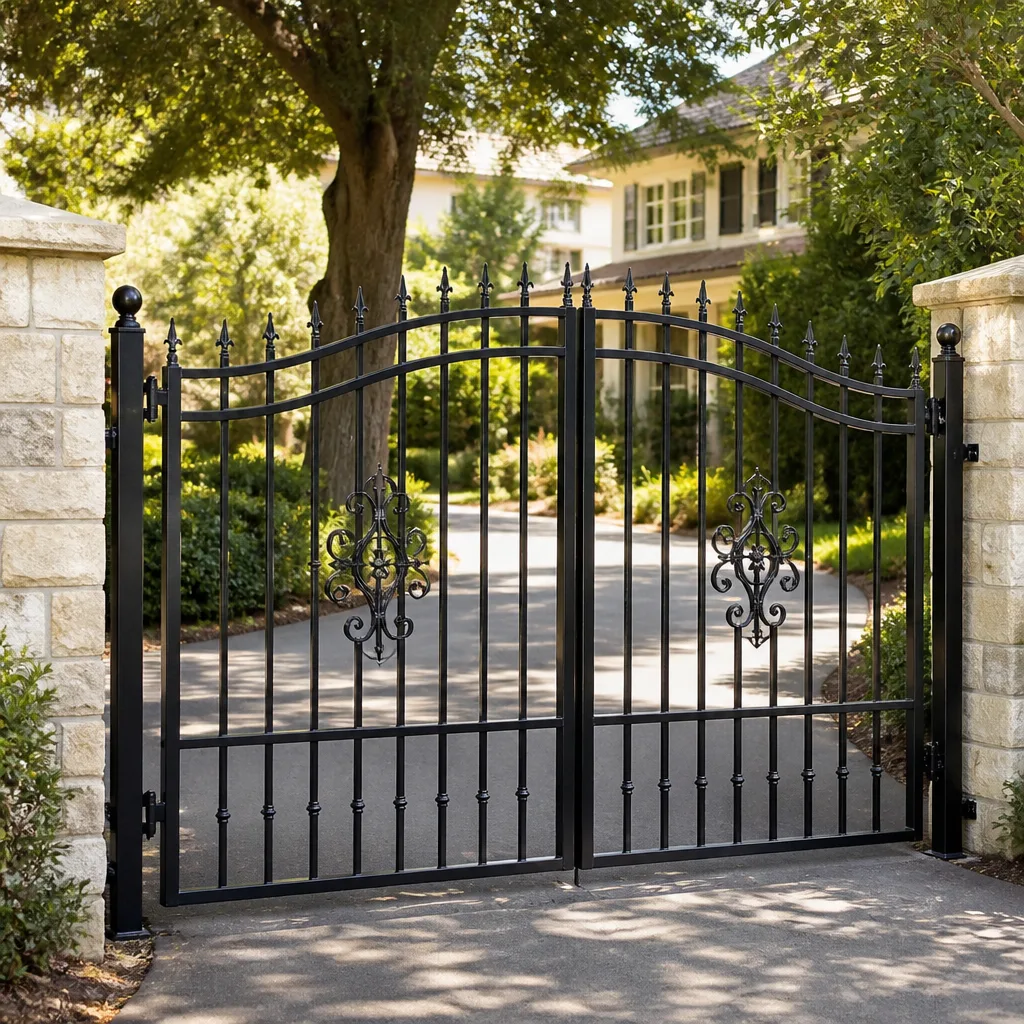 Wrought iron
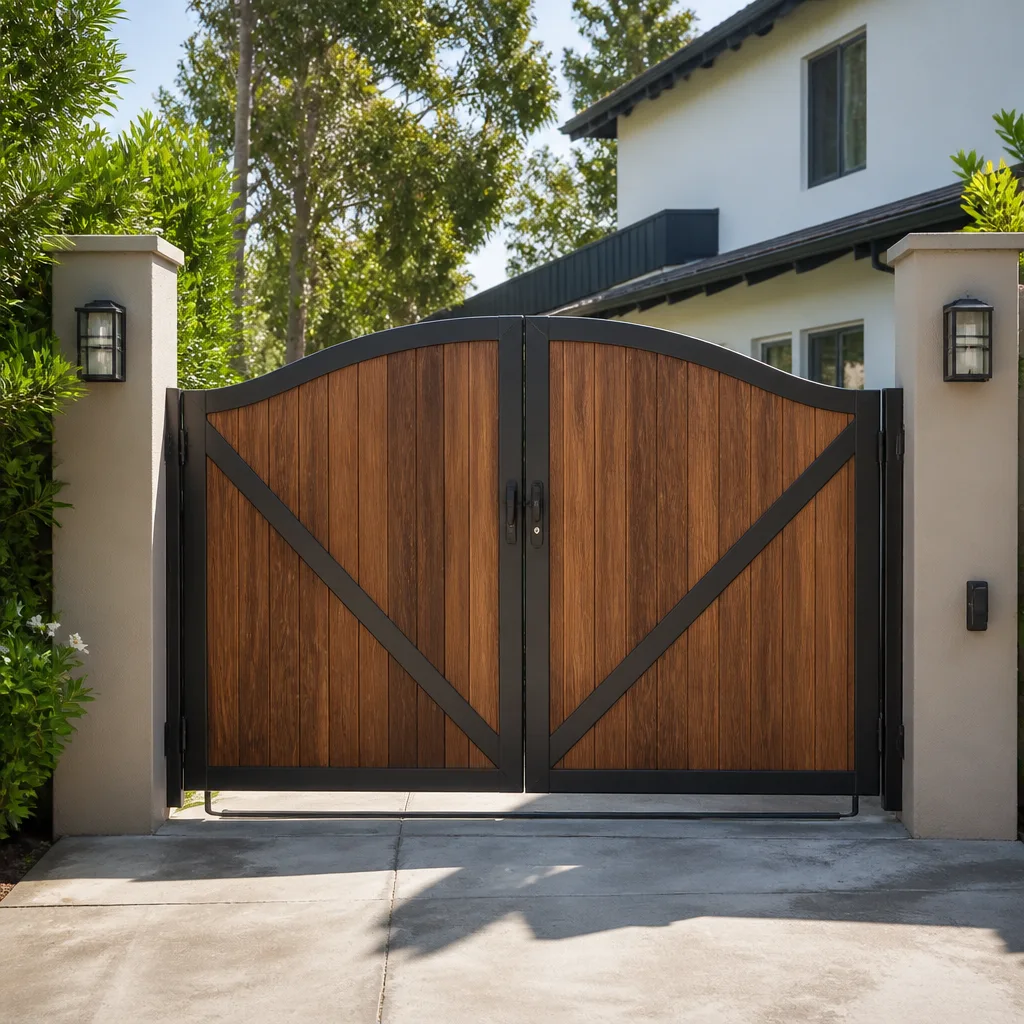 Wood & steel frame
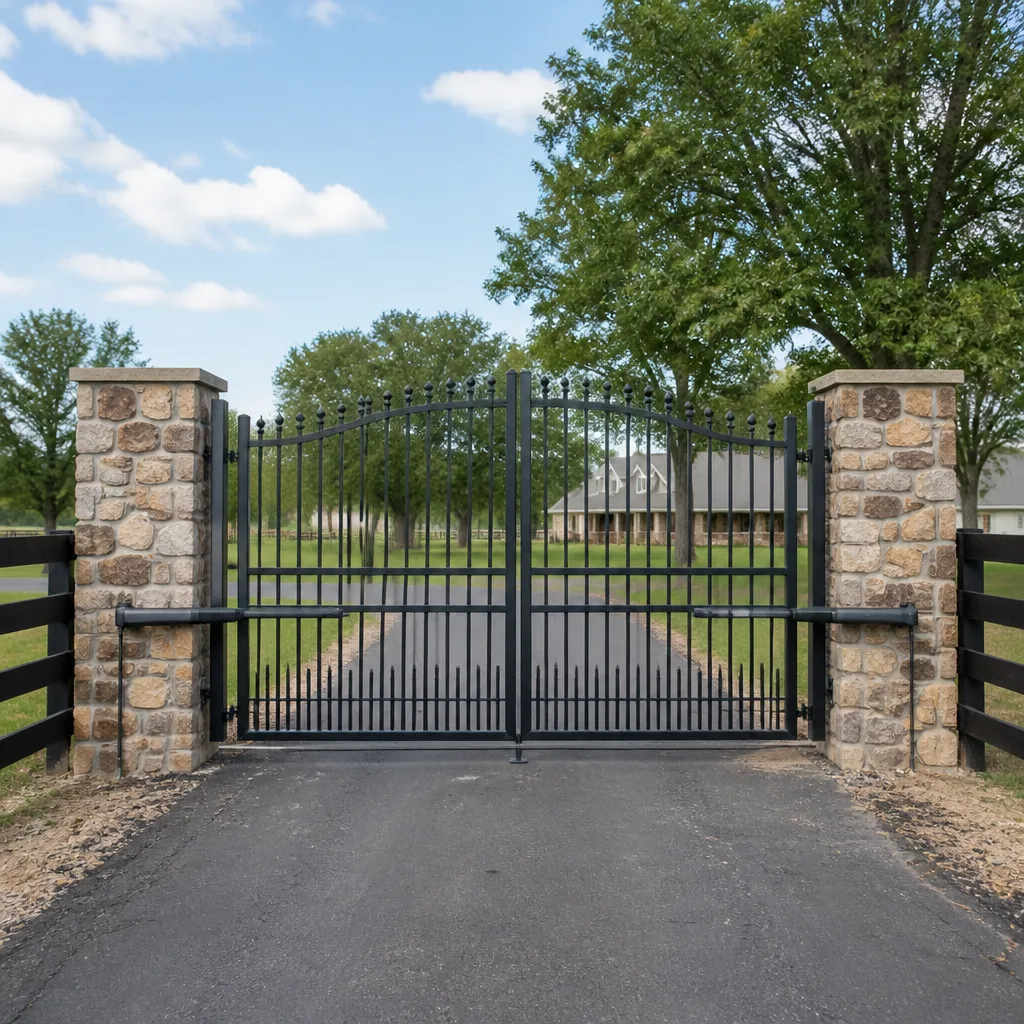 Farm & ranch
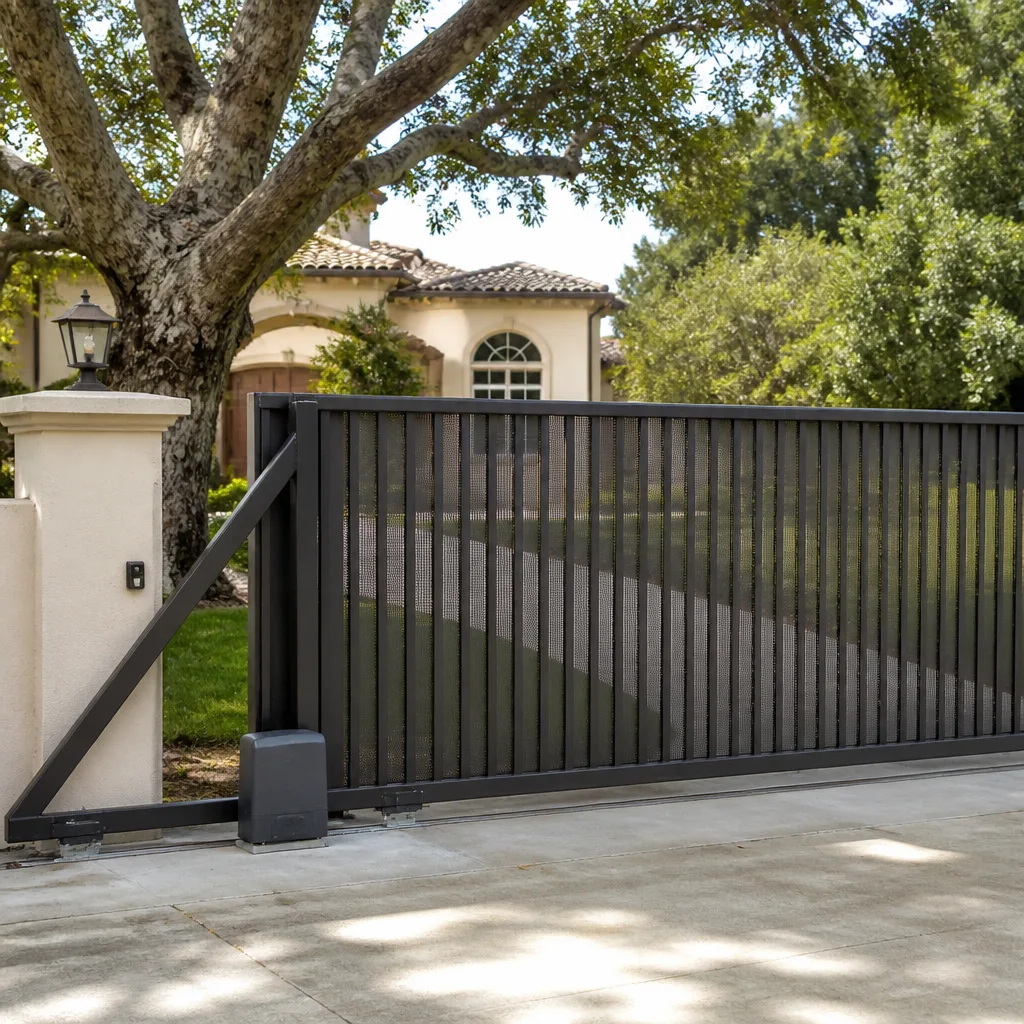 Sliding driveway gates
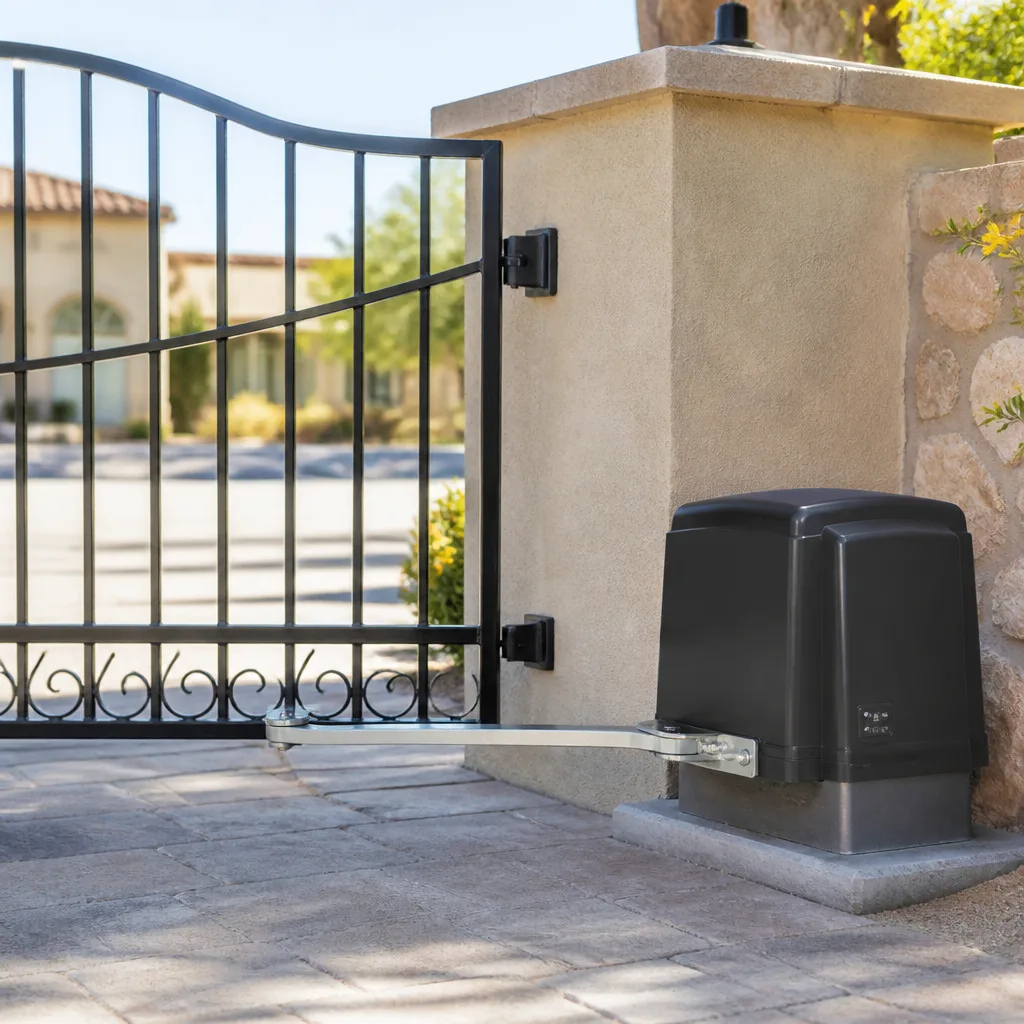 LiftMaster operators
Free on-site gate assessment - hinges, posts, and your LiftMaster or Nice gate operator checked before anything is quoted
The assessment is free and the quote is the invoice.
Get your free estimateGate Repair Maintenance Checklist for North Las Vegas Homeowners
The number-one maintenance mistake we see on gates around North Las Vegas isn’t skipping lubrication. It’s using the wrong lubricant. Spray WD-40 on a hinge out here in July and by September you’ve basically built a little grinding paste of dust and gummed-up carrier solvent, because the thin stuff flashes off in the heat and leaves the grit behind. A gate in North Las Vegas lives through 110-degree afternoons, blowing alkali dust, and humidity so low your skin cracks by the second week. That’s a different set of failure points than a gate in Seattle or Dallas faces. This guide walks you through what actually fails here, season by season, so you’re checking the right things instead of the generic ones.
Quick Answer
A gate in North Las Vegas needs lubrication with a high-temp, dust-resistant product every 60 to 90 days, a hinge-post inspection twice a year, photo-eye cleaning after every significant dust event, and a full hardware and weld check each spring and fall. Motor-driven gates need their operator serviced annually, and every gate should be checked for post movement and structural rust once a year. If you do those four things on a schedule, most gates here last decades.
Styles & brands we work with
- Wrought iron
- Wood & steel frame
- Farm & ranch
- Sliding driveway gates
- LiftMaster operators
Table of Contents
- Which Lubricants Actually Hold Up in Desert Heat
- The Three-Minute Hinge Wear Test
- Photo-Eye Care After a Dust Storm
- The Annual Post Inspection Routine
- A Month-by-Month North Las Vegas Gate Schedule
- Operator and Motor Maintenance
- Common Mistakes to Avoid
- Frequently Asked Questions
Which Lubricants Actually Hold Up in Desert Heat
Here’s what separates a lubricant that survives a North Las Vegas summer from one that doesn’t: temperature rating and carrier. Most spray lubricants are built for a garage in the Midwest. They use a light carrier solvent that evaporates fast, leaving behind either nothing or a sticky film. When it’s 112 degrees on the west side of town and wind is throwing dust off a vacant lot, that thin film grabs every particle it can.
What you want on hinges, latches, and the operator’s chain is a grease or synthetic lubricant rated to at least 300 degrees, or a dry-film PTFE product that leaves a slick surface rather than a wet one. Dry-film is the smart pick for anything the wind can reach. For heavier pivot points and rollers, a lithium or synthetic chassis grease applied sparingly lasts longer in heat than anything you spray from a can.
- Good for desert hinges: dry-film PTFE spray, synthetic chassis grease, high-temp bearing grease rated 300°F or above.
- Poor in the desert: standard WD-40, generic silicone spray with a light carrier, vegetable-based oils that turn gummy.
- Never use: motor oil from a can in the garage. It runs, attracts grit, and stains the driveway.
Apply two or three short bursts, not a soak. On a sliding gate’s track rollers, a thin film is plenty. On a swing gate, work grease into the hinge barrels with a small brush. You’ll do this every 60 to 90 days, more often during the windy spring months when the dust really moves. If your gate is on a gate motor & opener system, check the manual for the manufacturer’s recommended lubricant for the drive chain, because FAAC and BFT operators spec specific products that don’t always match what you have on the shelf.
The Three-Minute Hinge Wear Test
A gate sags in the hinge post, not in the middle. If you find yourself lifting the gate to close it, or the far edge is dragging a divot in the concrete, that’s post or hinge wear, not a frame problem. You can find it yourself with two people and about three minutes.
- Open the gate to 90 degrees and have one person hold it steady at the far edge.
- Grip the hinge side with both hands and give the gate a firm wiggle, back and forth, in the direction it swings.
- Watch the hinge pin while your helper holds the gate still. Any play at the pin, or motion between hinge halves, means the hinge is worn or the post has shifted.
- Check the post itself by marking the concrete where the post meets it, then pressing hard on the post in each direction. If the mark moves, the post is loose in the ground.
- Close the gate and watch the latch. A latch that needs a lift, a shove, or two tries is telling you the geometry has shifted.
Do that test once in spring and once in fall. If the gate moves a quarter inch or more at the hinge pin, it needs attention before something cracks. Here’s the hard part: fixing the hinge without addressing the post means you’ll fix it twice. This is the single most common repair we get called out for in North Las Vegas, and it’s almost always a wasted repair attempt by someone who replaced the hinges on a bad post.
Photo-Eye Care After a Dust Storm
When your automatic gate stops closing and the operator clicks but doesn’t move, don’t assume the motor’s dead. In our experience, a good share of those calls are dirty photo-eye lenses. Alkali dust coats the plastic lens until the beam can’t pass through, and the operator reads that as an obstruction. The gate thinks something is in the way, so it reverses or refuses to close.
Cleaning them takes a soft cloth and maybe 60 seconds:
- Find the two photo-eye units, one on each side of the gate opening, usually a few inches off the ground on the posts or on small brackets.
- Wipe the lens with a clean, soft cloth. A slightly damp cloth is fine, but don’t soak it.
- Check for cobwebs, wasp nests, or a shovelful of sand piled in front of the lens, which collects fast after a windy day in the northern parts of town.
- Check that both units are pointed at each other and that the mounting hasn’t loosened. A gate that swings freely next to a bumped lens will drift out of alignment.
If the eyes are clean and aligned and the gate still won’t close, the problem is downstream. That’s when a Linear or Viking operator might need diagnostic testing, which is a job for someone with a meter and the wiring diagram. Don’t guess at it. Electrical work on an operator isn’t a homeowner job.
The Annual Post Inspection Routine
Every post on your gate and fence deserves a once-a-year look, and the right way to inspect it is with a probe, not a glance. Take a screwdriver or a stiff wire and poke the base of each post, about six inches above the concrete or soil line. If the metal is solid, the screwdriver tip will skate. If it sinks in, you’ve found structural rust.
Rust colors matter here. Surface rust is orange-brown and sits on top of the metal. It’s cosmetic, and you can knock it back with a wire brush and a coat of rust-inhibiting paint. Structural rust is darker, often flaky, and you can push into it with a probe. On welded joints, especially, structural rust is a real problem because a joint that was strong is now a joint that’s thinning. We’ve seen gates in North Las Vegas where a weld looked fine until a screwdriver opened a hole the size of a quarter.
- Probe every post base with a screwdriver or stiff wire. Any penetration means structural rust.
- Look at every weld at joints, especially on the bottom rail and hinge side.
- Check the concrete footing for cracks radiating out from the post, which signals the post is moving.
- Confirm the gate swings freely by hand with the operator disengaged, and listen for grinding.
- Photograph anything suspicious with your phone and date it. It helps you track whether a problem is active or stable.
If a weld is bad, welding on site is the answer. You don’t want the gate hauled off to a shop for a fix you could watch happen in your own driveway. This kind of in-place repair is one reason we keep a welding setup on the truck for calls in North Las Vegas.
A Month-by-Month North Las Vegas Gate Schedule
Generic maintenance calendars assume rainy seasons and freezes. North Las Vegas doesn’t run on that schedule. The gate here deals with a hard summer, a windy spring, and mild winters that let you work outside almost year round. So the calendar shifts.
- January: Full annual post inspection and weld check. Weather is mild, and any rust you find is easy to fix before spring.
- February: Lubricate all hinges, latches, and drive chains. Cold-morning greasing holds up well.
- March: Dust-storm prep. Clean photo-eyes, tighten all mounting bolts, and clear yard debris away from the gate line.
- April: Spring hinge wear test. Any sag corrected now, before the heat hits.
- May: Check operator for overheating symptoms. If the motor housing feels hot to the touch on a mild day, it needs a look.
- June: Lubrication refresh, second time this season. Use dry-film on anything exposed.
- July: Photo-eye cleaning after any dust event, sometimes twice a month. Check for heat damage on plastic components.
- August: Inspect concrete footings for cracking. Heat stress on old concrete is real here.
- September: Fall hinge wear test and lubrication. Same as spring.
- October: Touch up surface rust before the winter moisture settles in.
- November: Operator diagnostic check and battery check on backup systems.
- December: Full visual inspection, look for anything new. Book your annual service if you haven’t.
What you’re really doing is keeping up with conditions that only show here. In the northern parts of North Las Vegas and out toward the open desert, wind-driven material is more aggressive, so photo-eye cleaning can be a monthly affair from March through July. Closer to the older center of town, gates on mature lots see less blowing dust but more rust from irrigation overspray, which is its own thing.
Operator and Motor Maintenance
An operator is a machine, and it needs the same annual attention as the gate itself. The most common sign of operator trouble in North Las Vegas is a gate that’s working harder than it should. If the motor has to shove against a sagging hinge, it’ll do that for a while, then one day it just stops. Motor failure often starts as a gate alignment problem.
Once a year, do this:
- Disengage the operator and swing the gate by hand. It should move with light effort. If it drags, the gate needs repair before the operator gives out.
- Inspect the drive chain or arm for slack, worn sprockets, or grease that’s dried to a crust. Re-grease per manufacturer spec.
- Check the battery backup if your operator has one, especially ahead of summer storms that can knock out power.
- Test the safety reverse. Put a piece of wood in the gate’s path and confirm the gate reverses on contact.
- Confirm the photo-eye alignment after every dust event and every season change.
Do this and your operator should see many years of use. If your gate is one of the LiftMaster or Mighty Mule systems we see across North Las Vegas, the operator-specific maintenance is a phone call, and we can walk you through what to check or send someone out. A failed operator on a security gate also means a gate that no longer secures anything, so it’s worth handling promptly.
Common Mistakes to Avoid
- Spraying WD-40 on hinges in summer. The carrier evaporates in the heat, leaving a sticky residue that grabs grit. Within 60 days you’re grinding metal on metal.
- Replacing hinges on a bad post. A new hinge on a shifted post will fail in months. Test the post before you buy hardware.
- Ignoring a dusty photo-eye. A dirty lens mimics a broken sensor, and replacing a good sensor costs far more than cleaning it.
- Painting over structural rust. Surface rust is fine to paint over. Flaky rust with probe penetration needs the metal cut out and rewelded, not painted.
- Forgetting the operator’s chain. Your gate hinges get greased while the drive chain dries to a crust. It’s the part most people miss.
- Running a loose gate through the motor. A gate that needs a lift to close is wearing out the operator every single time it cycles.
- Skipping the annual inspection. Small problems are cheap. Ignored problems are not.
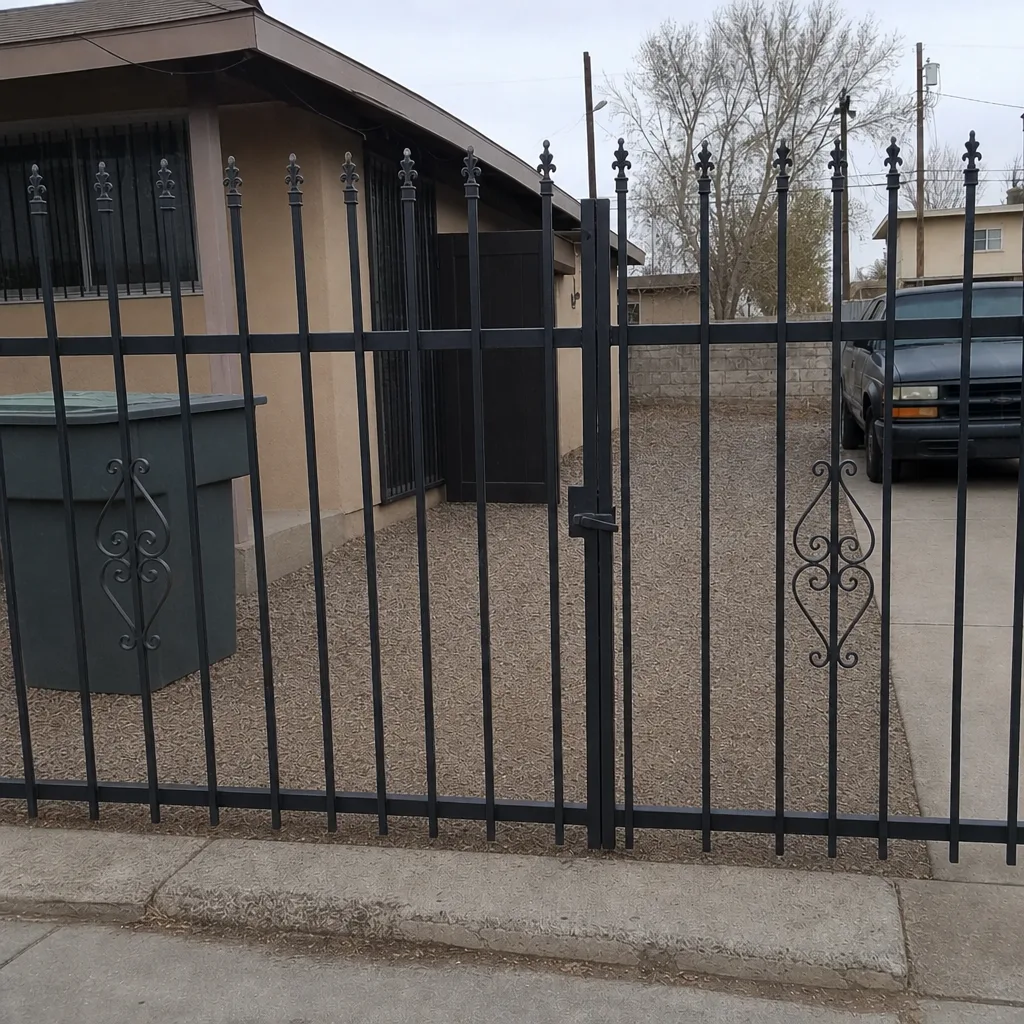
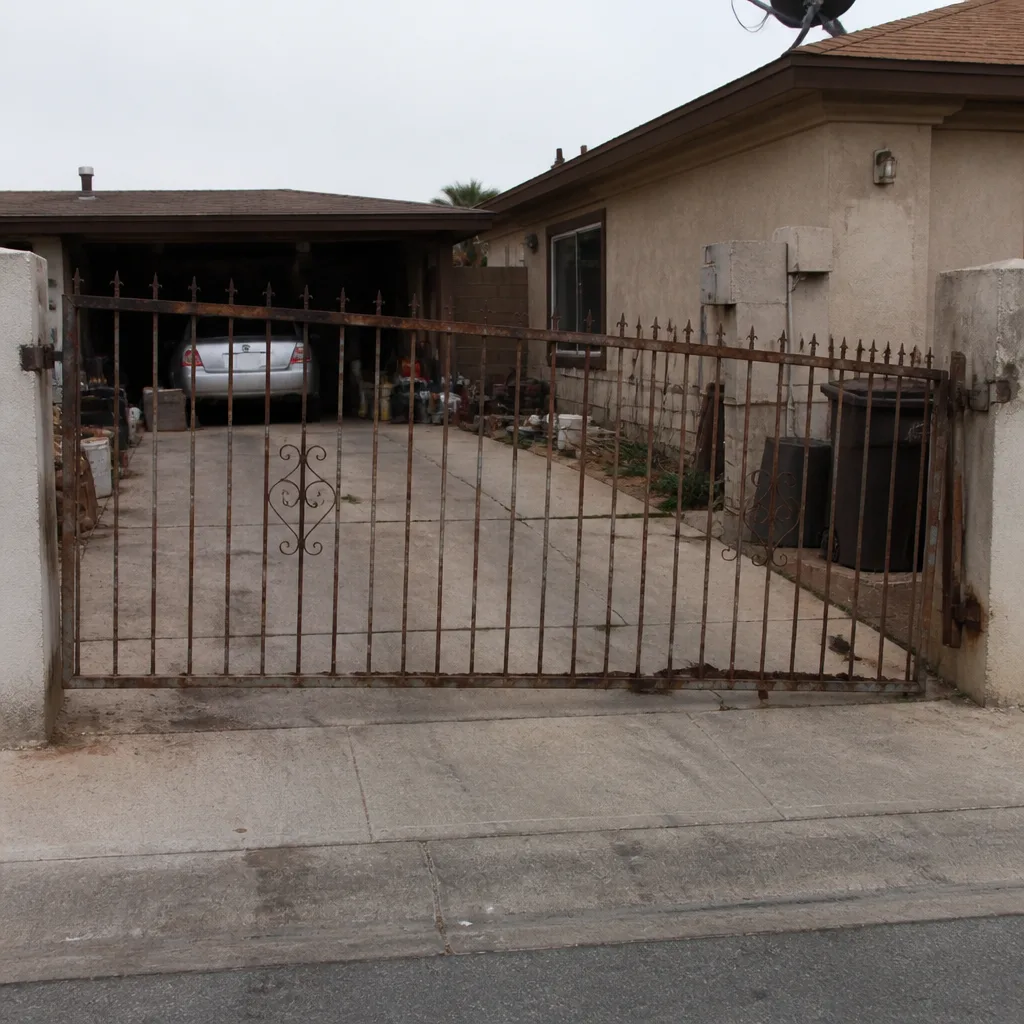
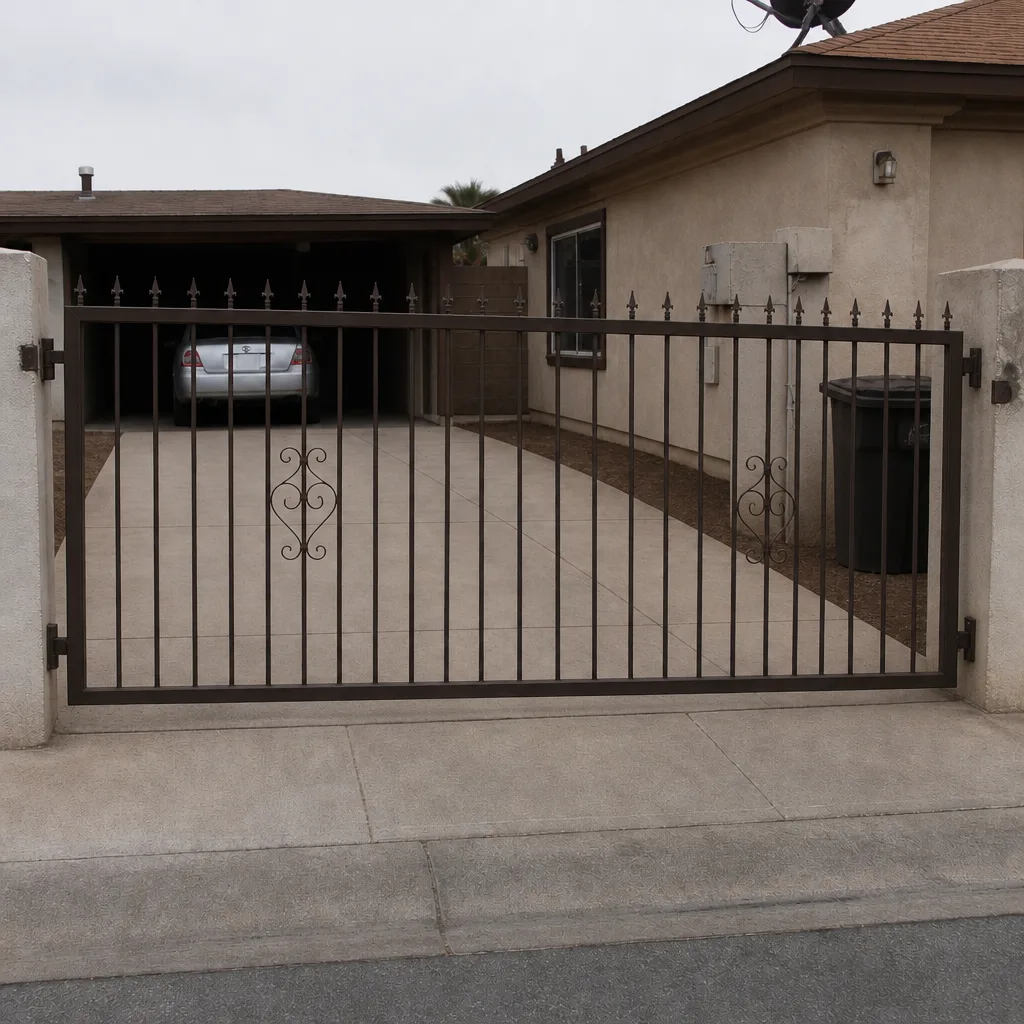
See the difference
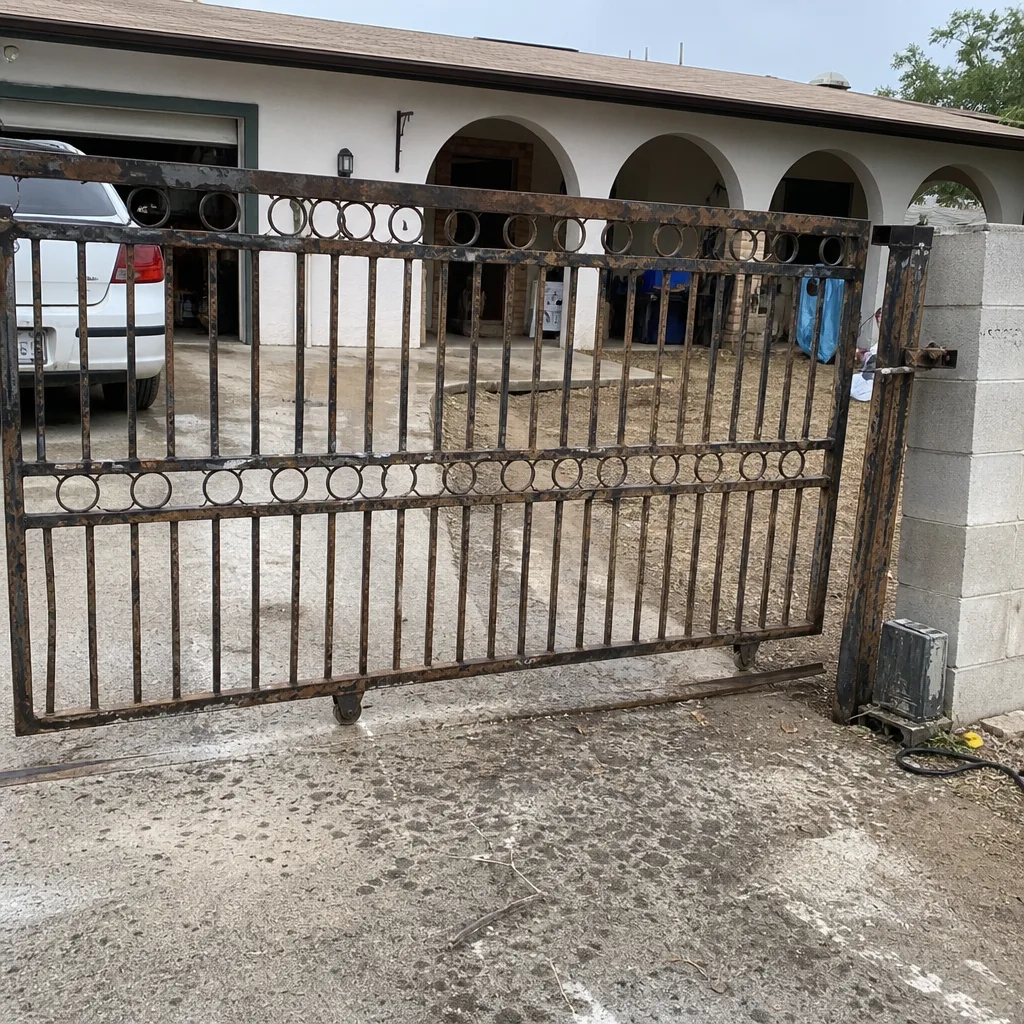 Before
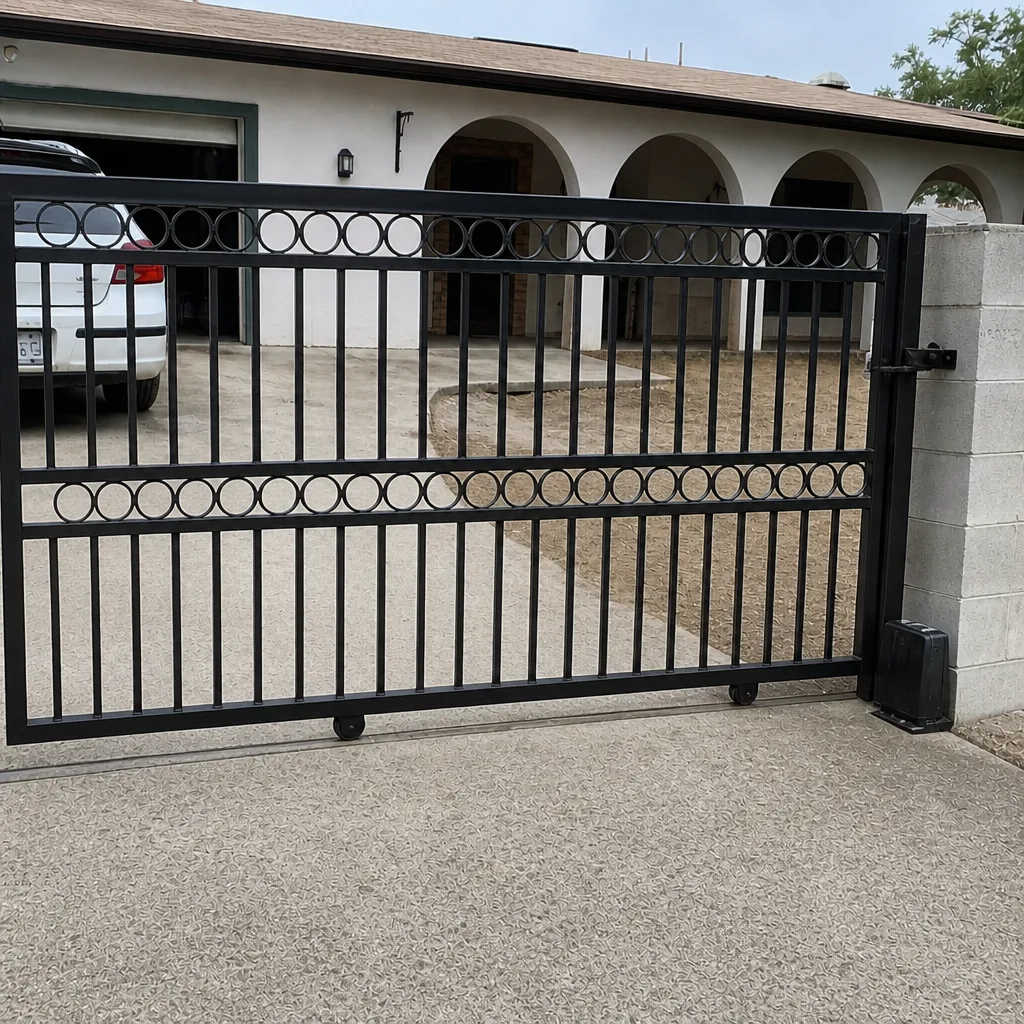 After
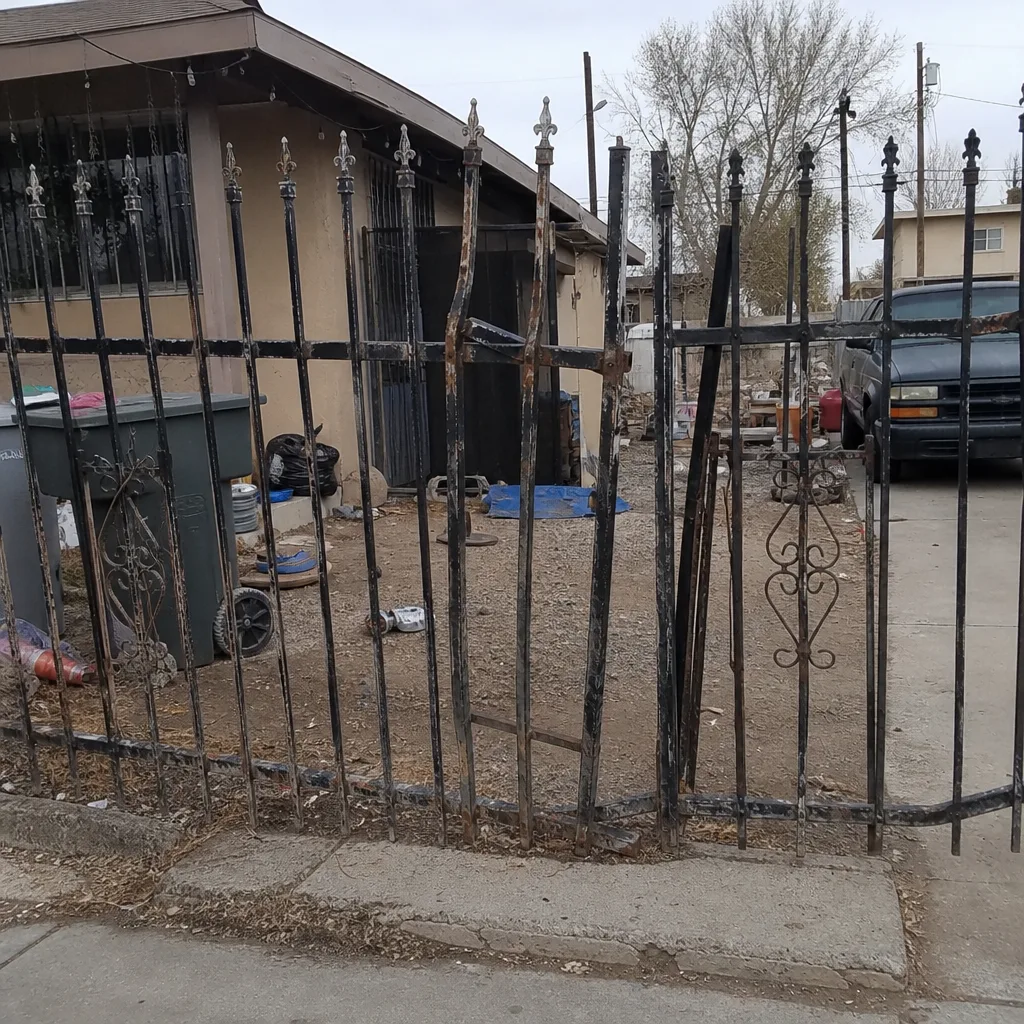 Before
 After
 Before
 After
When to Call a Professional
Some of these checks are homeowner-safe. Lubrication, photo-eye cleaning, and a visual inspection are all things you can do yourself. But a few situations call for a trained technician. Any work on the operator’s electrical wiring, high-voltage or low-voltage, is a job for someone qualified. A gate post that’s loose in the ground or a weld that’s failed needs a proper repair, often with on-site welding. A gate that’s out of alignment or a hinge that won’t hold after tightening is a repair, not a maintenance task. And if your gate has been making noises you can’t place, listen to it, a grinding or clicking sound is your gate telling you something is failing.
Need a hand with any of this? Gate repair in North Las Vegas is what we do every day, and we offer free estimates. Call (844) 761-9351 whenever you want a second opinion on a written estimate you’ve already got, or a straight answer about what your gate needs.
Frequently Asked Questions
Every 60 to 90 days, and more often during the windy spring months when dust is heavy. Use a dry-film PTFE spray or high-temperature synthetic grease rated 300°F or above. Standard WD-40 is the wrong product out here because the carrier evaporates and leaves a sticky film that collects grit.
Yes, and it takes about three minutes with two people. Open the gate to 90 degrees, have one person hold the far edge, and wiggle the hinge side to look for play at the hinge pin. Then press on the post itself to see if it moves. Any play of a quarter inch or more means the gate needs repair. Call (844) 761-9351 for a free estimate if you’re not sure what you’re seeing.
Dirty photo-eye lenses are the most common cause. Alkali dust coats the plastic lens, the beam can’t pass through, and the operator reads that as an obstruction. Clean both lenses with a soft cloth, clear any sand or cobwebs, and check that the two units are aligned with each other. If the gate still won’t close afterward, the problem is in the operator or wiring, which is a call for a trained technician.
Surface rust is orange-brown and sits on top of the metal, and you can knock it back with a wire brush and rust-inhibiting paint. Structural rust is darker and flaky, and you can push a screwdriver into it. Probe every post base once a year. Any penetration means structural rust and the metal needs to be cut out and rewelded, not painted over.
Small repairs like hinge replacement and lubrication run in the low hundreds, and photo-eye cleanup or realignment is often in the same range. Larger repairs, welding a failed joint or fixing a loose post, cost more. Call (844) 761-9351 for an exact quote, and we offer a free second opinion on any written estimate you’ve gotten elsewhere.
We service the major brands, including LiftMaster, FAAC, BFT, Linear, Viking, Ghost Controls, DoorKing, Elite, and Mighty Mule. If you have a brand you’re not sure about, call and ask. Free estimates and no trip charge inside the county.
The Bottom Line
Keeping a gate healthy in North Las Vegas comes down to four habits: the right lubricant, a hinge and post check twice a year, photo-eye cleaning after dust events, and an annual inspection of every post and weld. Skip the generic nationwide advice and match your maintenance to the desert. If we’ve learned one thing over the years, it’s that the homeowner who does these four checks spends far less than the one who waits for a gate to fail. A gate installation in North Las Vegas that’s properly maintained will outlast the driveway it sits on. If you want a hand with any part of this, or just want to see the checklist done once so you know what to look for, give us a call. A Gatewood Fence & Gate North Las Vegas home visit is the easiest way to see how a well-kept gate works, and everything we do is backed by our 90-Day Done Right Promise.
Call (844) 761-9351 for a free estimate. We answer the phone with a live person every hour of the day.
Written by the team at Gatewood Fence & Gate North Las Vegas.