
Last updated November 17, 2026
 Wrought iron
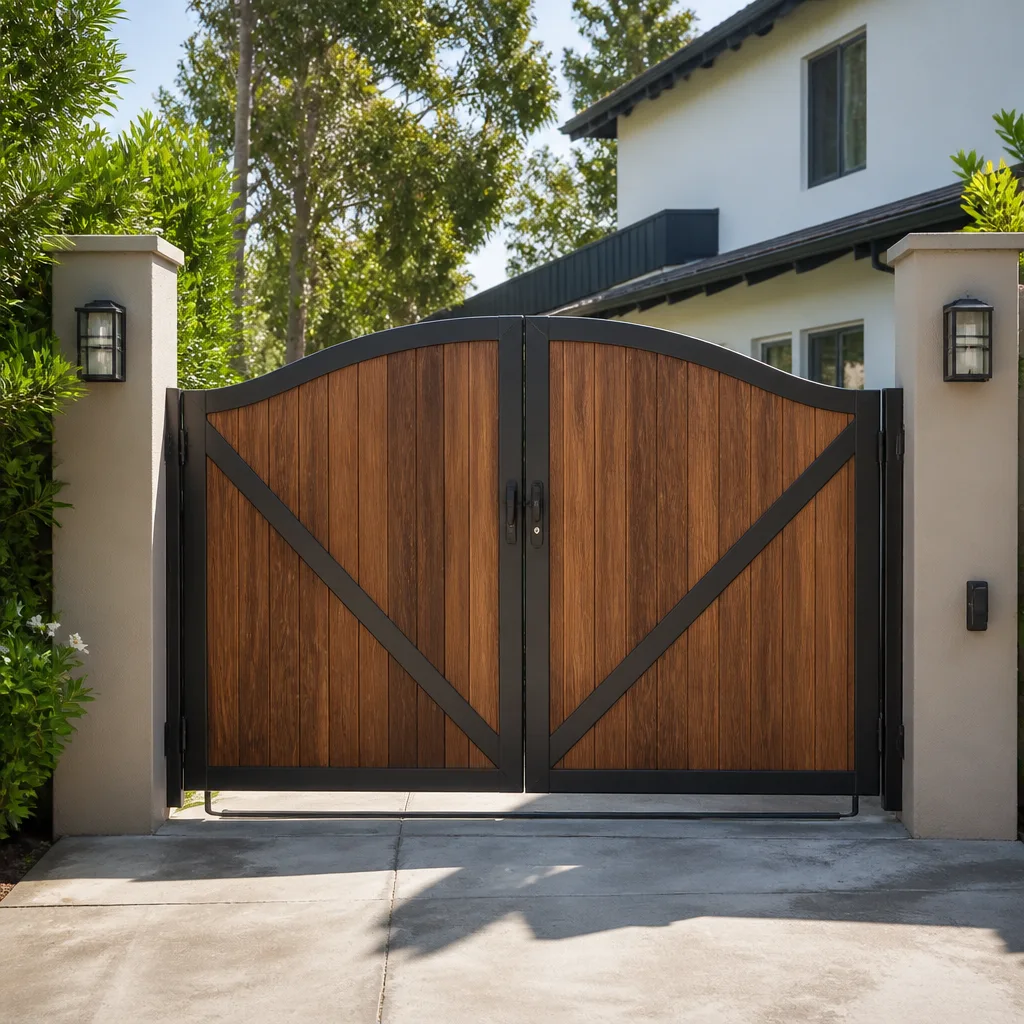 Wood & steel frame
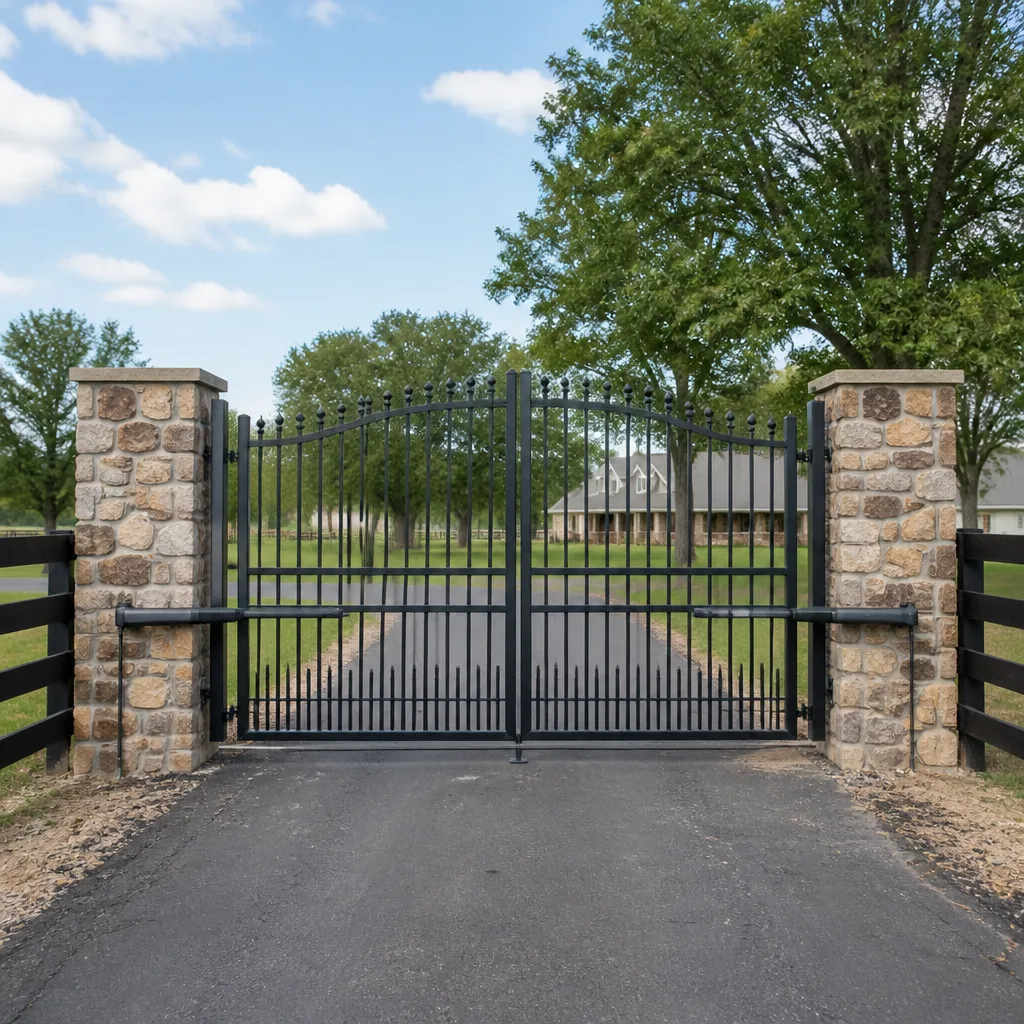 Farm & ranch
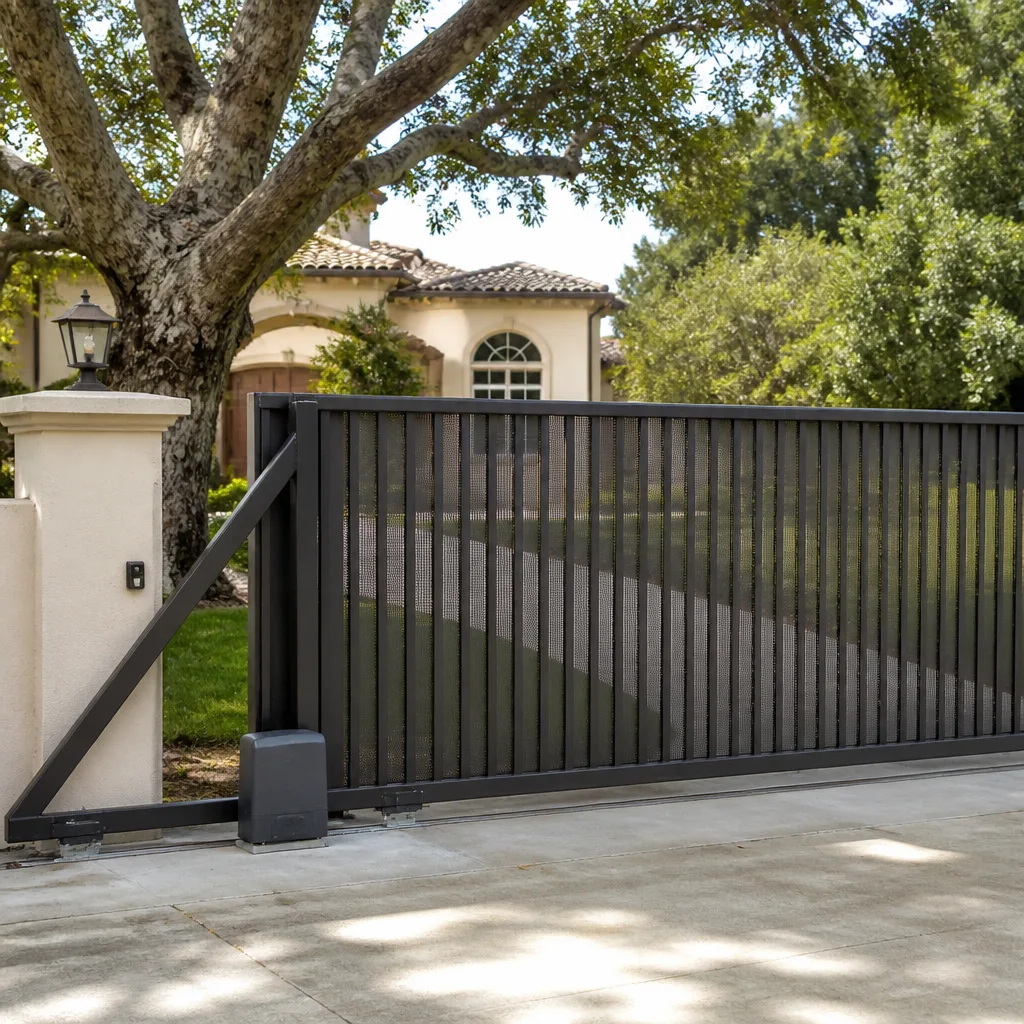 Sliding driveway gates
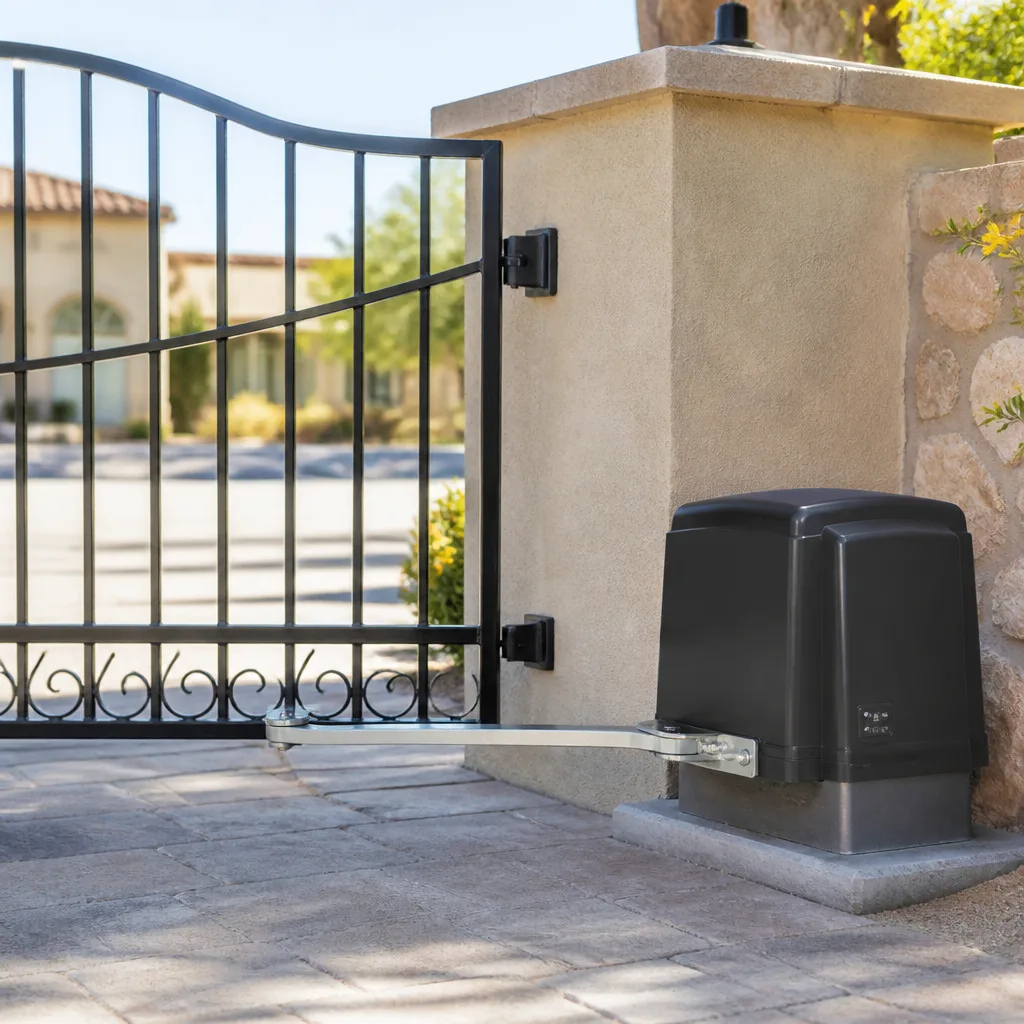 LiftMaster operators
Free on-site gate assessment - hinges, posts, and your LiftMaster or Nice gate operator checked before anything is quoted
The assessment is free and the quote is the invoice.
Get your free estimateGate Repair Permits, Codes & Inspections in NV: What You Need to Know
Here’s the thing most homeowners get wrong, and I don’t blame them: a gate that swings over a public sidewalk easement in North Las Vegas lives in a completely different regulatory category than the exact same gate sitting six inches back on private property. Same gate. Same hinge. Different rules. Most contractors won’t bring that up, because most contractors don’t want to slow the job down to check. In our experience, the vast majority of gate repairs never need a permit at all. But the exceptions are specific, they’re real, and they cost real money when you find out about them after a neighbor picks up the phone. This guide draws the line for Clark County so you know exactly where you stand before anyone touches your gate.
Quick Answer
In most of North Las Vegas and the rest of Clark County, repairing an existing gate in kind – welding a broken hinge, replacing a hinge post, swapping a gate motor, fixing a latch or a sagging frame – does not require a building permit. A permit becomes necessary when the work changes the gate’s footprint, height, or position, increases load on the structure, or involves a gate that sits within a public right-of-way or drainage easement. When in doubt, call the City of North Las Vegas or Clark County Building Department and ask them directly for your address. It’s a five-minute call that can save you weeks.
Styles & brands we work with
- Wrought iron
- Wood & steel frame
- Farm & ranch
- Sliding driveway gates
- LiftMaster operators
Table of Contents
- Which jurisdiction is your gate in – and why it matters
- The repair and modification thresholds that trigger a permit
- What “like-for-like repair” actually means
- HOA overlay rules that exist independently of city code
- Right-of-way encroachment for swing gates near sidewalks
- What a failed inspection really costs you
- How to verify the rules for your own address
- Permits for gate motors, operators, and access control
Which Jurisdiction Is Your Gate In – And Why It Matters
North Las Vegas is not a single set of rules. The city of North Las Vegas issues its own building permits, and many areas inside the city limits fall under City of North Las Vegas municipal code. But large stretches of unincorporated Clark County – including parts of the northern valley, pockets of the far northwest, and rural land out toward the Apex and Tule Springs edges – fall under Clark County Building Department jurisdiction instead. The two departments operate separate permit systems, separate plan reviewers, and separate inspection schedules.
The address you mail your mortgage bill to doesn’t always tell you which one applies. What tells you is the parcel, not the post office.
- Look up your parcel number on the Clark County Assessor’s site. It’s free.
- Match the parcel to the jurisdiction. The county assessor lists the taxing district, and that maps to the building authority.
- Call the right department before you call a contractor. Ask: “Does my address fall under city or county building jurisdiction for a fence and gate?”
- Write down the name of the person you spoke to, and the date. If it turns into a dispute later, that note matters.
In our experience, the most confusing address this happens to is a house on a county island surrounded by city – the kind of place where neighbors two doors down are in a different jurisdiction than you are. We’ve seen this crop up around North Las Vegas’s older neighborhoods off Las Vegas Boulevard North and in pockets out near the Speedway, where county parcels sit right next to city parcels. If you’re unsure, we can look it up with you. The gate doesn’t care about the boundary line, but the paperwork does.
The Repair and Modification Thresholds That Trigger a Permit
Clark County and the City of North Las Vegas both follow the International Residential Code as adopted locally, with amendments. The shorthand everyone repeats is “repair is exempt, replacement needs a permit.” That’s mostly true but too vague. Here’s the specific line we use.
Work that does not typically require a permit:
- Welding a broken hinge, corner, or bottom rail back onto the existing frame.
- Replacing a gate post set in the same location, same size, same embedment depth. (Permit-exempt as repair, but see the “like-for-like” section below for what can happen if you change that depth.)
- Swapping a failed gate motor for a new one in the same location, same class.
- Replacing latch hardware, striker plates, rollers, and hinges.
- Straightening a bent gate frame.
- Rehanging a gate onto a new hinge post at the original location.
Work that generally needs a building permit:
- Installing a new gate where there wasn’t one, or in a new location.
- Changing the width or height of the gate opening or the gate itself beyond the original design.
- Changing a gate from a fixed panel to an operating swing or slide gate.
- Relocating a gate closer to or farther from a property line.
- Installing a gate on a retaining wall, block wall, or other structure (the wall may need its own permit).
- Adding an automatic operator to a gate that was manually operated, if the gate design wasn’t originally for it.
- Adding electrical service to a gate for the first time – that one is an electrical permit, pulled separately from the building permit.
If you’re doing a genuine repair – the kind we handle every week in North Las Vegas – the odds are high that no permit is required. But if the job slips into “modification,” stop and check. Gate repair in North Las Vegas from a licensed company will usually catch this before it becomes a problem.
What “Like-for-Like Repair” Actually Means
Easily the most misunderstood concept we run into. “Like-for-like” doesn’t mean “we fixed the gate and it looks the same.” It means the material, dimension, embedment, and structural behavior of the replacement are all functionally equivalent to what was there before. A permit exemption usually hinges on that word “functionally.”
Here’s the trap. A homeowner calls because their gate post rotted out. Contractor shows up, digs out the old post (a 4×4 set 24 inches deep in concrete), and installs a heavier 4×6 post set 36 inches deep because “it’s stronger.” Sounds great. But the post is now doing a different structural job than the original design accounted for, the gate arm swing arc has changed, and depending on the jurisdiction you may now be in “modification” territory that a like-for-like repair would have avoided.
Where we see like-for-like claims blow up in North Las Vegas specifically:
- Older neighborhoods east of the I-15 where the original post was a small pipe post set shallow – matching it in kind is the whole point of the exemption.
- Gates installed by builders in the early 2000s with standard 6-foot wood or ornamental steel frames. That’s the design of record for those homes; repair should match it.
- Windscreen and privacy panels added later. If you add a mesh privacy panel to an existing gate, you’ve increased wind load, and that can push a “repair” into a “modification.”
In our experience, most repairs really are like-for-like. But when a homeowner asks “can you make it stronger while you’re in there?” – that’s the moment to slow down and figure out whether the answer is a repair or a modification. Those two ideas sound identical and are not.
HOA Overlay Rules That Exist Independently of City Code
Here’s the part that trips up even careful homeowners: your HOA rules and your municipal building code are two completely separate things. An HOA can’t override building code, but it can be stricter than code, and it can require things code never asks for. This matters because a gate repair can be perfectly legal under Clark County or North Las Vegas code and still be a violation of your CC&Rs.
Common HOA rules that come into play for gate work in North Las Vegas:
- Color, finish, and material restrictions. A replacement panel that’s the wrong shade of bronze, or a motor housing that isn’t on the approved color list, can be forced to come back out.
- Architectural review approval before any change visible from the street. Even a repair if the panel changes profile.
- Setback requirements from the property line that are stricter than what the city requires.
- Height limits that are sometimes lower than the zoning code allows.
- Prohibition on certain gate automation or access hardware that would affect HOA-owned walls or shared driveways.
When HOA rules and code conflict, code wins on safety and structural questions, HOA wins on aesthetic and use questions – and the HOA generally wins appeals because they own the covenant. Our advice: pull both sets of rules before anyone schedules work. The HOA architectural request form is usually online with your management company, and it might take a week to process. That’s worth knowing before the gate gets pulled out.
Right-of-Way Encroachment for Swing Gates Near Sidewalks
This is the North Las Vegas issue that almost nobody talks about until an inspector shows up. When your gate swings out over a public sidewalk, a public utility easement, or a drainage easement, you’re in a different regulatory world. That swing arc is technically a right-of-way encroachment, and it requires a revocable encroachment permit or an approved encroachment agreement, separate from any building permit.
Where the issue usually lives in North Las Vegas:
- Older neighborhoods with narrow front setbacks where gates swing toward the street.
- Homes bounded by sidewalks where a gate’s arc crosses the 5-foot public way.
- Corner lots where a side gate swings over a public walkway.
- Properties with a drainage easement along the property line (common in parts of the valley that flood in monsoon season).
How the encroachment process usually works:
- Determine if the gate’s arc actually crosses into the public way. Technically it’s the swing path, not the gate’s closed position, that matters.
- Contact the jurisdiction’s public works or right-of-way department – City of North Las Vegas or Clark County, whichever applies to your address.
- File for an encroachment agreement or revocable permit. Fee and timeline vary; assume weeks, not days.
- Include a site plan showing the property line, sidewalk, easement, and gate swing arc. This is what slows people down if they’re not ready for it.
- Comply with any conditions the engineer places on the permit – sometimes a “gate shall not swing into the public way during school hours” condition, or a requirement to convert to an in-swinging gate.
If you’ve had the same gate opening the same way for twenty years, this usually doesn’t come up unless you change anything about the gate. But if you replace it with a wider, taller, or in-swinging-to-out-swinging gate, the encroachment question becomes live again. We flag it early because a North Las Vegas homeowner finding out about an encroachment issue after work is done is a hard way to learn.
What a Failed Inspection Actually Costs You
Numbers make this real. We’ve watched homeowners go through both paths, and the difference is significant. Here’s the ballpark for the North Las Vegas and Clark County market in 2026 – these are ranges, not quotes, and every job is different.
- Permit pulled correctly up front: $75-$250 for the typical residential gate permit, inspection usually bundled into the fee, timeline typically 2-4 weeks from application to final inspection.
- Re-inspection fee after a failed inspection: $60-$150 per re-inspection, per jurisdiction.
- Contractor re-mobilization to fix what failed: $150-$400 depending on what was wrong.
- Timeline burn: 2-6 weeks added, sometimes more if the fix requires another inspection window and crew availability.
- DIY excavation of a post or footing that failed to meet depth: we’ve seen this come in at $600-$1,800 because the concrete has to be broken out.
- Forced tear-out of a non-compliant gate (rare, but happens when the encroachment was never addressed): $1,500-$4,000+ parts and labor to redo it correctly.
The math is simple: pulling the permit correctly on the front end is almost always cheaper than a failed inspection on the back end. When a permit applies, pull it. The inspection determines whether the job was done right – and for gates on a right-of-way, the inspector is going to look at the swing arc, the post footing, the frame, and the gate’s operating behavior, in that order.
How to Verify the Rules for Your Own Address
Don’t guess. Call and confirm. Here’s the sequence we walk every North Las Vegas homeowner through before we schedule work.
- Find your parcel number. Clark County Assessor’s site, searchable by address. Free.
- Identify your jurisdiction. City of North Las Vegas Building Department, or Clark County Building Department. The parcel page tells you which taxing district; a call to either department confirms.
- Ask specifically: “For a repair of an existing gate at [your address], do I need a permit?” Tell them it’s a repair, not a replacement.
- Ask about any easements on the property. You can request an easement report or look for recorded easements in your title docs; a phone call to the right-of-way department is often faster.
- Check your HOA CC&Rs and architectural rules. Most management companies will send you the current version by email.
- Write everything down. Department, person, date, what they said. If it changes later, you have a record.
That process will tell you exactly where you stand. It’s a couple of hours of homework – usually less. We’ve walked through it with customers in the morning and had the answer by afternoon.
Permits for Gate Motors, Operators, and Access Control
Automation adds a layer. In our work, the most common surprise is: adding a brand-new automatic operator to a gate that was manually operated often needs an electrical permit in addition to any building permit, and the electrical work itself must be done by a licensed electrician. That’s true in North Las Vegas city limits and in Clark County, though the details are worth confirming with the department.
What usually triggers a permit for automation:
- New electrical service run to the gate location – electrical permit, licensed electrician.
- New operator on an existing gate where the gate design wasn’t originally powered – building permit sometimes, and always worth the phone call to confirm.
- Adding safety edges, photo eyes, or a loop detector – generally not separately permitted, but must meet current code requirements.
- Access control systems (keypads, card readers, intercoms, video entry) – not usually separately permitted, but DKS or DoorKing units wired into an existing power source should be reset by someone who knows how the operator was originally configured.
This is where brand matters. A new LiftMaster or Mighty Mule operator on an existing gate is a straightforward swap when the gate was already automatic. A DoorKing unit tying into a shared commercial or HOA entrance is a different scope – usually planned, not same-week. If you’re weighing a gate motor and opener in North Las Vegas, expect measurement, quote, and scheduling, not a next-morning dispatch.
Common Mistakes to Avoid
- Assuming “no permit” because the neighbor’s gate repair didn’t need one. Neighbors can be in different jurisdictions, easements, and HOA overlays than you are. Check your parcel, not theirs.
- Replacing rather than repairing, to “make it stronger.” A heavier post, taller gate, or wider opening can flip a permit-exempt repair into a permit-required modification without anyone intending it.
- Ignoring HOA architectural review because the city already approved it. A city permit doesn’t cover HOA rules. Those live in a separate file, with a separate approver, and a separate timeline.
- Not checking for easements before an in-swing/out-swing change. Homes anywhere near a drainage way or public sidewalk – which is much of North Las Vegas – can trip a right-of-way encroachment question the moment the swing direction changes.
- Pulling a permit after the job is done. Retrofitting a permit to already-performed work is possible in some cases and miserable in all of them. Pull it before the first weld.
- Wiring a gate operator without an electrical permit. A homeowner can usually get away with a lot, but electrical work is the wrong place to test that theory.
- Letting a contractor start without a written estimate. The permit-required-or-not question is a great time to slow the job down and get the scope in writing.
See the difference
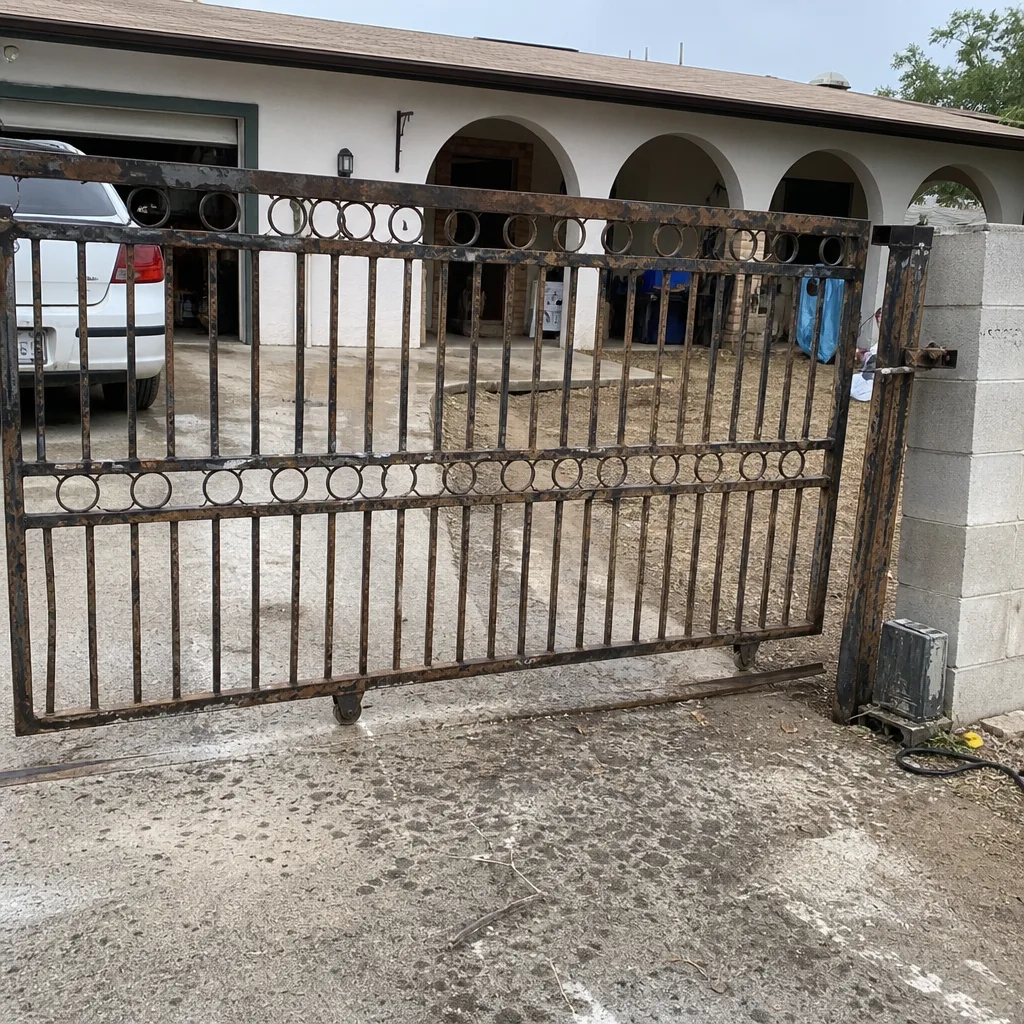 Before
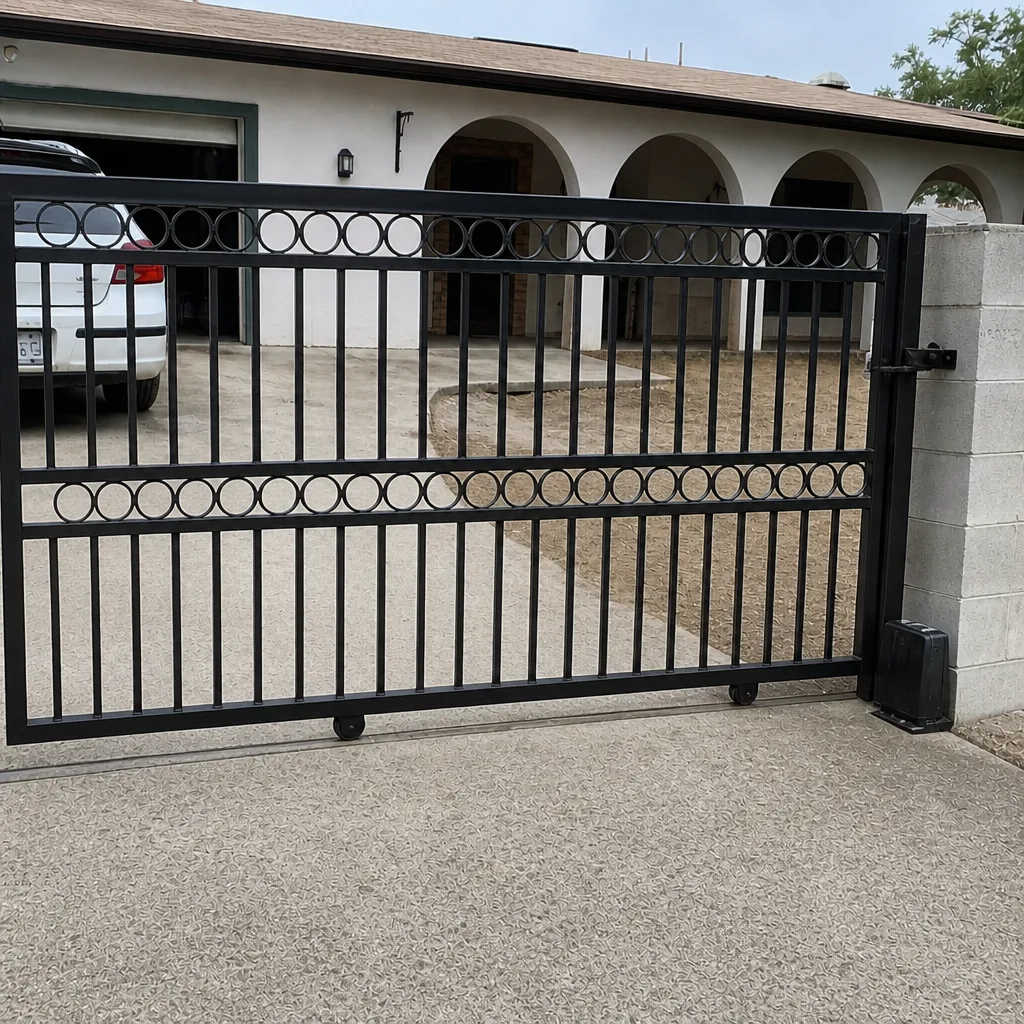 After
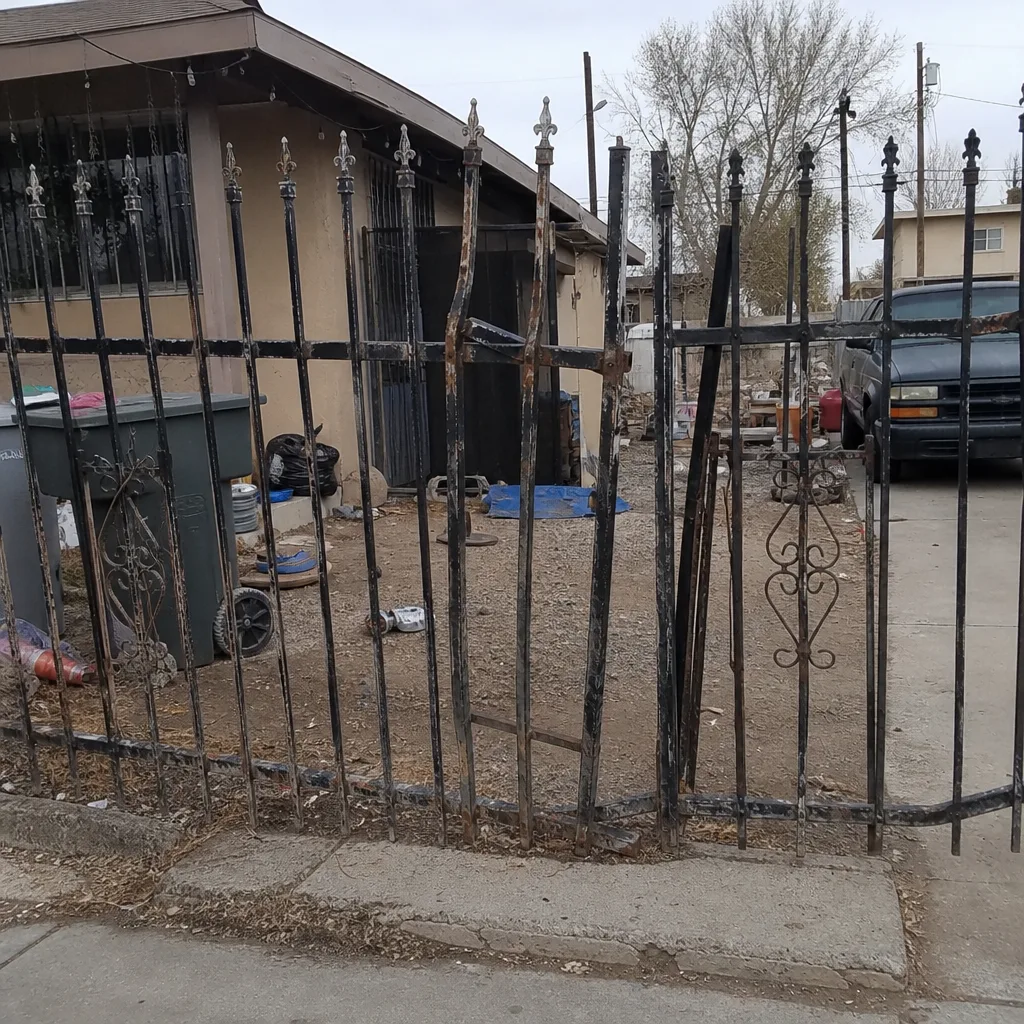 Before
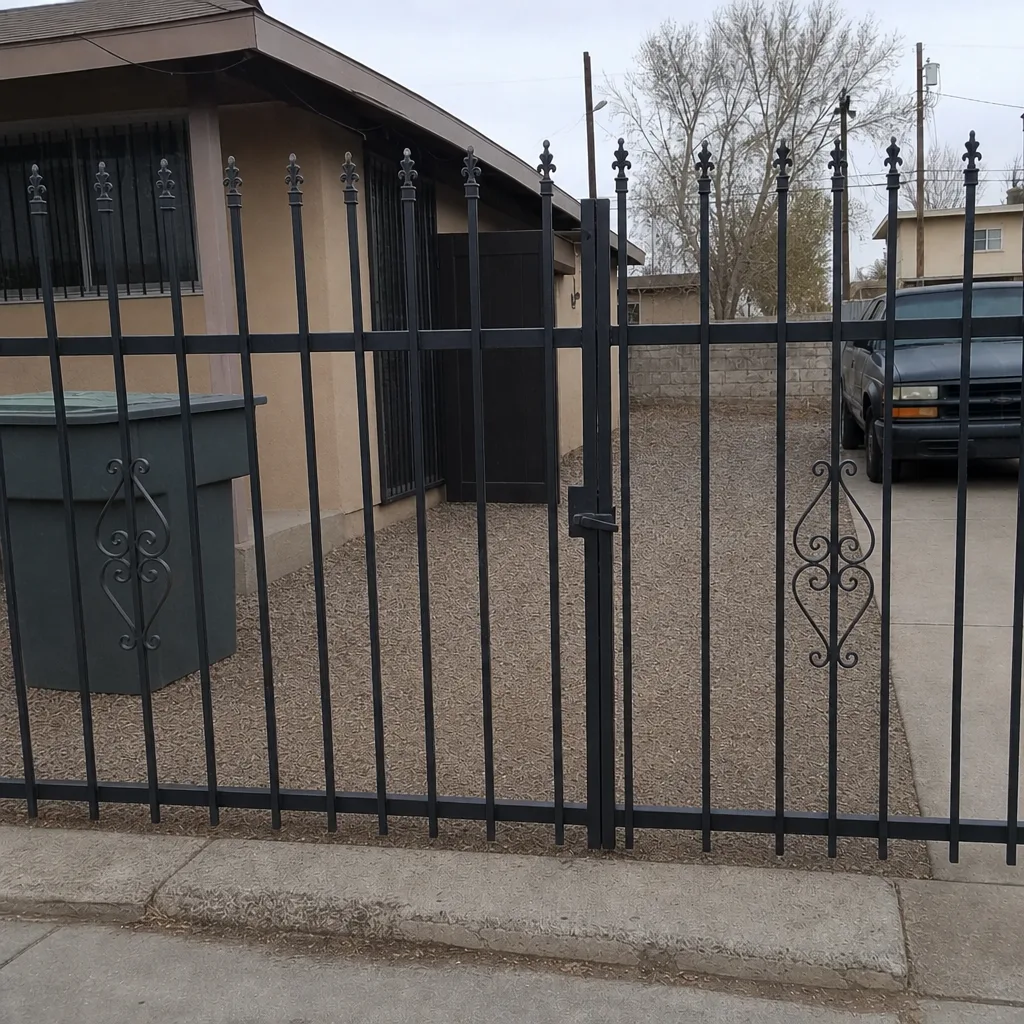 After
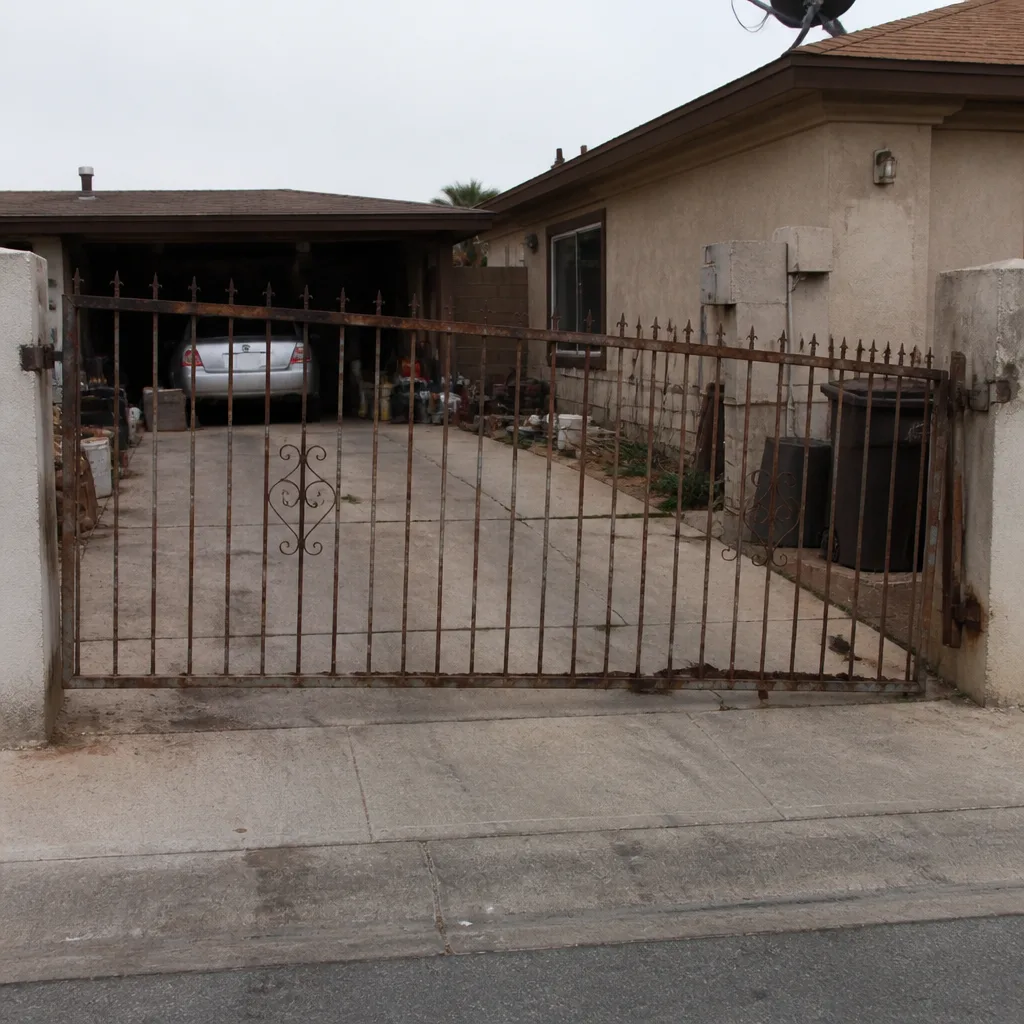 Before
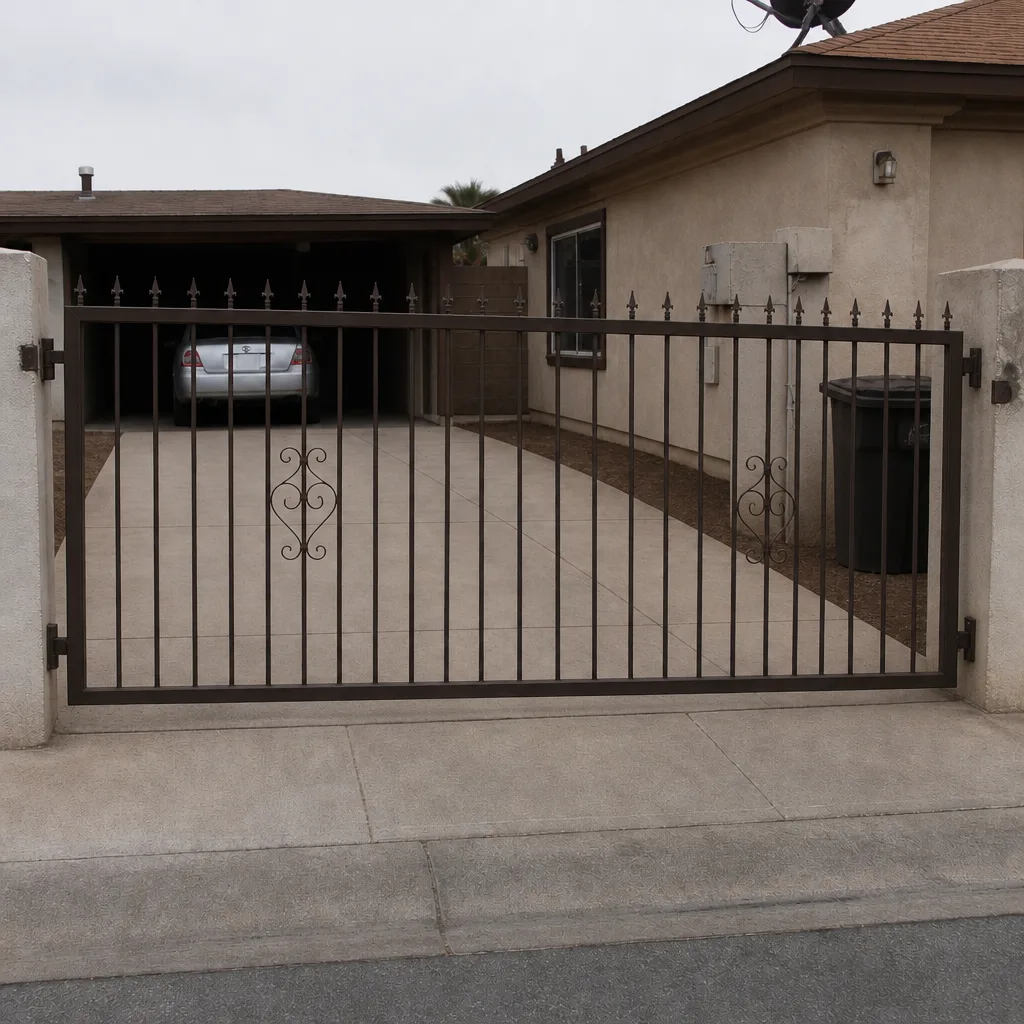 After
When to Call a Professional
Most gate repairs are straightforward, but here are the cases where you want a licensed company looking at it before a permit question gets tangled up with a structural one: a post that’s rotted through and set in concrete, a gate that’s pulling away from a block wall, a gate whose swing arc touches a public sidewalk, an operator that’s shorting out or tripping the breaker, or any gate that needs new electrical service. In our experience, those are the jobs where “repair” and “modification” sit close together and it’s worth a trained eye. Welding, cutting, and setting a post are also genuinely dangerous – a grinder in wet concrete, a 400-pound gate swinging free, and 220V at the operator are not the same thing as replacing a hinge. When in doubt, call. Gatewood Fence & Gate North Las Vegas offers free estimates in North Las Vegas – call (844) 761-9351. We answer the phone live, day or night.
Frequently Asked Questions
In most cases, no. Repairing an existing gate in kind – welding a hinge, replacing a post at the same location and depth, swapping a motor for one in the same class – is typically permit-exempt in both City of North Las Vegas and Clark County jurisdiction. A permit becomes necessary when the work changes the gate’s size, location, height, or structural load, when the gate sits in a public right-of-way, or when new electrical service is involved. When in doubt, call the building department for your address and confirm. Then call us at (844) 761-9351 for a free estimate on the repair itself.
Look up your parcel number on the Clark County Assessor’s site and match the taxing district to the building authority. The assessor lookup is free. Then call the City of North Las Vegas or Clark County Building Department and confirm which one issues permits for your address. Write down the answer and the date you called. If your parcel is unincorporated Clark County surrounded by city limits, this is the single most important step before you schedule work.
Nothing good. Worst case, you’re required to tear out the work and redo it to code, pay re-inspection fees, and face fines. Even a small skipped permit can complicate a future home sale if the buyer’s inspector flags the gate and the county has no record of a permitted install. In our experience, the paperwork is a couple hundred dollars when handled up front and a couple thousand when it gets handled after the fact. Call (844) 761-9351 – we’ll help you figure out which permits, if any, your job needs.
Sometimes. Swapping a failed operator for a new one of the same class is usually permit-exempt. But if you’re adding electrical service to a gate that had none, or automating a gate that was manually operated, expect at least an electrical permit and possibly a building permit. Always use a licensed electrician for the power run. Call us at (844) 761-9351 and we’ll walk you through what your gate needs before we schedule.
Yes, in some cases. HOAs are governed by their CC&Rs, which can be stricter than city code and independent of it. A repair that’s legal under Clark County or City of North Las Vegas code can still violate an HOA rule about color, material, height, or architectural review. Pull your HOA architectural rules and request approval before work starts if the panel changes in any visible way. If it’s a same-material repair with no appearance change, HOAs usually don’t require review – but confirm.
Re-inspection fees typically run $60-$150 per visit, and re-mobilizing to fix what failed usually adds $150-$400 in labor, plus a timeline delay of two to six weeks. Pulling the permit correctly from the start is usually $75-$250 – and the job passes the first time. The math almost always favors doing it right up front. Call (844) 761-9351 for a free second opinion on any written estimate you’ve already received.
The Bottom Line
Most gate repairs in North Las Vegas don’t need a permit. The exceptions matter: anything that changes the gate’s size, location, height, or structural behavior; any gate within a public right-of-way or drainage easement; and any new electrical service to a gate. Add HOA overlay rules to the picture, because they can be stricter than city code and get decided by a different office entirely. Check your parcel, call the right building department, and pull the permit before the first weld – not after. If a permit applies, the inspection is on your side; it exists to tell you the gate was done right. And if you’re not sure where your job falls on that line, we’ll help you find out. Written by the team at Gatewood Fence & Gate North Las Vegas.
Get a Free Estimate
Whether you’re looking at a hinge repair, a new gate installation, or a permitted modification in North Las Vegas, the team at Gatewood Fence & Gate North Las Vegas will walk the job with you, tell you straight whether a permit applies, and give you an upfront written price before any work starts. We weld on-site, we answer the phone live around the clock, and every job carries our 90-Day Done Right Promise in writing. Stand on the Gatewood Fence & Gate North Las Vegas home page to see the full service list, or go deeper on gate installation in North Las Vegas when you’re ready to plan a new gate. Call (844) 761-9351 for a free estimate – no trip charge inside the county, $40 off any repair over $200, and a permanent 10% discount for seniors and veterans.