
Last updated November 17, 2026
 Wrought iron
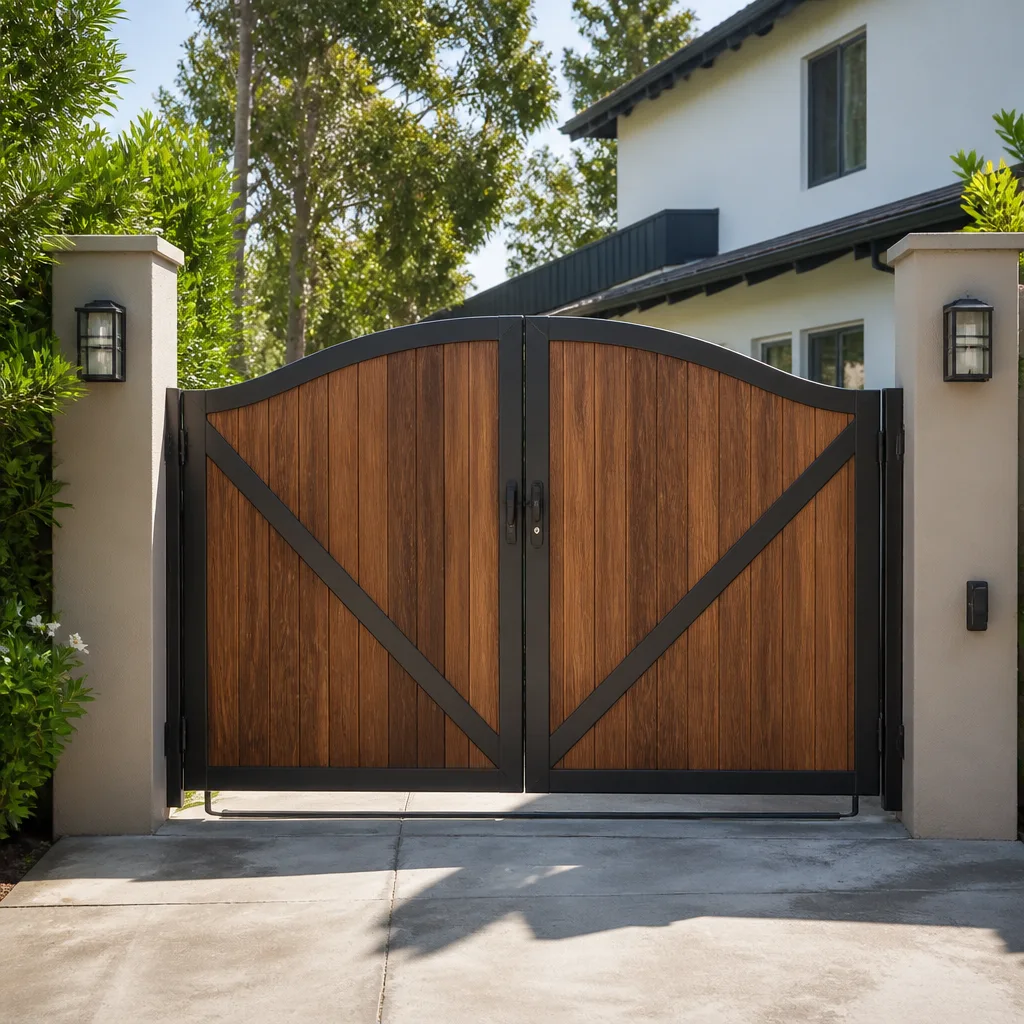 Wood & steel frame
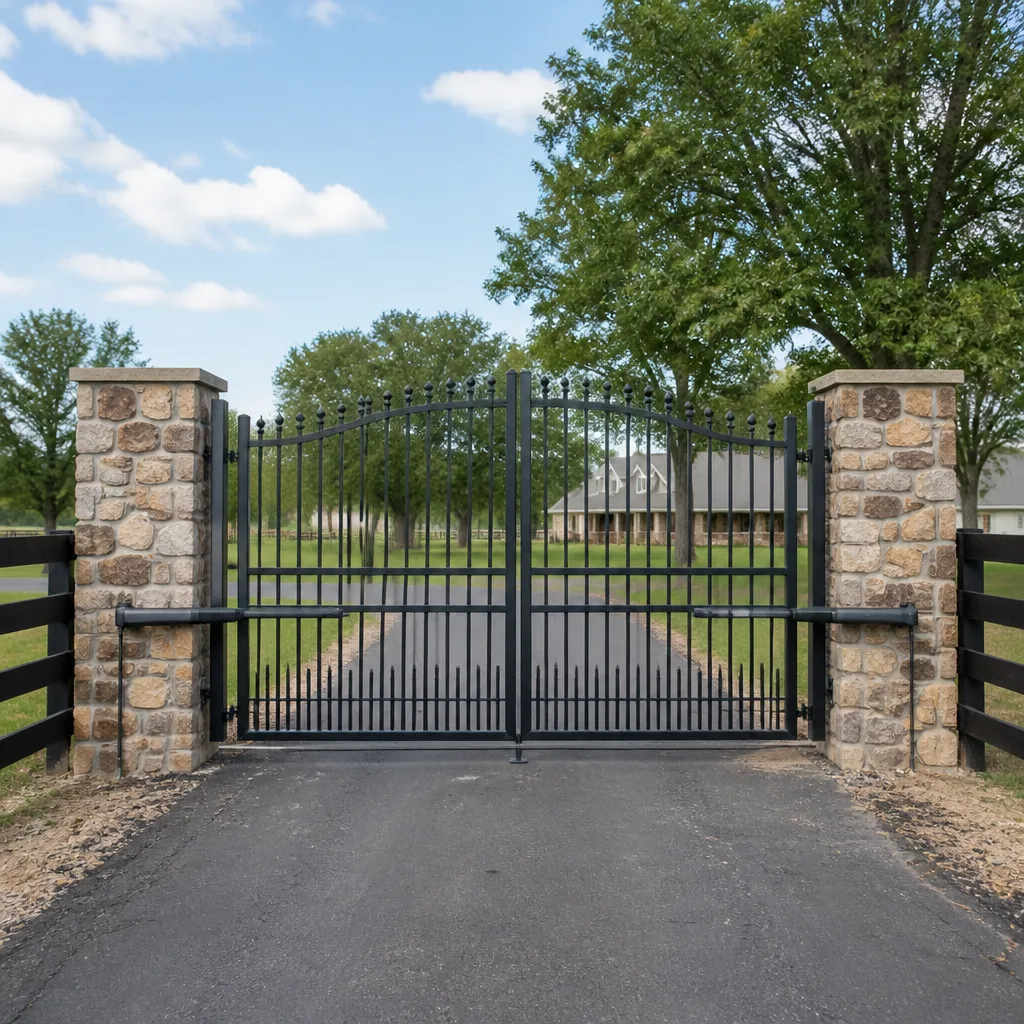 Farm & ranch
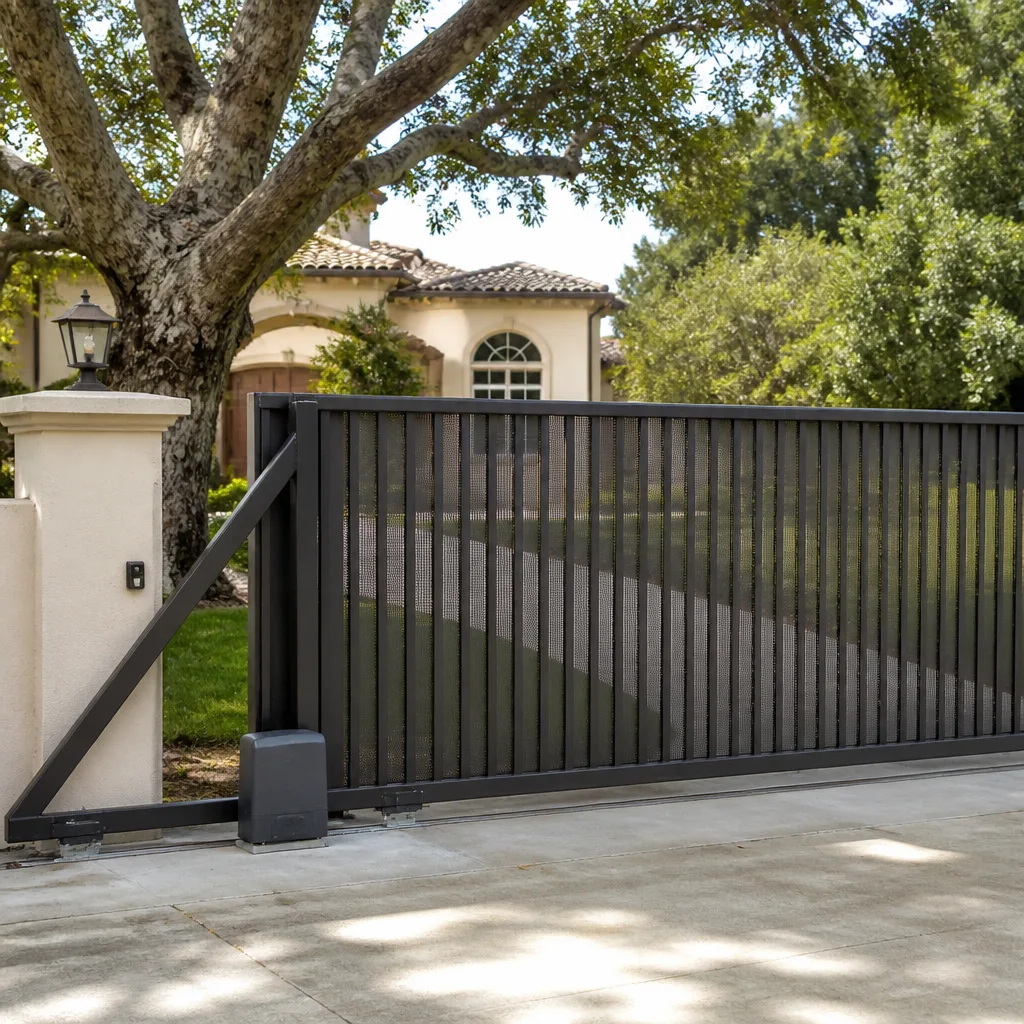 Sliding driveway gates
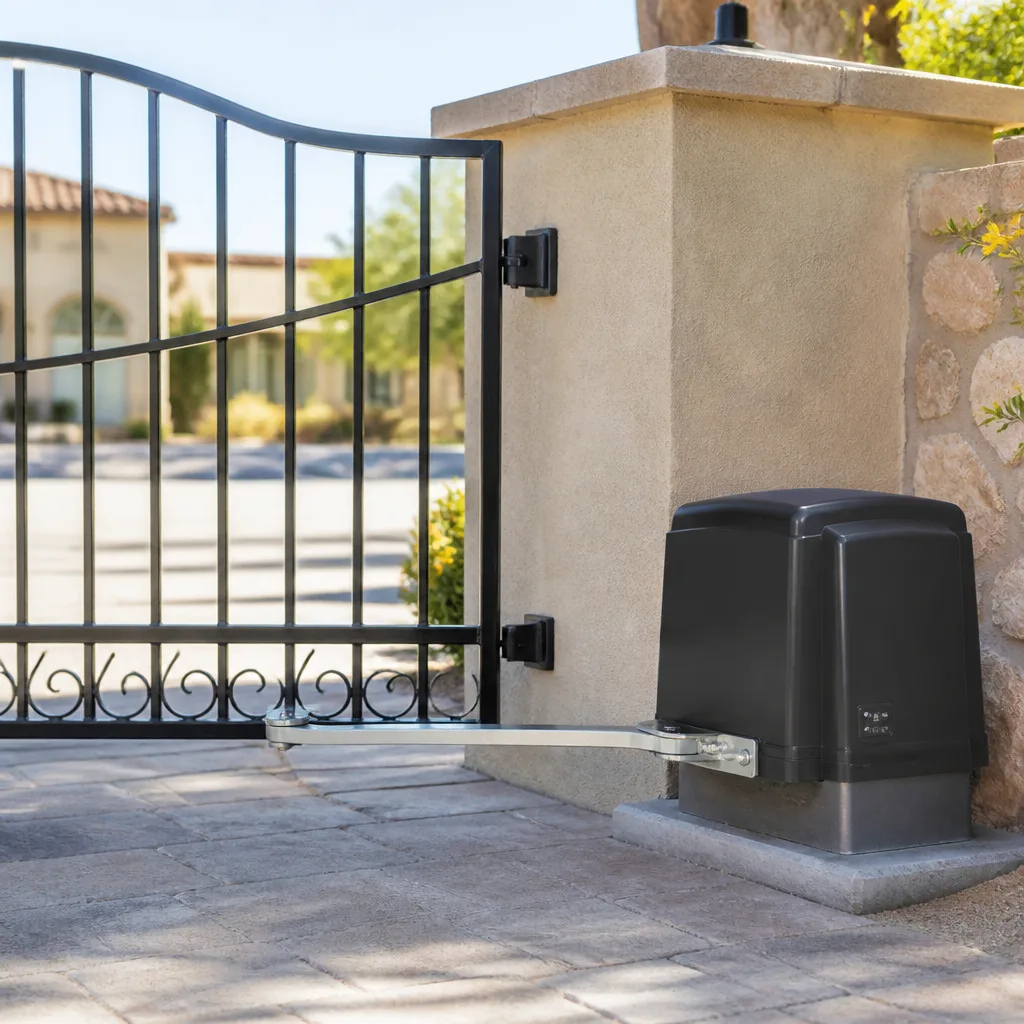 LiftMaster operators
Free on-site gate assessment - hinges, posts, and your LiftMaster or Nice gate operator checked before anything is quoted
The assessment is free and the quote is the invoice.
Get your free estimateGate Repair Warning Signs Every Homeowner Should Know
The gate that swings a little slow in December and then stops cold in January didn’t fail in January. It failed in October. The cold just finished what the summer heat started, and there were probably four or five things that told you so if you knew what to look for. North Las Vegas gates live a hard life: triple-digit summers that cook motors and dry out wood, monsoon gusts that rack the frame, and desert grit that works its way into every hinge pin. This guide walks you through the sounds, the visual checks, and the behavior patterns that tell you a gate is on its way out, so you can fix a small thing now instead of a big thing at midnight.
Quick Answer
The most reliable warning signs of a failing gate are grinding or squealing at the hinge and roller points, a gate that drags or leaves tire marks on the driveway, a post that’s loose at grade, a motor that strains or reverses on its own, and a safety sensor that fails to stop the gate under load. Catching any one of these early usually means a weld, a hinge, or an adjustment instead of a full motor replacement. In our experience across North Las Vegas, the gates that fail suddenly were showing at least three of these signs for weeks.
Styles & brands we work with
- Wrought iron
- Wood & steel frame
- Farm & ranch
- Sliding driveway gates
- LiftMaster operators
Table of Contents
- What the Sounds Are Telling You
- The Visual Checks Most Homeowners Never Make
- How to Test Your Gate’s Safety Sensor
- Motor Failure Versus Structural Failure: Telling Them Apart
- Why a Gate That “Works Fine” Is Still Costing You Money
- How North Las Vegas Heat and Wind Age a Gate
- A Seasonal Walk-Around Checklist
- When to Call a Professional
What the Sounds Are Telling You
A gate makes noise. That’s normal. What matters is which noise, because each one narrows the problem to a different component. When someone calls us and says “it’s making a weird sound,” the first thing we ask is what kind. Nine times out of ten the answer points straight at the fix.
Grinding
Grinding almost always means metal-on-metal contact that shouldn’t be happening. Common culprits: a dry or seized hinge pin, a roller track that’s worn through its coating, or a gate that’s dropped just enough that the frame is rubbing the post. On a sliding gate, grinding often traces to a worn trolley wheel that’s flat-spotted. Ignore it and the pin or wheel will eventually seize or snap.
Clicking
Clicking usually comes from the operator, not the gate. A rhythmic click when the motor starts or stops can mean a relay in the control board is failing, a gear is missing teeth, or a limit switch is mis-set so the gate is hitting its stop and bouncing. If you hear clicking and the gate stutters, that’s a motor or control problem, not a hinge problem.
Squealing
Squealing is the sound of friction crying for lubricant. A high-pitched squeal at the hinge or roller is usually a dry bearing. On swing gates with older hinges, it can also be a sign the hinge is binding because the gate has shifted and is now loading the hinge unevenly. Grease quiets it for a week or two; if the squeal comes back fast, the hinge is worn and needs attention.
Rattling or Clunking
A rattle or clunk when the gate moves is often loose hardware: a bracket that’s worked its way loose, a bolt backing out of the post, or a striker that’s out of alignment. Left alone, a rattle turns into a broken bracket, and a broken bracket means the gate is hanging on less than it should.
The Visual Checks Most Homeowners Never Make
You don’t need to be a gate tech to spot trouble. You need to know where to look. Here are the four spots we check first on any gate in North Las Vegas, in order.
- The bottom of the post at grade. Look for cracks in the concrete footing, rust stains bleeding out of the post, or soil pulled away from the base. Desert soil shifts with irrigation cycles and monsoon runoff, and a post that’s moving at grade will eventually drag the whole gate out of square. A gate sags in the hinge post, not in the middle, and that is where we start every inspection.
- The inside corners of the frame. Cracks starting at a welded corner are stress fractures. They start small and grow every time the gate swings. On steel gates, look for rust blooming out of a weld seam, which often means the weld is already failing underneath the paint.
- The hinge pin shoulders. If the pin has worn a visible groove into the hinge barrel, or the pin is riding up out of its seat, the hinge is on its way out. Worn hinge pins are the single most common cause of a gate that suddenly drags.
- The operator arm and its mounts. Look for bent arms, loose bolts at the mounting bracket, or a chain (on sliding gates) that’s sagging or riding off its sprocket. A bent opener arm is often the first sign the gate itself is out of alignment.
If you find any two of these in a single walk-around, it’s worth having someone look at it before the next wind event. A gate repair specialist can usually tell you in ten minutes whether you’re looking at a weld, a hinge, or a bigger alignment problem. In North Las Vegas, our gate repair service starts every job with exactly this kind of walk-around.
How to Test Your Gate’s Safety Sensor
This is the check almost nobody makes, and it’s the one that matters most. A gate’s entrapment sensor is designed to stop and reverse the gate when something blocks its path. But sensors fail quietly. A sensor that hasn’t been tested under load may be reading “clear” no matter what’s in the way.
Here’s how to test it safely, without putting yourself in the path of the gate:
- Set the gate in motion, then place a sturdy object (a trash can, a cardboard box, or a broom handle laid across the path) in its way at the point where the gate leaf closes.
- Watch whether the gate stops and reverses when it contacts the object, or whether it pushes the object aside or stalls against it. A properly working sensor reverses the gate within a second or two. A failing sensor lets the gate push against the object or stop dead without reversing.
- Repeat the test at the open limit, not just the close limit. Many sensors are only tested on the closing cycle, but a gate that doesn’t reverse while opening is just as dangerous.
- Repeat the test once a month, or any time the gate sounds different than usual.
If your gate doesn’t reverse when it hits the object, stop using it until it’s checked. This is one of the few gate problems where a delay can genuinely hurt someone. Sensors on LiftMaster and FAAC operators are the most common we see on residential gates in North Las Vegas, and both are straightforward to test and replace, but a sensor that’s misaligned or has a dirty lens will fail the test even when the operator itself is fine.
Motor Failure Versus Structural Failure: Telling Them Apart
A gate that suddenly stops working could have a motor problem or a structure problem, and they look more alike than you’d think. Getting the diagnosis right saves you from replacing an operator that was never the problem, or from welding a frame that was fine all along.
Signs it’s the motor or operator:
- The gate moves freely by hand with the operator disengaged, but not when the operator is engaged.
- The operator hums, clicks, or beeps but doesn’t move the gate.
- The gate reverses randomly, stops partway, or only works intermittently.
- The remote works sometimes and not others, or the keypad has begun to fail.
Signs it’s the gate’s structure or hardware:
- The gate drags on the ground or on the driveway even when you push it by hand.
- The gate is out of square (measure both diagonals; if they don’t match, the frame has racked).
- A hinge pin is loose, a weld has cracked, or the gate no longer swings in a straight arc.
- The post at grade is loose, rusted through, or has shifted out of the concrete.
The tell is almost always in how the gate moves by hand. If it’s smooth and easy with the operator off, the operator is the suspect. If it drags, binds, or hangs unevenly, the gate is the suspect and the operator is just the messenger. Fix the panel without the post and you’ll fix it twice, so we always confirm the frame and hinges are sound before touching the motor. That’s the same repair-first logic behind our gate motor and opener service, and it’s why we keep a full set of gate parts on hand rather than swapping whole units.
Why a Gate That “Works Fine” Is Still Costing You Money
A gate that leaves tire marks on the driveway is not working fine. It’s working just enough. Those marks are the leading edge of a gate that’s dropped, out of square, or running on a sagging hinge, and they’re a warning that the gate is doing damage every time it cycles.
Here’s what’s actually happening: the gate has dropped by a quarter inch or so, or the hinge has worn enough that the leaf now hangs lower than it should. Every time it swings, the bottom edge grazes the concrete. The friction does two things. First, it makes the operator work harder, which shortens motor life. Second, it grinds a groove into the concrete, which is a permanent scar on your driveway and increasingly hard to ignore.
By the time you can see the groove, the gate has usually been dragging for weeks. In our experience, homeowners in North Las Vegas often notice the marks before they notice the gate is slow, because the driveway is what they see getting out of their cars. If you’re seeing marks, the gate needs a hinge adjustment or a post repair, not a new operator. Left alone, the drag gets worse, the operator eventually fails under the extra load, and you’re looking at a repair that costs several times what a hinge adjustment would have.
How North Las Vegas Heat and Wind Age a Gate
Gates fail differently in different climates, and North Las Vegas puts a specific kind of wear on them. Knowing what to watch for here saves you from surprises.
Heat and sun. Metal expands and contracts across a 60-degree swing between a July afternoon and a January morning. Those cycles work on every weld and every fastener. Welds that were sound five summers ago can develop hairline cracks, and painted steel can blister and let moisture in under the paint film. Operators sit in full sun on many residential gates here, and control boards are rated for a temperature range that a black metal housing in July can push past. If your operator lives in direct afternoon sun, it’s living a harder life than the spec sheet claims.
Wind. Monsoon gusts are the single biggest cause of sudden gate damage in North Las Vegas. A gate that’s slightly out of alignment catches wind like a sail, and the extra load goes straight into the hinges and the operator. After a wind event, walk the gate before you cycle it: look for bent hardware, a shifted post, or a frame that’s visibly racked.
Dust and grit. Desert dust works its way into hinge pins, roller tracks, and operator chains. It’s abrasive, and it accelerates wear on any moving part that isn’t kept clean and lubricated. A quick monthly wipe-down of the moving hardware is one of the cheapest maintenance habits you can build.
If you’re installing a new gate in this climate, the hardware matters as much as the gate. Our gate installation service plans for sun exposure and wind load from the start, rather than treating them as an afterthought.
A Seasonal Walk-Around Checklist
Ten minutes, twice a year, catches most of what we find on a repair call. Do this walk-around in spring before the heat sets in, and again in fall before the first cold snaps. Here’s the list we’d give a neighbor.
- Push the gate open and closed by hand (operator off) and feel for drag, bind, or uneven resistance.
- Look at the bottom of every post at grade for cracks, rust bleed, or pulled-away soil.
- Check the inside corners of the frame for new cracks or rust blooming from welds.
- Wiggle every hinge pin and look for grooves worn into the hinge barrel.
- Run the entrapment sensor test described above, on both the open and close cycles.
- Inspect the operator arm, chain, and mounting bolts for bends, sag, or loose hardware.
- Listen for grinding, clicking, squealing, or rattling, and note which one and where.
- Look at the driveway under the gate for tire marks, grooves, or fresh scrape marks.
Write down anything that’s changed since the last walk-around. A gate that’s “always made that noise” is fine; a gate that’s started making a new noise is not. That difference is the whole point of the checklist.
Common Mistakes to Avoid
- Lubricating a grinding hinge and calling it fixed. Grease quiets the symptom but doesn’t repair the worn pin. If the grind comes back within a month, the hinge is worn and needs replacement, not more grease.
- Replacing the operator before checking the gate. A motor that’s straining is doing what it’s told, just against a gate that’s dragging. Diagnose the gate first, then the operator. In North Las Vegas, we see this swapped-order guesswork more than any other single mistake.
- Skipping the entrapment sensor test. The sensor can fail without any outward sign. Testing it monthly is the only way to know it’s working. This is a safety check, not an optional one.
- Ignoring tire marks on the driveway. Those marks mean the gate is dragging, and dragging means the operator is working harder than it should. A hinge adjustment now prevents a motor replacement later.
- Letting a loose post ride. A post that’s moving at grade will slowly pull the whole gate out of alignment, and by the time it’s obvious, you’re looking at a post reset instead of a hinge adjustment.
- Patching a weld without checking for rack. If the frame is out of square, a fresh weld will just crack again under the same load. Measure both diagonals before welding anything.
- Assuming a “big name” operator means a reliable gate. The operator is one part of the system. Hinges, posts, and alignment matter just as much, and a great motor on a sagging gate will still fail early.
See the difference
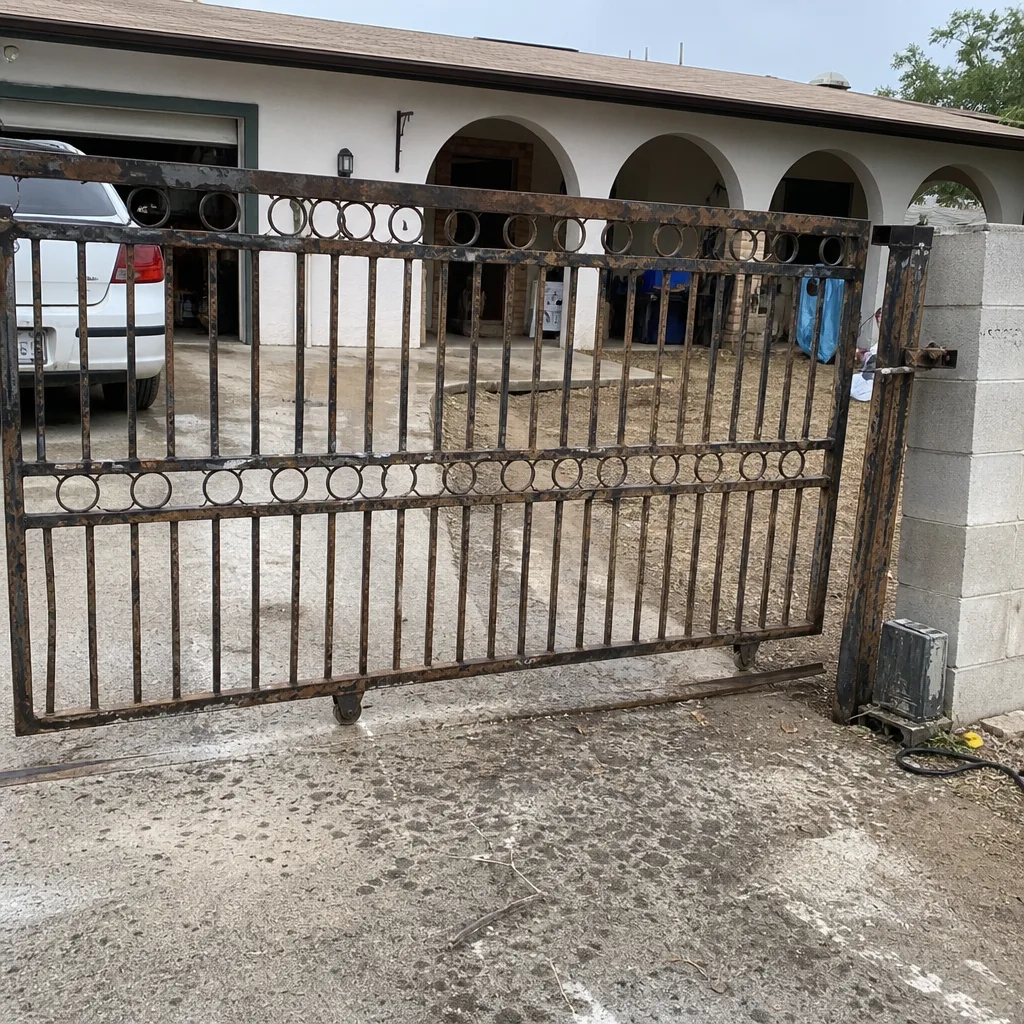 Before
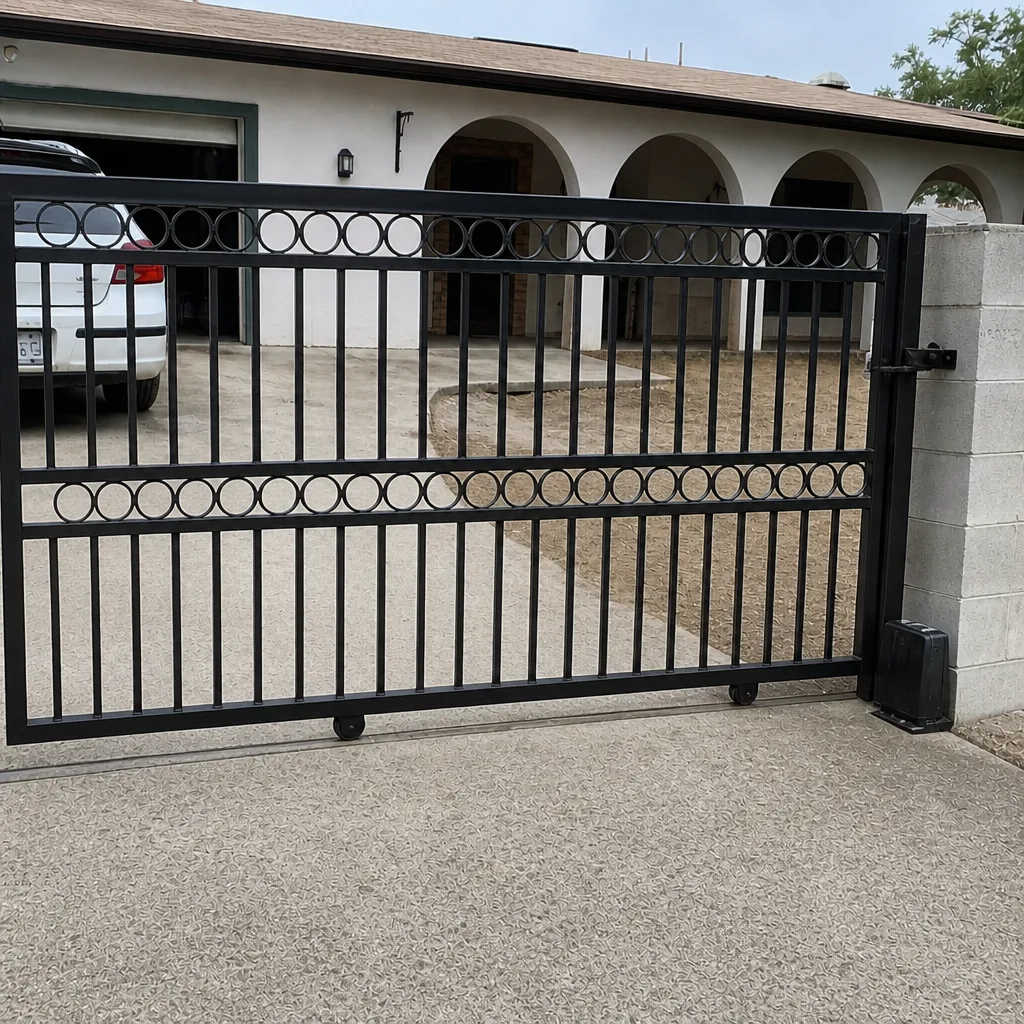 After
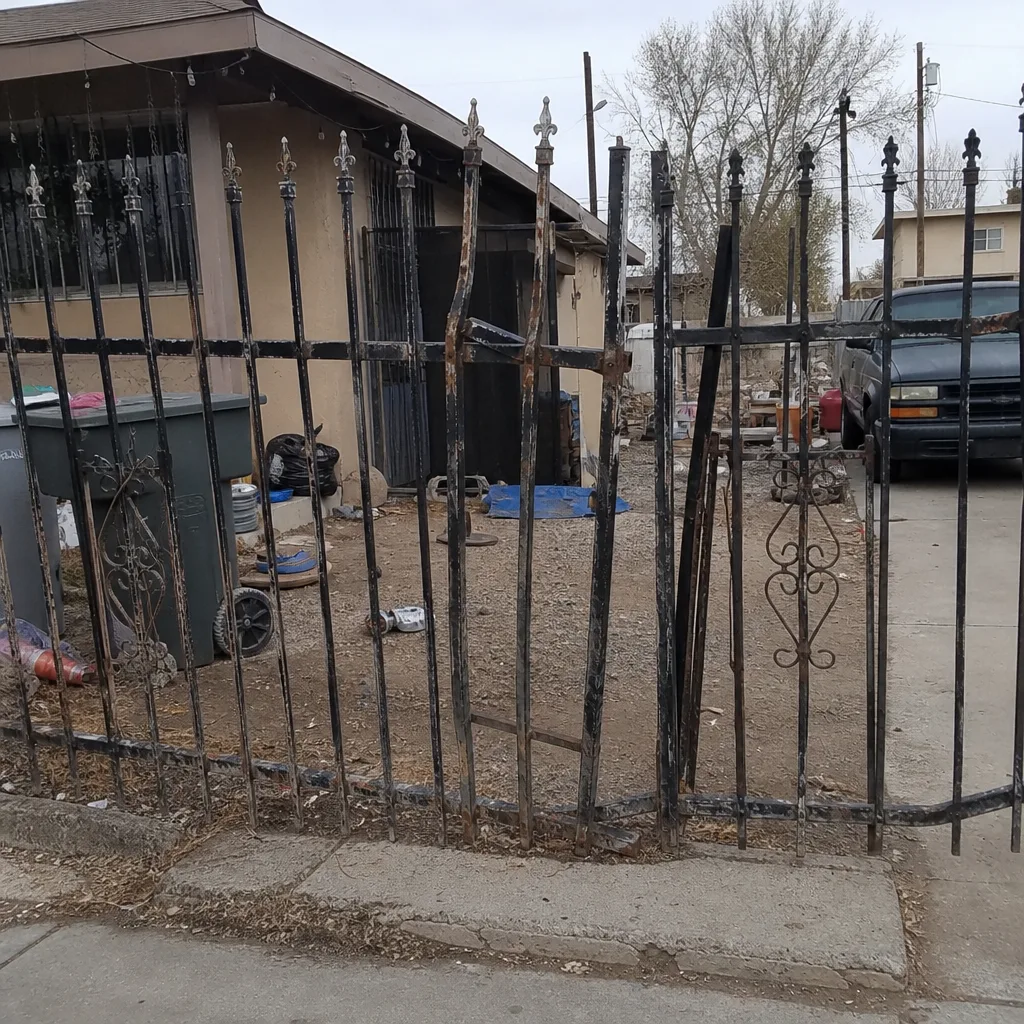 Before
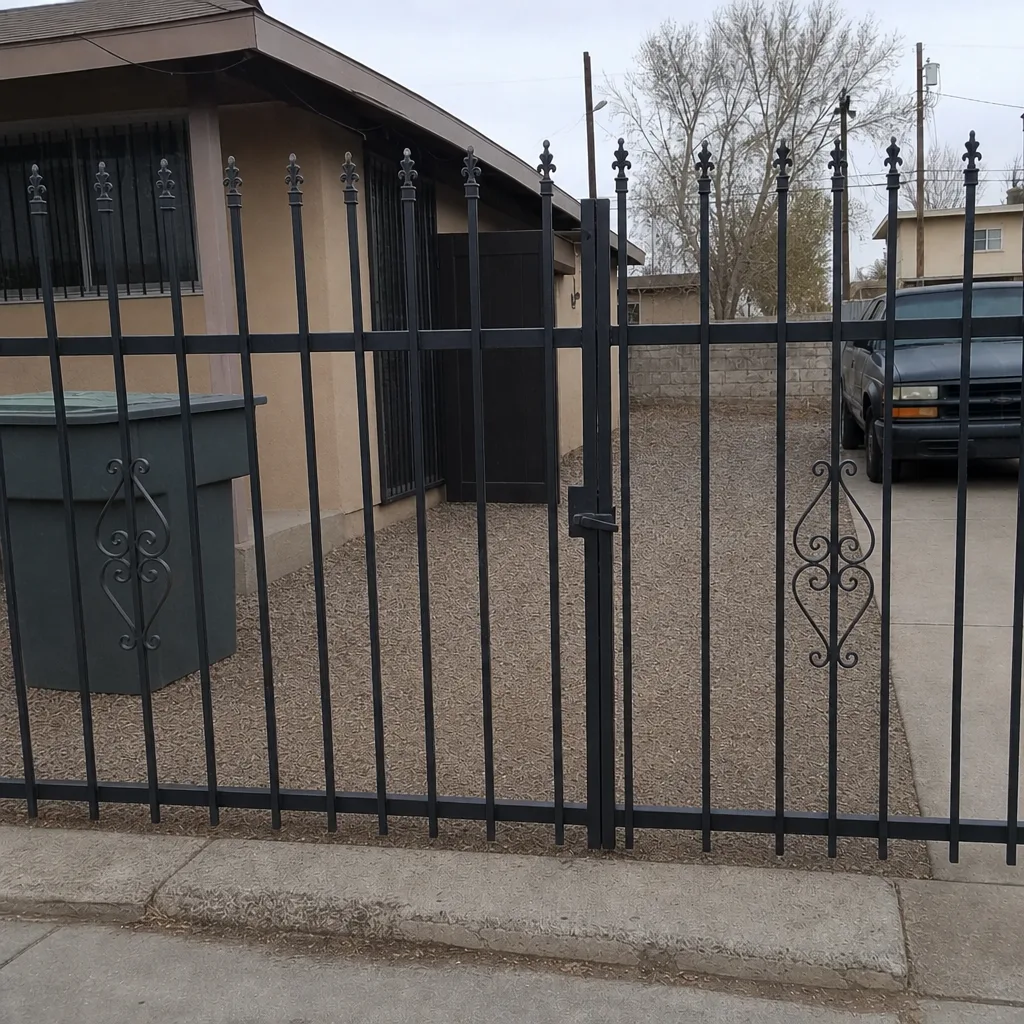 After
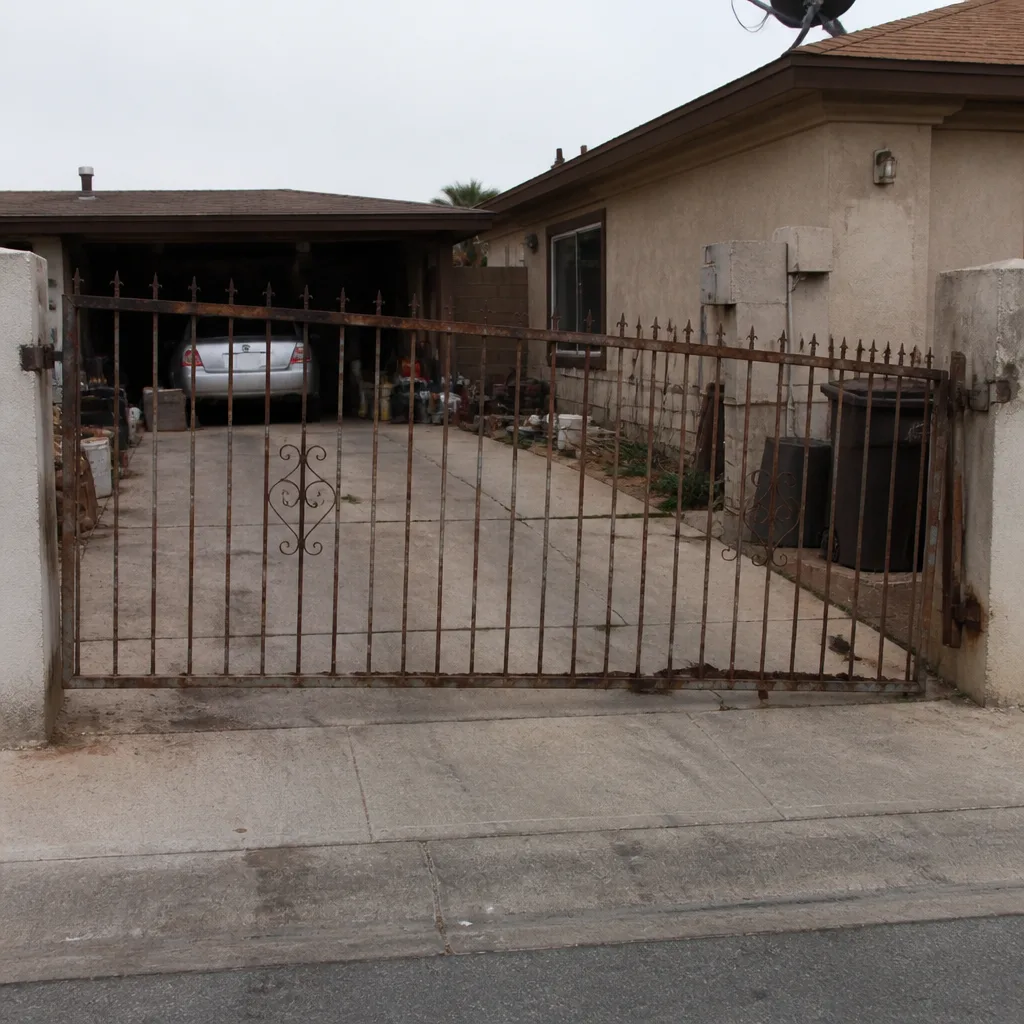 Before
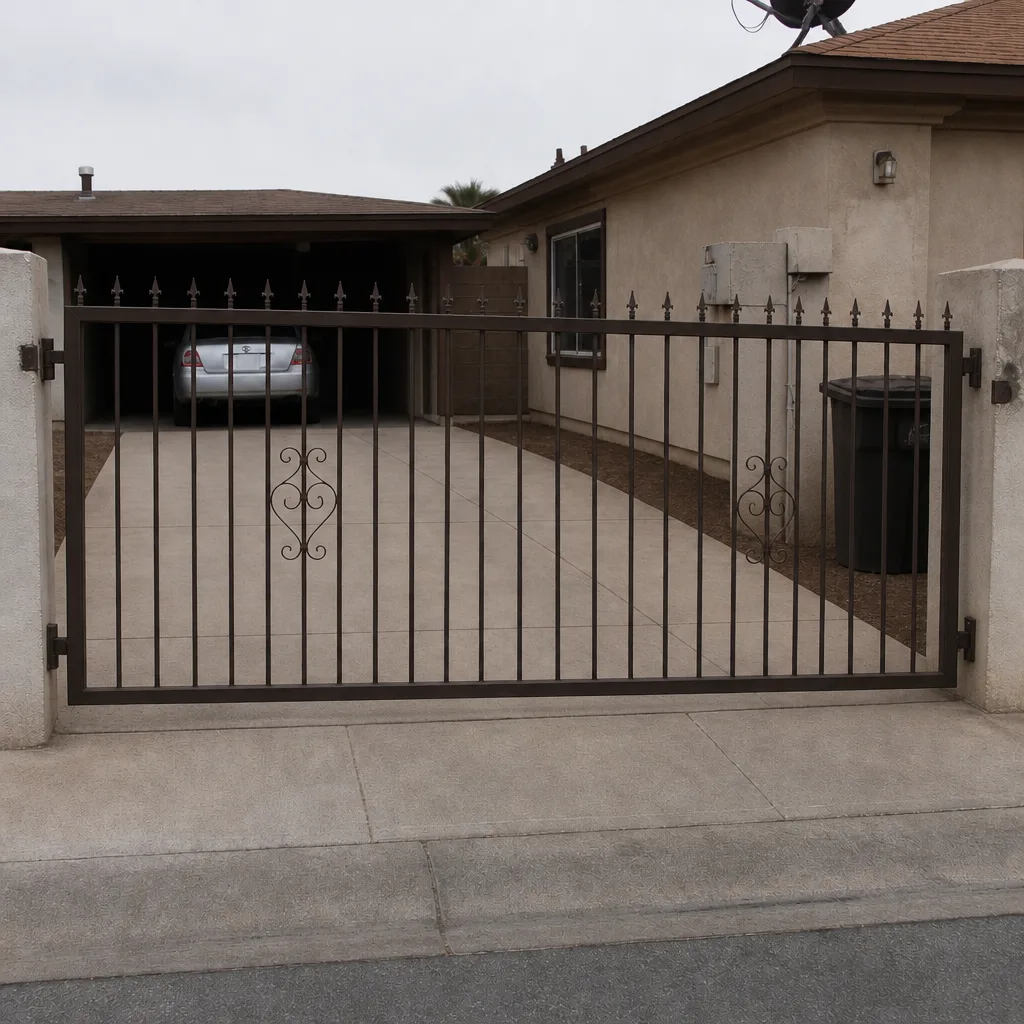 After
When to Call a Professional
Some checks you should do yourself, and some you shouldn’t. Call a professional if you find a cracked weld, a hinge pin that’s worn through, a post that’s loose at grade, a gate that fails the entrapment sensor test, or a gate that drags or binds when you push it by hand. Skip the DIY on gas-strut operators and high-tension springs, and never disengage an operator on a steep driveway without knowing how the gate will behave. If the gate is stuck open at night, call rather than reach for a wrench. Gatewood Fence & Gate North Las Vegas offers free estimates in North Las Vegas – call (844) 761-9351. Every job carries the 90-Day Done Right Promise in writing, and a live person answers the phone around the clock. We also offer a free second opinion on any written estimate, so you can compare before you commit.
Frequently Asked Questions
The most common warning signs are grinding or squealing at the hinges, a gate that drags or leaves tire marks on the driveway, a loose post at grade, cracked welds at the frame corners, and a safety sensor that fails to reverse the gate under load. Any one of these is worth a closer look. In North Las Vegas, the heat and dust make hinge wear and weld cracks the two we see most. If you’re seeing two or more at once, call (844) 761-9351 for a free estimate.
Disengage the operator and push the gate by hand. If it moves smoothly, the motor or operator is the likely problem. If it drags, binds, or hangs unevenly, the gate’s structure or hardware is at fault and the operator is just reacting to it. Fixing the panel without fixing the post means you’ll fix it twice. Call us for an exact diagnosis – estimates are free.
Yes. A live person answers every call, 24 hours a day, and we can talk you through what’s safe to do until someone gets there. Some fixes we can schedule for the next morning, and some we can handle the same night. Call (844) 761-9351 and we’ll tell you honestly which it is.
Once a month, and any time the gate starts sounding or moving differently. Place a sturdy object in the gate’s path on both the open and close cycles and confirm the gate reverses within a second or two. If it doesn’t reverse, stop using the gate until it’s checked. Call us for a free second opinion on any written estimate if another company has already quoted a repair.
Tire marks on the concrete mean the gate has dropped slightly and is dragging on the ground as it swings. That drag wears on the operator and grinds a groove into your driveway over time. It’s usually a hinge or post adjustment, not a motor replacement. If your gate is leaving marks in North Las Vegas, call (844) 761-9351 – we’ll take a look and give you a written price before we start.
Most gate repairs in North Las Vegas run from a small hardware fix up to a motor or post repair, and the price depends on what’s actually wrong. We give you a written price before any work starts, so there are no surprises at the door. We also offer $40 off any repair over $200 and a permanent 10% discount for seniors and veterans. Call (844) 761-9351 for an exact quote – estimates are free.
The Bottom Line
Gates give you warnings, and the warnings are cheap to act on. A grind, a click, a squeal, a tire mark, a loose post, a sensor that doesn’t reverse: none of these are emergencies yet, but all of them are the gate telling you what’s coming. Walk your gate twice a year with the checklist above, test the sensor monthly, and call when something changes. In North Las Vegas, the heat, wind, and dust make the timeline tighter than in milder climates, so catching a small problem early is worth more here than almost anywhere else. The repair you schedule now is smaller than the one you’ll be scheduling at midnight if you wait. Call Gatewood Fence & Gate North Las Vegas at (844) 761-9351 for a free estimate.
Written by the team at Gatewood Fence & Gate North Las Vegas.