
Last updated November 17, 2026
 Wrought iron
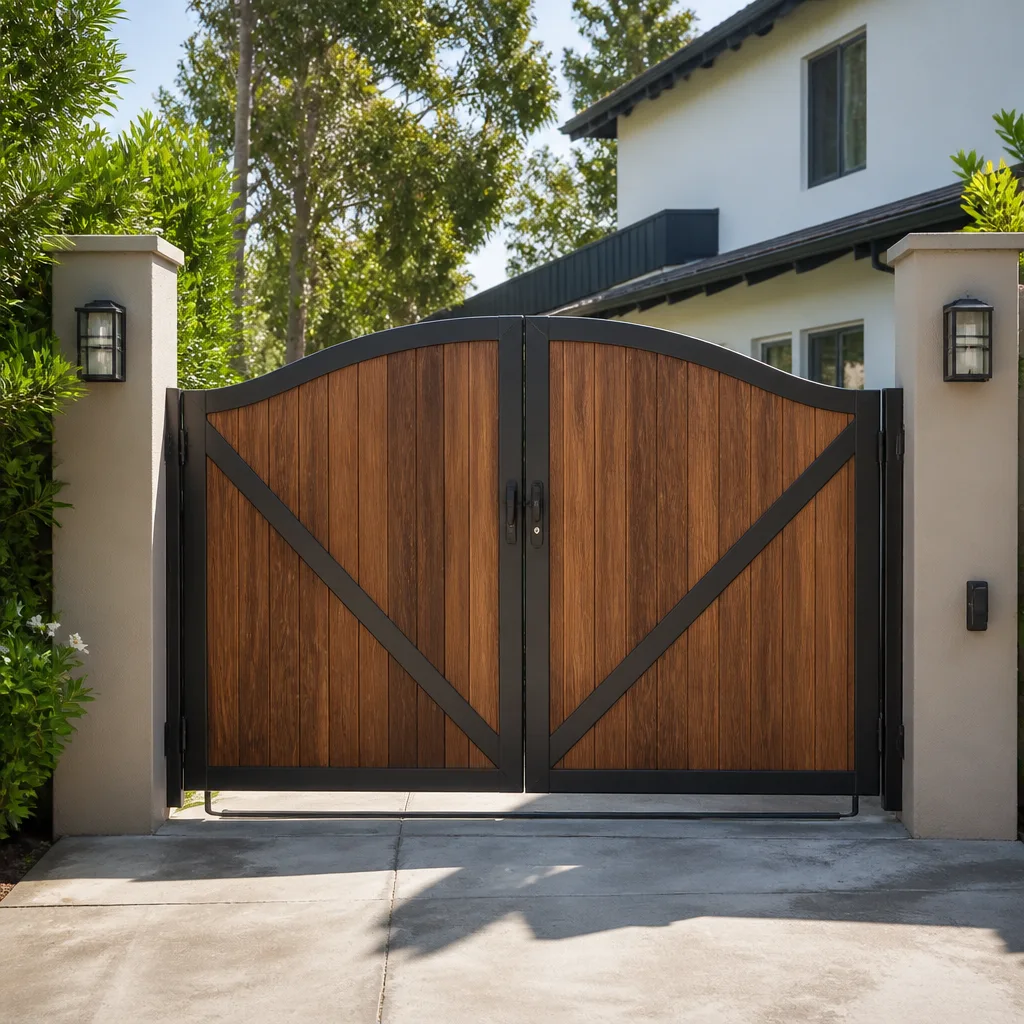 Wood & steel frame
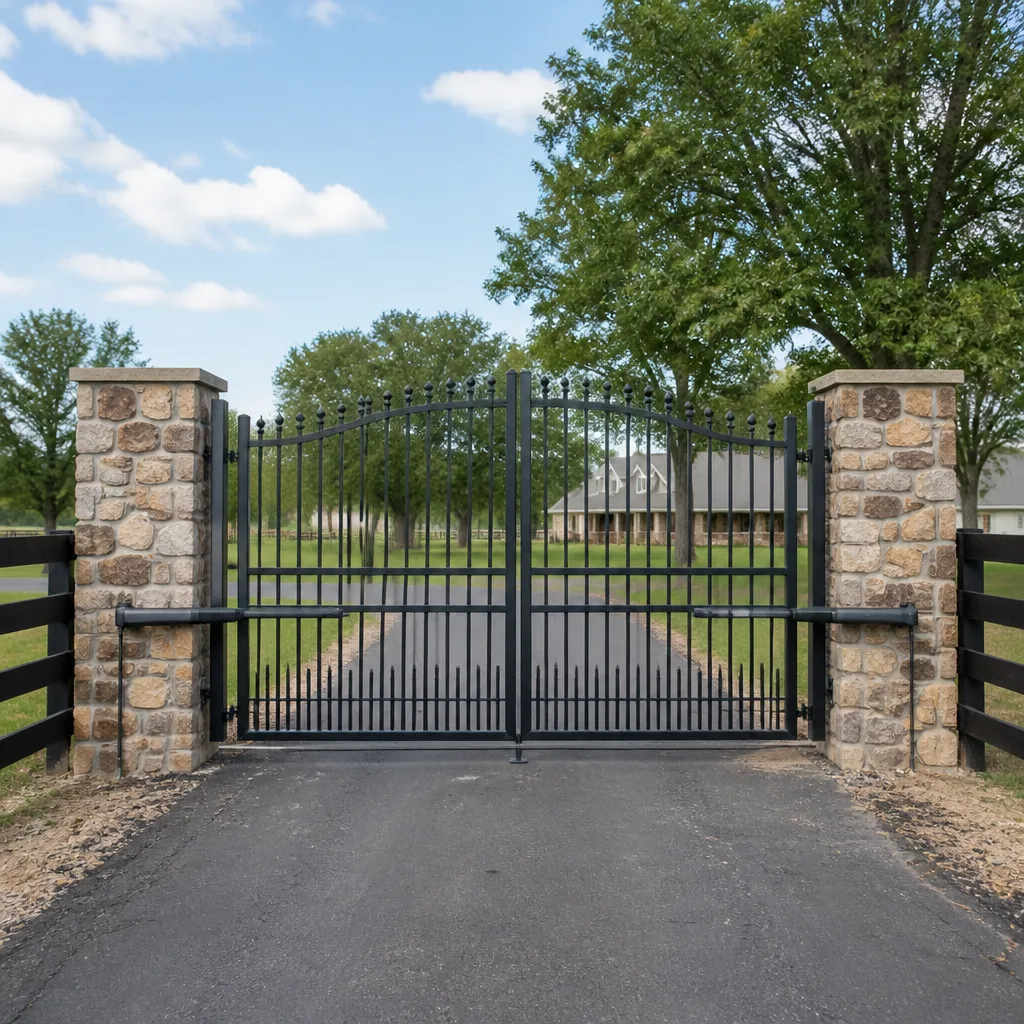 Farm & ranch
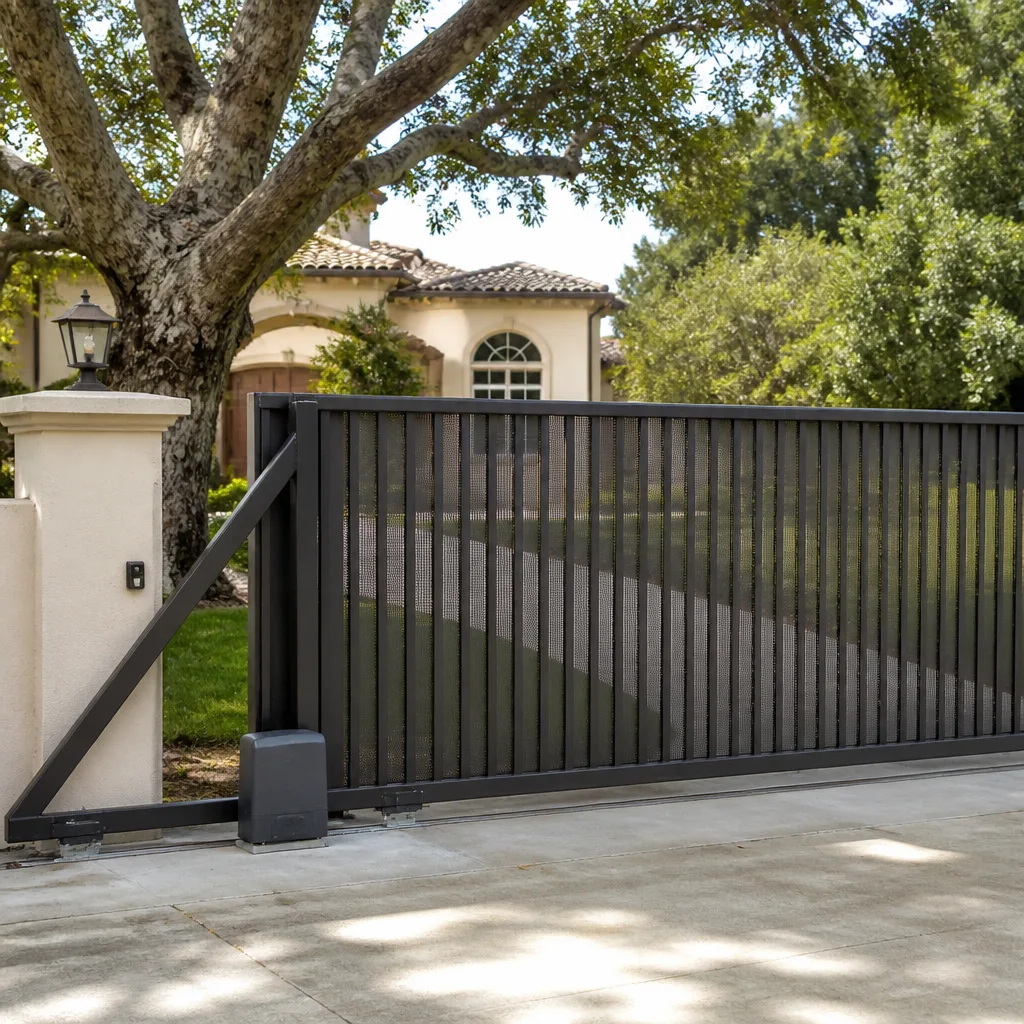 Sliding driveway gates
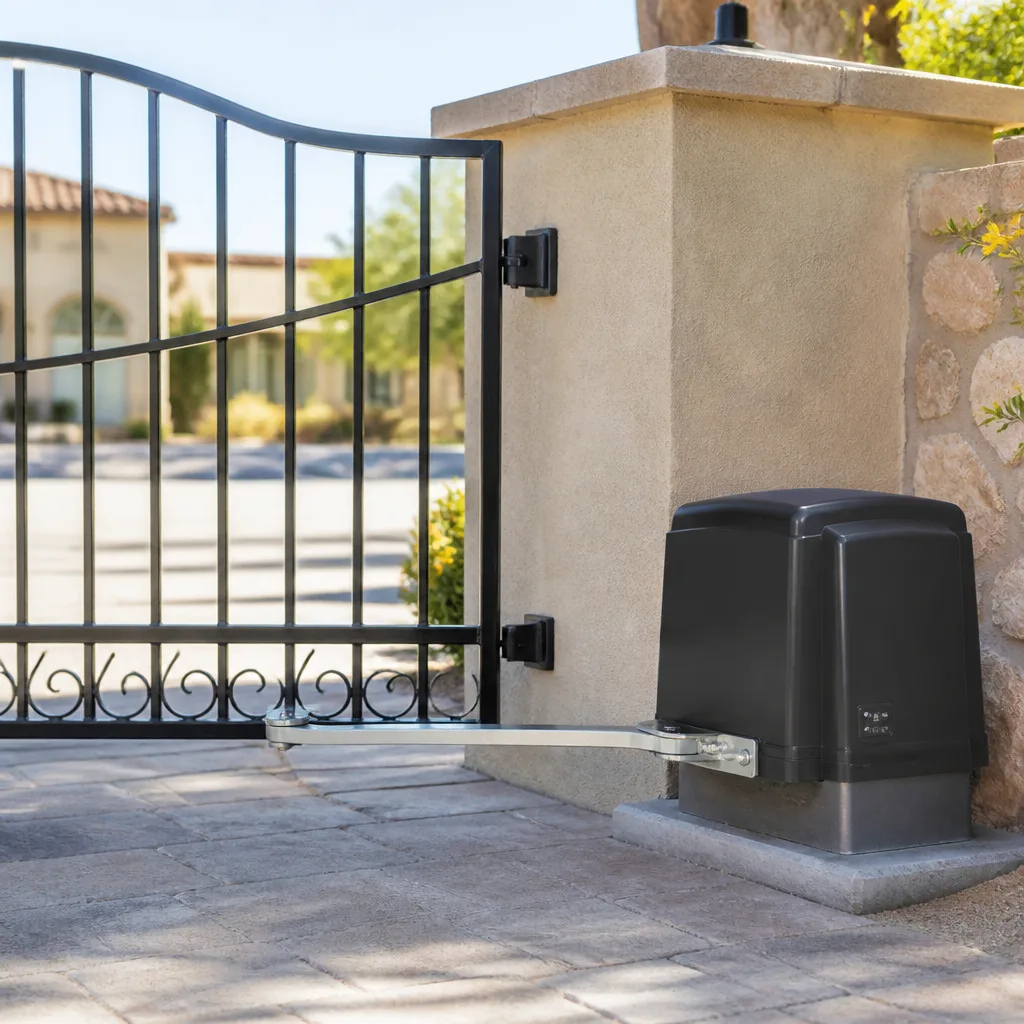 LiftMaster operators
Free on-site gate assessment - hinges, posts, and your LiftMaster or Nice gate operator checked before anything is quoted
The assessment is free and the quote is the invoice.
Get your free estimateGate Installation Troubleshooting: Common Problems and How to Fix Them
I get calls about “brand new” gates that won’t close right, and when I show up, the gate is fine. It’s the post. Somebody set it in a footing that wasn’t given 72 hours to cure before the operator was hung on it. The concrete is still green and the post has already moved. That’s not a gate problem. In our experience across North Las Vegas, most failures on a recent installation trace back to the install, not the product – and knowing which one you’re dealing with changes the entire repair. This guide shows you how to tell a product problem from an installation problem from a site problem, and what to do about each.
Quick Answer
A gate installed within the last year or two that won’t close, sags, binds, or drifts is almost always an installation or site failure, not a defective gate. The three things to check first are post plumb (especially whether the footing cured long enough before the operator went on), the swing geometry of the frame, and whether the site’s drainage and slope were addressed before the gate was hung. Each has a different fix, and mixing them up is how people end up paying twice.
Styles & brands we work with
- Wrought iron
- Wood & steel frame
- Farm & ranch
- Sliding driveway gates
- LiftMaster operators
Table of Contents
- Is it the gate or the installation? How to tell
- Post out of plumb: installed wrong versus moved since
- Operator programming errors and how to reset the popular residential units
- Why a gate binds at the same point every cycle
- Site conditions that should have been addressed before installation
- When poor work rises to a Nevada State Contractors Board complaint
- What you can safely check yourself (and what you can’t)
- What troubleshooting and correction costs look like
Is it the gate or the installation? How to tell
The first move on any troubleshooting call is figuring out which category you’re in, because the fix and the money are completely different. A product defect is rare on a residential gate. An installation flaw is common. A site condition that was never addressed is somewhere in between, and it’s the one most installers quietly skip because fixing it means doing work below ground.
Here’s how we sort it, and it works whether the gate was installed in North Las Vegas or anywhere else:
- Look at the hardware condition. Rust streaks, cracked hinges, and loose bracket welds on a gate that’s a year or two old point to install stress, not a bad gate.
- Check the post, not the panel. A gate sags in the hinge post, not in the middle. Put a level against the post in both directions and write down the number.
- Watch one full open and close cycle. Show me the gate closing on its own and I’ll show you where it’s failing. It reveals geometry, slope, and operator force in one pass.
- Ask when the operator was hung. If it went on before the concrete cured, that alone can explain a wobbling post on a gate that’s otherwise sound.
- Check the ground around the footing. A footing showing soil erosion, cracks radiating outward, or a telltale ring of settled dirt is a site problem wearing an installation costume.
In our experience a “defective gate” claim on a residential install turns out to be one of those five things about nine times out of ten. The gate is the last thing to suspect.
Post out of plumb: installed wrong versus moved since
This is the distinction that changes the entire repair, and it’s the one almost nobody bothers to make. A post that was never plumb from day one and a post that was plumb and has since moved are two different jobs, two different price points, and two different likelihoods of failing again.
How to tell them apart:
- Installed wrong: the hinges sit at an angle relative to the plumb line from the very first screw. The gate has always dragged slightly. The owner usually says “it’s never been quite right.”
- Moved since: the hinge bracket was clearly square when it went on, and now the post has leaned. There’s a visible crescent of disturbed soil or a hairline crack in the footing at the base of the post on the side it’s leaning toward.
- The green concrete tell: if the operator went on before 72 hours of cure, the post was rushed. The footing probably looked fine on the day and moved within the first month. That’s an install-timing problem.
A post installed out of plumb gets corrected by re-plumbing the hinge geometry, adjusting the bracket, or in the worst case resetting the post in a new footing. A post that has moved since installation gets corrected by re-plumbing first, then figuring out why it moved (usually drainage or an undersized footing) before putting weight back on it. Fix the post without fixing the cause and you’ll fix it twice.
For gates where the post needs resetting or welding, our Gate Repair in North Las Vegas page covers what on-site repair looks like.
Operator programming errors and how to reset the popular residential units
Roughly a third of the “new gate won’t close” calls we take in North Las Vegas are software, not steel. Somebody programmed the opener during the rush of the install, left the travel limits a quarter inch short, and now the gate stops just shy of latching. Or the force setting is too high and it reverses on the first hard contact. Or the photo-eye wasn’t aligned after the gate was hung and the operator thinks there’s an obstruction every cycle.
For the popular residential units – LiftMaster, FAAC, BFT – the reset and reconfigure sequence usually follows the same shape, though the exact buttons differ:
- Clear the memory. Most residential boards have a reset or “learn” clear step. Do it before you program, not after, or you’ll fight the old limits the whole way.
- Set the open and close travel limits. Run the gate all the way open, confirm it’s fully back, then run it all the way closed and confirm it’s fully seated against the stop. If the gate hits a pad or a stop, back the limit off before locking it.
- Run the automatic force learn. Most of these boards have a force-learn cycle. Let it run without interruption; don’t nudge the gate with your hand while it’s learning or the operator stores a wrong profile.
- Re-align and re-test the safety edges and photo-eyes. A photo-eye test should trip the operator every cycle. If it doesn’t, verify the beams are aligned before blaming the board.
- Test the reverse on obstruction. A gate that doesn’t reverse correctly on contact is a safety failure. Do not rely on the operator’s force alone; check that the safety edges are working.
For units under the manufacturer’s warranty, a reset through the factory programming procedure usually doesn’t void anything. What does void a warranty is bypassing safety edges, drilling new holes in the board housing, or swapping in an unapproved remote or receiver. If you’re not certain which of those you’re about to do, stop.
Our Gate Motor & Opener in North Las Vegas page goes deeper on operator diagnostics if the reset doesn’t hold.
Why a gate binds at the same point every cycle
If your gate hangs up at the same place every single time – the middle of the swing, or three inches from closed, or right where it passes the pier – that’s not a motor problem. A motor that’s failing gets weaker across the whole cycle. A gate that binds at one point has a geometry problem in the frame, and it’s been there since the install day, whether the installer noticed or not.
The usual culprits:
- Hinge spacing set wrong for the gate weight. Too close together and the gate twists on the post at the midpoint of the swing.
- The gate frame is out of square. One diagonal is longer than the other. It’ll run fine at the ends and bind in the arc where the bow is greatest.
- The operator arm doesn’t line up with the gate swing line. If the pivot points don’t align with the physical arc, the operator stalls at the same point every cycle.
- The gate is hitting the pad or the pier at exactly that point in the arc. Sometimes the gate is fine and the fence is three-quarters of an inch too far in.
A gate that binds at one point every cycle needs diagnosis before it needs a part. In North Las Vegas we see it often on gates hung on masonry piers where the concrete was poured to spec but the pier cap went on slightly proud of the line, and the gate has been kissing it since day one. That’s a fix-the-pier job, not a new-operator job.
Site conditions that should have been addressed before installation
Some problems were designed in before a single post went in the ground. When those surface, the fix is a retrofitted correction, and it pays to know what you’re looking at so you’re not talked into a new gate when the site is the actual issue.
- Drainage. A footing sitting in a low spot pools water and moves over the first wet season. Retrofits involve regrading, a small French drain, or re-pouring the footing higher.
- Slope. A sloped driveway means the gate needs a grade-specific bottom rail and hinge setup. If a flat-profile gate went on a sloped driveway, the bottom will drag from day one.
- Overhead obstructions. Tree limbs, patio cover edges, and low power service lines should be cleared before an operator is installed. If they weren’t, the gate stops short of full open and the operator burns out trying to push past it.
- Undersized footing for the gate weight. A light ornamental gate needs less concrete than a wide steel one. When the wrong footing went in, the retrofit is a new footing, not a bigger operator.
- Frost heave and soil movement. Less of a North Las Vegas problem than in northern Nevada, but on the edges of town where soil is looser, footing depth still matters.
Retrofitting after the fact is honest work. It’s also more expensive than doing it right the first time, which is why we walk the site on every new install, not just the gate.
When poor work rises to a Nevada State Contractors Board complaint
Most installation problems are fixable and not worth a formal complaint. Some are. If you’re weighing whether to file with the Nevada State Contractors Board, the test is straightforward – and it’s about the work, not about whether you’re unhappy.
The honest filter:
- Was there a written contract with a scope of work? If not, you have a much weaker complaint no matter how bad the work is.
- Did the installer leave without a functioning gate? A gate that doesn’t close, doesn’t latch, or doesn’t reverse on obstruction is not a finished install.
- Did they fail to pull a permit if one was required? Anything that involves structural work, electrical hookup for the operator, or new fence around a pool area is typically permitted in North Las Vegas, and pulling it is the contractor’s job.
- Have you given them a written chance to fix it? The Board expects you to have made a good-faith request to correct the work first.
- Is the contractor licensed? If they were unlicensed, that’s a Board matter even before the workmanship does.
If several of those are “yes,” call the Contractors Board at their Reno office and start a file. It’s a legitimate step and it exists for exactly this. If only one is “yes” and the rest are “no,” it’s usually cheaper and faster to have the work corrected and move on.
What you can safely check yourself (and what you can’t)
Some of this you can do yourself with a level and a phone. Some of this is work for a trained professional, and I’d rather turn away a job than hear about somebody hurt doing it.
Safe to check yourself:
- Whether the gate holds open at 45 degrees on its own. If it swings closed, the hinge post is leaning.
- Whether the gate binds at the same point every cycle.
- Whether the photo-eyes trip the operator – walk through the beam and confirm the gate reverses.
- Whether the gate drags against the ground at any point in the swing.
- Whether the manufacturer’s manual is still in your file, and what warranty dates apply.
Do not do yourself on a dangerous component:
- Opening the operator housing to reset the board or test motor leads, unless the manual specifically walks you through it. Capacitors hold dangerous charge.
- Touching the safety edges if the operator only partially reverses on contact. That’s a failure mode that gets people hurt.
- Resetting or re-pouring a footing on a gate that’s already loaded. The stored tension in a sagging gate is real, and it can release in unexpected directions.
- Welding on an installed gate if you’re not set up for it. We bring a welder to the driveway for a reason – it’s the safe way to fix the panel without taking the gate off.
What troubleshooting and correction costs look like
We quote every job before we start, and the quote you agree to is the quote you pay. Here’s the honest range, based on what we see in North Las Vegas on recent residential installs:
| Job | Typical range | Notes |
|---|---|---|
| Diagnostic call (in county) | No trip charge inside the county | Troubleshooting, walk-through, written findings |
| Operator reprogram / reset | $95-$175 | Reconfigure travel limits, force learn, re-test photo-eyes |
| Re-plumb hinge post, minor correction | $175-$340 | Bracket adjustment or short-weld on the hinge |
| Reset hinge post in new footing | $450-$900 | Includes concrete and re-hang |
| Re-square gate frame on-site | $200-$400 | Usually paired with a hinge adjustment |
| Photo-eye / safety edge replacement | $120-$260 | Per unit or pair, depending on brand |
Repairs over $200 qualify for $40 off as a standing offer, and seniors and veterans get a permanent 10% discount. To learn our approach to installation done right the first time, our Gate Installation in North Las Vegas page is the place to start.
Common Mistakes to Avoid
- Hanging the operator before the footing cures. A 72-hour cure is not optional. Hanging earlier is the single most common cause of a “new” gate that wobbles within a month, and it’s a full footing reset to correct.
- Replacing the gate when the post is the problem. The gate sags in the post, not the middle. New panels on a bad post fail in the same way within weeks.
- Turning up the operator force to compensate for a bind. You’re overriding the symptom and wearing out the motor, and on gates fitted with safety edges you’re also softening the reverse response.
- Bypassing the photo-eyes to quiet a false trip. On a residential gate this is a genuine personal injury risk, and it also voids most manufacturer warranties.
- Ignoring the drainage in the low corner of the yard. North Las Vegas yards often have a swale or a low corner that should have been regraded before the post went in. Skip it and the footing moves every wet season.
- Not asking for a written scope and warranty before install. A verbal scope is what turns “fix it” into “not our fault.” Get it in writing before the first post goes down.
See the difference
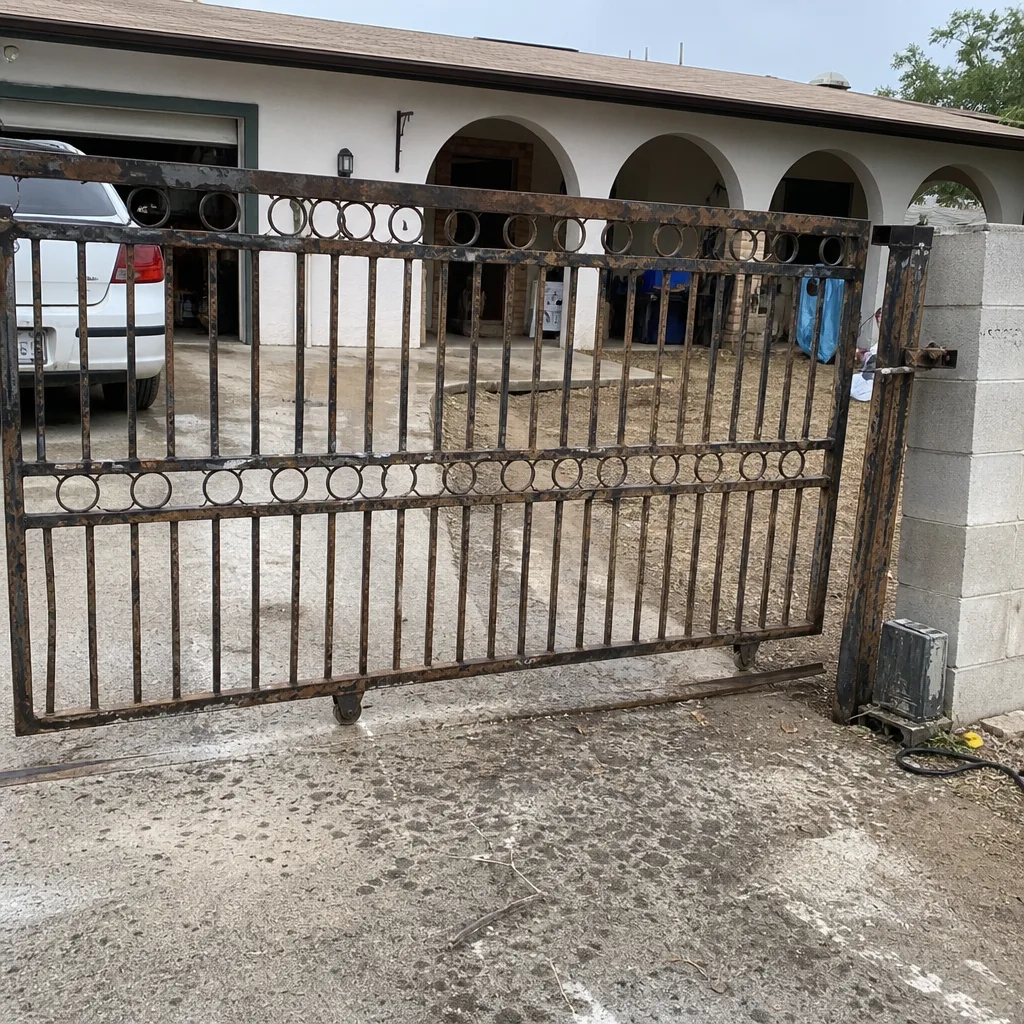 Before
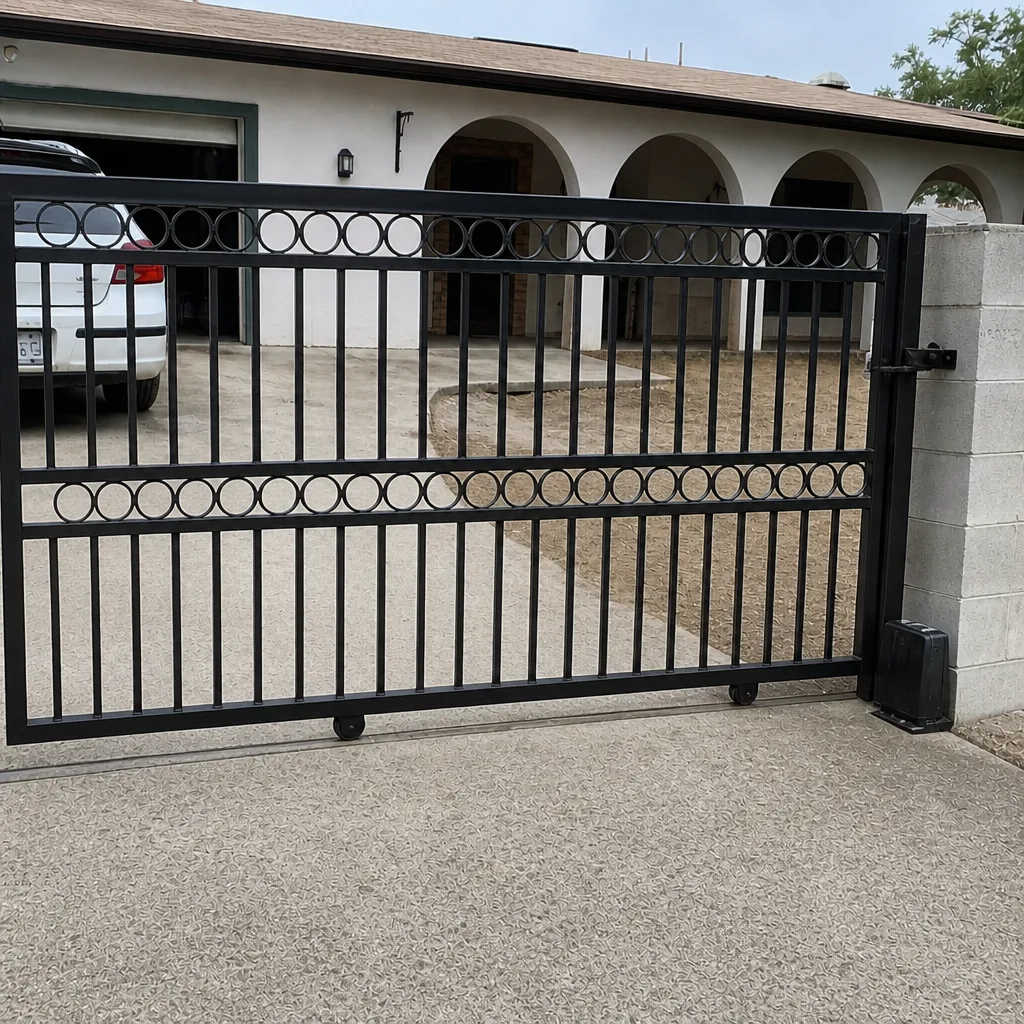 After
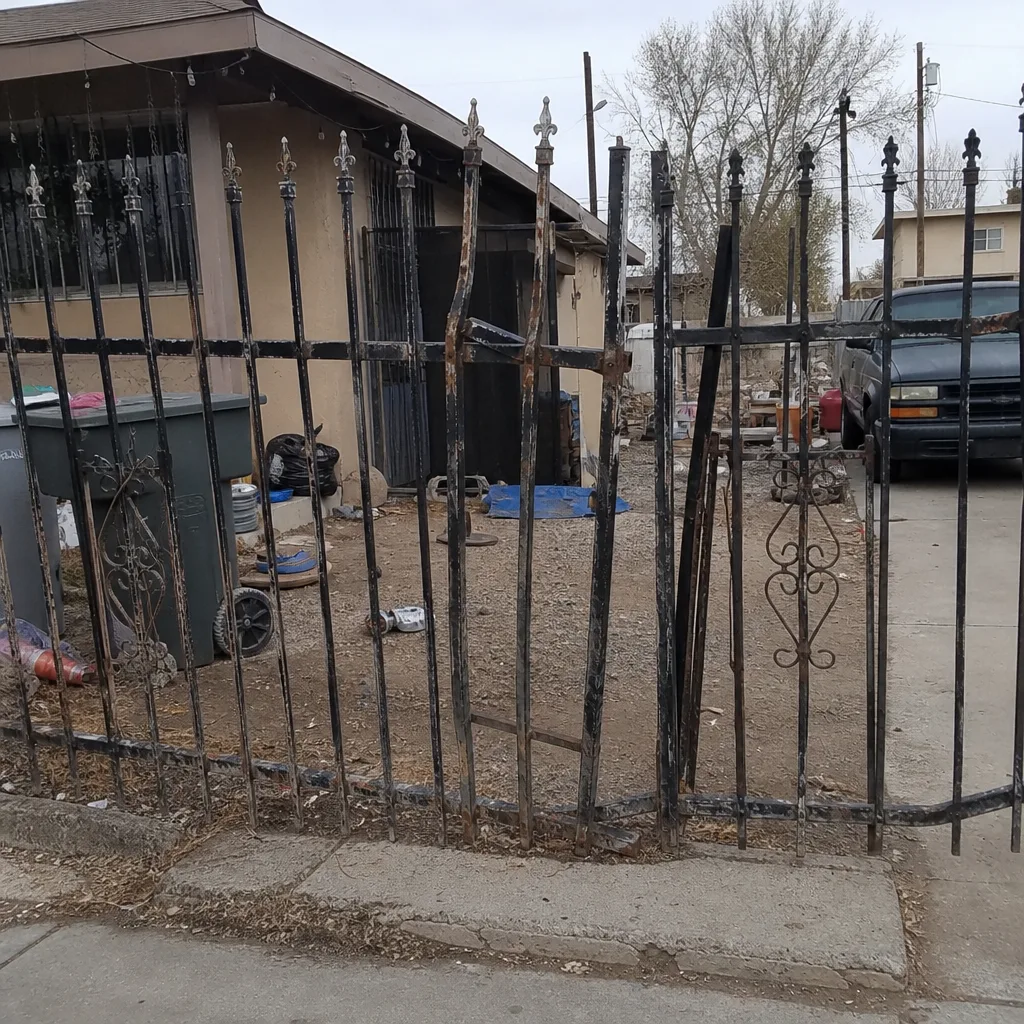 Before
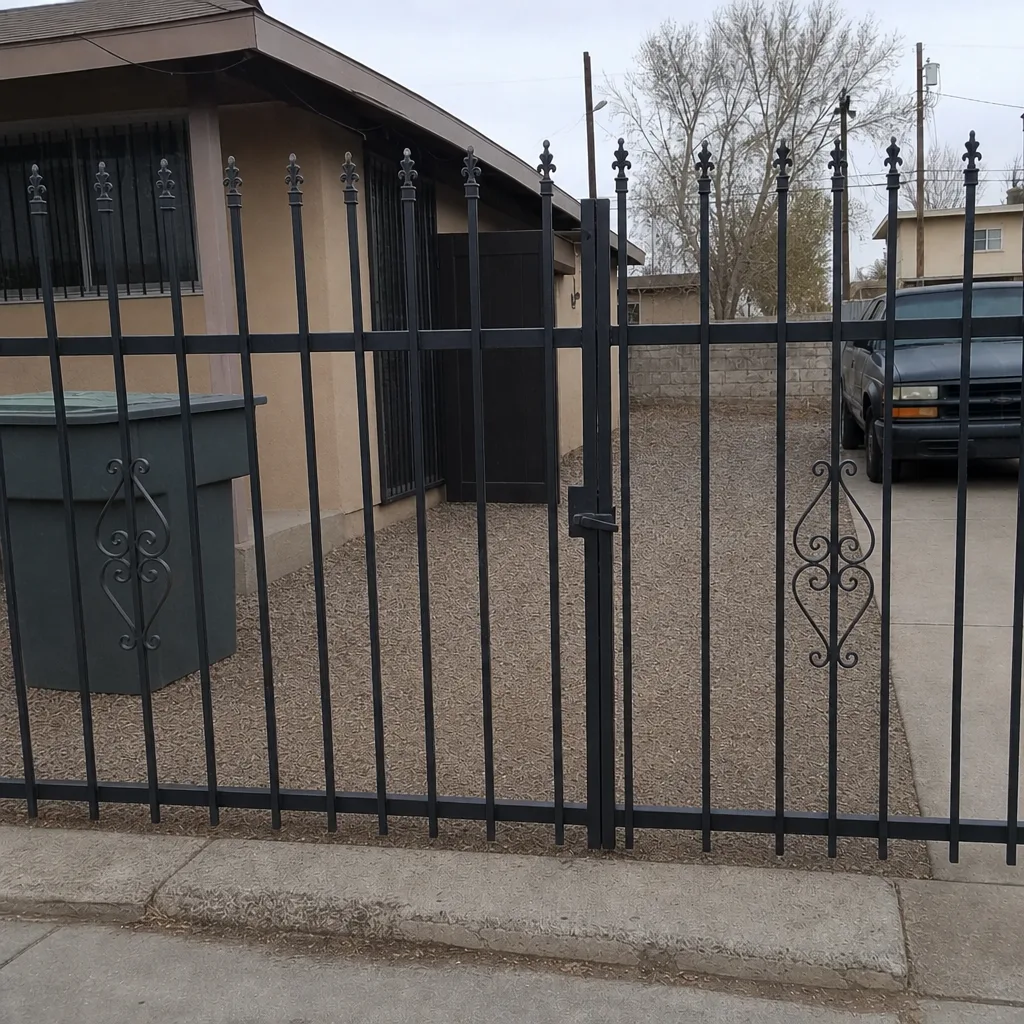 After
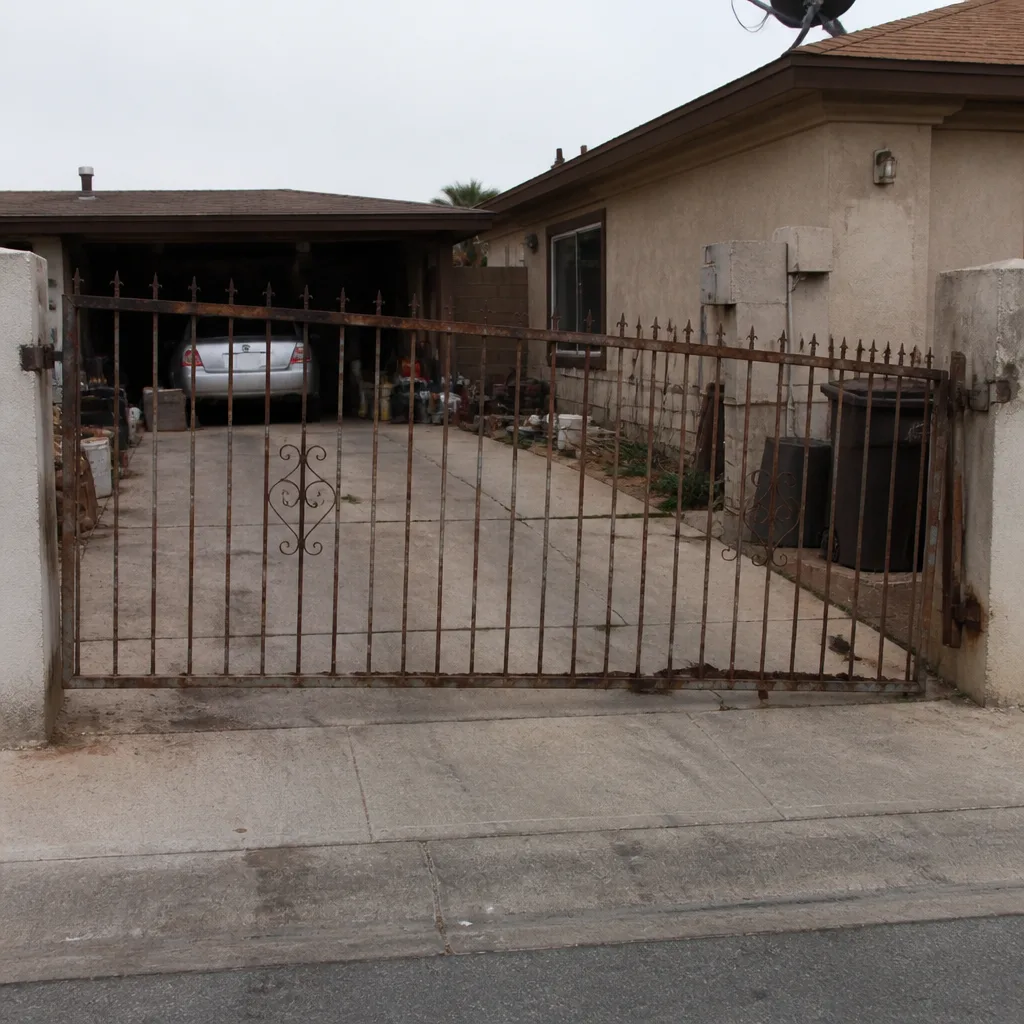 Before
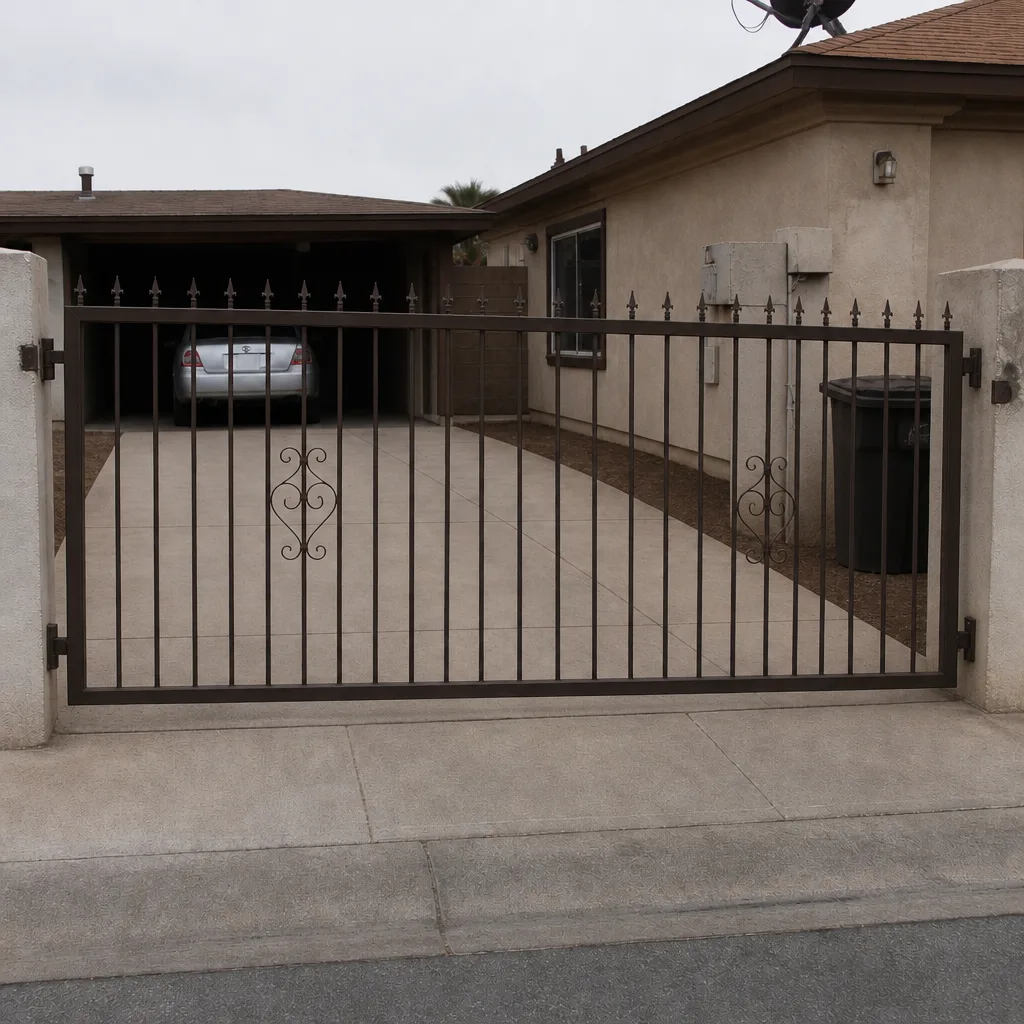 After
When to Call a Professional
If you’ve watched one full open-and-close cycle and you can name the point of failure, that’s useful information for whoever you call. If you can’t name the point of failure, or if anything on the gate involves the operator housing, the safety system, a weld, or resetting a footing, get a trained eye on it. Those are the areas where a small problem becomes a big one, and on a gate that’s only a year or two old, the fix is usually cheaper than most homeowners expect. Gatewood Fence & Gate North Las Vegas offers free estimates in North Las Vegas on troubleshooting and corrections – call (844) 761-9351. Calls are answered by a live person, around the clock, and every job carries the 90-Day Done Right Promise in writing.
Frequently Asked Questions
Almost always because something in the installation was rushed – most often the operator was hung on a footing before it fully cured, the hinge post went in slightly out of plumb, or a site condition like drainage or slope wasn’t addressed. A modern residential gate on a proper installation shouldn’t have problems at one year. If it does, the fault usually isn’t the gate. Call (844) 761-9351 and we’ll come look at it and give you a written diagnosis before any work starts.
Check the hardware first – rust streaks, cracked brackets, and a sag toward the hinge post point to install stress, not a bad gate. Then watch one full cycle and see where it fails. If it looks fine but won’t close, the failure is usually in the post, the footing, or the operator programming. Calling in a professional for a quick diagnosis is far cheaper than replacing a gate that isn’t broken. Free second opinions on any written estimate – call (844) 761-9351.
Yes, and in the right circumstances you should. The Board takes workmanship complaints, unlicensed contracting, and permit violations seriously. For it to hold up, though, you generally need a written contract, a clear scope not delivered, and a written request to the contractor to fix it first. If your installer was licensed and left you a functioning gate that’s slightly off, it’s usually a repair, not a Board matter. If you’re not sure which side of that line you’re on, call us for a free second opinion first.
That’s a geometry problem in the frame, not a motor problem. The gate is binding at one point in the swing because the frame is out of square, the hinge spacing is wrong for the gate weight, or the operator arm doesn’t align with the arc. Turning up the force hides it for a while and burns out the operator. A professional correction is almost always less than a motor replacement. Call (844) 761-9351 for a free estimate.
Following the manufacturer’s reset and reconfigure procedure for travel limits and force learn usually doesn’t void anything on LiftMaster, FAAC, and BFT residential units. What does void the warranty is bypassing safety edges, drilling the board housing, or swapping in unapproved receivers. If you’re not certain which of those you’re about to do, call us.
Drainage and slope of the site, overhead obstructions on the operator’s open arc, footing size for the gate weight, and – if the operator was to be installed – a 72-hour cure on the concrete. Any of those skipped will show up as a “problem” on a brand new gate within the first year. Retrofitting them after the fact is honest work but it’s more expensive than getting them right the first time. Call (844) 761-9351 for a free estimate on corrected work.
The Bottom Line
A gate installed last year shouldn’t have problems. When it does, the issue nearly always traces to the install, the operator programming, or a site condition that was never addressed – not to a defect in the gate. Fix the post without the footing and you’ll fix it twice. Turn up the force to hide a bind and you’ll burn out a motor. Get the diagnosis right first and the repair is usually cheaper and faster than a new gate. When you’re ready to have a trained eye on it, call Gatewood Fence & Gate North Las Vegas at (844) 761-9351 for a free estimate. More about who we are on our Gatewood Fence & Gate North Las Vegas home page.
Written by the team at Gatewood Fence & Gate North Las Vegas.