
Last updated November 17, 2026
 Wrought iron
 Wood & steel frame
 Farm & ranch
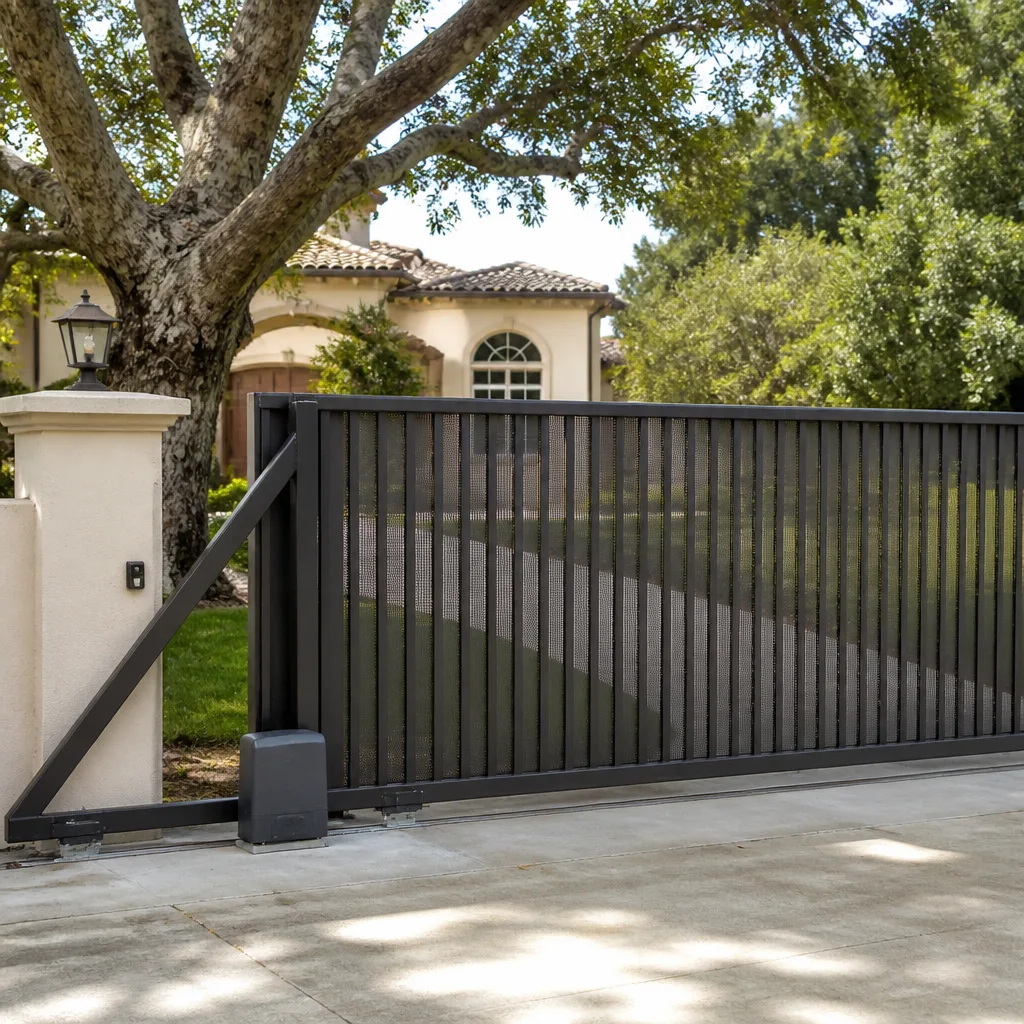 Sliding driveway gates
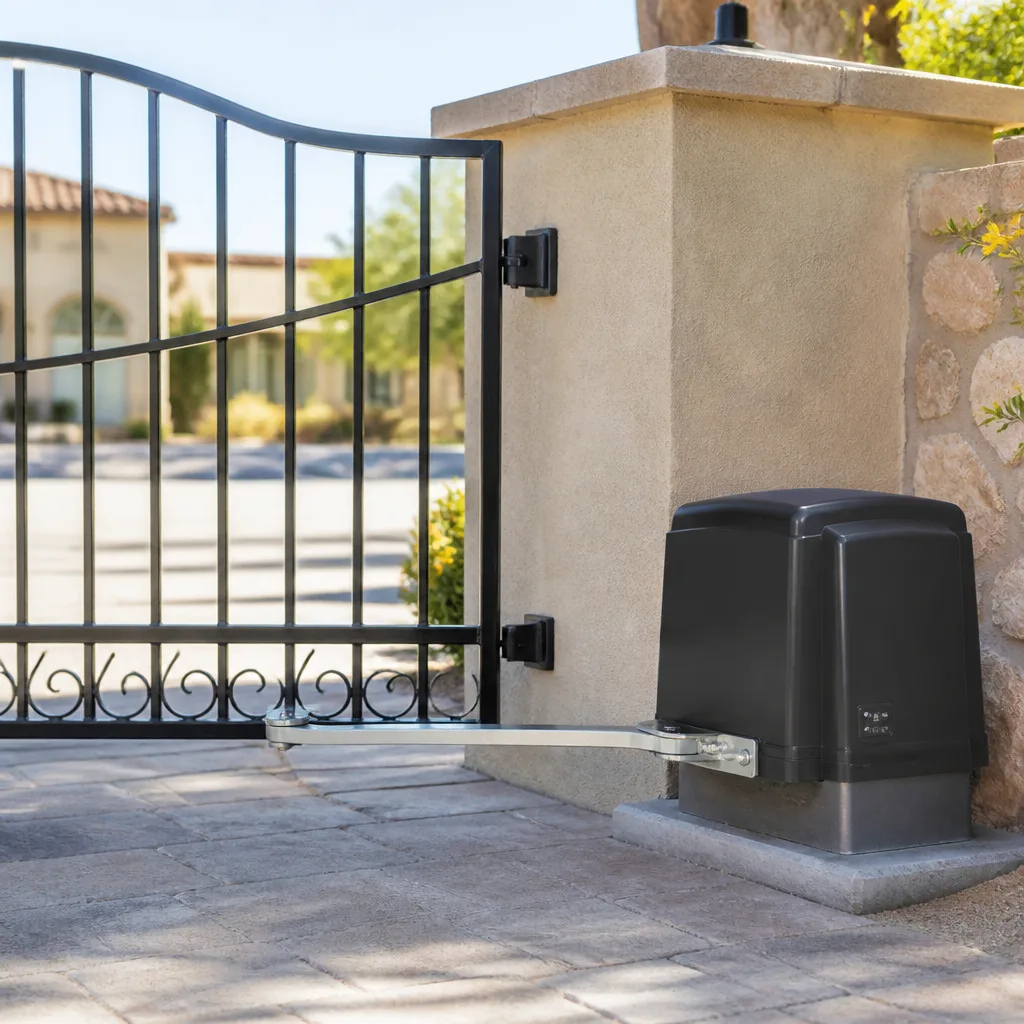 LiftMaster operators
Free on-site gate assessment - hinges, posts, and your LiftMaster or Nice gate operator checked before anything is quoted
The assessment is free and the quote is the invoice.
Get your free estimateGate Motor & Opener Maintenance Schedule: What to Do and When
The manual says lubricate every six months. In North Las Vegas, the dust that packs into a drive chain or rack gear in one dust storm can do what six months of normal wear does. The calendar isn’t your guide – the conditions are. We’ve pulled apart slide gate operators out in the far northeast valley where a single spring blow-through had caked the pinion gear in grit so fine it acted like sandpaper, and we’ve seen the opposite: a well-lubed, well-timed operator in an older neighborhood tick along for years on the factory schedule. The difference wasn’t the brand or the motor size. It was whether anyone matched the schedule to the desert. This guide lays out a task-by-task maintenance calendar built for North Las Vegas seasons, the right lubricants for dust, the five-minute inspections you can run yourself, and the jobs that genuinely need a technician.
Quick Answer
In North Las Vegas, a gate motor needs a dust purge and lube check after every major dust event and a full scheduled service about every four to six months – not the yearly rhythm most manuals assume. Key tasks are cleaning and re-greasing the rack or chain, testing the obstruction sensors and auto-reverse, checking the battery and control board for corrosion, and having a technician test the capacitor, amp draw, and limit switches once a year. The single biggest failure risk here is silt packing into moving parts, followed by summer heat cooking batteries and cracking UV-exposed wiring.
Styles & brands we work with
- Wrought iron
- Wood & steel frame
- Farm & ranch
- Sliding driveway gates
- LiftMaster operators
Table of Contents
- Why the Desert Rewrites the Manual
- The North Las Vegas Seasonal Calendar
- The Five-Minute Homeowner Inspection
- The Right Lubricants for Dust, and the Wrong Ones
- How to Safely Test Your Obstruction Sensors and Auto-Reverse
- The Jobs That Need a Technician – and Why
- What Maintenance and Repair Realistically Cost Here
- Common Mistakes to Avoid
Why the Desert Rewrites the Manual
Gate operator manuals are written for a national audience. That means they’re written for a place that gets regular rain to wash grit out of gears, moderate summers that don’t bake the control board enclosure, and air that isn’t loaded with abrasive dust half the year. North Las Vegas is none of those. Our combination of fine caliche dust, monsoon-season grit storms, and 105- to 115-degree summer afternoons does a specific kind of damage that the standard six-month or yearly service interval just doesn’t account for.
Here’s what actually happens to a gate motor in North Las Vegas:
- Dust compaction. Fine particulate doesn’t just sit on the rack or chain. It works into the pinion gear teeth and the chain rollers, then compacts under the load of every open-and-close cycle. Packed grit acts like lapping compound and grinds the moving surfaces down from the inside.
- Heat cycling. A control board enclosure in full July sun can hit well past 140 degrees internally. That accelerates the failure of capacitors and stresses battery chemistry. Sealed lead-acid batteries in gate operators that would last four years in a mild climate often give out in two to three here.
- UV degradation. Wiring insulation and sensor cable jackets crack and go brittle faster under our sun. A cracked jacket lets in dust and moisture, and that’s where intermittent faults come from.
- Monsoon grit. The late-summer storms don’t just drop water. They lift and deposit a fresh layer of grit on every horizontal surface, including the top of an operator housing and the open rack of a slide gate.
None of this means a North Las Vegas gate is doomed. It means the schedule that keeps it running is set by conditions, not a page in a booklet. Our technicians, who bring up to 25 years of experience to these calls, adjust the interval to the specific gate: a swing operator on a shaded residential driveway may only need service twice a year, while an exposed slide gate on a windy lot near the open desert may need a dust purge far more often.
The North Las Vegas Seasonal Calendar
This is the heart of the guide. Instead of “every six months,” we build the schedule around the four events that actually stress a gate motor in North Las Vegas: the run-up to summer heat, the summer itself, the monsoon season, and the cool winter months when batteries and sensors get tested. Here’s how the year breaks down.
May: Pre-Summer Heat Prep
Before the first 110-degree week, get the operator ready for it. This is the most important service window of the year for most North Las Vegas gates.
- Purge accumulated dust and grit from the rack and pinion or the drive chain, then re-lubricate with the correct dry-film or dust-resistant product (more on that below).
- Inspect the control board enclosure for dust buildup and any sign of corrosion; clean and confirm the gaskets and seals are intact so the board is protected from both grit and summer heat.
- Check wiring insulation on sensor runs and the operator feed for UV cracking before the harshest sun hits.
- Test the battery under load, not just at rest. A battery that reads fine cold can collapse under a summer open cycle.
- Run the full obstruction sensor and auto-reverse test described further down.
June through August: Heat Watch
During peak heat, your job is monitoring rather than heavy service. Listen for new strain in the motor. Watch for slower opening, a gate that reverses on its own, or a board that resets after a hot afternoon. Heat-related electronics faults show up here first. If an operator starts behaving erratically only in the afternoon, that’s a heat symptom, not a mystery.
September: Post-Monsoon Dust Purge
Monsoon season leaves a fresh coat of grit on everything, and it loves to pack into an open rack gear. This is the second major service window. Purge the rack or chain again, clean the operator housing, clear the sensor lenses of dust and splash, and re-check the enclosure seals. If only one service a year is realistic for your gate, this is the one to prioritize, because it clears the grit before winter and removes the abrasive that would otherwise work all through the cool months.
January: Midwinter Battery and Sensor Check
Our winters are mild, which is exactly why this check is easy to skip – and shouldn’t be. Cooler temperatures are when a weak battery first shows its limits, because cold cranking capacity drops. Test the battery, clean and align the sensors, and confirm the auto-reverse still engages. If you use access control – a keypad, an intercom, a card reader – check those functions too, since contacts and connections quietly corrode over the year.
If you’d rather not track any of this yourself, a scheduled maintenance visit from Gate Motor & Opener service in North Las Vegas handles the full calendar in one stop.
The Five-Minute Homeowner Inspection
You don’t need tools for most of this. A quick walk-around, done monthly, catches the majority of problems before they become a repair. Do it in daylight and, for anything involving reaching into a mechanism, with the power off. Here’s the checklist:
- Wear indicators on the drive gear. Look at the pinion gear and the rack teeth where they mesh. You’re looking for sharpness, flattening, or shiny metal where the coating has worn through. A little polish is normal; deep grooves or teeth that look pointed mean it’s time to have it looked at.
- Corrosion on the control board enclosure. Open the housing (with power off) and look for white or greenish residue on the terminals and board, or rust at the mounting screws. Any of that means moisture or dust has gotten in past the seals.
- UV cracking on wiring insulation. Trace the sensor cable and the operator feed where they’re exposed to sun. Look for crazing, flaking, or exposed conductor. Cracked jackets are a fault waiting to happen.
- Grit on the rack or chain. Run a finger along an open rack and see how much dust comes away. A light film is fine; a visible crust means it’s time to clean and re-lube.
- Loose hardware. Check the brackets and mounts. A gate that has started to shift shows up as loose bolts and a motor that strains at the ends of travel.
- Odd sounds. A healthy operator is fairly quiet. Grinding, squealing, or a new rattle is your cue to look closer.
If your visual walk turns up anything that needs welding or structural work, that’s our kind of repair. Gate Repair in North Las Vegas covers everything from a sagging hinge post to a motor bracket that has pulled loose.
The Right Lubricants for Dust, and the Wrong Ones
This is where a lot of do-it-yourself gate owners in North Las Vegas go wrong, and it’s not their fault – the product on the shelf at the hardware store is the wrong one for our conditions. Standard white lithium grease is a magnet for fine dust. It stays tacky, and every dust event glues a fresh layer of grit to the very surfaces you were trying to protect. On a rack-and-pinion system, that tacky grease plus desert silt is a grinding paste.
What to use instead on an exposed rack or chain in a dusty environment:
- Dry-film or PTFE-based lubricants that go on wet and dry to a thin film. They don’t stay tacky, so grit doesn’t stick.
- Dust-resistant spray lubricants labeled for outdoor or dusty use, applied sparingly. A light coat is enough; heavy application just collects dirt.
- Clean before you lube, every time. Re-greasing over packed grit traps the abrasive underneath. Purge first, then apply.
For enclosed gearboxes and sealed mechanisms that call for grease, follow the operator manufacturer’s spec. We service and maintain the major brands – FAAC, BFT, Linear, and Viking among them – and each has its own recommendation for the gearbox and the moving surfaces. Getting the lubricant wrong on a Linear slide operator is a slow way to wear out a rack that would otherwise last years. When in doubt, a quick call to a shop that works on these every week saves you a guess. We’re happy to talk you through what your specific operator wants.
How to Safely Test Your Obstruction Sensors and Auto-Reverse
Your gate’s safety system should be tested on a schedule, not just when something seems off. This is the part that protects a child, a pet, or a car, and it’s the part most homeowners never think about until they notice the gate didn’t stop. The test is simple and safe if you do it right.
Auto-reverse test, step by step:
- Make sure the area under and around the gate is clear of people, pets, and vehicles.
- Start the gate closing on its normal cycle.
- As it travels, break the sensor beam with a flat object – a piece of cardboard or a broom held upright works well – or press the safety edge if your gate has one.
- The gate should stop and reverse immediately. If it keeps closing, or only stops without reversing, the safety system needs attention.
- Repeat with a light object if your obstruction sensors are the type that detect mass, and confirm the gate reverses.
Do this monthly and after every major dust event, because dust on the sensor lenses is one of the most common causes of a safety system that quietly stops working. Wipe the lenses clean with a soft cloth. If your gate fails the auto-reverse test, treat it as a priority – not a wait-and-see. A gate that doesn’t reverse on contact is a hazard, and we’d rather you call and have it fixed than leave it running. This level of testing is exactly what belongs on the Gate Motor & Opener maintenance calendar, not just a someday item.
The Jobs That Need a Technician – and Why
Some maintenance is genuinely a homeowner job: cleaning, visual inspection, re-lubing, sensor testing. Other tasks need test equipment and the judgment to read what it tells you. Here’s what we handle and what each one actually does, so you understand what you’re paying for.
- Capacitor testing. The start capacitor helps the motor spin up. As it weakens, the motor struggles to start on hot days. A technician tests it with a meter and compares the reading to spec. A weak capacitor is a cheap fix that saves an expensive motor, which is why we test it every visit.
- Motor amp draw measurement. This is the health check for the motor itself. A technician clamps a meter on the feed and measures how much current the motor pulls under load. Rising amp draw means increasing friction or a failing winding – and it shows up long before the motor actually quits.
- Limit switch calibration. The limit switches tell the gate where to stop at each end of travel. When they drift, the gate over-travels or stops short. Setting them properly takes a trained hand and an understanding of how the gate’s geometry has settled over time. This is also where a lot of “the gate keeps hitting the post” complaints come from.
- Control board diagnosis. Intermittent faults, random resets, and sensor errors often live in the board or its connections. Reading those requires the right meter work and experience with the specific brand.
Amp draw and capacitor tests catch a dying motor while it’s still cheap to address. Limit switch calibration keeps the gate from beating itself up against the stops. These belong on the yearly schedule and are the reason a periodic professional visit pays for itself. When we come out, we bring the meters and the brand-specific knowledge – for the systems we service and maintain, including BFT and Viking – and we tell you what we find before we touch anything, with the price quoted and agreed before any work starts.
What Maintenance and Repair Realistically Cost Here
Prices vary by gate type and brand, but here’s the honest range for common work in North Las Vegas. Every price is quoted and agreed before any work starts, which means no surprise at the door – a promise we take seriously after too many homeowners have been burned by a phone quote that turned into a bigger bill.
| Service | Typical Range |
|---|---|
| Routine maintenance visit (clean, lube, test, adjust) | $150 – $300 |
| Battery replacement (operator-specific) | $90 – $220 |
| Capacitor replacement | $100 – $200 |
| Limit switch adjustment or replacement | $120 – $250 |
| Sensor or safety-edge repair | $150 – $350 |
| Control board replacement | $250 – $600 |
| Motor or gearbox repair | $300 – $800 |
Standing offers that apply without haggling: $40 off any repair over $200, no trip charge inside the county, and a free second opinion on any written estimate. If a national outfit has already quoted you, bring that estimate to us – a second look costs you nothing, and it’s saved plenty of North Las Vegas homeowners from paying for a whole new operator when a repair would have done the job. Call (844) 761-9351 for a free estimate.
Common Mistakes to Avoid
- Following the six-month manual in a desert. A dust storm can compact more grit into a rack in one afternoon than six months of mild-climate wear. Match the schedule to the conditions, not the booklet.
- Lubing with tacky white lithium grease. In dusty North Las Vegas conditions that grease catches and holds fine silt, turning it into an abrasive paste on your moving parts. Use a dust-resistant dry-film lubricant instead.
- Skipping the obstruction test until something seems wrong. Dust on the sensor lenses is the most common quiet failure. Test monthly, not after the first near-miss.
- Waiting until the gate stops to service it. Amp draw and capacitor readings flag a failing motor well before it quits. Catching it early is far cheaper than a full motor or gearbox repair.
- Power-washing the operator housing. It seems like a good way to clear monsoon grit, but it drives moisture past the seals and into the control board. Clean with a brush and cloth, and keep the housing closed.
- Ignoring UV cracking on wiring. Cracked insulation lets in dust and moisture and causes the intermittent faults that are hard to chase later. Fix it at the walk-around stage.
- Hiring the phone-quote crowd. A price given on the phone by an outfit that has never seen your gate is a guess. Get the estimate in writing before work starts.
See the difference
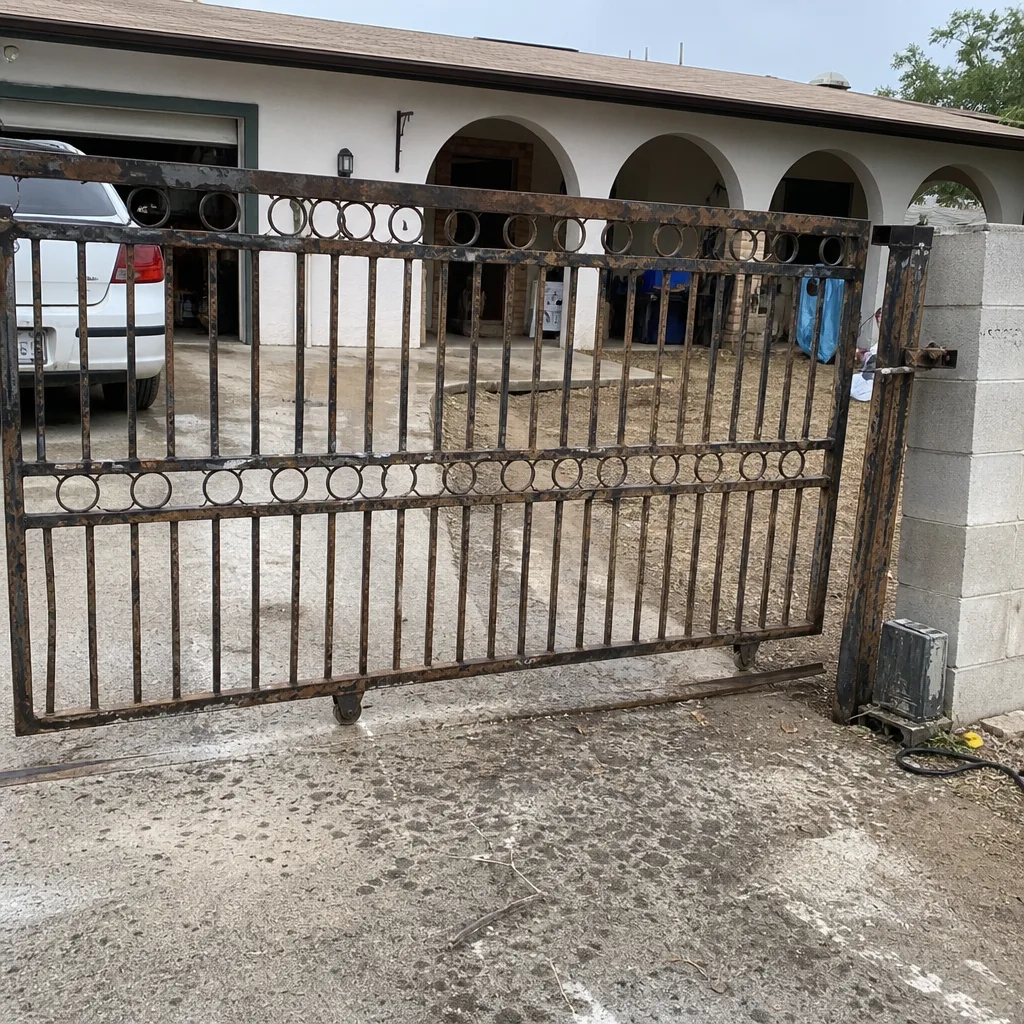 Before
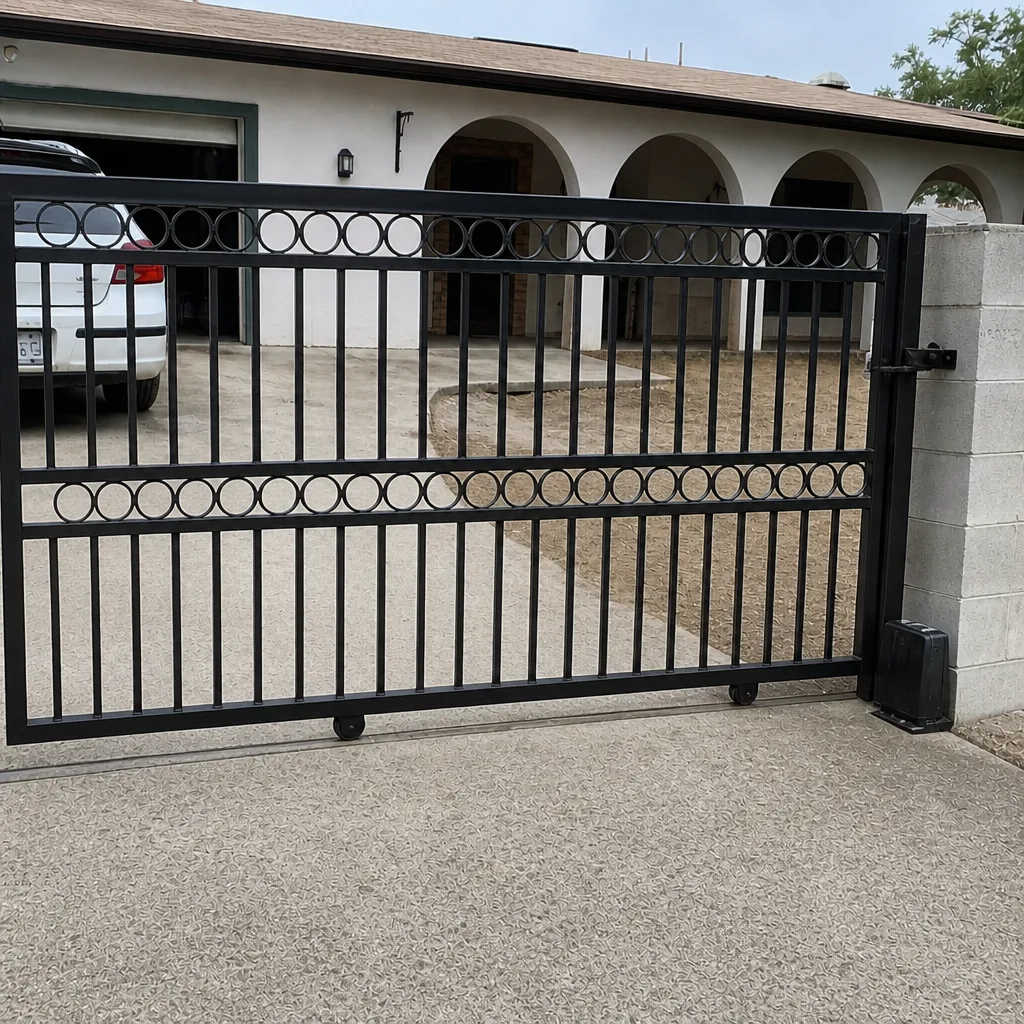 After
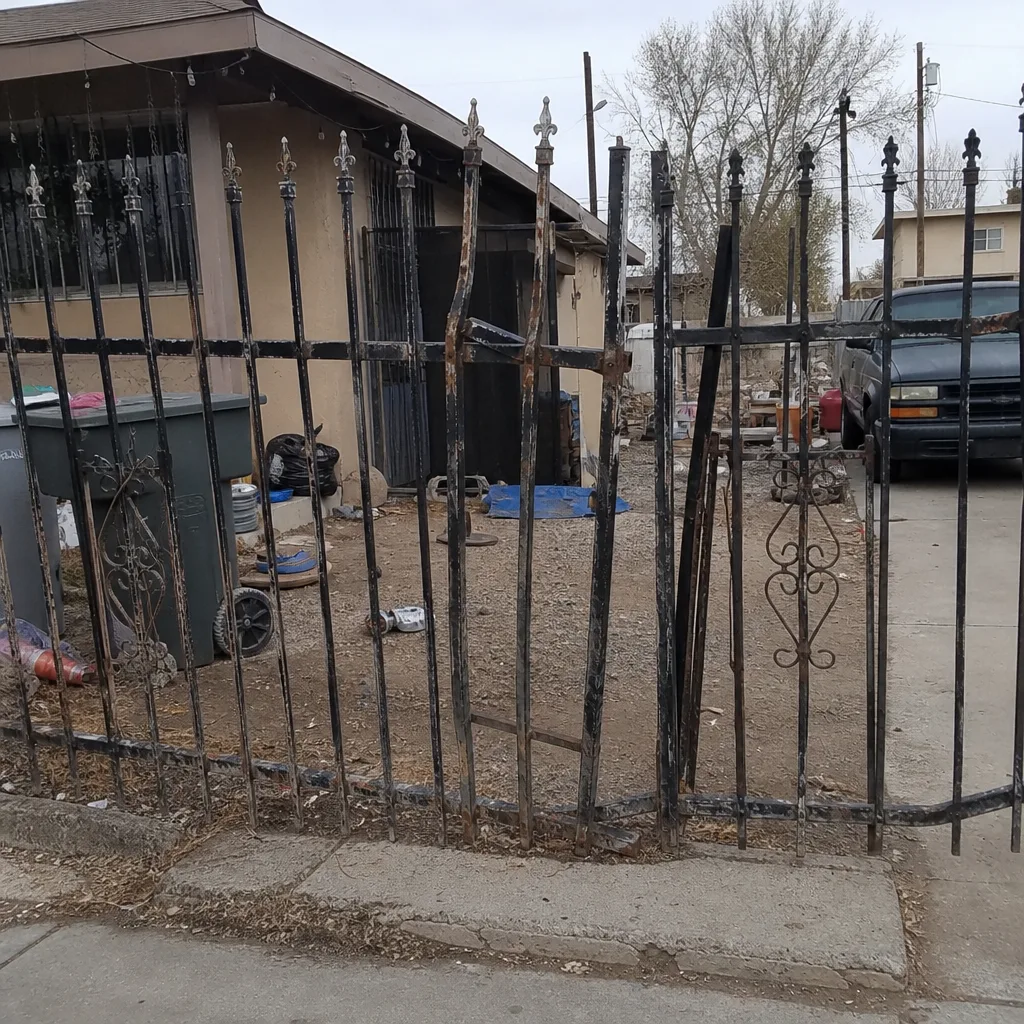 Before
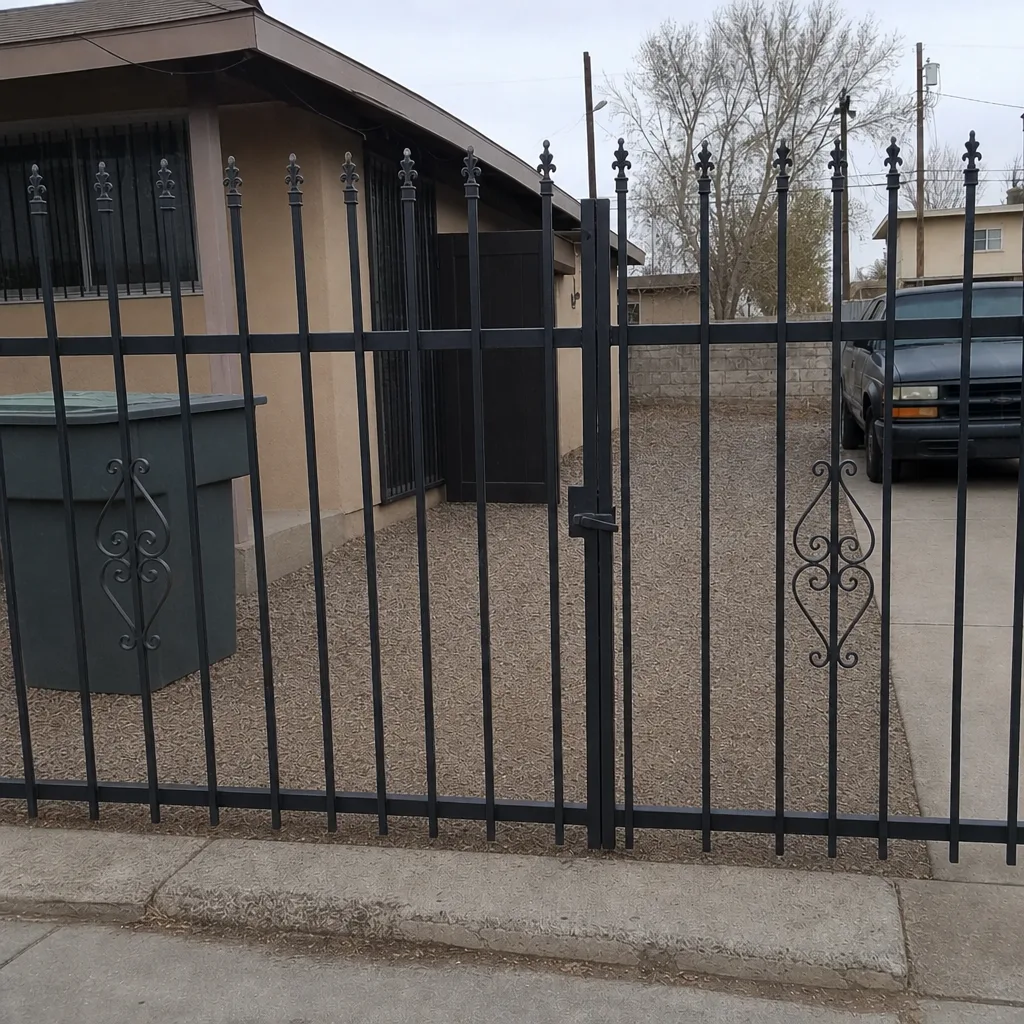 After
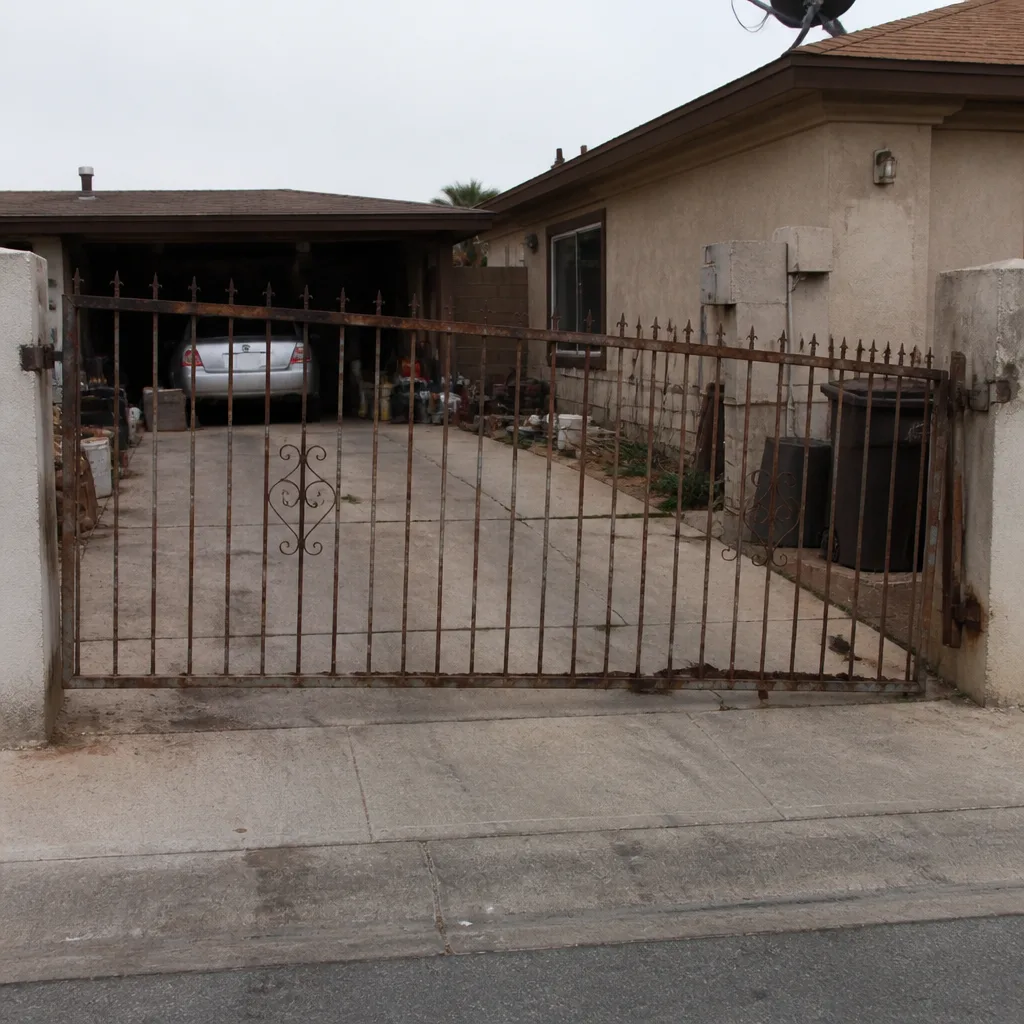 Before
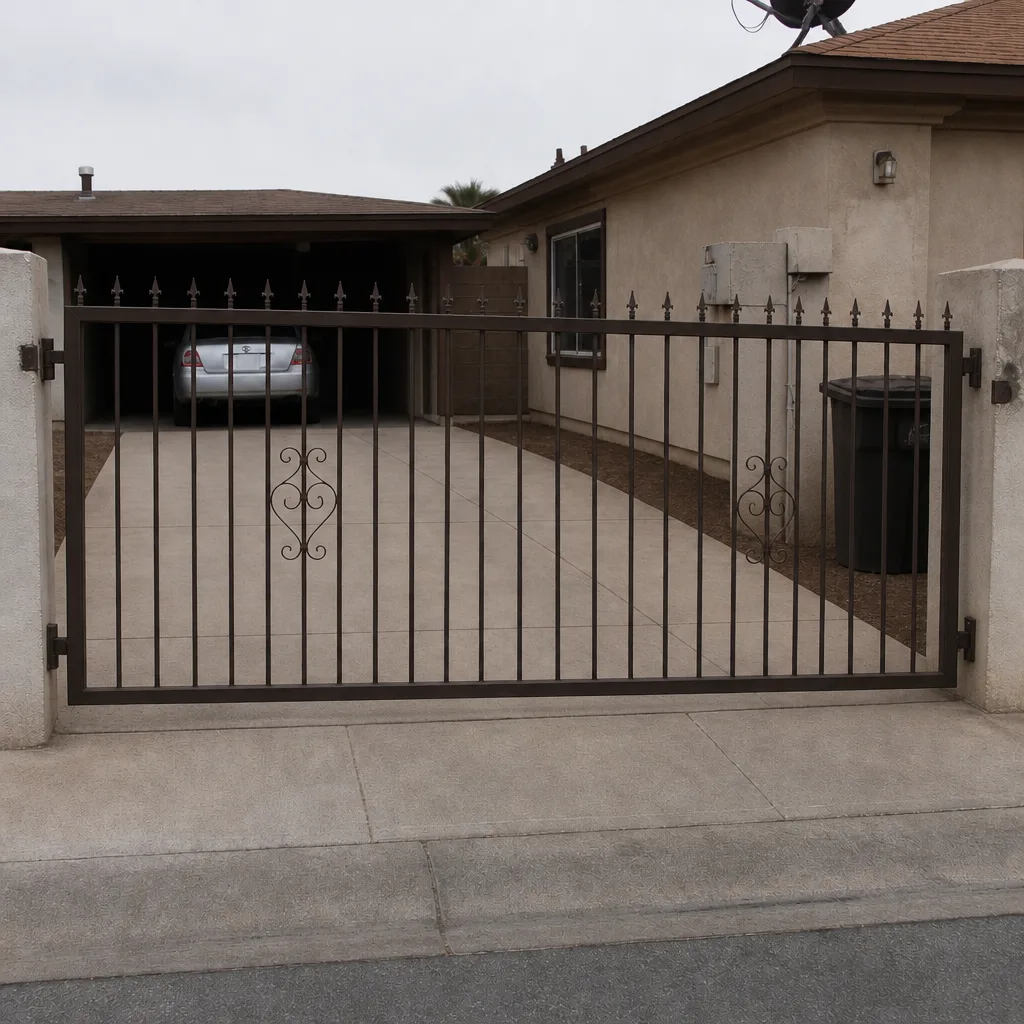 After
When to Call a Professional
Call a professional for anything involving the electrical side of the operator: the capacitor, amp draw, control board, limit switch calibration, or any overheating or resets that make the board suspect. Gate motors run on line voltage and carry springs and moving parts under load – the kind of thing where a mistake is genuinely dangerous, so leave it to a trained hand. Call for any structural repair too: a sagging hinge post, a loose motor bracket, a gate that has shifted and is now straining the operator. If the damage is real, our crew repairs on site with on-site welding so the gate stays in your driveway instead of being hauled off. Gatewood Fence & Gate North Las Vegas offers free estimates in North Las Vegas – call (844) 761-9351.
Frequently Asked Questions
Twice a year as a baseline, plus a dust purge after any major dust event – the September post-monsoon purge and the May pre-summer prep are the two anchors. Exposed slide gates on windy lots may need more frequent attention. The right interval depends on your gate and how much dust it sees, which is why a first visit to set the schedule pays for itself.
A dry-film or PTFE-based lubricant that doesn’t stay tacky. Standard white lithium grease catches fine grit and turns into a grinding paste on a rack exposed to desert dust. Clean the rack first, then apply a light coat, and follow your operator brand’s spec for enclosed gearboxes.
Yes, and you should – monthly. Start the gate closing, break the sensor beam or press the safety edge, and confirm the gate stops and reverses immediately. If it keeps closing, or only stops without reversing, stop using the gate and call for repair, because a gate that won’t reverse is a safety hazard.
Heat. Batteries in a control enclosure that hits well past 140 degrees in July sun age faster than the four years you’d expect in a mild climate – two to three years is common here. Testing the battery under load at the May prep is the best way to catch a weak one before it strands you.
Cleaning and re-lubricating the rack or chain, checking the enclosure and wiring, testing the obstruction sensors and auto-reverse, and the technician-only tasks: capacitor test, motor amp draw, and limit switch calibration. The price is quoted and agreed before any work starts, and every job carries our 90-Day Done Right Promise in writing.
We’re set up to service and maintain the major operator brands, including FAAC, BFT, Linear, and Viking, along with LiftMaster, Ghost Controls, DoorKing, Elite, and Mighty Mule. If you’re not sure what you have, tell us the model on the plate and we’ll confirm before we come out.
The Bottom Line
The manual isn’t wrong, it’s just written for somewhere else. In North Las Vegas, the dust and heat set the schedule, and the practical rhythm is a May heat prep, a September post-monsoon purge, a January battery and sensor check, and a monthly five-minute walk-around. Use the right dust-resistant lubricant, test your auto-reverse on a schedule, and hand the electrical and calibration work to a technician who can read what the meters tell them. Do that, and your operator will give you years longer than one run on the factory calendar. When you need a hand, we’re the locally owned shop on Gatewood Fence & Gate North Las Vegas home – a live person answers around the clock, and we offer free estimates. Looking ahead to a replacement? See Gate Installation in North Las Vegas.
Contact us today at (844) 761-9351 for a free estimate on gate motor maintenance or repair in North Las Vegas. We’ll set up a schedule that fits your gate and the desert, quote it upfront, and stand behind the work with our 90-Day Done Right Promise.
Written by the team at Gatewood Fence & Gate North Las Vegas.