
Last updated November 17, 2026
 Wrought iron
 Wood & steel frame
 Farm & ranch
 Sliding driveway gates
 LiftMaster operators
Free on-site gate assessment - hinges, posts, and your LiftMaster or Nice gate operator checked before anything is quoted
The assessment is free and the quote is the invoice.
Get your free estimateGate Access Control Maintenance Schedule: What to Do and When
The number-one reason keypads and card readers fail in North Las Vegas isn’t the hardware. It’s the alkaline battery corrosion that starts the moment summer heat hits 110°F inside a metal housing, long before the board itself ever quits. We’ve pulled keypads off posts in North Las Vegas where the batteries had cooked into a crusty green paste and the “dead” unit was actually fine underneath. Most access control failures follow a predictable decay pattern, and a seasonal checklist catches them before you’re locked out at midnight. This guide lays out the actual service intervals we use on North Las Vegas gates, not a vague “check it annually” throwaway.
Quick Answer
A working gate access control schedule runs on three tiers: a 90-day check of batteries, keypad buttons, and reader alignment; a 6-month service of wiring connections, strike and latch hardware, and backup power; and an annual full inspection of the control board, loop detectors, and operator integration. In North Las Vegas, the desert heat makes the 90-day and spring wiring checks the two that matter most. Miss them and you’re usually looking at a lockout, not a repair.
Styles & brands we work with
- Wrought iron
- Wood & steel frame
- Farm & ranch
- Sliding driveway gates
- LiftMaster operators
Table of Contents
- Why North Las Vegas Heat Sets the Schedule
- The 90-Day Check: Batteries, Buttons, and Readers
- Spring Wiring Inspection: The Joints Fail First
- The 6-Month Service: Latches, Power, and Backup
- The Annual Inspection: Board, Loops, and Operator
- Loop Detector Sensitivity: The Step Everyone Skips
- What You Can Check Yourself With a Screwdriver and Multimeter
- How to Log Maintenance So a Tech Can Read Your History
Why North Las Vegas Heat Sets the Schedule
Access control hardware is rated for a temperature range, and North Las Vegas spends a good chunk of the year at the top of it or past it. A metal housing sitting in full sun on a west-facing post along Commerce Street can read well over 140°F inside by mid-afternoon in July. That heat does three things at once: it cooks the electrolyte out of alkaline batteries, it expands and contracts every wiring connection point, and it ages the seals that keep fine desert dust out of the keypad and reader.
So the calendar most gate companies publish, built for a mild four-season climate, is the wrong calendar here. Our service intervals are shorter on the parts that heat attacks and standard on the parts it doesn’t. Batteries and connections get attention every 90 days. The control board, which sits in a shaded operator housing and doesn’t see the worst of it, can wait for the annual visit.
Dust matters as much as heat. North Las Vegas sits in the Mojave, and spring winds push fine grit into every seam. A keypad with dust packed behind the buttons starts registering phantom presses, and a reader lens filmed with dust starts failing to read cards at the gate. Wiping and reseating those parts quarterly costs almost nothing. Replacing a keypad because grit wore out the membrane costs real money.
None of this is guesswork. Twenty-five years of servicing gates in this climate shows the same pattern every year, and the schedule below is built around it. If you want the broader picture of how your access hardware ties into the rest of the system, our Gate Motor & Opener in North Las Vegas page covers the operator side.
The 90-Day Check: Batteries, Buttons, and Readers
This is the tier that prevents most lockouts. It takes under an hour and it’s the one we’d keep if we could only keep one. Do it in early spring, early summer, early fall, and early winter.
- Pull and inspect every battery. Keypads, standalone readers, and backup batteries in the operator housing. Look for white or green crust on the terminals, swelling, or a date code older than two years. Replace alkaline batteries on a schedule whether they test good or not, because in this heat a battery that reads fine in April can be dead by August.
- Test every button and the reader. Press each keypad button and confirm it registers. Wave a card or fob at the reader and watch for the relay click. A button that needs a hard press is on its way out.
- Clean the reader lens and keypad face. A dry microfiber cloth and a little compressed air. No solvents on a reader lens.
- Check reader and keypad alignment on the post. Loose mounting screws let the unit shift, and a reader that’s tilted a few degrees starts missing cards that used to work.
- Confirm the gate cycles cleanly after each entry. Bad access hardware gets blamed for operator problems and vice versa. Watch the gate open and close fully on a keypad command before you call it good.
If a keypad or reader has already failed, replacing it is straightforward work, and our Gate Repair in North Las Vegas page explains how we handle a failed unit so you’re not without access for days.
Spring Wiring Inspection: The Joints Fail First
Before temperatures spike, the single most useful thing you can do is inspect the wiring connection points. Not the control board. The connections. In our experience, the board is rarely the first thing to go. The terminals, splices, and wire nuts are.
Here’s why. Every metal connection point expands in the afternoon heat and contracts overnight, thousands of cycles a year. Over time a screw terminal backs off a quarter turn or a wire nut loosens, and the connection develops resistance. Resistance makes heat. Heat makes more resistance. Eventually a marginal connection drops the whole reader or keypad, and the homeowner assumes the expensive board died when a fifty-cent splice is the actual culprit.
What to look at each spring:
- Every screw terminal in the keypad, reader, and operator housing, snugged down (power off first).
- Wire nuts and splice points, looking for discoloration, melted insulation, or a loose cap.
- The low-voltage wire run where it enters the post, checking for sun-cracked insulation or rodent damage.
- Ground connections, which corrode faster in dusty desert air.
- The surge protection device, if the system has one, since monsoon-season lightning is a real risk in the North Las Vegas valley.
One safety note: this is low-voltage control wiring, but it shares an enclosure and often a circuit with line voltage at the operator. If you’re not comfortable confirming power is off at the breaker and the disconnect, leave this one to a trained professional. A 110-volt shock in a metal box is not a DIY lesson worth learning.
If you’re adding access control for the first time rather than maintaining an existing system, see our Gate Installation in North Las Vegas page for how wiring and hardware get planned from the start.
The 6-Month Service: Latches, Power, and Backup
Twice a year, go beyond the 90-day list. This is where you catch the mechanical wear that access control depends on. A keypad that “doesn’t work” is often a gate whose electric strike or latch has drifted out of alignment and the operator is binding against it.
- Electric strike and latch alignment. Command an open and watch the strike release. If the gate hesitates or the operator strains, the strike has shifted. Loosen, realign, retighten.
- Backup battery load test. The standby battery in the operator housing is what lets the gate open on a power cut. Test it under load, not just with a voltmeter at rest. Replace it if it won’t hold a command.
- Transformer and power supply check. Confirm output voltage at the supply is within spec, and look for heat discoloration on the transformer.
- Hinge and track lubrication, and a full gate cycle count. Access control triggers the gate; if the gate itself is stiff, the operator works harder and the whole system ages faster. We cover gate hardware in depth on the Gatewood Fence & Gate North Las Vegas home page.
- Clean the operator housing vents. Dust-clogged vents trap heat, and trapped heat is what kills boards and batteries.
Do this in spring and fall, timed to the shoulder seasons. Those are the windows when the hardware is under the least thermal stress and a tech can read the system’s true condition rather than its heat-stressed condition.
The Annual Inspection: Board, Loops, and Operator Integration
Once a year, the deeper components get a look. This is the visit where a technician earns their keep by finding problems before they strand you.
- Control board inspection. Look for swollen capacitors, burn marks, or corrosion on the board. In North Las Vegas, we regularly see corrosion on boards mounted in enclosures where dust held moisture after a rare rain.
- Full access device audit. Every keypad, reader, fob, and remote tested, and every credential in the system accounted for. Old tenant codes and lost fobs get cleared.
- Loop detector calibration, covered in the next section.
- Operator integration check. Confirm the access control sends clean commands to the operator and the safety edges still reverse the gate on obstruction. A gate that stops reversing is dangerous, not just annoying.
- Software and firmware review on connected systems, and a backup of the access list so it isn’t lost when a board does eventually fail.
We service nine major access and operator brands, including DoorKing, Elite, and Ghost Controls, and the annual inspection is tailored to how each one fails. A DoorKing system and a Mighty Mule system don’t age the same way, and a good technician checks the specific wear points for what’s installed.
Loop Detector Sensitivity: The Step Everyone Skips
If you look at a dozen published DIY gate checklists, almost none of them mention loop detector sensitivity calibration. It’s the one task that gets left off, and it’s often the reason a gate closes on a car or refuses to open for one.
The loop detector is the buried wire in the driveway that senses a vehicle and tells the gate to hold open or open on approach. It has a sensitivity setting, and over time that setting drifts as the loop wire’s inductance changes with ground temperature, moisture, and settling. Too sensitive and the gate won’t close because it thinks a car is always there. Not sensitive enough and it closes on a vehicle that’s genuinely in the path.
Calibrate it once a year, and again any time you notice the gate behaving oddly around a parked car. A technician adjusts the sensitivity with a small screw or a setting on the detector, tests it with an actual vehicle, and confirms the gate holds open when it should and closes when the path is clear. This is not a job to eyeball. A miscalibrated loop on a sliding gate is a genuine crushing hazard, and it’s exactly the kind of thing that gets flagged in a proper safety walk-through.
If your gate has been acting erratic around vehicles, that’s a call-a-professional moment, not a keep-driving-and-hope moment. Get it checked before someone gets hurt.
What You Can Check Yourself With a Screwdriver and Multimeter
Plenty of the schedule above is doable without opening the operator. Here’s the homeowner-replicable short list, and the honest line where it stops.
- Visually inspect every keypad, reader, and housing for cracks, loose screws, dust buildup, and heat discoloration.
- Test every credential (each code, fob, and card) and log which ones fail.
- Measure battery voltage at the keypad and standby battery terminals with a multimeter, both at rest and while the gate is commanded.
- Snug exposed mounting screws and reseat any loose reader or keypad on its post.
- Clean lenses and vents with a dry cloth and compressed air.
What we’d hand to a professional: anything inside the operator or control enclosure, anything involving line voltage, loop detector calibration, board-level diagnosis, and any safety-edge or reversing-system adjustment. Those carry real shock or crush risk, and a trained technician has the test equipment to verify the fix rather than guess at it.
How to Log Maintenance So a Tech Can Read Your History
A log is only useful if the next person can read it in thirty seconds. We’ve opened gate enclosures and found a folded receipt with “gate fixed” scrawled on it, which tells a technician exactly nothing. Here’s a format that actually helps.
- Date and what was done. “April 12 – replaced keypad batteries, cleaned reader.” One line, specific.
- What failed and how. Not “gate broke” but “keypad code 4 wouldn’t register on Tuesday, worked Wednesday.” Patterns live in those details.
- Brand and model of each device. Keypad, reader, operator. A tech who knows it’s a DoorKing versus a Ghost Controls arrives with the right parts and the right diagnostic steps.
- Who did the work. Name the company or note “homeowner.” It tells the next tech what standard the prior work was held to.
- Battery install dates. The single most useful line in the whole log. It stops a tech from guessing whether that battery is one year old or four.
Keep the log in a zip bag inside or beside the operator housing, or snap a photo of each entry and keep it on your phone. When a repair tech can read six months of history, they skip the guesswork and go straight to the likely cause. That saves diagnostic time on every visit and it’s the kind of thing our 90-Day Done Right Promise stands behind, because a job done right includes a clear record of it.
Common Mistakes to Avoid
- Waiting for a failure instead of running the schedule. Most access control lockouts we see in North Las Vegas were preventable. The part was decaying for months; nobody checked.
- Blaming the control board first. The board is the expensive part and rarely the actual failure. Check the wiring connections and the battery before anyone condemns a board.
- Ignoring batteries because they “still work.” In 110°F heat a battery can go from fine to dead in a single summer week. Replace on a schedule, not on failure.
- Skipping the spring wiring check. The expansion and contraction cycle peaks as temperatures climb. Spring is the window to catch a loose terminal before it strands you in July.
- Never calibrating the loop detector. Almost everyone leaves it off the checklist, and a drifted loop is a real safety hazard, not just an inconvenience.
- Running no maintenance log. Without a history, every technician starts from zero and you pay for the diagnostic time twice.
- Letting dust pack into the keypad and vents. Mojave grit gets into everything. A quarterly wipe and blow-out keeps hardware alive years longer.
See the difference
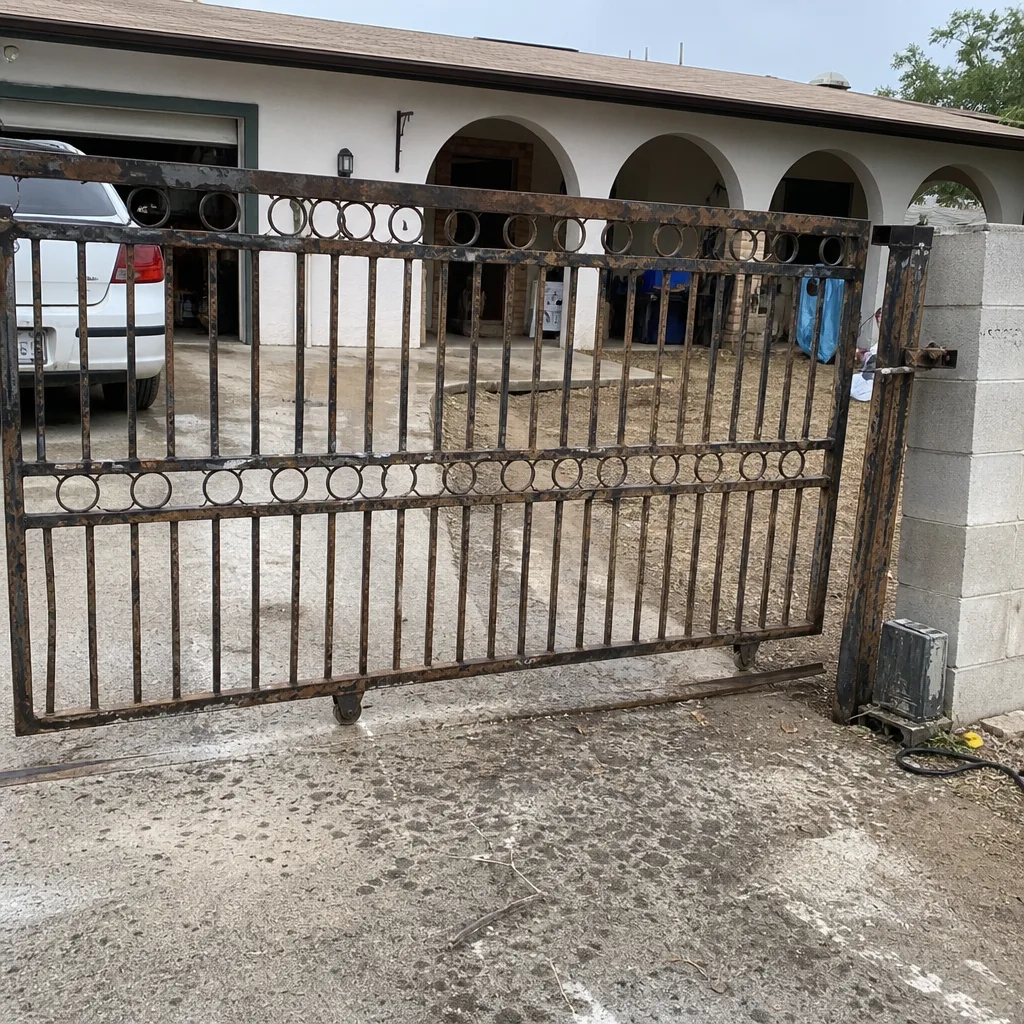 Before
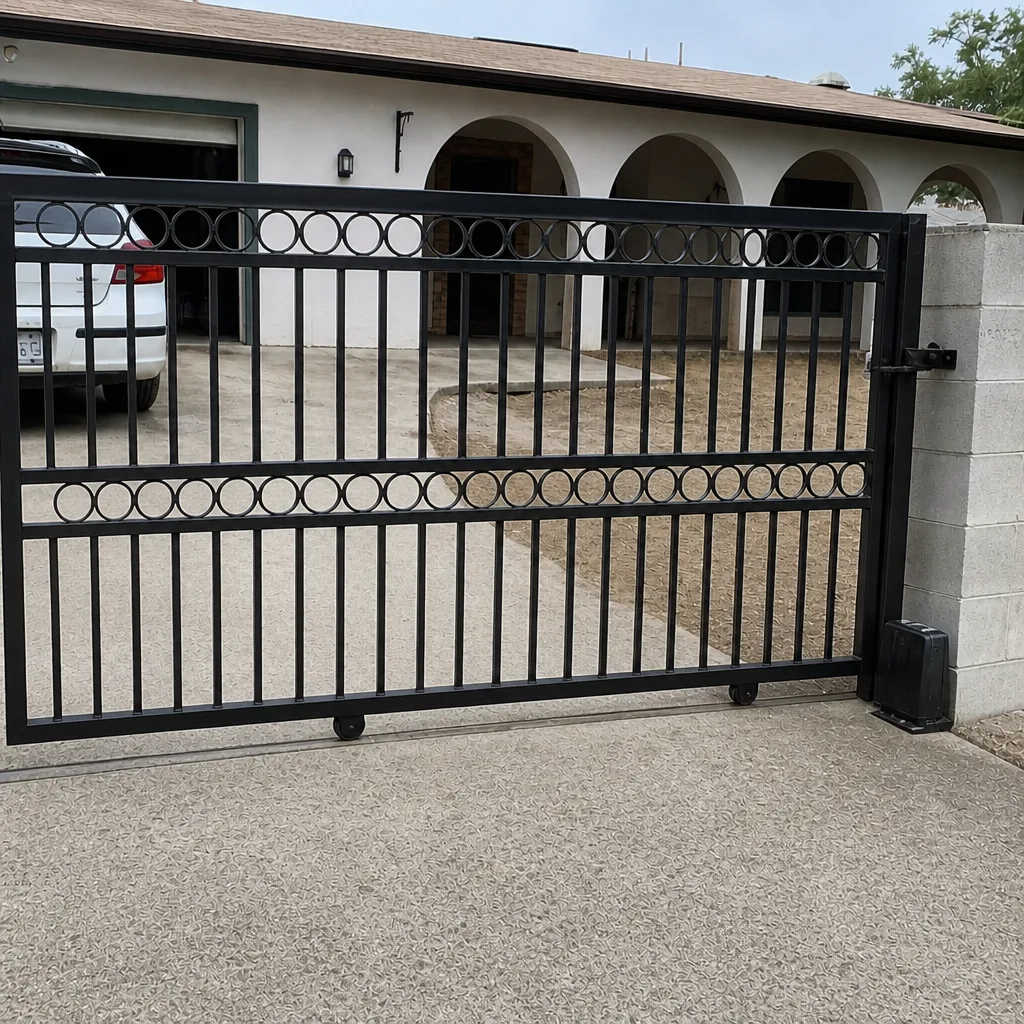 After
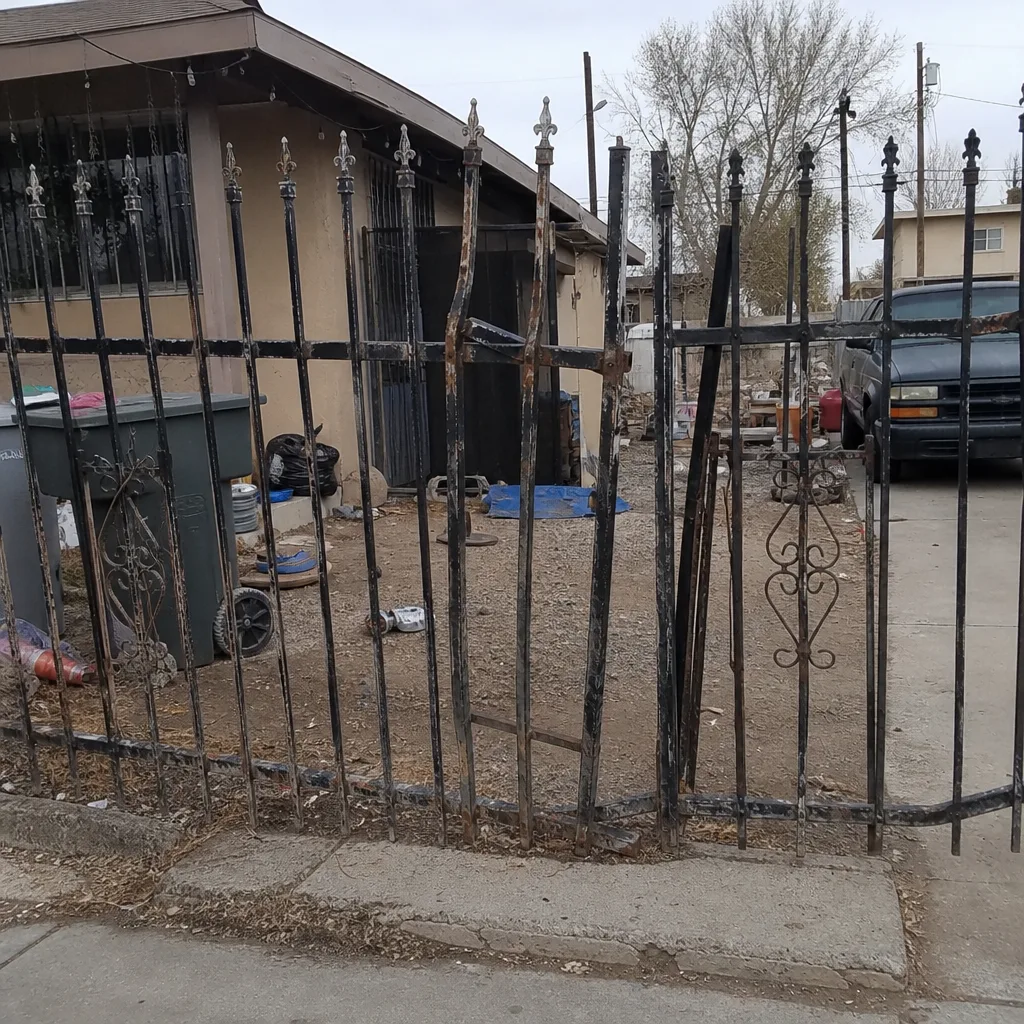 Before
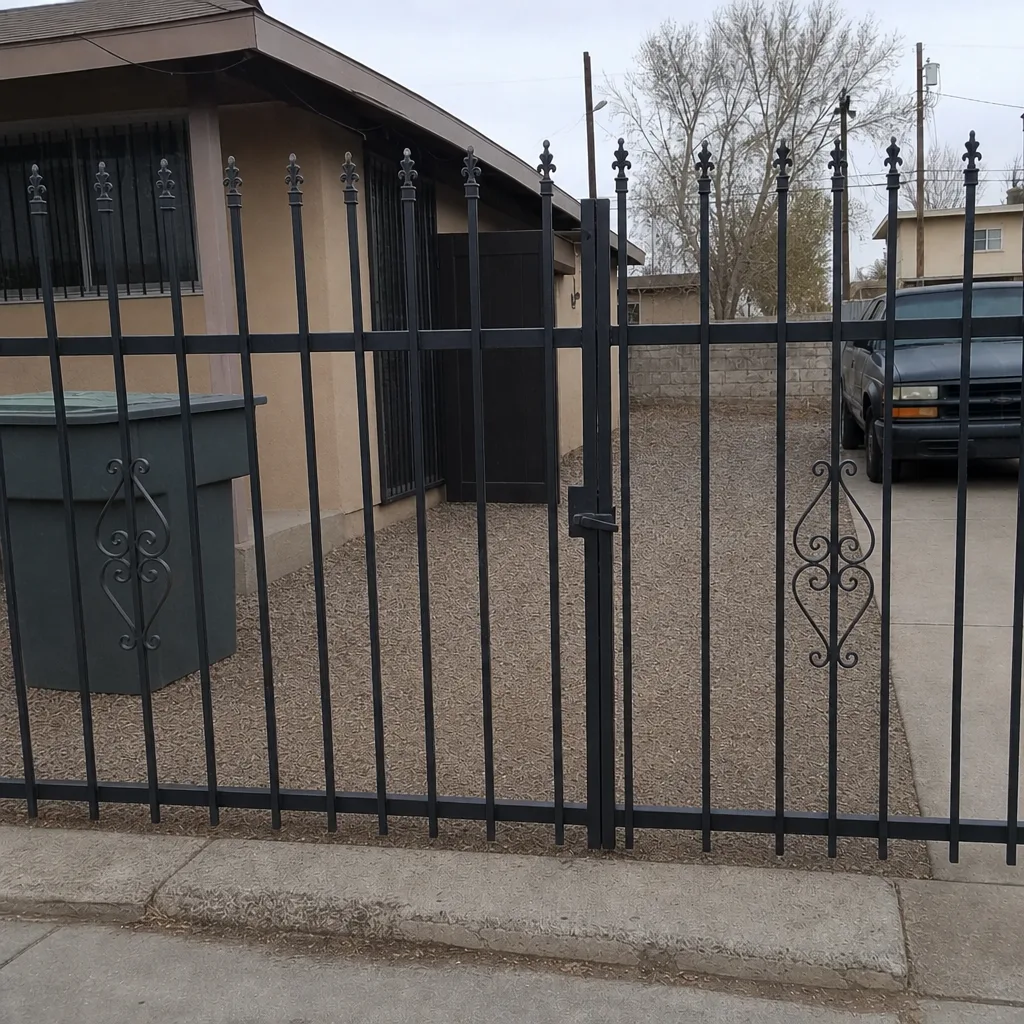 After
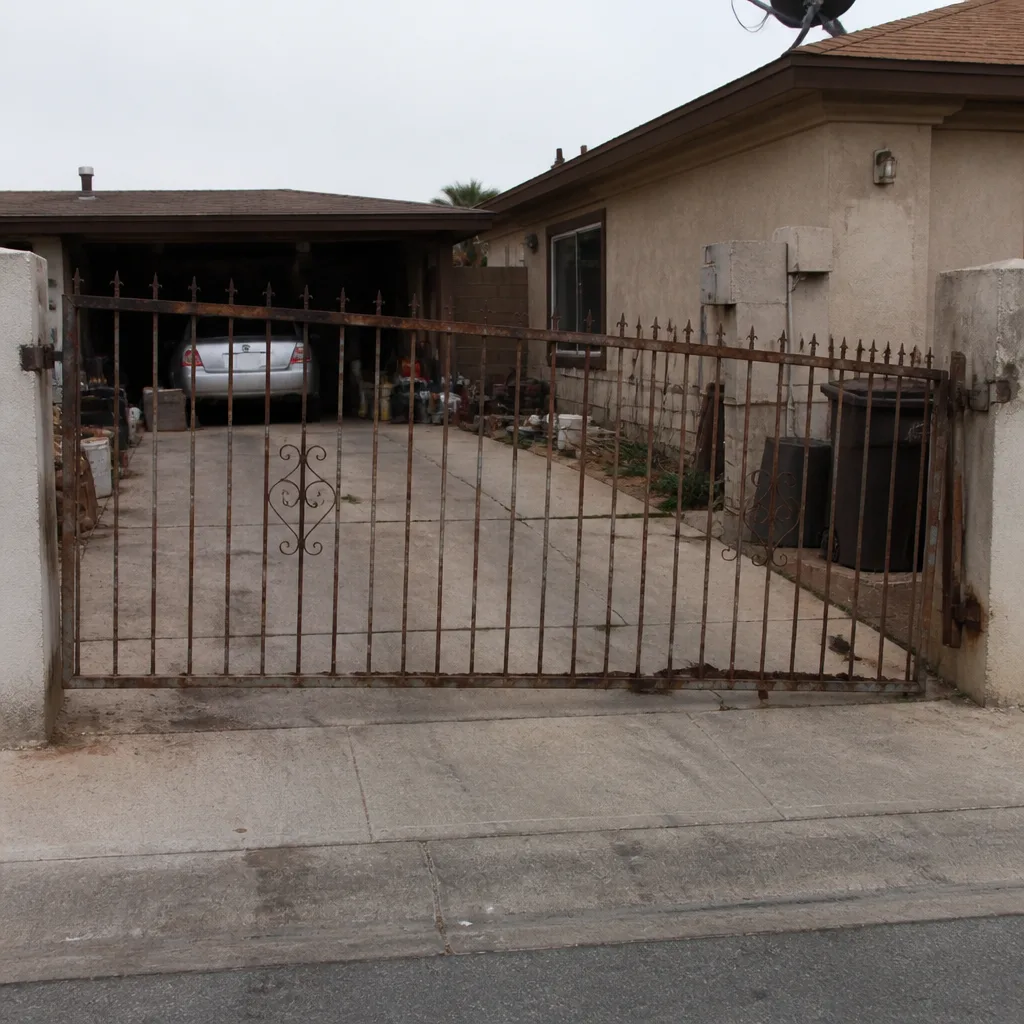 Before
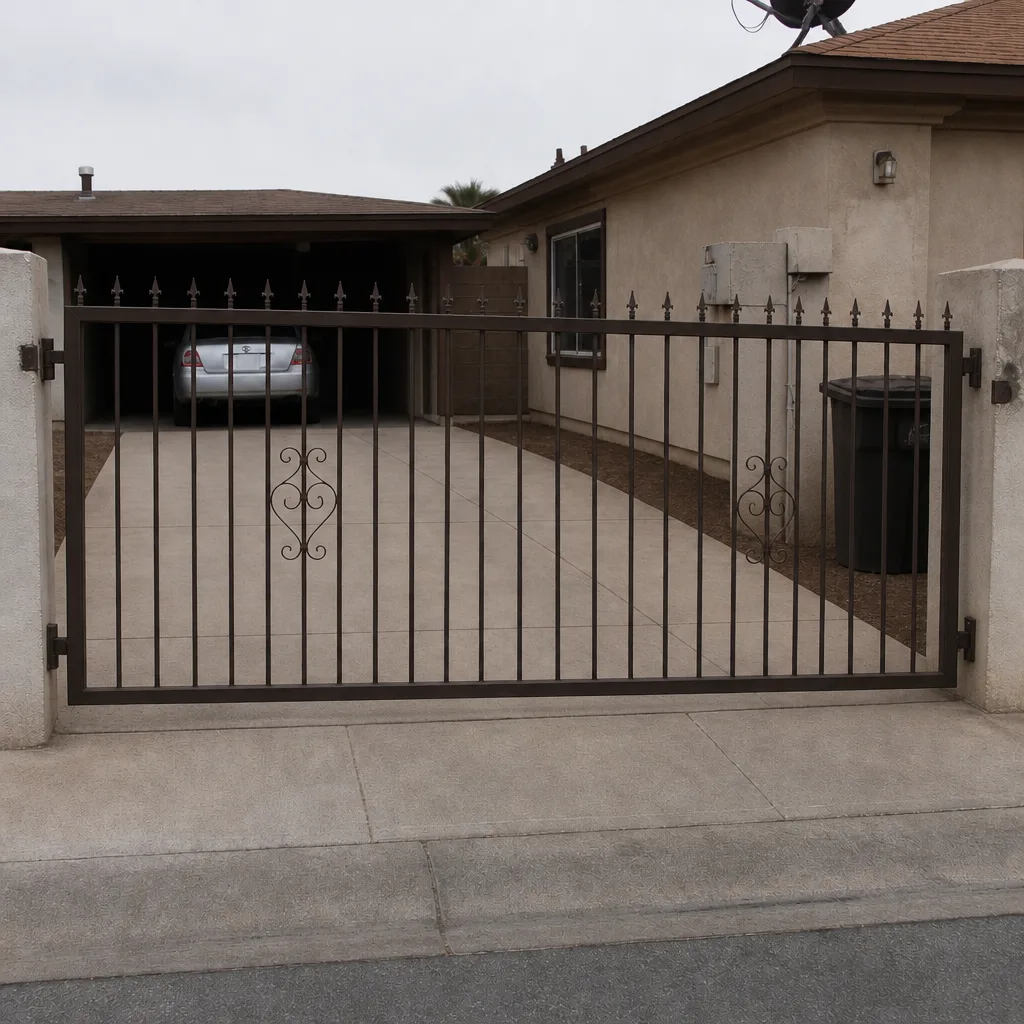 After
When to Call a Professional
Call when a keypad, reader, or fob suddenly stops working and a battery swap doesn’t fix it. Call when the gate hesitates, binds, or behaves oddly around vehicles, which usually means a loop detector or strike alignment problem. Call when you see burn marks, corrosion, or a warm spot in the control enclosure, and call before touching anything inside the operator or the line-voltage side of the system. Any time the gate fails to reverse on an obstruction or the safety edges seem off, stop using it and get it checked; a misbehaving gate is a crushing hazard. Gatewood Fence & Gate North Las Vegas offers free estimates in North Las Vegas and a free second opinion on any written estimate. Call (844) 761-9351.
Frequently Asked Questions
Every 90 days for batteries, keypad buttons, readers, and dust, plus a spring wiring inspection, a 6-month hardware and backup battery service, and an annual full inspection. The North Las Vegas heat shortens the intervals on batteries and connections compared with a mild climate, so the 90-day and spring checks matter most.
Heat and dust. Inside a metal housing in full sun, summer temperatures can exceed 140°F and cook the batteries into corrosive paste, while Mojave grit packs into buttons and lenses. The hardware is usually fine underneath. Replace the batteries on schedule and clean quarterly and most failures never happen.
The wiring connections. Screw terminals and splices expand and contract daily, loosen over time, and develop resistance that drops a reader or keypad long before the board itself fails. Inspect connection points every spring before temperatures spike. A lot of “dead board” calls turn out to be a loose terminal.
It’s adjusting the buried driveway loop so it correctly senses vehicles. Sensitivity drifts with ground temperature and settling, and a miscalibrated loop either refuses to close or closes on a car. Calibrate it once a year and any time the gate acts erratic around vehicles. It’s a safety item, so have it done by a trained professional.
You can handle the visual inspection, credential testing, battery voltage checks, mounting-screw tightening, and cleaning. Leave anything inside the operator or control enclosure, line voltage, loop calibration, board diagnosis, and safety-edge adjustment to a technician. Those carry shock or crush risk and need proper test equipment.
Not legally, but keep one anyway. A log with dates, device brands and models, battery install dates, and what failed saves diagnostic time on every visit. A tech who can read your history goes straight to the likely cause instead of starting from scratch.
The Bottom Line
Access control failures in North Las Vegas follow a pattern, and the schedule that intercepts it is short: 90-day battery, button, reader, and dust checks; a spring wiring inspection timed before the heat climbs; a 6-month hardware and backup battery service; and an annual deep inspection with loop calibration. Add a simple log and a multimeter, and you’ll catch most problems months before they lock you out. Leave the operator internals, line voltage, loop calibration, and safety edges to a trained technician. A quarter of an hour every three months is the difference between a gate that works for years and one that fails at midnight.
When something does fail, or when you’d rather have the whole schedule handled by someone who’s seen these gates for twenty-five years, call Gatewood Fence & Gate North Las Vegas at (844) 761-9351 for a free estimate. Every job is quoted and agreed before any work starts, it carries the 90-Day Done Right Promise in writing, there’s no trip charge inside the county, and a live person answers the phone around the clock.
Written by the team at Gatewood Fence & Gate North Las Vegas.