
Last updated November 17, 2026
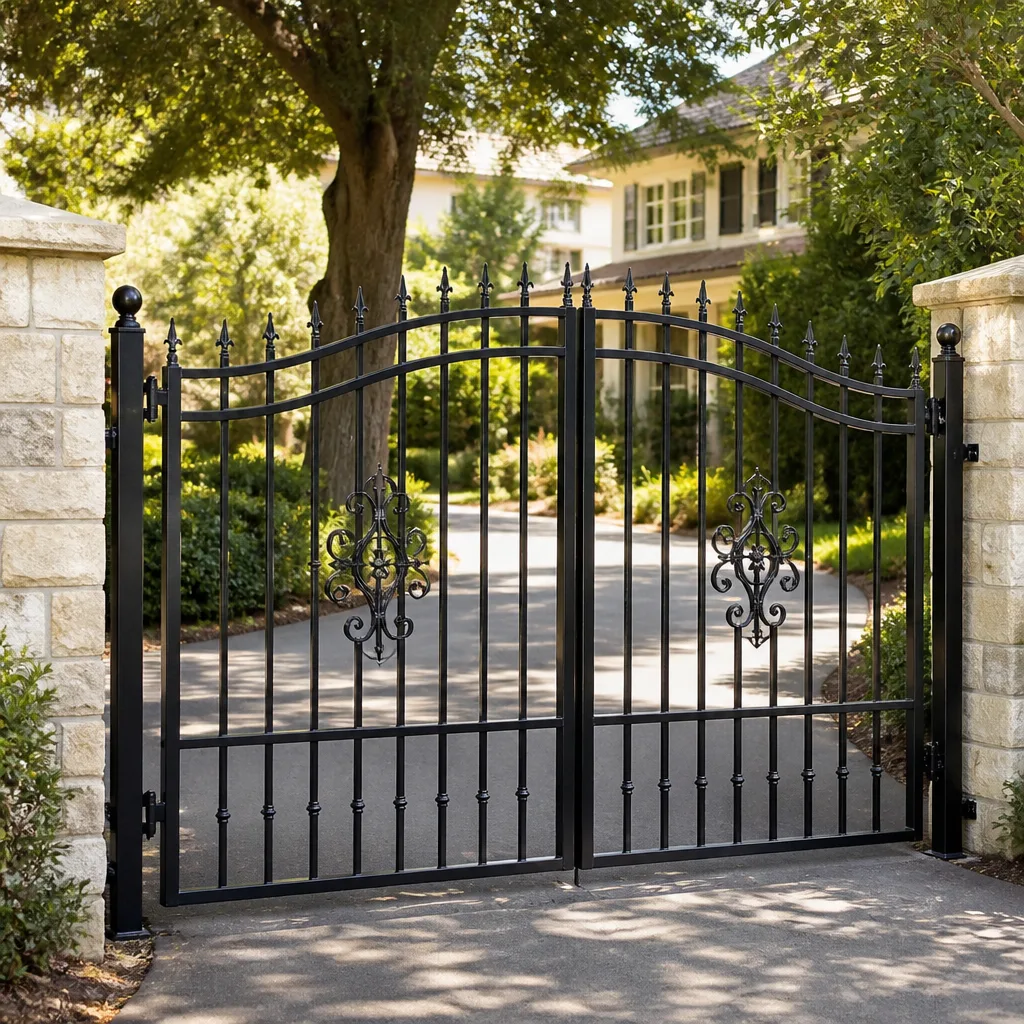 Wrought iron
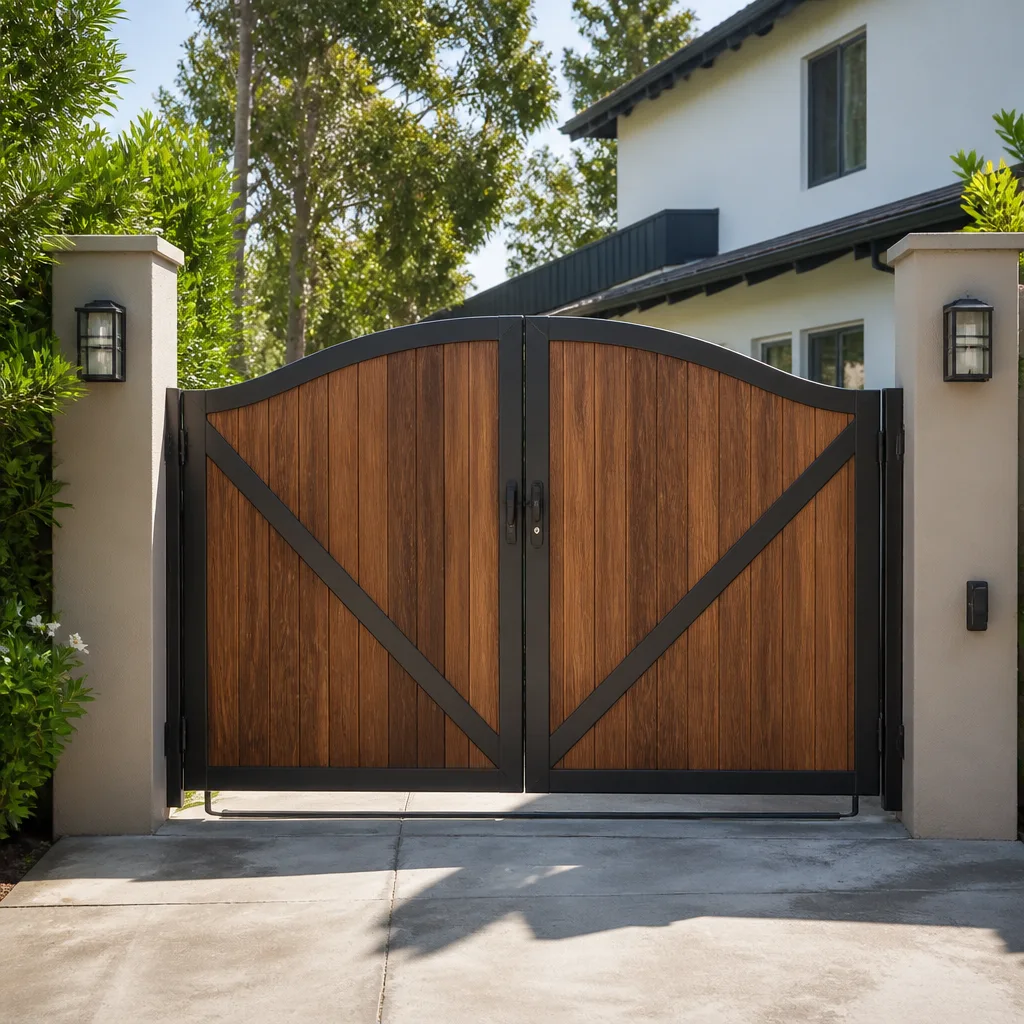 Wood & steel frame
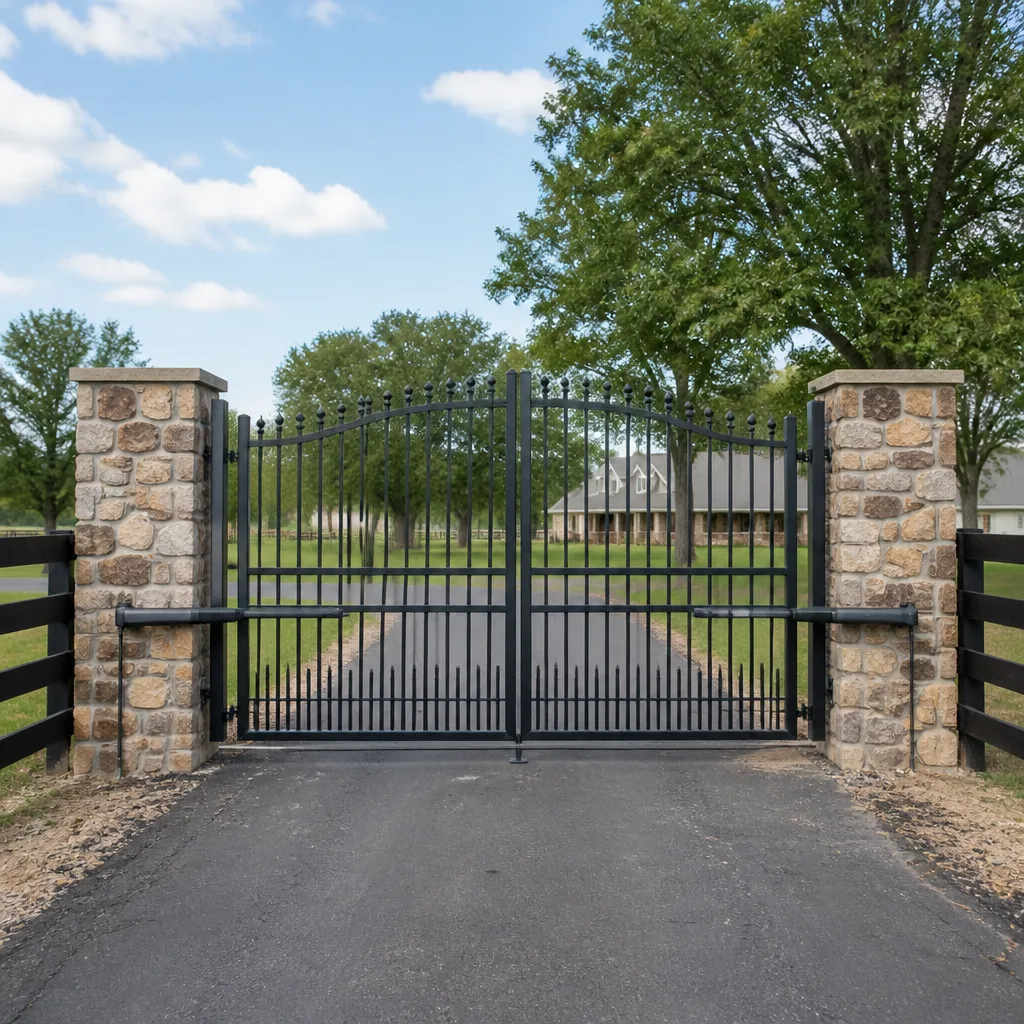 Farm & ranch
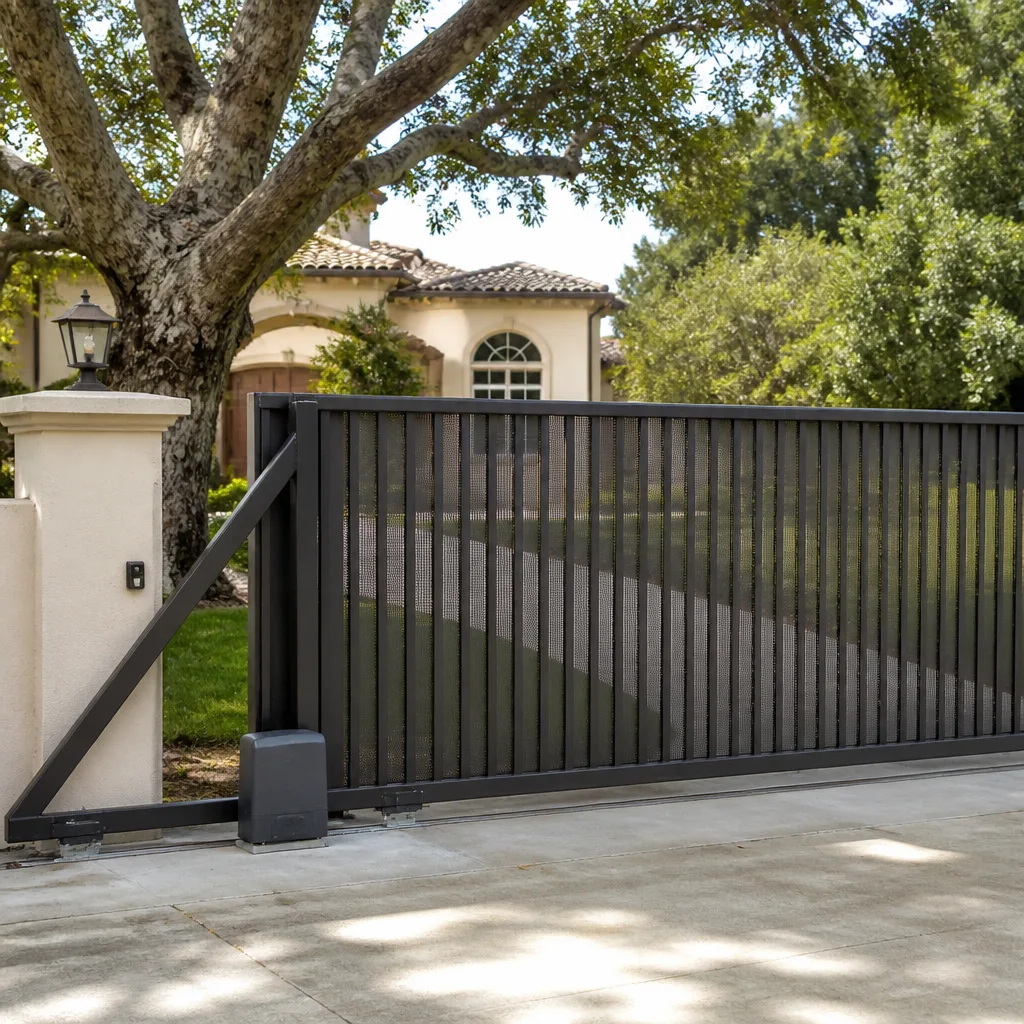 Sliding driveway gates
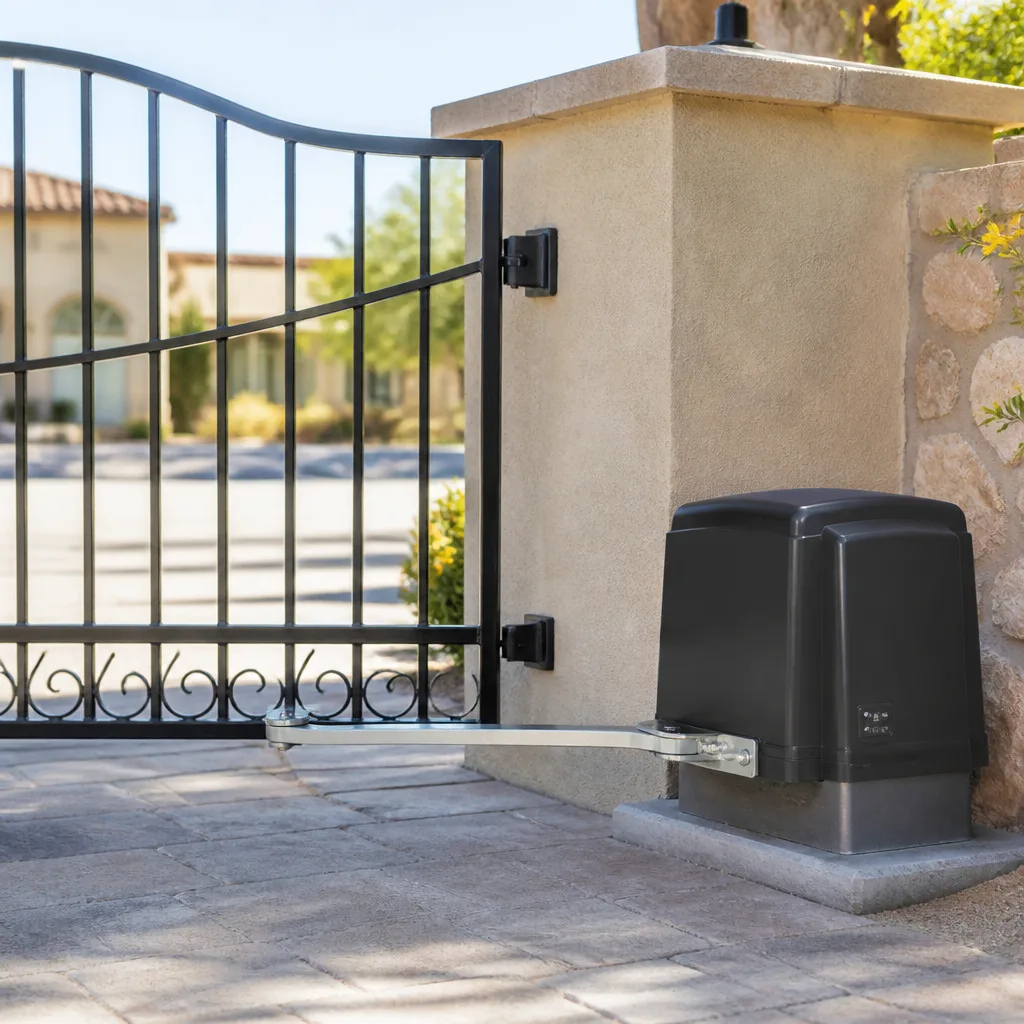 LiftMaster operators
Free on-site gate assessment - hinges, posts, and your LiftMaster or Nice gate operator checked before anything is quoted
The assessment is free and the quote is the invoice.
Get your free estimateThe Complete Gate Parts & Welding Guide for North Las Vegas Homeowners
A gate hinge rated for 20 years in Seattle will show stress cracking in 8 to 10 years in North Las Vegas. That’s not a manufacturing defect. That’s the Mojave doing what it does. The combination of alkaline soil, hard water, 40-degree daily temperature swings, and relentless UV exposure here wears gate metal in ways most manufacturers never designed for. Buy or repair a gate in North Las Vegas without understanding those conditions and you’re solving for the wrong environment, which is how homeowners end up replacing hardware every few years instead of every couple decades. This guide breaks down every major gate component, explains how each one behaves in Clark County, and shows you what a legitimate repair quote looks like.
Quick Answer
Gate parts in North Las Vegas fail faster than national averages because alkaline soil corrodes buried posts, hard water attacks welds and moving parts, and UV degrades powder coatings years ahead of schedule. The right strategy is to spec corrosion-resistant materials, weld on site instead of hauling the gate away, and itemize every repair line before work starts. Understanding your hinges, latches, posts, and infill panels is what separates a gate that lasts 20 years here from one that starts sagging in five.
Styles & brands we work with
- Wrought iron
- Wood & steel frame
- Farm & ranch
- Sliding driveway gates
- LiftMaster operators
Table of Contents
- Why Gates Fail Faster in North Las Vegas
- Hinges: The Component That Decides Everything
- Latch Hardware: Small Parts, Big Consequences
- Frames and Infill Panels: What to Look For
- Posts: The Foundation Nobody Sees
- Galvanized vs. Powder-Coated vs. Raw Steel in Clark County
- What On-Site Welding Fixes vs. What It Only Patches
- Cost-Cutting Substitutions That Come Back as Repair Calls
- How to Read a Repair Quote: Itemized vs. Vague
Why Gates Fail Faster in North Las Vegas
North Las Vegas sits in a corridor that punishes metal. Summertime surface temperatures on a sun-exposed steel gate routinely hit 150°F and higher. Winter nights drop into the 30s. That daily expansion and contraction cycle alone works fasteners loose and micro-cracks welds over years. Now add the actual chemistry of this place.
The soil here runs alkaline, often above pH 8, and it retains salt from irrigation water. Buried posts, gate bottoms, and anchor plates corrode from the ground up. If you’ve ever pulled a post out of the ground in Aliante or Eldorado and found the bottom third eaten to lace, that’s not a bad post. That’s the local soil doing exactly what it does to unprotected steel.
Our water is hard, loaded with calcium and magnesium. Splash from irrigation heads and hose-downs leaves mineral deposits on welds and moving parts that trap moisture against the metal. Combined with UV that degrades powder coating in six to eight years instead of the fifteen or twenty advertised, you get a gate that looks fine at year five and is quietly failing at year eight. That’s why a regular inspection matters more here than in most of the country. In North Las Vegas, we regularly see hinge-side failures on gates that were installed with plenty of margin for a milder climate but not enough for this one.
Hinges: The Component That Decides Everything
A gate sags in the hinge post, not in the middle. That’s where the failure starts, and that’s the first thing we check. If your gate drags, doesn’t latch cleanly, or swings on its own, the hinge has usually gone before the frame has. Hinge and gate hardware selection is the single most important decision in the whole assembly, and it’s the one most buyers ignore.
Here’s what the major hinge types are made of and how they behave in North Las Vegas:
- Weld-on steel barrel hinges. Strongest option for tube-frame gates. Steel barrel with a grease zerk is best because you can inject fresh grease twice a year, which pushes out the alkaline dust and hard-water grit that eats the pin. Plain steel without a zerk will seize in this climate within three or four years if it’s not maintained.
- Bolt-on hinges with nylon bushings. Common on residential driveway gates. The nylon dries out under UV and cracks. If you buy these, look for UV-stabilized bushings, and expect to replace the bushings every few years. Cheaper than replacing the whole hinge.
- Stainless steel hinges. The right choice when corrosion is the primary threat. More expensive up front, but they won’t rust out from hard-water splash. Worth the upgrade in North Las Vegas if the gate is anywhere near irrigation.
- Spring-loaded or self-closing hinges. Essential for pool gates under current safety codes, and useful on any pedestrian gate. The spring is the failure point. Buy hinges where the spring is serviceable rather than sealed.
When you inspect, look for rust bleeding from the pin, play side to side when you lift the gate, and elongation of the bolt holes. Any of those means the hinge is committing to fail. Catching it now is a $80 to $200 repair. Catching it after the hinge post cracks is four figures. If the hinge has already pushed the frame out of square, our Gate Repair in North Las Vegas team can re-weld and re-square the gate on site rather than replacing it.
Latch Hardware: Small Parts, Big Consequences
Latches get treated as an afterthought and then blamed when the gate “won’t stay closed.” The latch is doing exactly what the sagging hinge told it to do. Before you replace a latch that won’t engage, check whether the gate has dropped. Nine times out of ten the latch is fine and the hinge needs attention.
Common residential latches in North Las Vegas:
- Magnetic catches. Popular on pedestrian gates. The magnet housing is usually pot metal or zinc, and the magnet loses strength in heat. In summer sun they can fail to hold within two years. Look for versions with a mechanical backup.
- Gravity latches. Simple, reliable, and the best choice for a hot climate because there’s no spring to fail. A well-made gravity latch will outlast most gates.
- Slide bolt latches. Great for gates with two panels. Look for stainless steel bolts, not plated steel, or the bolt will rust into the sleeve.
- Self-latching pool gate hardware. Required for pool gates by current safety codes. Do not substitute a standard latch here. If you’re not sure what code applies to your pool enclosure, that’s a call for a licensed professional to inspect.
The one upgrade we’d make on almost every North Las Vegas pedestrian gate is moving from a spring latch to a gravity latch. Fewer moving parts means fewer things the Mojave can ruin.
Frames and Infill Panels: What to Look For
The frame carries the whole structure’s load. Infill panels are what you see through. They have completely different failure modes, and buying one without considering the other is how people end up with a beautiful gate that sways every time the wind hits it.
Frame stock, ranked for our climate:
- 1/8-inch wall steel tube, welded seams. The standard for residential driveway gates. Adequate if welded correctly and powder-coated. Thin-wall 1/16-inch tube is a cost cut that shows up as dents and flex within a couple of years.
- Galvanized steel tube. Handles the alkaline soil and splash better than raw steel because the zinc coating sacrifices itself before the underlying steel corrodes. Best value in North Las Vegas.
- Powder-coated steel. The coating protects, not the metal. When the coating fails at welds and sharp edges, corrosion starts underneath. Annual touch-up is required, especially at corners.
- Aluminum frame. Won’t rust, which is a real advantage, but it’s softer and more expensive to weld. Fine for pedestrian gates and decorative panels, less ideal for wide driveways.
For infill, pick based on what you want to see through and how much wind you get. Wrought iron pickets last a lifetime but require paint or powder coat maintenance. Wood fills in and needs sealing against UV and moisture. Composite will fade in the North Las Vegas sun within a decade, but it won’t rot. Any gate over 12 feet wide should be a cantilever or rolling design rather than swinging simply because swing hardware won’t handle the load in this soil. If you’re choosing a design from scratch, our team can walk you through this on a Gate Installation in North Las Vegas call before you commit.
Posts: The Foundation Nobody Sees
The hinge post is the load-bearing member of the entire assembly, and it’s buried in the alkaline soil that quietly eats it. The most common hidden problem we find in North Las Vegas is a hinge post that’s internally rusted out from the bottom up, still looks solid, and is the actual reason the gate sags.
What a properly specced hinge post looks like here:
- Galvanized or thicker wall steel, not raw steel tube. The post sees more ground contact than any other part.
- Set in concrete well below grade with the concrete crown sloped away from the post. Standing water at the post base is the enemy.
- Minimum 4-inch tube for a residential driveway gate, 6-inch or larger for anything over 14 feet wide. Undersizing the post is the number one cause of premature sag.
- Bottom plate isolated from soil where possible, or slathered with a bituminous or epoxy coating to slow corrosion. Cheap insurance.
Fix the panel without the post and you’ll fix it twice. If the post wobbles when you push the gate, stop adjusting the hinges. The post is telling you what’s wrong.
Galvanized vs. Powder-Coated vs. Raw Steel in Clark County
The finish choice is where most homeowners under-budget, and it’s the choice that decides whether the gate lasts five years or twenty in Clark County’s particular air and soil.
- Raw steel. Cheapest, and the fastest to fail here. Requires a quality paint job and annual maintenance. Fine for a decorative gate that’s mostly under shade, hopeless on a south-facing driveway gate.
- Powder-coated. Better than paint, but the coating fails first at welds and cut edges where the coating is thin. In North Las Vegas the UV index pushes the coating to fail faster than the manufacturer’s warranty implies. Expect touch-up every two to three years, full re-coat every eight or so.
- Galvanized. The clear winner in this climate. The zinc coating works by sacrificing itself, so the whole gate doesn’t have to be perfect to stay protected. Even where the zinc scratches, it protects the steel around it. Pair galvanized steel with a powder coat topcoat on visible surfaces and you get the longest life available short of stainless.
- Stainless steel. Highest cost, longest life. Justified when the gate is near the pool or anywhere irrigation splash is constant.
Whichever finish you choose, the detail that matters is what’s happening inside the tube and at the welds. Sealed tube ends and fully welded joints (not tack welds with gaps) prevent the corrosion that starts from the inside out.
What On-Site Welding Fixes vs. What It Only Patches
On-site welding keeps the gate in your driveway instead of loading it onto a trailer where it loses alignment and comes back with fresh dings. That’s the practical case for it. But the more important question is what welding actually fixes versus what it masks.
Welding genuinely fixes:
- Broken hinge-side welds. A proper re-weld with the gate realigned and the post anchored is a permanent repair.
- Cracks at corners and joints. Once welded and dressed, the joint is as strong as the surrounding metal.
- Failed latch plates and stops. These are structural details that welding restores cleanly.
- Sagging gates with good posts. Re-square the frame in place, re-weld the diagonal brace, and the gate swings true.
Welding only patches (temporarily):
- A hinge welded to a rotting post. If the post is compromised, welding to it is welding to rust. The gate will fail again within a year.
- Thin tube walls. If the original tube is 1/16-inch and rusted, a weld will blow right through. Better to replace the section than to chase it.
- Corrosion starting from inside the tube. You can weld the surface, but the internal corrosion keeps spreading. Sealed, galvanized stock is the fix, not more weld.
Telling the difference is the whole job. We refuse the temporary fix when it isn’t honest, and we explain why. If a gate motor is involved in the failure, that’s usually a separate issue on the control side, and our Gate Motor & Opener in North Las Vegas team handles that alongside the mechanical repair so you’re not calling two outfits.
Cost-Cutting Substitutions That Come Back as Repair Calls
Most “mystery” gate failures we diagnose in North Las Vegas (and in nearby North Las Vegas neighborhoods like Aliante, Eldorado, and the northern reaches of Craig Road) come back to a substitution someone made to hit a price. These are the ones we see most often, and what they cost you over time.
- Thin-wall tube instead of 1/8-inch. Saves a few hundred up front and shows up as dents, flex, and cracked welds within 24 months.
- Raw steel post instead of galvanized. Saves small money on the post, then costs a full re-post job when the base rusts through.
- Cheap bolt-on hinges for a heavy gate. Saves a bit on hardware and costs a hinge replacement plus a re-square within three years.
- Tack welds with gaps instead of full welds. Looks fine on delivery, fails at year two when moisture gets inside.
- Standard latch on a pool gate instead of self-latching safety hardware. A code violation and a genuine safety problem. Never accept this.
- Nylon bushings without UV stabilization. Cheap bushings crack within one or two summers here and let the gate wobble.
- Rushed post concrete without crown slope. Standing water at the base eats the post from below.
All of these look like savings on the invoice and none of them are. The reason we’re picky about this is that we end up seeing the consequences in the driveway eight to twenty-four months later, and it always costs more to fix than to spec the right part the first time.
How to Read a Repair Quote: Itemized vs. Vague
A legitimate repair quote tells you what’s being fixed, with what part, and why. If you see “labor and materials” as the only line, ask for the breakdown before you agree to anything. In North Las Vegas, a well-itemized gate repair quote typically looks like this:
- Diagnosis line: what the inspection found, in plain language (“hinge post failed at base, gate dropped 3/4 inch”).
- Parts line(s): each part named with brand and quantity (two hinges, one latch plate, three feet of 1/8-inch galvanized tube).
- Labor line(s): welding, realignment, post work, painting, all separated.
- Mobility and access notes: whether the gate stays on site or comes off, and any permits or code compliance involved.
- Total, plus the guarantee: what’s covered and for how long, in writing.
Vague quotes (“$X flat, parts and labor”) leave the door open for a mid-job upsell, which is exactly what most people we meet in North Las Vegas have already been through. The price should be agreed before work starts and should not change because the job turned out to be what the diagnosis already said it was. If you want a free second opinion on a written estimate someone else gave you, that’s a standing offer we make on every job. Call (844) 761-9351 for an exact quote, and we’ll walk you through any line item you don’t understand.
Common Mistakes to Avoid
- Adjusting hinges on a gate whose post has failed. You’ll buy six months at best before the sag returns, and you’ll have paid twice. Push the post; if it moves, the hinge adjustment won’t hold.
- Buying the cheapest raw-steel hinge set at a big-box store. That hinge was designed for a milder climate and it will show stress cracking years early in North Las Vegas. Spend the extra for galvanized or stainless.
- Accepting “labor and materials” without itemization. If the quote doesn’t name parts, brands, and quantities, you don’t have a quote, you have a number.
- Letting a contractor haul the gate off “for welding.” Gates come back out of square and with damage from transport. On-site welding is the honest method when the gate can stay put.
- Skipping annual touch-up on powder coat. In this UV, a small touch-up at year two prevents a full re-coat at year six. It’s the cheapest maintenance you can do.
- Letting the concrete crown at the post base slope toward the post. Standing water at the base is the number one hidden killer of gate posts here. Check the slope even on existing gates.
- Replacing a functional gate because one part failed. A hinge, a latch, or a weld is often the whole problem. Ask for a repair-first diagnosis in writing before you accept a replacement quote.
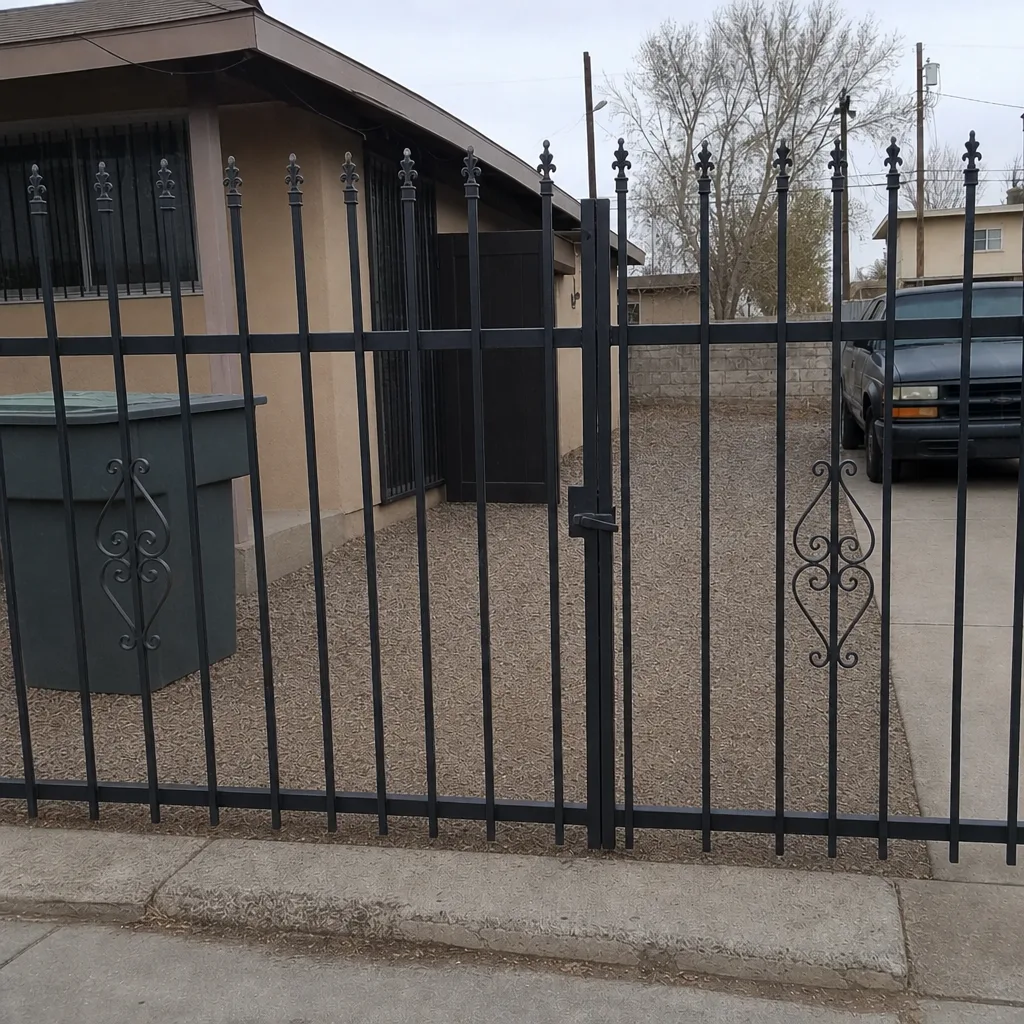
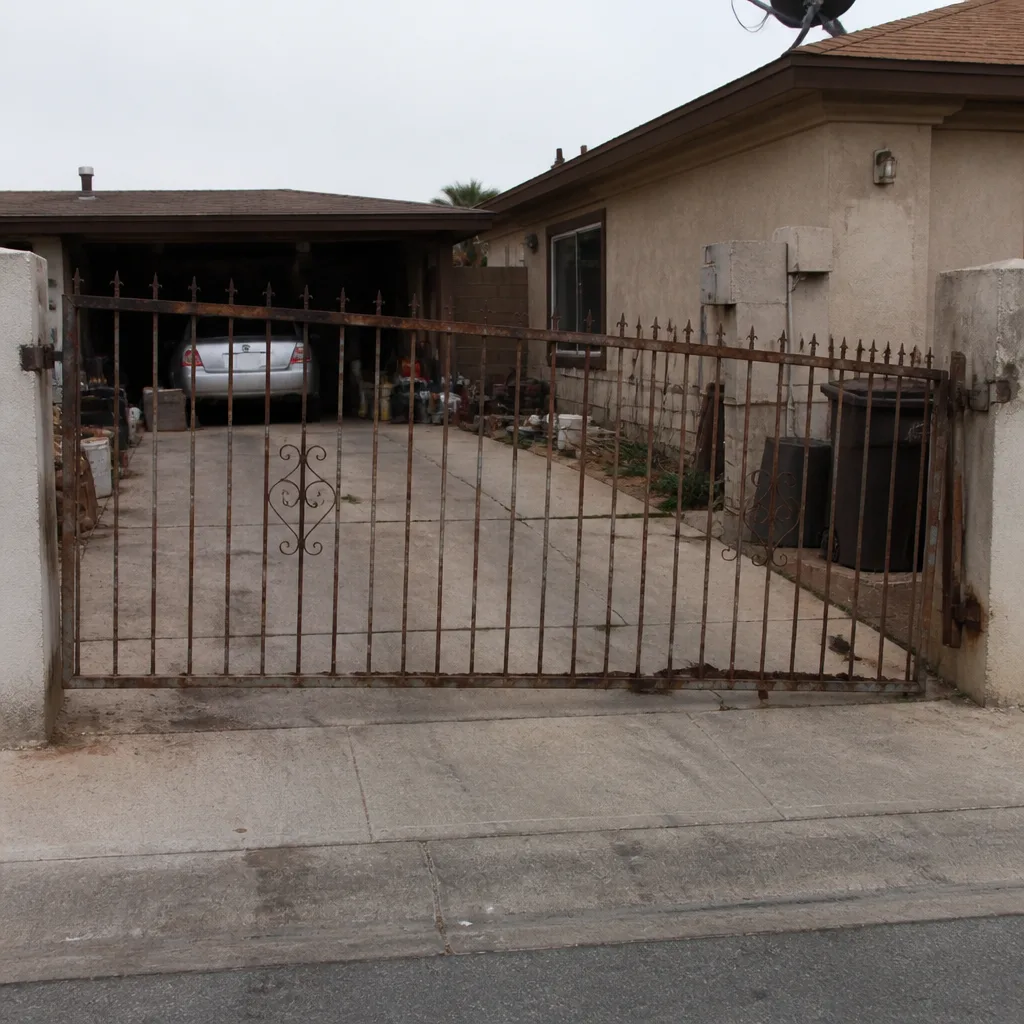
See the difference
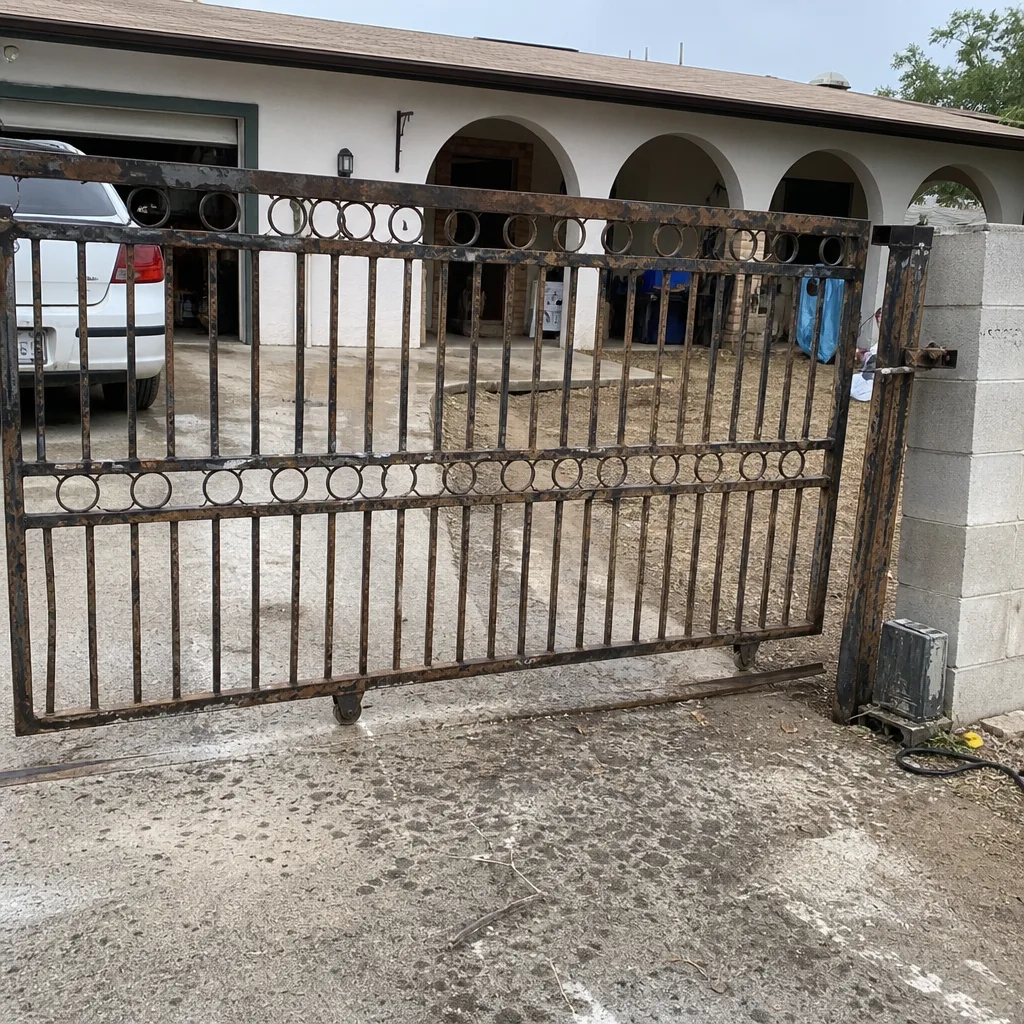 Before
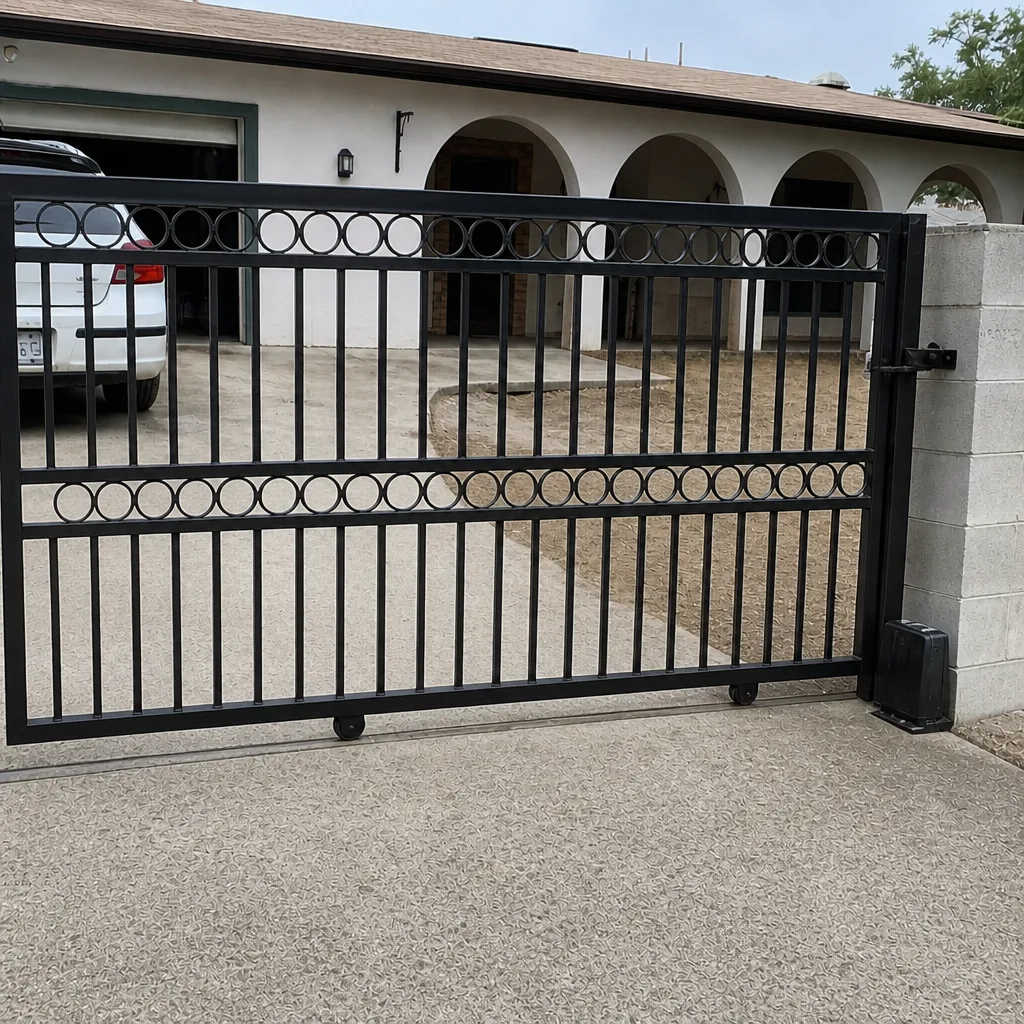 After
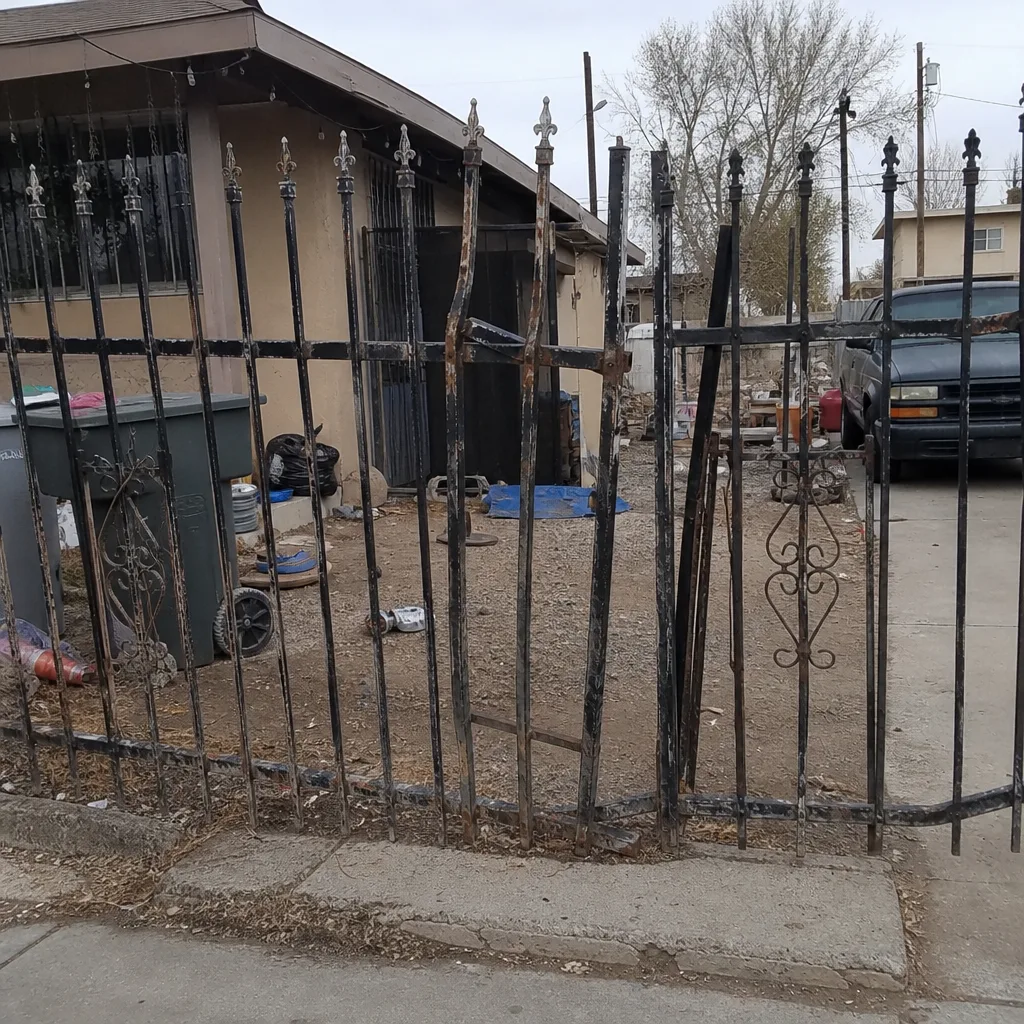 Before
 After
 Before
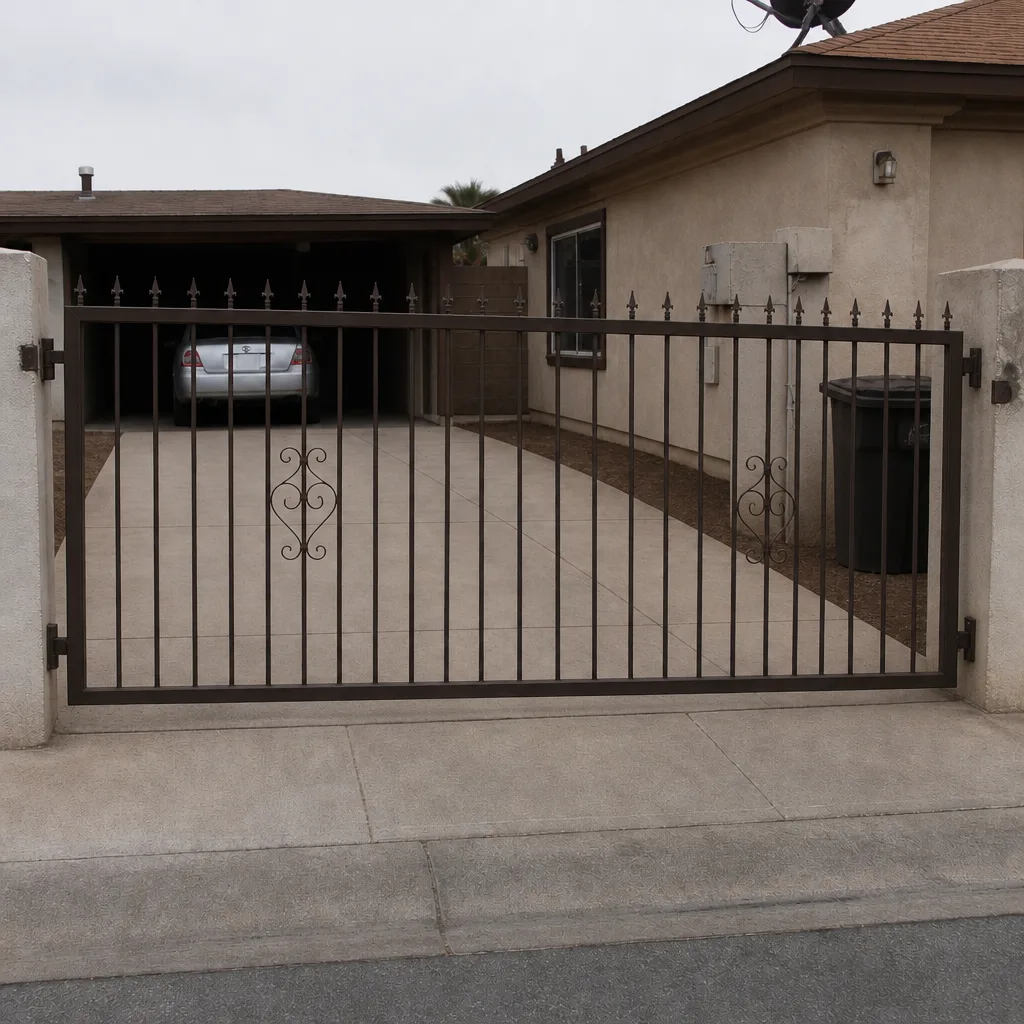 After
When to Call a Professional
If the gate drops enough that the latch won’t engage, if the hinge post moves when you push the gate, or if you see cracks radiating from a weld, get a professional out. These are all failures that get more expensive the longer they sit, because the post, the concrete, and the surrounding hardware all take the load while the gate is failing. If the gate is powered and the motor is involved, or if a pool gate’s self-latching hardware isn’t working, treat those as urgent. There are real safety and code issues in both cases that a homeowner shouldn’t be diagnosing alone. Gatewood Fence & Gate North Las Vegas offers free estimates in North Las Vegas – call (844) 761-9351. A live person answers, day or night, and the price is agreed before any work starts.
Frequently Asked Questions
Alkaline soil corroding buried posts, hard water degrading welds and hinges, UV failing powder coatings early, and the daily heat expansion cycle working fasteners loose. The single most common specific failure we diagnose is a hinge-side problem originating from a compromised or undersized hinge post.
Yes, especially for posts and hinges. The alkaline soil and hard-water splash in Clark County corrode raw steel fast, and galvanized stock sacrifices its zinc coating first instead of failing. The upcharge is typically minor compared to the cost of re-posting a gate.
Almost every residential gate repair we handle is welded on site, in your driveway. We only take a gate off when the frame has to be replaced outright, which is rare. On-site welding avoids the misalignment and transport damage that come with hauling a gate off.
An itemized list of the diagnosis, each part with brand and quantity, labor separated from parts, whether the gate stays on site, and the written guarantee. A quote that only says “labor and materials” is a red flag – ask for the breakdown before agreeing.
Nine times out of ten the motor is fine and the mechanical side has failed (hinge, post, or alignment). We check the mechanicals first before touching the motor, because a motor fighting a dragging gate burns itself out. If the opener is the actual problem, our Gatewood Fence & Gate North Las Vegas home team handles motor service alongside the repair.
Yes. Self-latching, self-closing pool gate hardware is required by current safety codes, and we install and service it. A standard latch on a pool gate is a code violation and a real safety hazard – if you’re not sure what you have, that’s worth a professional inspection.
The Bottom Line
Buying gate parts or hiring welding work in North Las Vegas means understanding one truth: this is a hostile climate for metal, and the right spec beats the right price almost every time. Go galvanized or stainless on posts and hinges. Prefer gravity latches over springs. Keep powder coating touched up annually. Insist on an itemized repair quote, refuse “labor and materials,” and choose on-site welding over hauling the gate off. Fix the post when the post fails, not the hinge. Those choices are what turn a five-year gate into a twenty-year one. The rest is maintenance.
If you’d rather have a professional look at it in person, that’s what we’re here for. Call (844) 761-9351 for a free estimate in North Las Vegas. A live person answers every call, day or night, the price is agreed before work starts, and every job carries the 90-Day Done Right Promise in writing.
Written by the team at Gatewood Fence & Gate North Las Vegas.