
Last updated November 17, 2026
 Wrought iron
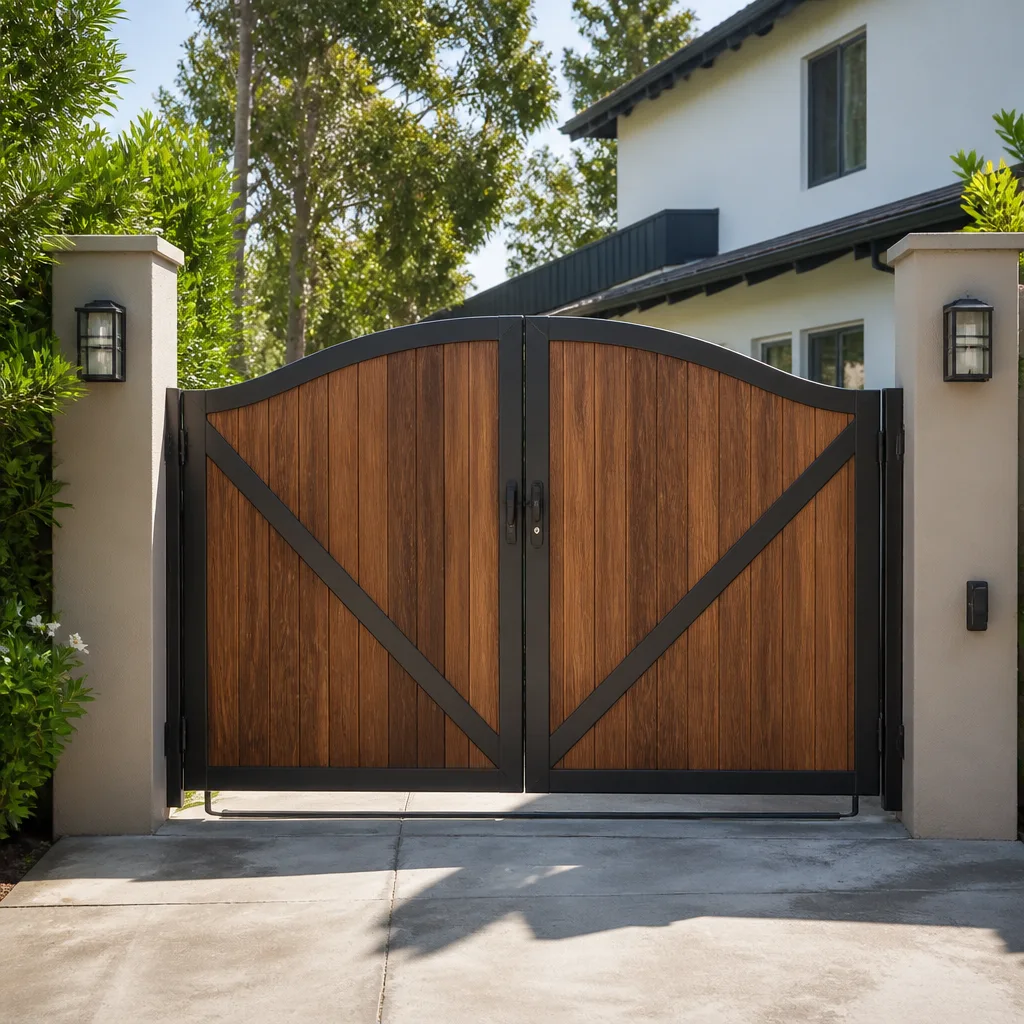 Wood & steel frame
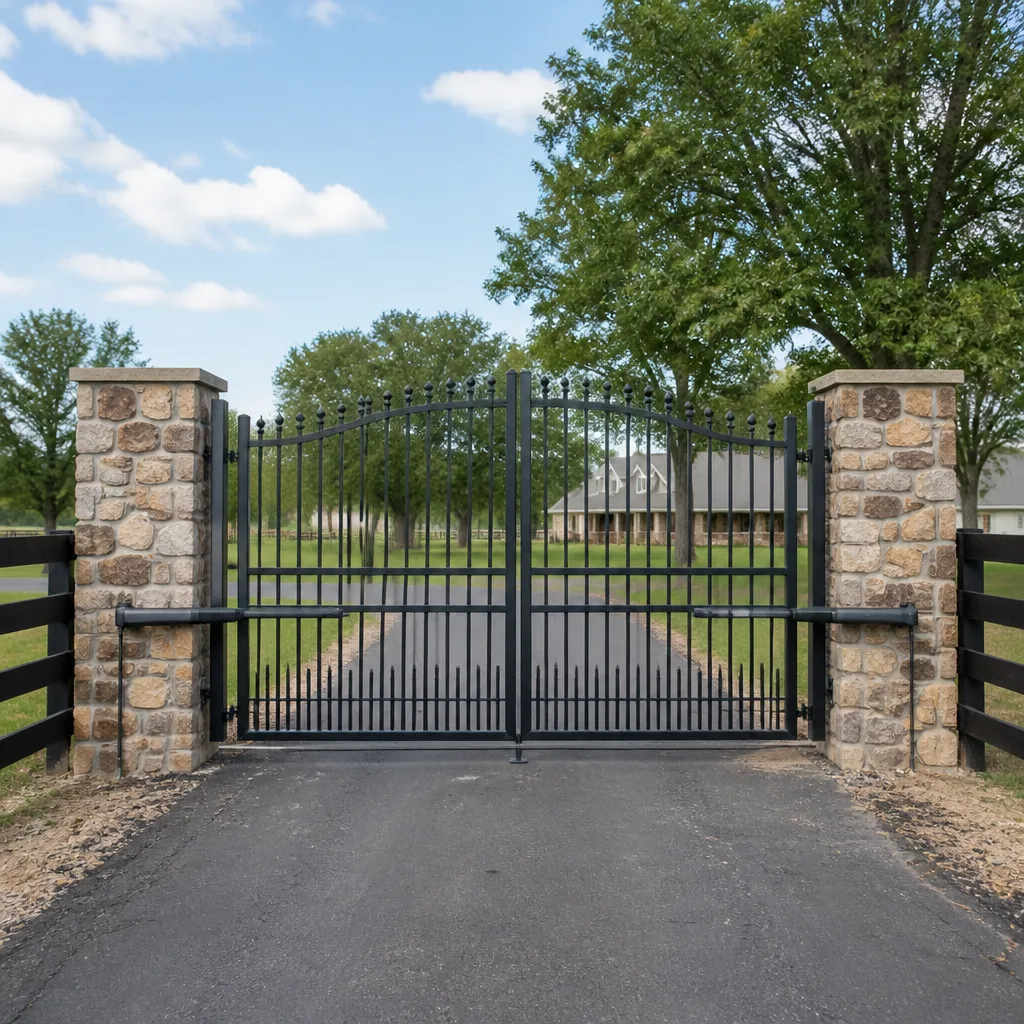 Farm & ranch
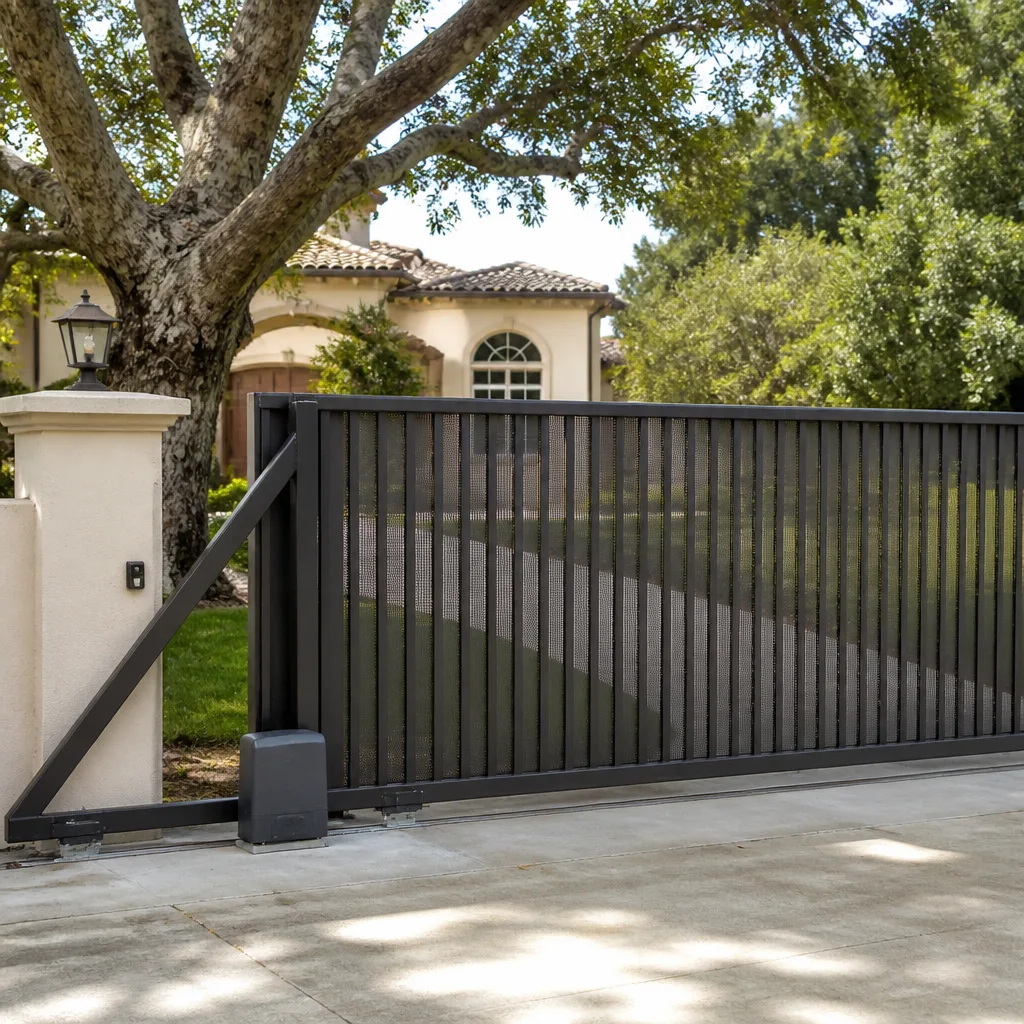 Sliding driveway gates
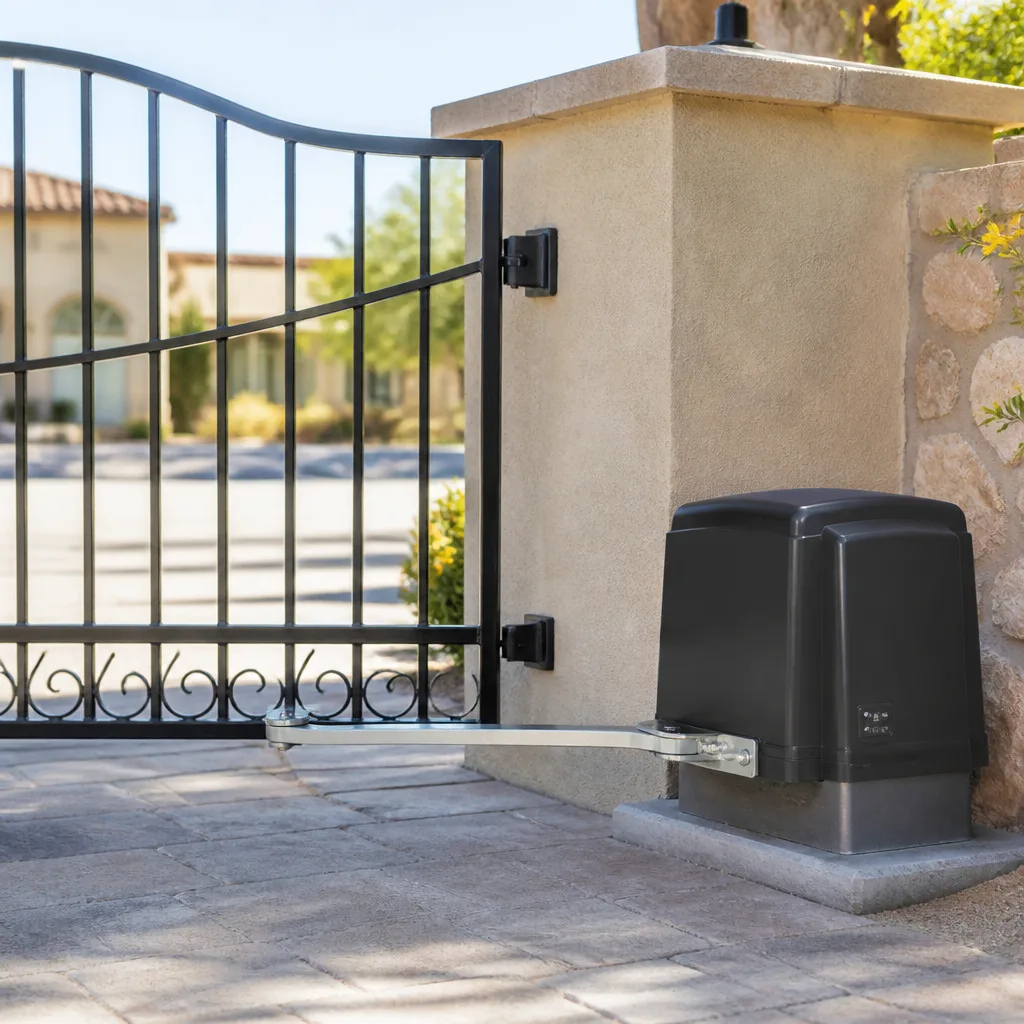 LiftMaster operators
Free on-site gate assessment - hinges, posts, and your LiftMaster or Nice gate operator checked before anything is quoted
The assessment is free and the quote is the invoice.
Get your free estimateDIY vs Professional Gate Access Control: What’s Safe to Do Yourself
A homeowner who replaces his own keypad saves about $80. A homeowner who accidentally shunts 24V DC into a control board replaces a $400 board, and that’s the best-case scenario. The worst case is a gate that opens when it shouldn’t, which is a security problem, not a repair bill. The line between “I can do this myself” and “I should not be touching this” isn’t about how handy you are. It’s about whether the thing you’re touching runs on low-voltage control wiring or on the 110/220V power that feeds the operator. This guide draws that line plainly, task by task, and points you to what’s safe, what’s risky, and what will void a warranty if you get it wrong in North Las Vegas.
Quick Answer
Swapping batteries, re-pairing a remote, and resetting user codes are genuinely safe for a careful homeowner. Anything that involves splicing control wire, adjusting loop detectors, or touching the operator’s power supply should go to a trained professional. The dividing line is voltage: low-voltage control signals are forgiving, but 110/220V operator power and the control boards tied to it are not, and a mistake there can destroy an expensive board or leave a gate that moves when it shouldn’t.
Styles & brands we work with
- Wrought iron
- Wood & steel frame
- Farm & ranch
- Sliding driveway gates
- LiftMaster operators
Table of Contents
- The Voltage Line: Why It Decides Everything
- Tasks That Are Genuinely Safe to Do Yourself
- Tasks That Look Simple but Carry Real Risk
- How to Read Your Operator’s Wiring Diagram
- When DIY Voids the Warranty (and What to Document)
- When a Pro Saves You Money
- Common Mistakes to Avoid
- When to Call a Professional
The Voltage Line: Why It Decides Everything
Here’s the part most DIY guides skip. Your gate system has two entirely different electrical worlds living inside one box. The first world is low-voltage control: 12V or 24V signals that tell the operator what to do. The second world is line voltage: the 110/220V feed that actually powers the motor. A keypad, a remote, a photo-eye sensor – all of those live in the low-voltage world. The motor, the transformer, the main control board – those sit in the line-voltage world, and that’s where things get serious.
The reason this matters is that low-voltage is forgiving in one direction and unforgiving in another. If you tap the wrong terminal on a keypad, you might blow a small fuse you can replace for a few dollars. If you accidentally bridge a control signal into the operator’s low-voltage supply the wrong way, you can cook a board that costs several hundred dollars to replace. And if you open the operator housing and reach into the line-voltage side while the power is live, you’re not troubleshooting anymore. You’re taking a real safety risk.
We’ve seen this play out across North Las Vegas more times than we’d like. A homeowner in the Aliante area swapped a keypad in fifteen minutes and felt confident, then tried to trace a bad wire and sent 24V into the control board. The board failure cost more than the keypad ever would have. That’s the pattern: the first job goes fine, the second job teaches an expensive lesson.
The practical rule: if the task requires the operator’s power to be on and your hands inside the housing where the motor connects, stop. If the task only involves a battery, a remote, or a numbered code on a keypad, you’re likely in safe territory. Everything between those two poles deserves a phone call or a manual check.
Tasks That Are Genuinely Safe to Do Yourself
Let’s start with what you can actually handle. These jobs are simple, low-risk, and don’t require opening the operator housing or touching line voltage. A careful homeowner with a manual and a little patience can knock most of these out in a half hour.
- Replacing remote batteries. Most gate remotes use a coin cell or a small watch battery. Pop the case, swap the battery, close it up. This is the single easiest task on the list, and it fixes a surprising share of “my remote stopped working” calls.
- Re-pairing remotes to the receiver. When you add a new remote or one loses its pairing, re-pairing is usually a matter of holding a “learn” button on the receiver and pressing the remote. On LiftMaster and Linear systems, the procedure is printed in the manual and takes two minutes.
- Basic code resets on common keypads. Changing a user code on a DoorKing or Elite keypad is a menu task, not a wiring task. If you have the programming instructions, this is safe, and it’s a good idea to change codes whenever a contractor, a houseguest, or a former tenant has had access.
- Replacing keypad batteries. Many standalone keypads run on internal batteries. Swapping one is the same category of job as swapping a remote battery.
- Cleaning photo-eye lenses. A dirty photo-eye can make a gate behave erratically. A soft cloth and a little care clear up more phantom problems than any part swap.
- Checking and resetting a tripped breaker on the operator’s dedicated circuit. If the gate is dead and the breaker is tripped, resetting it once is fine. If it trips again, that’s a signal to call, not to keep flipping it.
Notice what these have in common: none of them require you to splice a wire, open the operator’s power section, or guess at a signal. They’re all handle-level tasks, the kind of thing the manual walks you through in plain language. If a job fits on this list, you don’t need us, and we’ll tell you so.
Tasks That Look Simple but Carry Real Risk
Now the other column. These jobs get recommended on forums and in videos as easy fixes, and every one of them can turn a $60 problem into a several-hundred-dollar repair. We’re not listing them to scare you into a service call. We’re listing them because each one has a specific failure mode you can’t see until after the damage is done.
Splicing control wire runs
A cut or chewed control wire looks like an easy splice. It isn’t, at least not reliably. Gate control wiring carries low-voltage signals that are sensitive to resistance and to the polarity of the connection. A splice that’s mechanically tight but electrically marginal can work for a week and then fail intermittently, which sends you chasing a ghost. Worse, a splice crossed onto the wrong conductor can send the wrong signal into the board. If a control wire is damaged, the right move is a proper splice with the correct connectors, tested for continuity, and ideally a fresh run.
Adjusting loop detector sensitivity
Loop detectors are the buried sensors that tell the gate a car is waiting. When a gate stops detecting vehicles, the temptation is to crank the sensitivity dial. That can help, but it can also make the loop pick up a passing car in the next lane or a piece of rebar in the driveway, so the gate holds open when it shouldn’t. Loop tuning is a judgment call that depends on the loop’s size, the soil, and what’s buried nearby. It’s exactly the kind of adjustment that needs someone who has done it before and can test the result.
Firmware updates on networked systems
Modern access control on a DoorKing or LiftMaster system can be networked, which means it has firmware. A firmware update sounds routine, but an interrupted or mismatched update can brick a controller. On a networked system, an update also has to match the rest of the network, or one device stops talking to the others. Leave firmware to the people who do it for a living and can recover if something goes wrong.
Anything inside the operator housing with power on
Adjusting limit switches, testing the motor, tracing a fault on the control board – all of these put your hands inside the housing where line voltage lives. This is the hard stop. The gate operator is a piece of machinery that moves hundreds of pounds of steel, and the electrical side of it can hurt you. That work belongs to a trained professional, full stop.
If you’re in North Las Vegas and you’re not sure which side of the line a task falls on, that uncertainty is itself the answer. When in doubt, it’s a Gate Repair in North Las Vegas job, not a Saturday project.
How to Read Your Operator’s Wiring Diagram
Before you touch anything, find the wiring diagram. It’s usually printed on a sticker inside the operator cover, or in the manual that came with the unit. The diagram is the map, and without it you’re guessing at which terminal does what.
Here’s how to read one without a background in electronics:
- Find the power input first. The diagram will label the incoming 110/220V feed clearly, usually with “L” and “N” for line and neutral, or “L1” and “L2.” That’s the section you never touch with the power on.
- Identify the low-voltage control terminals. These are labeled things like “COM,” “OPEN,” “CLOSE,” “STOP,” and “SAFETY.” This is where keypads, remotes, and photo-eyes connect.
- Match the device to its terminal. Your keypad manual will tell you which wire goes to which terminal. Cross-check that against the operator diagram before you connect anything.
- Look for the accessory power output. Most operators supply 12V or 24V to accessories. That’s where a keypad draws its power, and it’s a common spot for a wrong connection.
- Note the fuse locations. If the diagram shows a control fuse, find it. A blown fuse is the most common result of a wiring mistake, and knowing where it lives saves you a panic.
If you can’t find the manual, don’t guess. The make and model number are usually on a label on the operator housing, and most manufacturers publish manuals online. A Mighty Mule or Elite unit that’s been on a gate since it was installed will still have its manual available. Get the right diagram for the exact model before you touch a wire, because wiring conventions differ between brands and even between model years of the same brand.
When DIY Voids the Warranty (and What to Document)
Here’s a question few homeowners ask until it’s too late: does doing this myself void the warranty? The honest answer is that it depends on the manufacturer and on what you did. Most gate operator warranties cover parts and workmanship for a defined period, but nearly all of them exclude damage caused by improper installation, incorrect wiring, or unauthorized modification. If you cross a wire and fry a board, the manufacturer can point to that exclusion and decline the claim.
That doesn’t mean you should never touch your gate. It means you should document what you did if you do. If you replaced a remote battery or re-paired a keypad and the gate later fails for an unrelated reason, you want a record that separates your work from the failure. A few practical habits:
- Snap a photo of the wiring before you disconnect anything, so you can prove the original state.
- Keep the receipt for any part you buy and write the date on it.
- Note the date and what you did in a simple log, even on your phone.
- Don’t open the operator housing at all if the unit is still under warranty. Any interior work is the fastest way to give a manufacturer a reason to deny a claim.
If the unit is out of warranty, the calculus shifts. There’s no warranty left to protect, so the question becomes purely about risk and cost. That’s when a pro’s diagnosis often pays for itself, because it stops the trial-and-error spending. If you’d rather have a second set of eyes before you start, our Gatewood Fence & Gate North Las Vegas home page has the details on how we work.
When a Pro Saves You Money
DIY is cheaper than a service call right up until it isn’t. The place where homeowners lose money is trial-and-error parts swapping. The gate doesn’t open, so you replace the remote. Still doesn’t open, so you replace the keypad. Still nothing, so you replace the receiver. By the time you’ve bought three parts you didn’t need, you’ve spent more than a diagnosis would have cost, and the actual problem – a bad control wire or a failing board – is still there.
A trained technician diagnoses before replacing. On a DoorKing or LiftMaster system, that means testing the signal at each point in the chain to find where it stops. That’s fifteen minutes of testing versus a weekend of guessing. In our experience in North Las Vegas, the most common scenario we see is a homeowner who’s already replaced a keypad and a remote and is now calling because the gate still won’t respond. The parts were fine. The wire wasn’t.
There’s also the loop detector and safety-edge category, where a wrong adjustment creates a genuine hazard. A gate that fails to reverse on an obstruction is a serious safety problem, and no amount of parts swapping fixes a tuning error. That’s the clearest case where a pro saves money: the cost of getting it wrong is higher than the cost of getting it right the first time.
And when the operator itself is failing, replacement or major repair is a scheduled, measured job, not a same-day fix. If you’re weighing that, our Gate Motor & Opener in North Las Vegas page walks through what that involves.
Common Mistakes to Avoid
- Working on a live operator. Turning the power off at the breaker before you open anything is the first rule, and skipping it in North Las Vegas heat when you’re in a hurry is how people get hurt. Shut the breaker, then confirm the gate won’t move.
- Guessing at wiring colors. Wire colors aren’t standardized across brands, so a red wire on one unit does nothing like a red wire on another. Always match the diagram, never the color alone.
- Cranking loop sensitivity to “fix” a detection problem. This is the most common DIY misfire we see, and it trades a gate that won’t open for a gate that stays open when a car drives past. Adjust, then test with an actual vehicle in the actual driveway.
- Buying a replacement part before diagnosing. The part is rarely the first thing that failed. Test the signal path first, then buy.
- Ignoring a breaker that keeps tripping. In North Las Vegas, monsoon-season moisture can get into an outdoor operator housing and cause a ground fault. A breaker that trips twice is a call, not a reset.
- Downgrading to a smaller, cheaper operator to save money. A unit that’s undersized for the gate’s weight and cycles will fail early, and the savings disappear. Match the operator to the gate, not to the price tag.
- Forgetting the safety edges. If you touch anything near the gate’s path, confirm the safety edges and photo-eyes still reverse the gate on obstruction before you call the job done. That test is not optional.
When to Call a Professional
Call us when the task crosses the voltage line, when the operator housing needs to come open, or when you’ve replaced a part and the gate still won’t cooperate. Call when a loop detector needs tuning, when control wire is damaged, or when a networked system needs a firmware update. Call when the gate reverses unexpectedly, when a breaker keeps tripping, or when you’re installing a new operator rather than repairing an existing one. And call when you simply don’t want to guess; a diagnosis up front is cheaper than a stack of parts you didn’t need. Gatewood Fence & Gate North Las Vegas offers free estimates in North Las Vegas, call (844) 761-9351. If a job is safe to do yourself, we’ll tell you. If it isn’t, we’ll show up and get it right.
See the difference
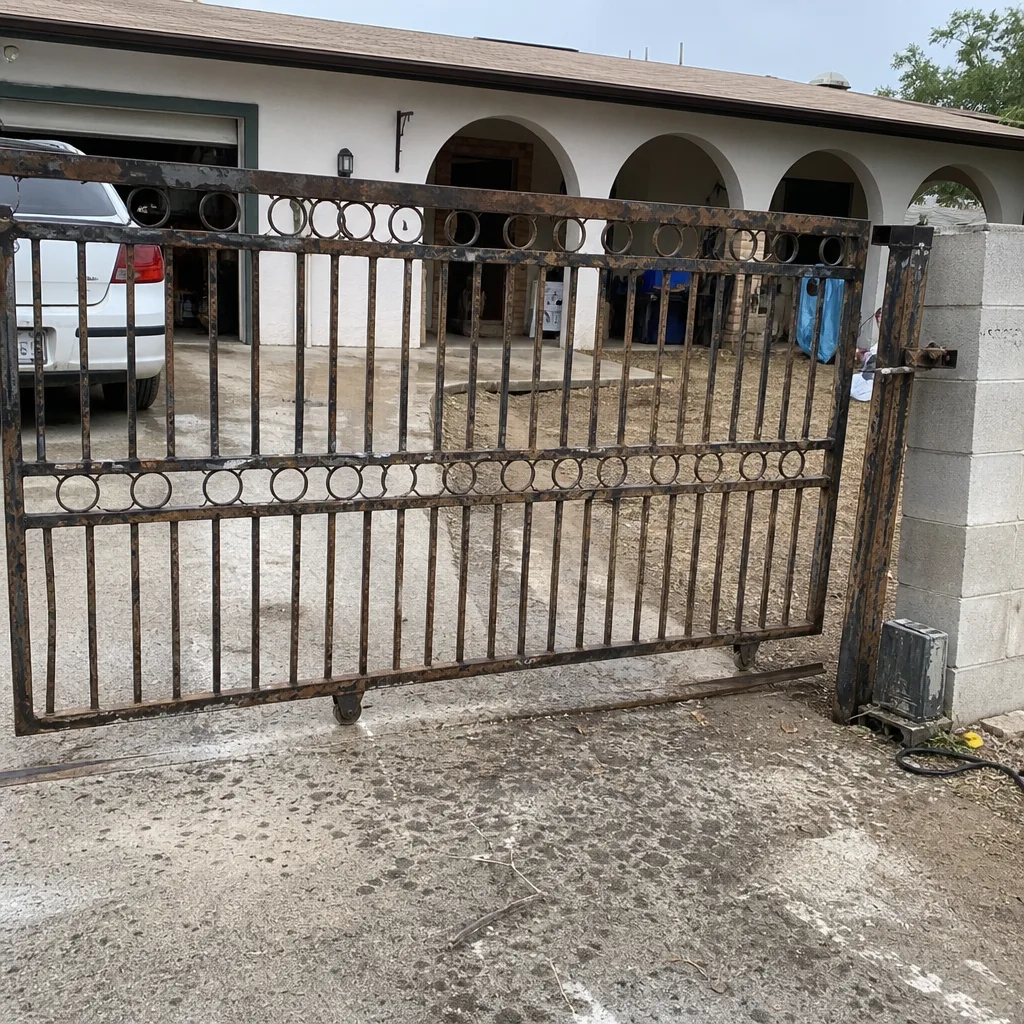 Before
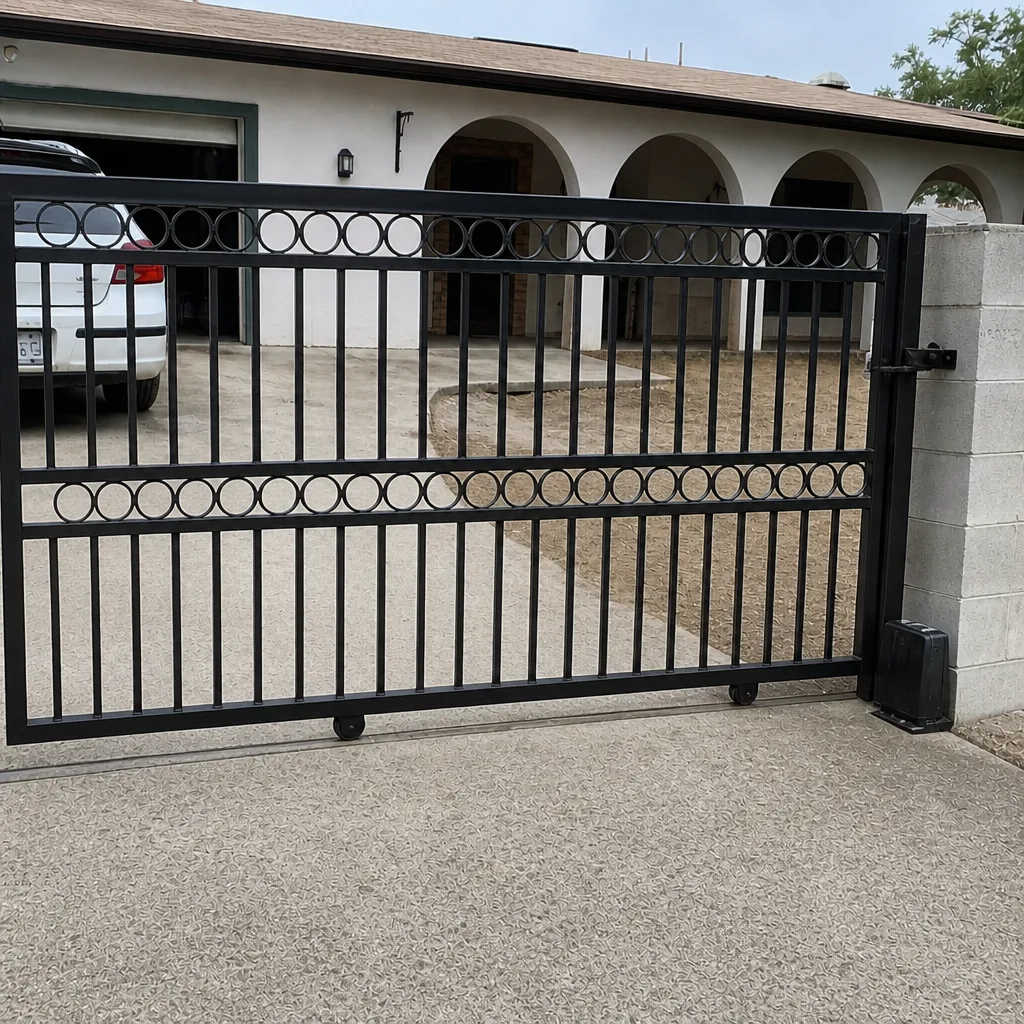 After
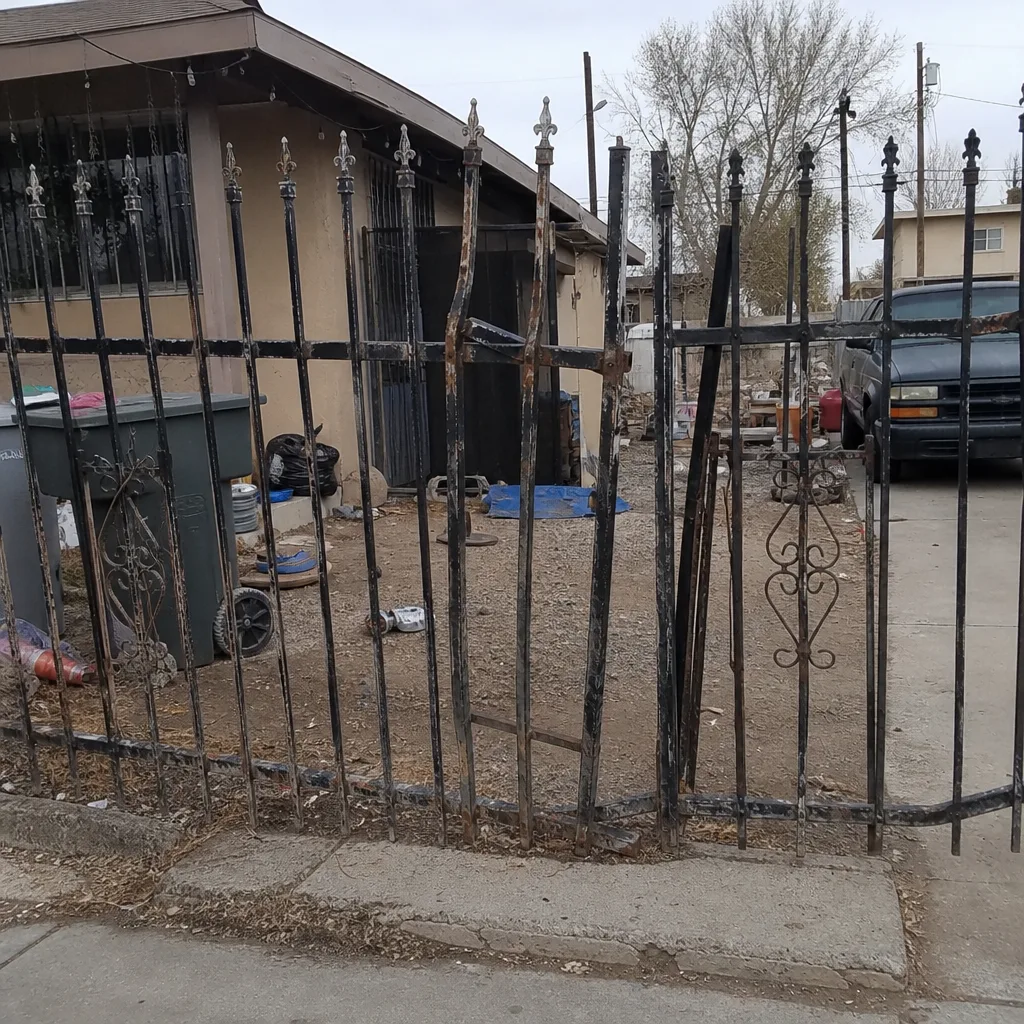 Before
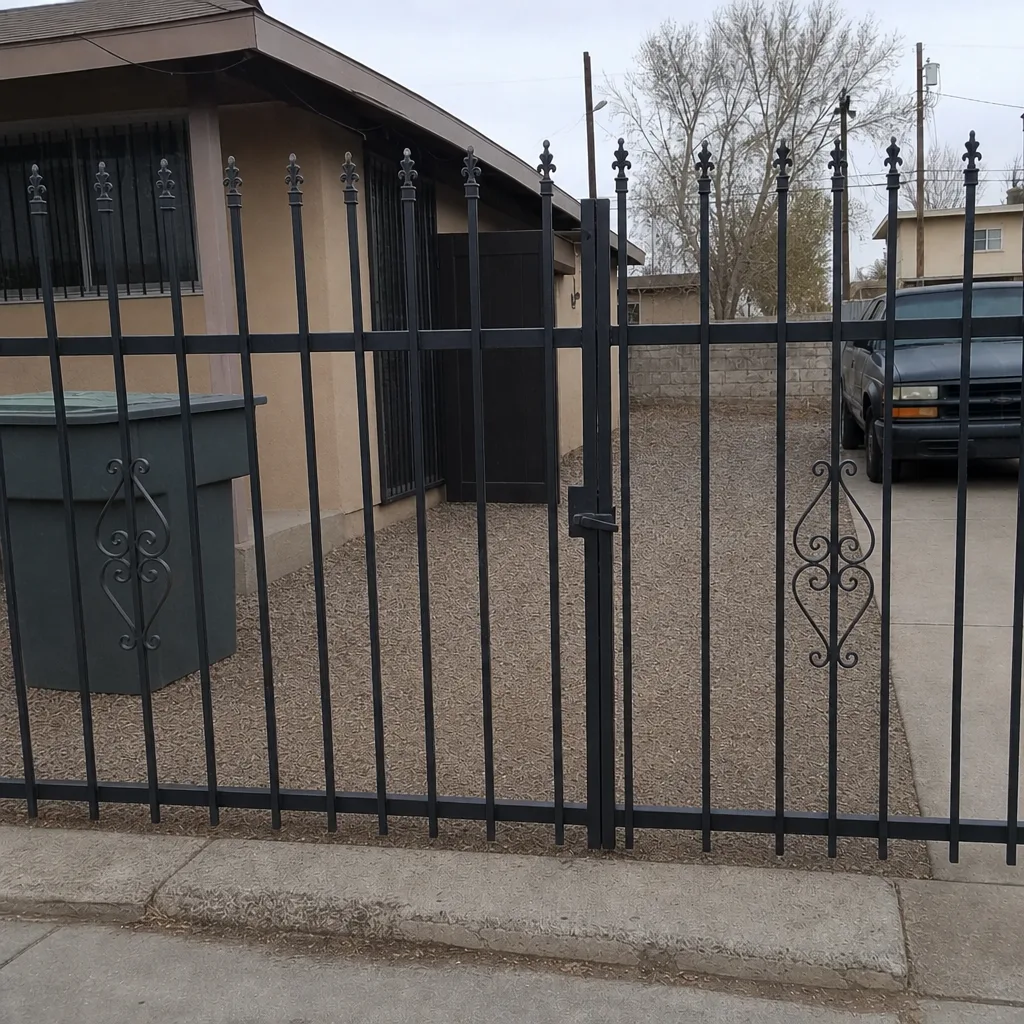 After
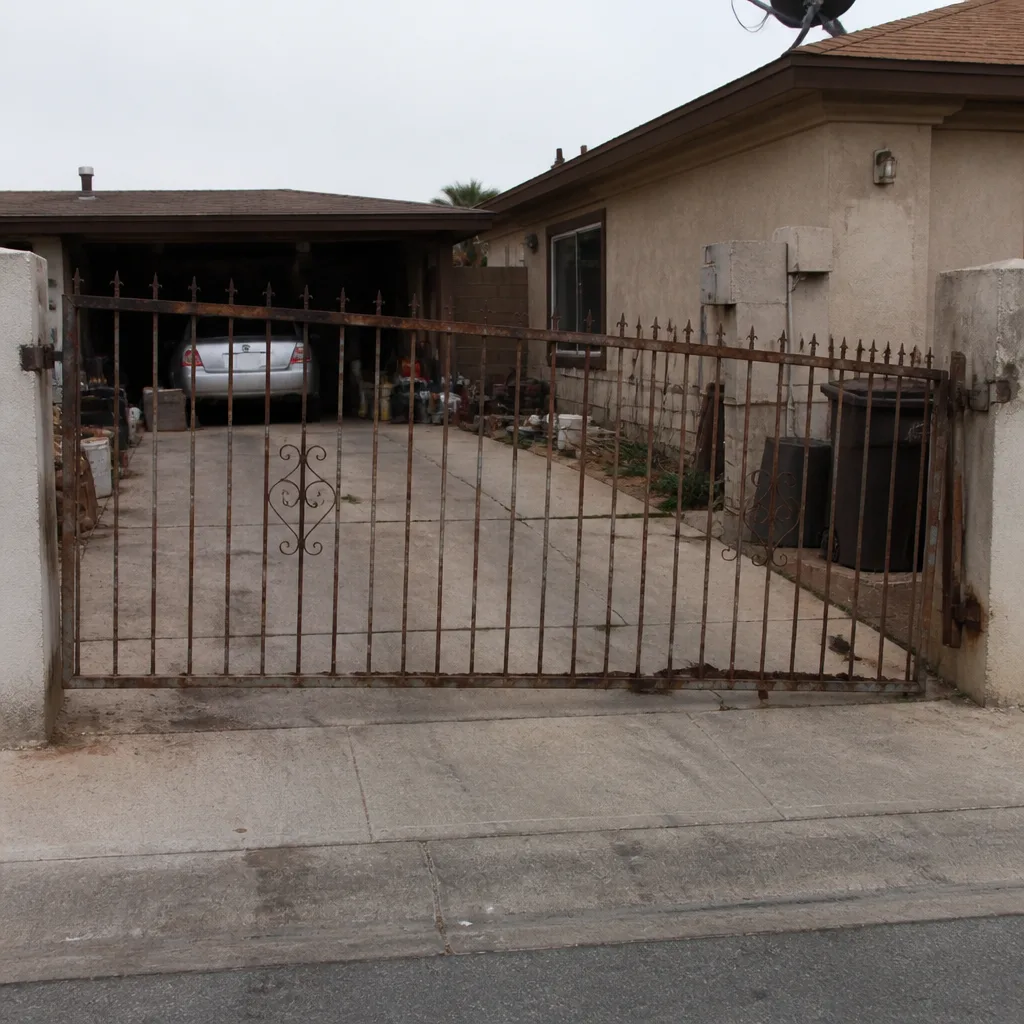 Before
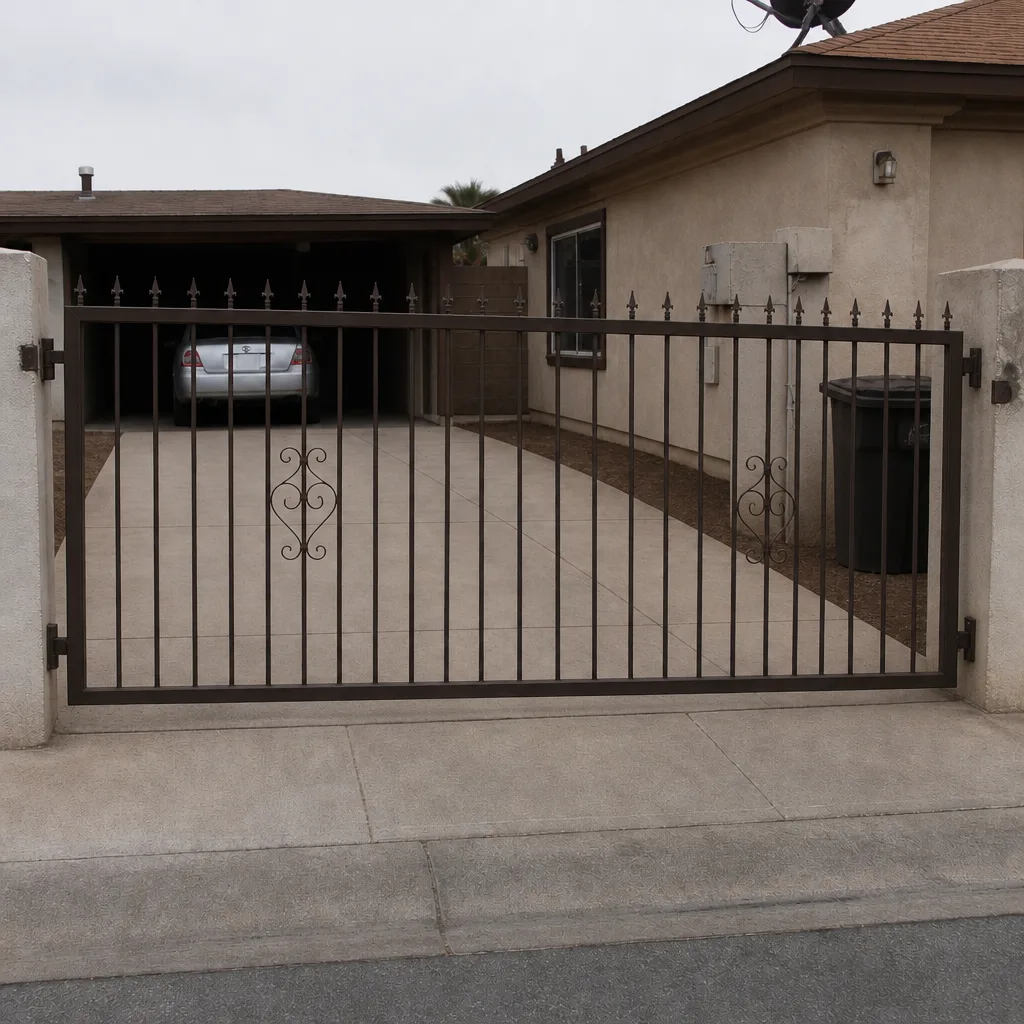 After
Frequently Asked Questions
Usually yes, if it’s a straight swap on an existing low-voltage keypad with the same wiring. The risk starts when the wiring doesn’t match or the new keypad needs a different power source. If the terminal layout differs from your old unit, get the manual out or call before you connect anything.
It’s not the voltage that makes splicing risky, it’s the connection quality. A marginal splice can work for a while and then fail intermittently, and a crossed splice can send a wrong signal into the board. A proper splice with the right connectors, tested for continuity, is a job for someone who does it regularly.
It can, if the manufacturer can trace the damage to your work. Most operator warranties exclude improper wiring and unauthorized modification, so opening the housing during the warranty period is the fastest way to lose coverage. Document anything you do and keep receipts, just in case.
It depends on what failed, but a diagnosis and a straightforward repair on a keypad or receiver is usually a modest job compared to a board replacement. The expensive path is buying parts you don’t need. We quote the price and agree on it before any work starts, and estimates are free. Call (844) 761-9351 for an exact quote.
A gate stuck open is a security concern, and a live person answers our phone 24/7, so call and we’ll work out the fastest path. We don’t promise a same-day dispatch for every job, but we’ll tell you honestly what we can do.
Yes, loop tuning is a judgment call that depends on the loop’s size, the soil, and what’s buried nearby. A wrong adjustment trades a gate that won’t open for one that holds open when it shouldn’t, and that’s a security problem, not just an annoyance.
The Bottom Line
The line between safe DIY and a call to a pro isn’t about your skill level. It’s about voltage. Battery swaps, remote re-pairing, and code resets are yours to handle, and we’ll tell you so. Splicing control wire, tuning loop detectors, updating networked firmware, and opening the operator housing belong to a trained professional, because the cost of a mistake there is measured in hundreds of dollars and, in the worst case, in safety. In North Las Vegas, the smartest DIY habit is knowing where your limit is. When a job crosses it, that’s what we’re here for. If you’re planning a full replacement rather than a repair, our Gate Installation in North Las Vegas guide covers what that looks like.
If you’ve read this far and you’re still not sure which side of the line your gate falls on, pick up the phone. Gatewood Fence & Gate North Las Vegas answers with a live person 24/7, quotes the price before any work starts, and stands behind every job with the 90-Day Done Right Promise in writing. Call (844) 761-9351 for a free estimate.
Written by the team at Gatewood Fence & Gate North Las Vegas.