
Last updated November 17, 2026
 Wrought iron
 Wood & steel frame
 Farm & ranch
 Sliding driveway gates
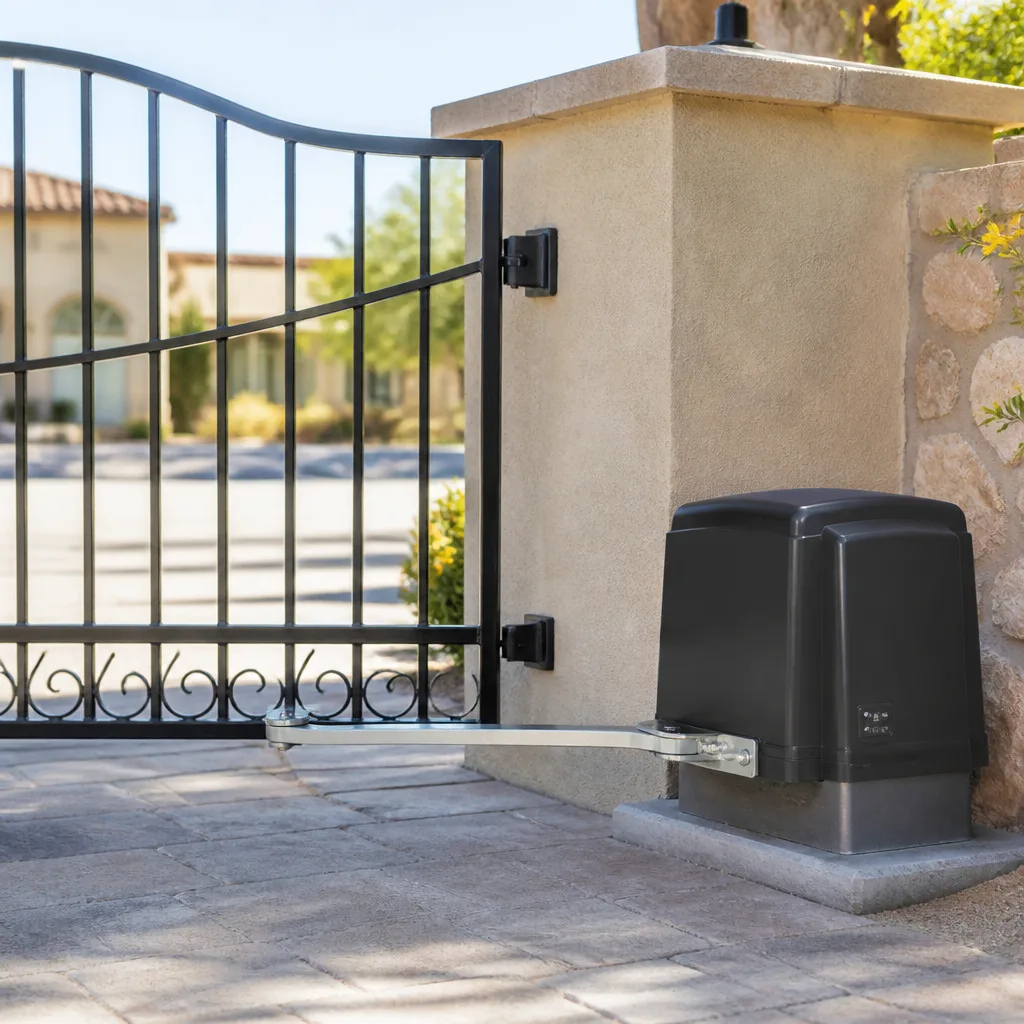 LiftMaster operators
Free on-site gate assessment - hinges, posts, and your LiftMaster or Nice gate operator checked before anything is quoted
The assessment is free and the quote is the invoice.
Get your free estimateDIY vs Professional Gate Parts & Welding: What’s Safe to Do Yourself
Replacing a latch yourself is a Saturday afternoon job. Grinding out and re-welding a cracked hinge plate yourself is a job where a bad bead can fail under dynamic load, meaning while the gate is moving, and that’s a different conversation entirely. Most homeowner gate failures split cleanly into two piles: surface hardware you can swap with a wrench and a YouTube refresher, and structural weld joints that hold the gate’s weight and swing. This guide maps the work by category so you know exactly where the line is in North Las Vegas, what tools actually separate a safe fix from a dangerous one, and when a DIY attempt turns a simple repair into a bigger bill.
Quick Answer
Surface hardware (latches, handles, hinges bolted to a sound post, rollers, stop plates, keypads) is fair game for a careful homeowner with the right tools. Structural weld joints (hinge plates welded to the frame, cracked posts, sagging swing arms, cracked bottom rails) are not, because a failed weld fails while the gate is moving and the gate weighs 150 to 400 pounds. If the repair involves cutting, grinding, or laying new weld metal on a load-bearing joint, bring in a professional welder.
Styles & brands we work with
- Wrought iron
- Wood & steel frame
- Farm & ranch
- Sliding driveway gates
- LiftMaster operators
Table of Contents
- Surface Hardware vs. Structural Weld Joints
- Tools You Own vs. Tools a Welder Brings
- The DIY Attempts That Make the Repair Cost More
- How to Read a Weld Without Being a Welder
- Permits, HOA Approvals, and Resale in North Las Vegas
- Hardware Swaps You Can Do Safely (Step by Step)
- Why the North Las Vegas Climate Shortens Weld Life
- When to Stop and Call
Surface Hardware vs. Structural Weld Joints
The practical dividing line is simple: does the part carry weight or motion, or does it just hold, catch, or guide? Surface hardware is bolted to something structural and can be unbolted again. Structural weld joints are what the gate hangs from and swings on; they carry the whole gate’s load and they fail suddenly.
In our experience across North Las Vegas, the homeowner calls that go well are almost always on the surface-hardware side. The ones that go sideways involve someone with a borrowed welder and a cracked hinge post.
Surface hardware (usually fine to DIY)
- Gate latches, thumb latches, and self-closing spring latches
- Handles, pulls, and decorative hardware
- Bolt-on hinges where the post and plate are sound
- Rollers and roller brackets on sliding gates
- Keypads, exit buttons, and photo-eye brackets (low-voltage only)
- Stop plates and catch brackets, if the concrete is intact
Structural weld joints (do not DIY)
- Hinge plates welded to the frame or post
- Cracked or bent hinge posts (set in concrete)
- Bottom rails, top rails, and corner gussets
- Swing arms, operator arms, and any moving arm on a motorized gate
- Weld on a gate that has already failed under load
- Anything you would have to cut, grind, or re-weld to fix
If you’re not sure which side your repair falls on, gate repair in North Las Vegas is the honest place to start. A quick look costs nothing and stops a $60 hardware swap from turning into a $600 weld job.
Tools You Own vs. Tools a Welder Brings
Here’s the uncomfortable truth: you probably own everything you need for a latch swap and almost nothing you need for a weld repair. The tool gap is enormous, and it’s the real reason “I’ll just weld it myself” almost never goes the way the homeowner pictured.
A homeowner doing surface hardware needs:
- Socket set and adjustable wrench
- Screwdriver set (Phillips, flathead, and the hex drivers most gates use)
- Drill with a bit set
- Level, tape measure, and a pencil
- Penetrating oil for rusted bolts
- Safety glasses and work gloves
A welder doing structural gate repair brings:
- A portable MIG or stick welder sized for 11- to 14-gauge steel tube
- Grinder with cut-off and flap wheels
- Clamps, jigs, and a magnetic square to hold the joint true
- A welding helmet, leathers, and fire blanket
- A properly rated extension cord or generator (gate work is almost always outdoors)
- Steel stock and hinge plates to match
- The experience to know the difference between a weld that looks fine and one that holds
That gap matters because weld quality is invisible after paint. A homeowner’s first weld on a 14-gauge hinge plate can look perfect and fail in a year, which is why professional on-site welding is worth the money on any load-bearing joint. If the gate runs on a motor, some of the failures you’re chasing aren’t weld at all; those live on the gate motor and opener service side, where sensor alignment and arm geometry cause more “sagging” than the metal does.
The DIY Attempts That Make the Repair Cost More
Most DIY gate repairs we see in North Las Vegas didn’t start as a bad idea. They started as a reasonable attempt that went one or two steps too far. Here’s what makes the eventual professional repair harder and more expensive than it would have been.
- Welding over a dirty or rusty joint. A quick bead on top of rust and mill scale traps the rust and looks finished. To fix it properly, we have to grind it all out and start over, which costs more than the original repair would have.
- Cranking a bent hinge straight with a pipe. It works for a week. Then the stress crack propagates along the weld and the post has to be cut out and re-set in concrete.
- Replacing a hinge without checking the post. The hinge wasn’t the problem; the post plate was. The new hinge fails too, and now the gate has been re-hung twice.
- Over-tightening gate hinges to “fix” the sag. This makes the frame twist and accelerates fatigue at the weld joint you were trying to protect.
- Adhesive repairs on load-bearing joints. Construction adhesive and epoxy aren’t rated for the dynamic load of a moving gate. They hold long enough to give you false confidence.
- Cutting the frame to “make it fit.” Removing steel from a gate frame shortens its working life and voids any manufacturer warranty on motorized systems like LiftMaster or FAAC operators.
- Painting over a fresh repair before checking it. Paint hides a bad weld until it fails. Give any repair a week of use before you cover it.
We see this pattern most often on older gates in neighborhoods like Aliante and Eldorado, where the original welds have been weathering since the houses were built and a small crack gets treated as a Saturday project. If you’re already at the “it’s more than I thought” point, the cost of a professional repair is usually lower than the cost of undoing the DIY attempt on top of it.
How to Read a Weld Without Being a Welder
You don’t need to weld to spot a weld that’s about to fail. There are visual cues any careful homeowner can read on a gate in North Las Vegas, and they hold up on any gate we’ve looked at. Anchor your judgment on these:
- Rust bleeding from the weld toe. Rust weeping out from where the weld meets the parent metal is a sign the weld is porous or was laid over contamination. It’s the clearest early-warning cue.
- Cracks traveling away from the weld. A hairline crack moving perpendicular to the weld is more serious than a crack along it; perpendicular cracks are fatigue cracks.
- Paint flaking in a line. Paint doesn’t fail along a straight line by accident. A straight paint chip usually traces a stress crack underneath.
- A weld that looks “smeared” or lumpy. A good weld has a consistent bead with a visible ripple pattern. Lumpy, uneven, or undercut edges are signs of a cold or fast weld.
- Movement at the joint under load. Open and close the gate slowly with a helper watching the joint. Any flex at the weld is a failing weld, no matter how it looks.
- Fresh rust on a joint that was painted last year. If the paint is intact everywhere except one weld, that weld is working, and it’s tired.
None of that tells you the weld’s actual strength, but it tells you whether to stop and call. When you’re ready for a trained set of eyes, a free second opinion on a written estimate is one of the standing offers we keep, and it’s the cheapest way to know whether that crack is cosmetic or load-bearing.
Permits, HOA Approvals, and Resale in North Las Vegas
Structural changes to a gate in North Las Vegas touch three things that can cost you money later if you skip them: permits, HOA approval, and resale disclosure. The North Las Vegas municipal code requires a building permit for structural modifications to fences and gates, including new posts, height changes, and changes to the structural frame. Replacing a latch or a keypad doesn’t. Cutting out the hinge post and re-welding a taller or heavier gate does.
HOA rules are stricter than people expect. The newer master-planned communities around North Las Vegas often have explicit gate specifications in the CC&Rs: approved materials, height limits, color, and design. A repair that keeps the gate identical is usually fine; a repair that changes the gate’s footprint or appearance may need written HOA approval before anyone touches it.
On resale, the buyer’s inspector will look for unpermitted structural work. An unpermitted gate repair isn’t always a deal-breaker, but it can turn into a repair credit, a delayed close, or an insurance question. Permitted work is documented; a handwritten receipt from a Saturday is not. When a structural repair is needed on a gate we work on, we handle the paperwork side as part of the job.
New installations follow a different path. If you’re replacing rather than repairing, the scope and the permitting conversation live on the gate installation in North Las Vegas side, and it’s worth planning that one before you cut anything.
Hardware Swaps You Can Do Safely (Step by Step)
These are the jobs we’re comfortable telling a homeowner to try first. They stay clear of the structural weld and they rarely turn into a bigger repair. Work slow, work with the gate secured open, and stop if anything feels wrong.
- Secure the gate. Open it fully and prop or chock it so it can’t swing while you’re working on it. A 200-pound gate in motion is the most common cause of DIY gate injuries.
- Photograph the old hardware in place. Take close photos before you loosen anything. You will forget the orientation of a hinge or the position of a stop plate.
- Soak the fasteners. Penetrating oil on every bolt and screw, then give it fifteen minutes. Rushed fasteners strip heads and turn a 20-minute job into an afternoon.
- Remove the hardware and check the surface. If the hinge plate or the post is cracked, bent, or moving, put the new part down and call. That’s a structural repair, not a hardware swap.
- Test-fit before you tighten. Set the new latch or hinge, swing the gate, and confirm it opens and closes smoothly before you torque anything. Tightening first and testing after is how homeowners bend a hinge they just installed.
- Tighten and lube. Snug, not cranked. A light coat of lithium grease on moving parts extends the life of the swap and gives you a visual read a month later.
- Check it after a week. Recheck the fasteners, look for movement, and paint any raw metal before winter rains hit.
If the gate runs on a LiftMaster, Linear, or BFT operator, power the motor off at the breaker before you work anywhere near the moving arm. The motor doesn’t care that you’re only changing a latch.
Why the North Las Vegas Climate Shortens Weld Life
Metal fatigue looks different in North Las Vegas than it does in the Midwest. We get 100-plus-degree summers, single-digit humidity most of the year, and the occasional hard winter cold snap that swings forty degrees in a day. Each of those cycles expands and contracts a gate frame by a measurable amount, and every cycle works the weld joints a little.
The upshot is that a weld that would last fifteen years in a mild climate can crack at eight to ten out here, especially on gates facing west or south where afternoon sun runs the surface temperature well over 150 degrees. The powder coat fades first, the paint under it fails next, and once rust gets into a weld toe, the crack starts. That’s why we strongly recommend re-checking and re-painting gate welds every couple of years in North Las Vegas. It isn’t a sales pitch; paint is what keeps the weld from breathing.
Wind matters too. Spring gusts out of the north and the wash can load a gate sideways for hours at a time, and a gate that isn’t latching fully in the wind will be working its hinge welds every time it bangs shut. A correctly adjusted latch solves most of that, which brings it back to surface hardware: the cheapest fix you can do yourself is the one that protects the weld you can’t fix yourself.
When to Stop and Call
Stop and call a professional when any of these are true: the repair involves cutting, grinding, or adding weld metal; the joint that’s failing carries the gate’s weight or motion; the post is cracked, bent, or moving in the ground; the gate has already been repaired once and it failed again; you’re not sure whether the part is structural; or the gate is motorized and the failure could be in the operator arm or the sensor rather than the metal.
Stop earlier than you think you should. In our experience a professional repair costs less than the sum of a DIY attempt, the second repair it makes necessary, and the time you lose getting it right. That’s why we hand out free second opinions on any written estimate: bring us the quote you got from someone else and we’ll tell you honestly whether the work is needed.
If you’re trying to find the right place to start the conversation, the Gatewood Fence & Gate North Las Vegas home page has the phone number, the address, and a live person on the other end of the line around the clock. No voicemail, no dispatch queue, no call center three states away.
Common Mistakes to Avoid
- Welding before the area is clean. Rust, paint, and mill scale all trap contamination in the weld. Grind to bare metal every time, which is a step most DIY welders skip on the first attempt.
- Assuming the hinge is the problem. A gate sags in the hinge post, not in the middle. Replace the hinge before you’ve checked the post and you’ll do the job twice.
- Buying “heavy duty” hardware for a light gate. Oversized hardware cracks the frame it’s bolted to, especially on tube-steel gates built for a lighter load.
- Ignoring the HOA on a visible repair. North Las Vegas HOAs see gate color and design in every review, and a mismatched weld-repair paint job is the fastest way to a violation letter.
- Leaving an unpermitted structural fix to sell. Buyers’ inspectors are thorough, and an undocumented structural repair can cost more at closing than a permitted one ever would have.
- Cutting a motorized gate arm to “make it fit.” Operators from LiftMaster, FAAC, Linear, and BFT are calibrated to a specific arm geometry. Shortening the arm changes the safety envelope the manufacturer designed.
- Painting over a fresh weld in the same day. Fresh weld metal is still cooling and off-gassing. Give it a day, wire-brush it, and use a rust-inhibiting primer before top coat.
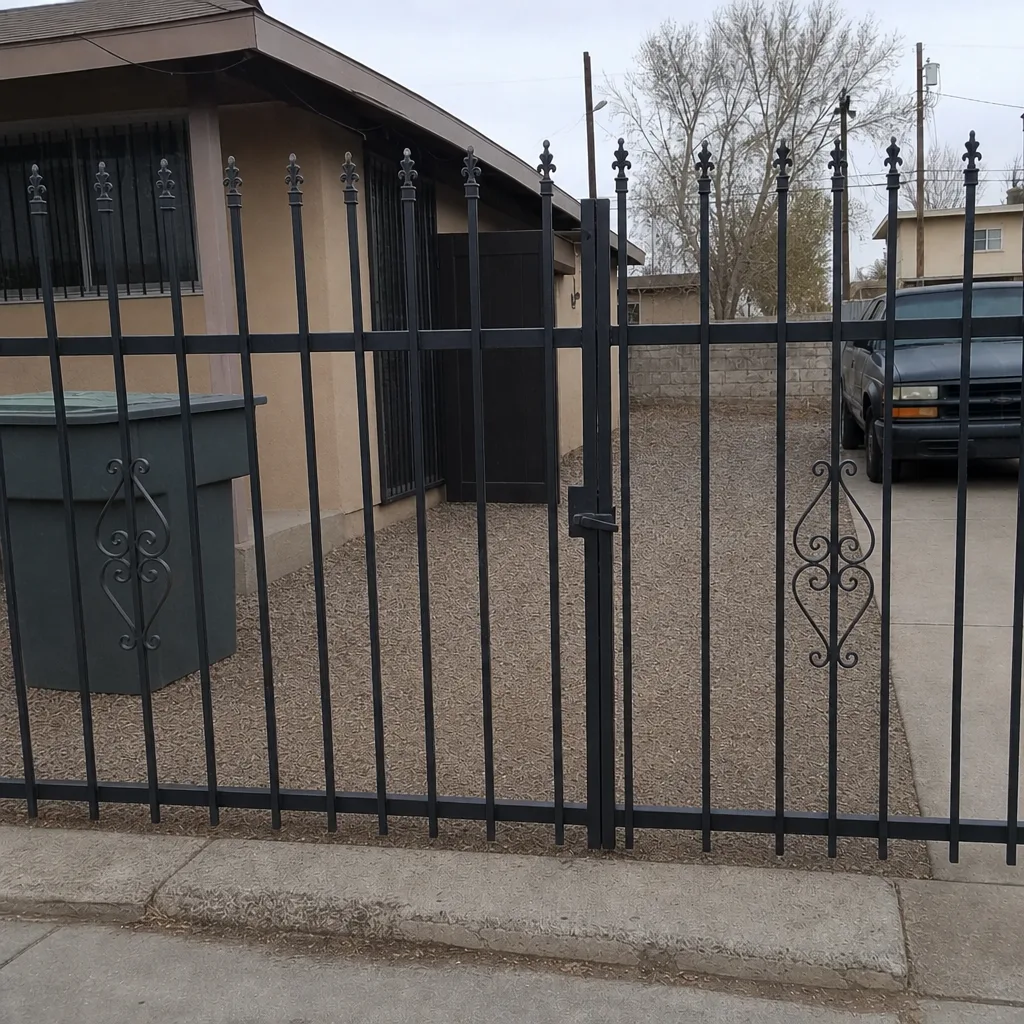
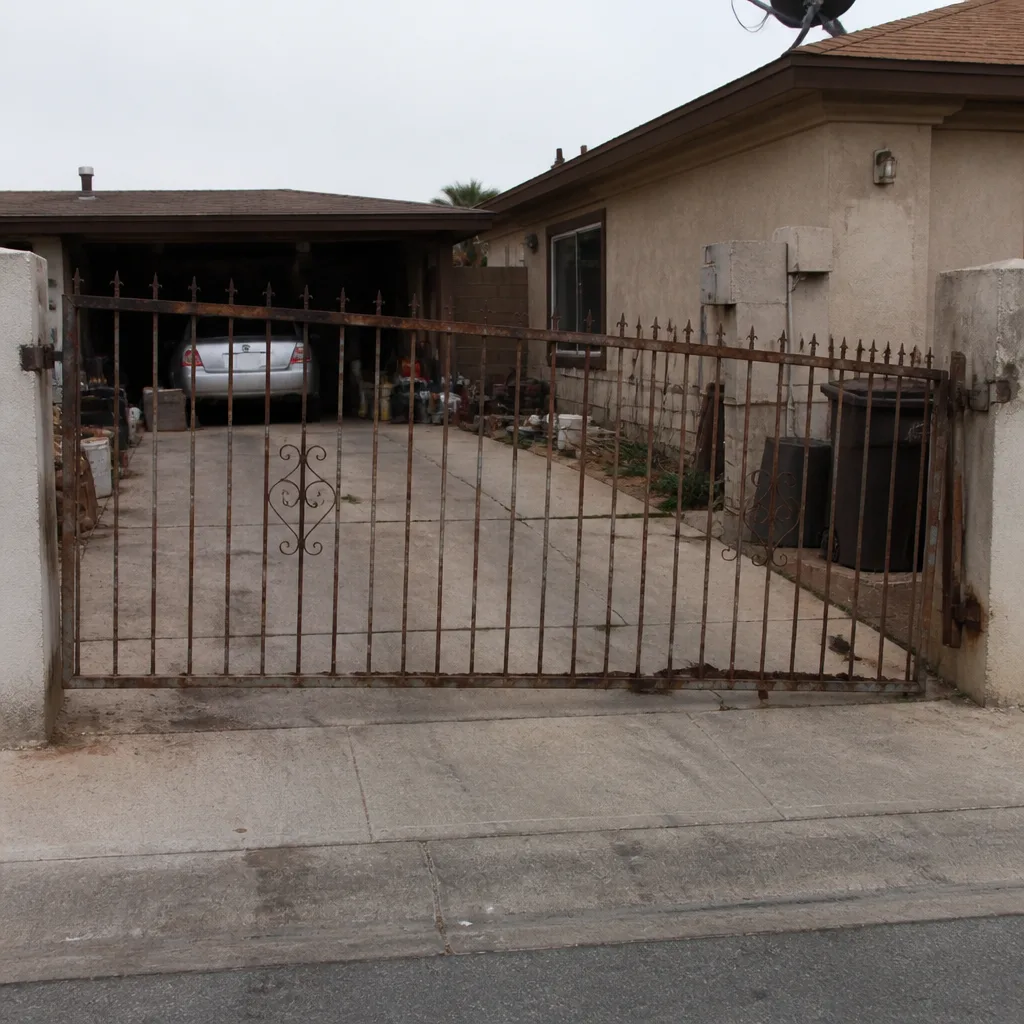
See the difference
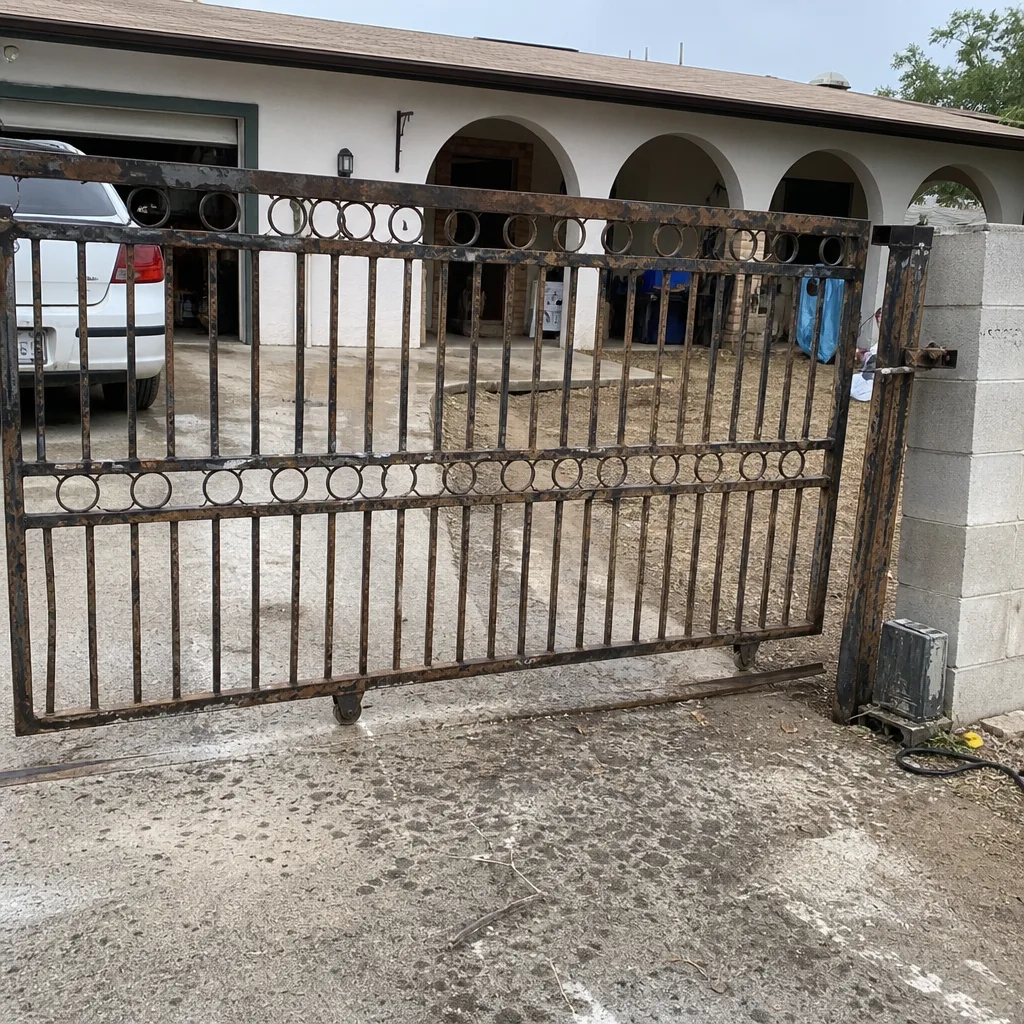 Before
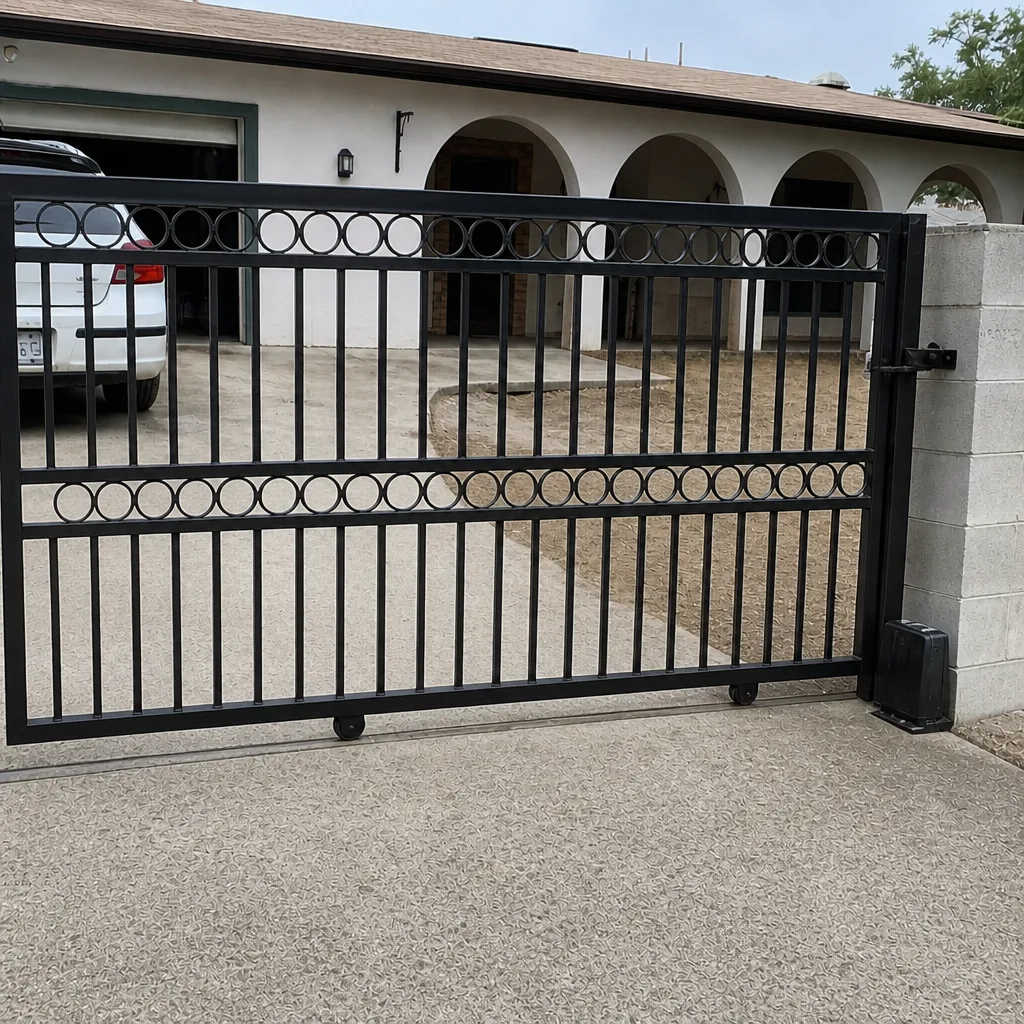 After
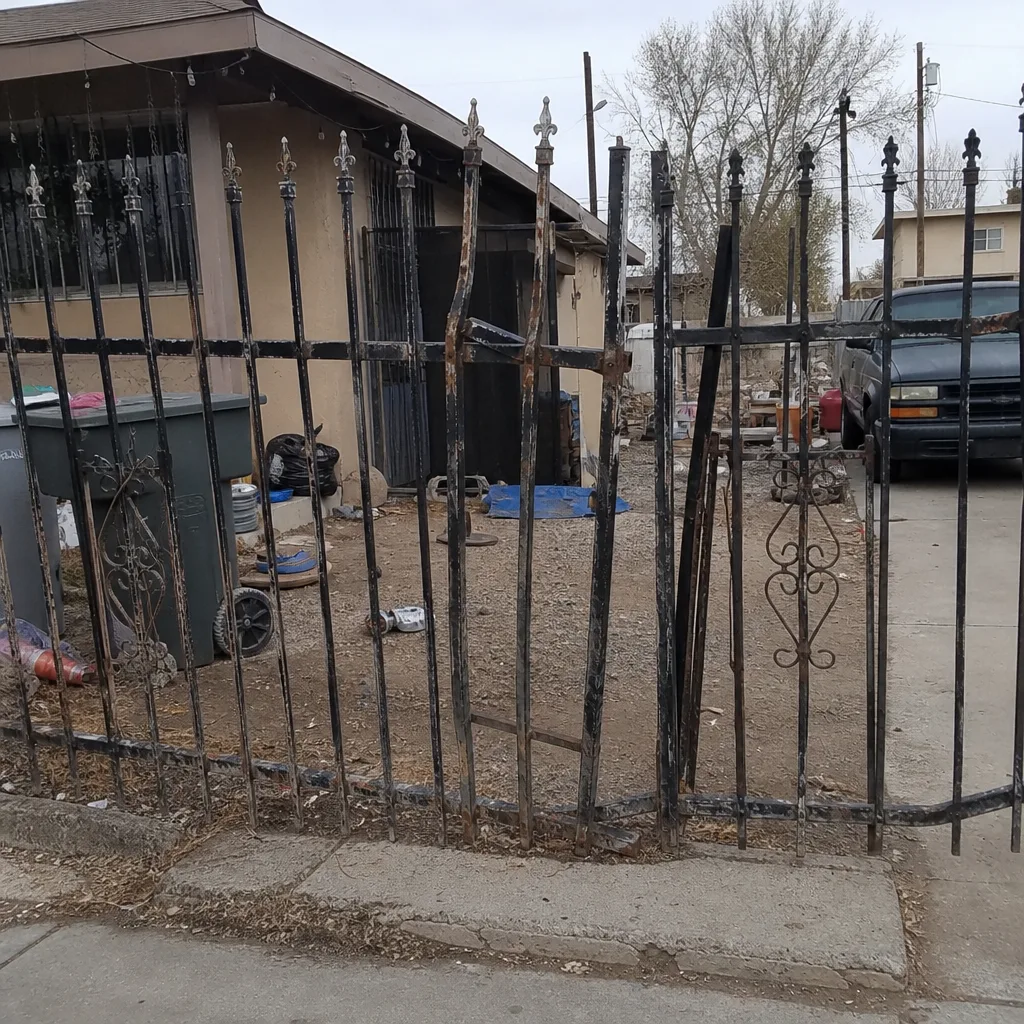 Before
 After
 Before
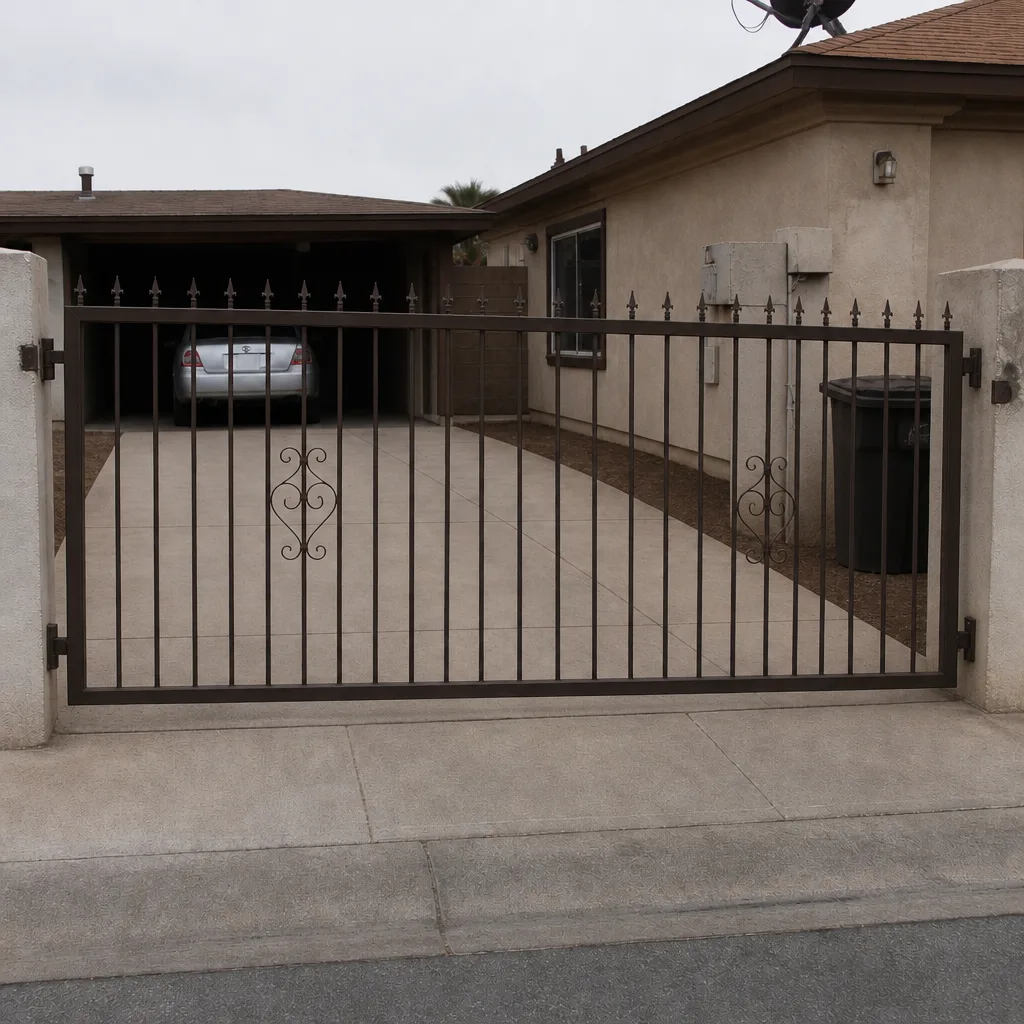 After
When to Call a Professional
Call a professional the moment the repair moves from surface hardware to a load-bearing weld, a cracked post, or any moving arm on a motorized gate. Dynamic-load failures don’t wait for a convenient weekend. A 200-pound gate that drops off a hinge weld doesn’t just break; it damages the operator, the driveway, and whatever it lands on, and the safety code that governs automatic gates near public walkways exists because those failures are serious. Height and welding both carry a real injury risk, and no honest guide will tell you otherwise. For everything on the surface-hardware side, do it yourself with confidence.
Gatewood Fence & Gate North Las Vegas offers free estimates in North Las Vegas. Call (844) 761-9351 and a live person answers, day or night. Every job is quoted before work starts, and we carry the 90-Day Done Right Promise in writing on every repair.
Frequently Asked Questions
No. A hinge weld on a gate is a load-bearing joint that has to hold the gate’s full weight while it moves. A weld that looks fine from the outside can fail under dynamic load, and a failed hinge weld on a gate in North Las Vegas can drop 150 to 400 pounds of steel. Hire a professional welder for any hinge, post, or frame weld.
Yes, in most cases. Latches, handles, stop plates, and bolt-on hardware are surface hardware and only need basic tools. Shut the gate, photograph the old hardware, soak the fasteners in penetrating oil, and test-fit the new part before you tighten it. If you find a crack in the post or hinge plate underneath, stop and call.
Surface hardware repairs typically run $80 to $250, and structural weld repairs typically run $200 to $500 depending on access and paint. Motor and operator repairs usually run $150 to $450. Every price we quote is agreed before work starts, and a second opinion on any written estimate is free, so call (844) 761-9351 and get an exact number.
Repairing existing hardware usually doesn’t need a permit. Structural modifications, height changes, new posts, or changes to the gate’s frame generally do under the North Las Vegas municipal code. HOA approval is a separate question and often stricter. If you’re unsure which category your repair falls into, that’s a good reason to call before you cut.
Look for rust bleeding out from the weld toe, paint flaking in a straight line, a lumpy or smeared bead, and any movement at the joint when the gate swings. Those four signs mean the weld is working harder than designed. Call for a free second opinion on any written estimate before you decide the repair can wait.
For most surface hardware and motor repairs, often yes; we’ll tell you on the phone whether same-day is realistic once we know what failed. For structural welds and new parts, the work is scheduled after a measure and a written price. Call (844) 761-9351 and a live person will give you a straight answer, not a guess.
The Bottom Line
Do the hardware. Don’t do the weld. That’s the whole guide in one line. Latches, handles, rollers, bolt-on hinges, and low-voltage keypad hardware are safe to tackle yourself with a socket set and an afternoon. Hinge plates, posts, frames, gussets, and moving arms are load-bearing and belong to a professional welder. In North Las Vegas, add two local rules: check the HOA before you change anything visible, and pull a permit for anything structural, because resale catches up with both. If your repair lands anywhere outside surface hardware, get a free estimate and a straight answer before you cut.
Written by the team at Gatewood Fence & Gate North Las Vegas.