
Last updated November 17, 2026
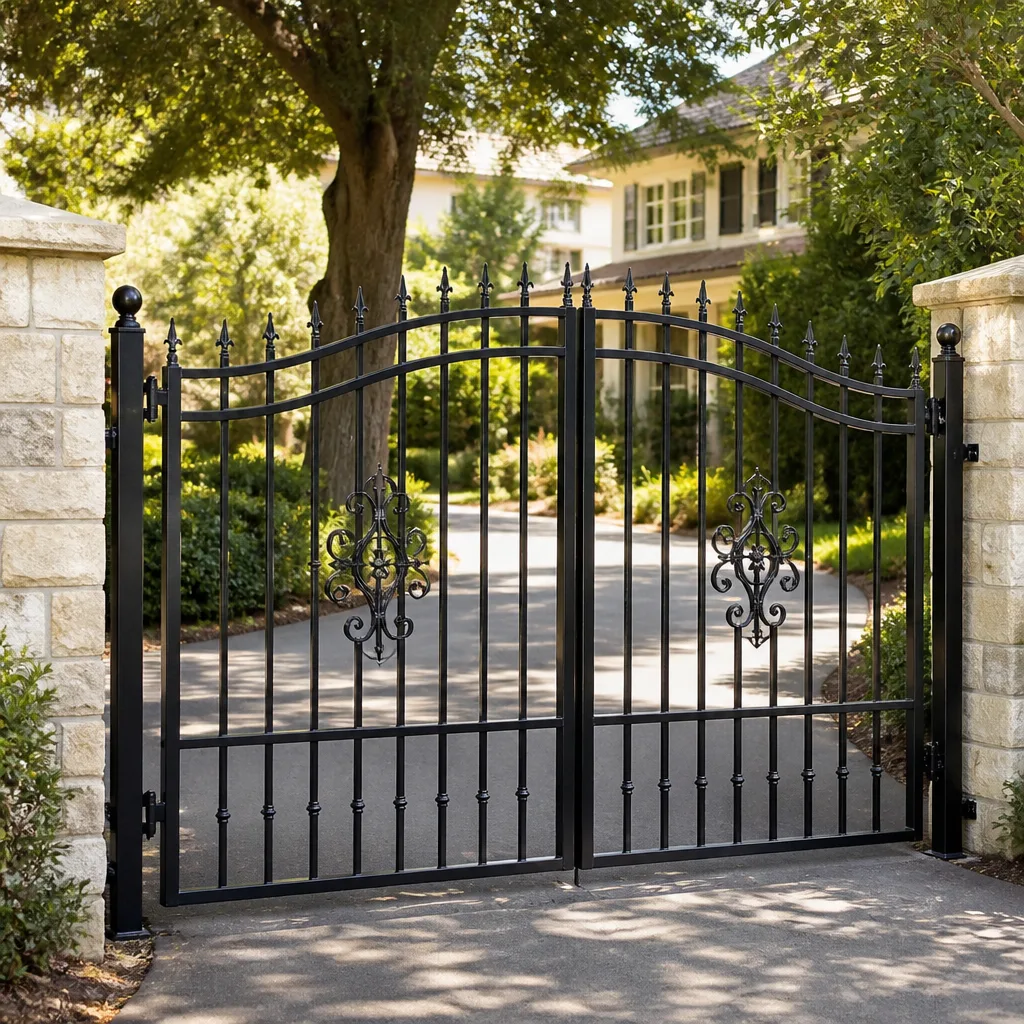 Wrought iron
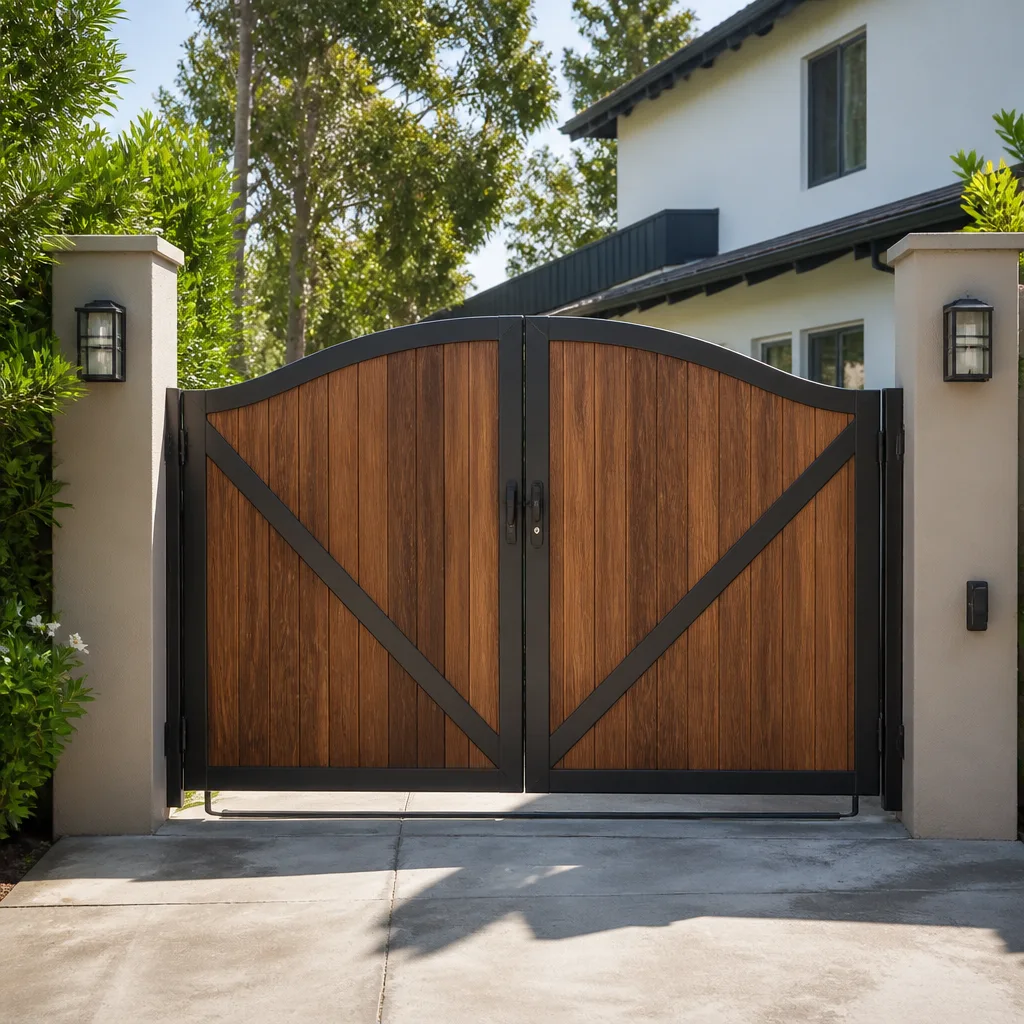 Wood & steel frame
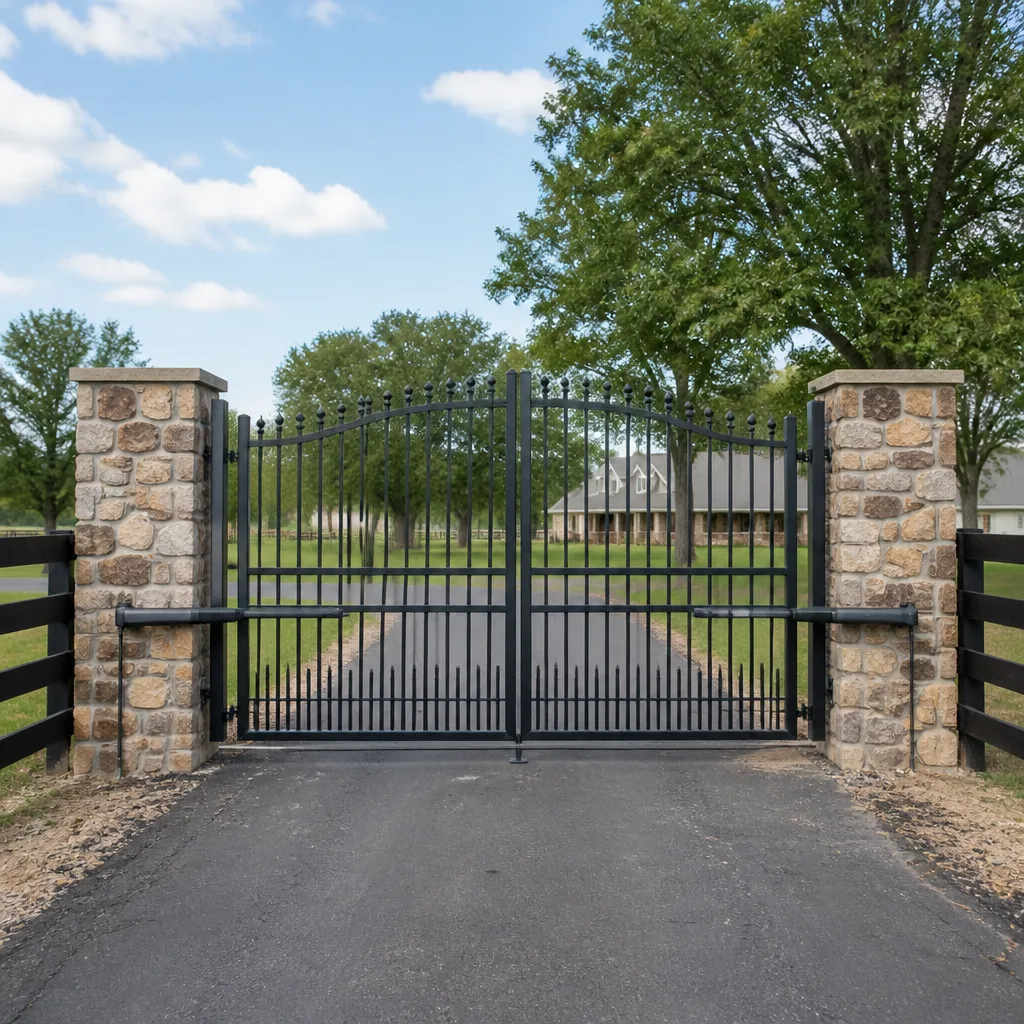 Farm & ranch
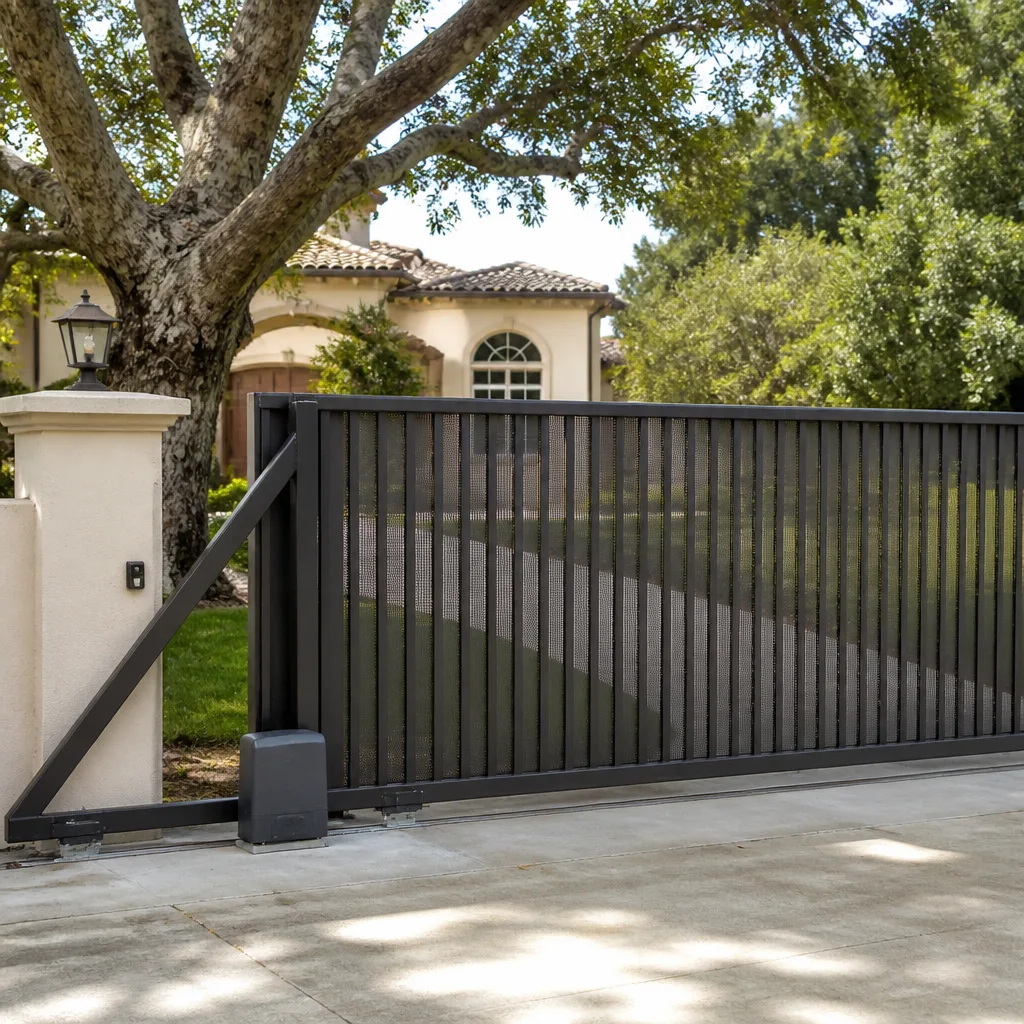 Sliding driveway gates
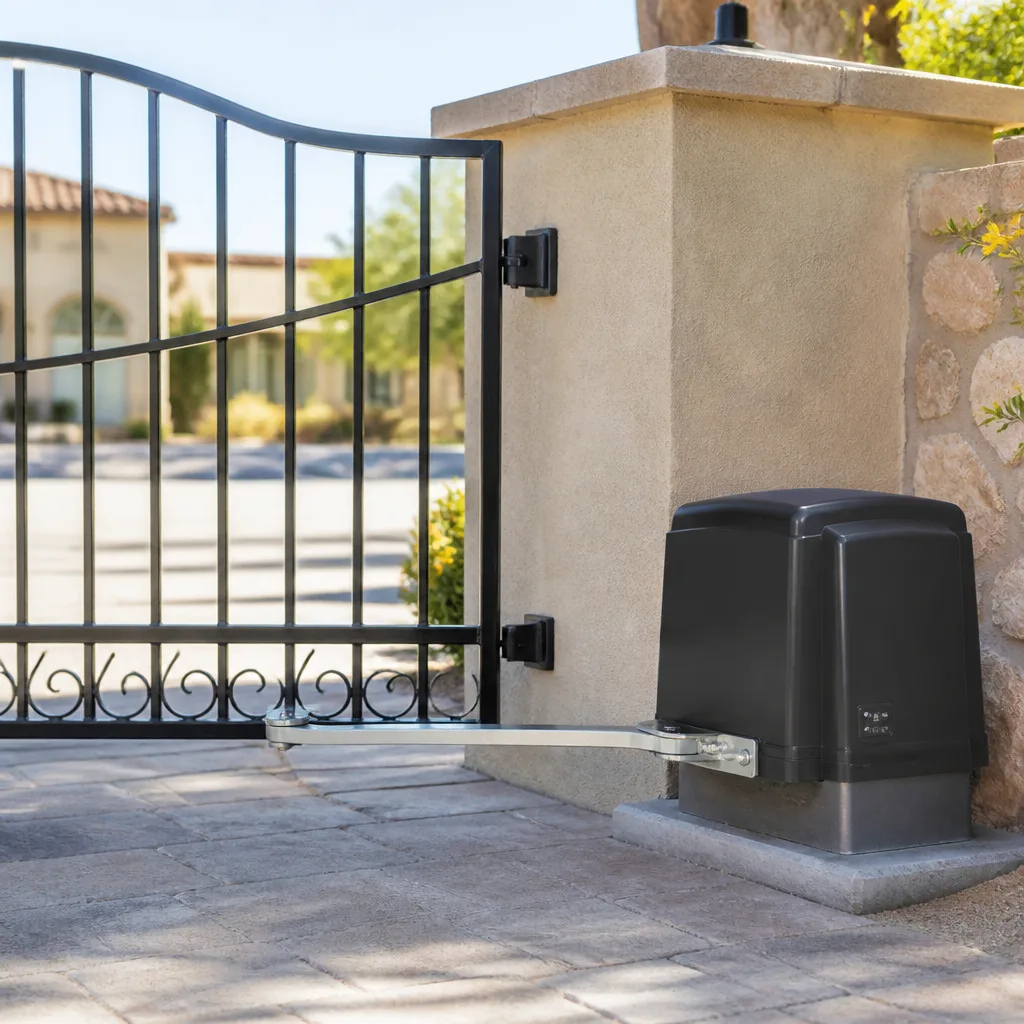 LiftMaster operators
Free on-site gate assessment - hinges, posts, and your LiftMaster or Nice gate operator checked before anything is quoted
The assessment is free and the quote is the invoice.
Get your free estimateDIY vs Professional Gate Repair: The North Las Vegas Homeowner’s Decision Guide
Hal has quoted more than a few jobs where the homeowner had already bought the right part and done the diagnostic correctly, and he told them they didn’t need him. He’s also quoted jobs where someone bought the wrong part, installed it backward, and voided the warranty on a $600 operator. The difference between those two stories isn’t luck. It’s knowing which category of repair you’re standing in before you pick up a wrench. This guide lays out an honest framework for North Las Vegas homeowners: which gate repairs are genuinely do-it-yourself, which ones will cost you more if you start and can’t finish, and the tool and skill requirements nobody spells out for you.
Quick Answer
Some gate repairs are genuinely DIY-appropriate for a handy homeowner, including replacing a battery, resetting a remote or rehanging a sagging lightweight gate with basic tools. Others, like spring and motor work, hinge-post welding, and loop detector programming, need specialty tools and real experience, and a half-finished job in those categories typically costs more to correct than the original repair would have. The right call depends on the specific repair, not on a blanket rule.
Styles & brands we work with
- Wrought iron
- Wood & steel frame
- Farm & ranch
- Sliding driveway gates
- LiftMaster operators
Table of Contents
- Repairs That Are Genuinely DIY-Friendly
- Repairs That Require Welding and Specialty Tools
- The DIY Operator Replacement Mistake
- The Tools and Skills, Stated Honestly
- What the 90-Day Done Right Promise Changes
- The Hybrid Approach: Prep Yourself, Call a Pro for the Structure
- North Las Vegas Conditions That Affect Gate Repairs
- Common Mistakes to Avoid
- When to Call a Professional
- Frequently Asked Questions
- The Bottom Line
Repairs That Are Genuinely DIY-Friendly
Here’s a list we don’t see published often enough: the gate repairs where a careful homeowner with basic tools is genuinely better off doing the job themselves. Nothing structural moves in these categories. No spring tension gets released, no welder gets fired up, and no life safety equipment gets disturbed. If you can turn a screwdriver and read a manual, you can handle most of them.
- Battery replacement in the operator and remote. A weak battery is the most common reason a residential swing gate starts acting up. It’s a two-minute job on most Linear and Viking operators, and it costs less than a service call.
- Remote pairing and reprogramming. Adding a new remote, removing a lost one, or re-syncing an existing one is a sequence of button presses. The manual for your brand walks you through it, and it takes about five minutes.
- Tightening loose hinges and brackets. A gate that rattles or wobbles slightly often has a loose bolt. Check the plates at the hinge points first. This isn’t the fix for a sag, but it’s the correct first step on a brand-new wobble.
- Clearing debris from the travel path. A gate that stops halfway often has a rock, a palm frond, or some other obstruction in the swing arc. Clear it and test.
- Replacing worn rubber bumpers and stoppers. These are cheap and easy, and a worn bumper lets the gate bang into the post, which is a slow way to crack a weld.
- Lubricating hinges and the chain on a sliding gate. A modest amount of lubrication on the moving parts keeps things working and quiets a lot of noise.
- Replacing damaged slats or pickets on a decorative gate. If the frame is sound and the damage is cosmetic, this is often a homeowner job.
If you’re in North Las Vegas and you’re not sure which category your repair falls in, the honest answer is to check the specific repair before you buy a part. Buying the right part is cheap. Buying the wrong part and forcing it to fit is what turns a small repair into a real one.
Repairs That Require Welding and Specialty Tools
These are the gates where we’ll tell you straight: don’t start this yourself. Not because of a sales pitch, but because the tools required cost more than the repair, and a half-finished job in this category damages the gate, the operator, or you. Some of these repairs involve stored mechanical energy that can injure an untrained person, and we won’t walk anyone through a do-it-yourself version of them.
- Hinge-post repair and welding. A gate sags in the hinge post, not in the middle. That means the fix is at the structure, and the fix is welding. Doing it correctly requires a real welder, a way to square the post to the fence line, and a way to hold that square while the weld cools. We use on-site welding so the gate stays in the driveway and the alignment is measured against the actual ground, not a shop floor.
- Spring and counterbalance work on any gate operator. These springs store enough energy to hurt a person badly if they’re released improperly. A trained technician uses the right tool for the brand and handles the safe release correctly. This is not a repair we walk anyone through in a guide.
- Loop detector installation and programming. The loop is buried under the driveway, so the install requires cutting and repairing concrete, pulling wire, and programming a detector for sensitivity to the actual soil and pavement condition. Getting a loop to behave correctly on a North Las Vegas driveway means accounting for the alkalinity of the soil and the reactivity of the slab, and that’s experience talking.
- Motor and control board replacement. Every operator brand has a slightly different wiring layout, and getting any of them wrong damages the board or creates a real hazard. This includes the operator and the code panel for brands like DoorKing or Ghost Controls, where a wrong setting opens the gate to every visitor instead of the one you meant.
- Hinge-post replacement at the ground. If the post is rotted or broken where it meets the concrete, the repair moves into the ground. That’s a different job than the sag, and doing it on top of the old post is the most common way people end up fixing the same gate twice.
- Access control wiring and interfacing. Keypads, telephone entry, and intercoms need to be wired into the operator correctly and grounded for our lightning season. This isn’t a swap-out job.
The DIY Operator Replacement Mistake
Here’s the single pattern we see most often in North Las Vegas, and it’s the one that costs homeowners real money. Someone’s gate operator quits. They look up the brand and the model and swap in something that looks similar, and the gate works for a few weeks and then starts failing in a specific way.
The problem is almost always torque rating. Every operator is rated for a specific gate weight and length, and if the new operator is under-rated for that gate, it will cycle until it overheats, until the board fails, or until the control board burns up. A $300 operator installed on a gate it wasn’t rated for isn’t a repair, it’s a countdown.
There’s a second layer: the model number on the operator isn’t always the full picture. The torque, the arm length, and the duty cycle are separate specs on most of the brands we service, including Linear and Viking. A homeowner can match the brand and the family name and still get a dead-end model number that was never meant to open this specific gate.
Here’s the pattern we’ve seen too many times in North Las Vegas: the homeowner buys an operator, installs it backward or under-sized, voids the warranty on a several-hundred-dollar unit, and still has to call us. The lesson isn’t shame. It’s that the diagnostic step before the part purchase is the part that saves money. Get the model matched correctly before you spend a dollar. That step is free and it’s what a trained tech does first.
The Tools and Skills, Stated Honestly
“Basic tools” is a useless phrase in a repair guide. Here’s what each repair category actually asks for.
DIY-friendly repairs
- Screwdriver set (Phillips and flathead)
- Adjustable wrench
- A socket set for the hinge bolts
- Ladder only if the operator is mounted high
- Your operator’s manual (download it if you’ve lost the paper copy)
Operator and control work
- A multimeter for voltage and continuity checks
- Insulated screwdrivers and a wire-stripper
- Working knowledge of low-voltage wiring and how each brand labels its terminals
- A torque spec for the specific gate weight and model
- The ability to read a wiring diagram on a control board you’ve never seen
Structural and welding repairs
- A welder and the ability to strike an arc on-site
- Welding shields and PPE
- Angle grinder, level, and clamps
- A way to square the hinge post to the fence line and hold it during cooling
- Concrete and anchoring tools for post-in-ground repairs
Loop detector and access control installs
- A concrete saw and patch materials
- Wire-pulling equipment and buried conduit
- The brand-specific programming sequence, and detector sensitivity adjustment for our soil and slab conditions
If you don’t have the right item on one of these lists, the honest advice is to stop before you start. That’s Hal’s rule, and it saves more money than the upsell does.
What the 90-Day Done Right Promise Changes
Every job we do carries the 90-Day Done Right Promise in writing. If the repair doesn’t hold, we come back and make it right, and it costs you nothing. That’s not a footnote in a contract, it’s the whole point of the repair-first approach.
When you do a gate repair yourself, that coverage goes away. Not just on the part, but on the labor and the diagnosis. If a repair fails in two weeks, a DIY job means a second trip to the hardware store, a second attempt, and possibly a damaged part. A covered repair means one call.
There’s a subtler loss too. When a job goes wrong in the DIY version, the failure often blames the part or the operator and misses the real cause. A trained tech diagnoses the cause first, then fixes it, then tests it. That sequence is what makes the promise real. It’s also why “fix the symptom” is the most expensive version of a gate repair, whether a homeowner is doing it or a company is.
For a repair that’s genuinely DIY-appropriate, the warranty loss is small. For a repair that involves welding, springs, or a control board, the 90-Day Done Right Promise is the strongest argument for calling the pro, because the failure mode is expensive and the fix isn’t always obvious. Our Gate Repair in North Las Vegas page spells out how that promise works on the various repair types.
The Hybrid Approach: Prep Yourself, Call a Pro for the Structure
There’s a middle path that works well for a lot of North Las Vegas homeowners. You do the parts you can do, and the pro does the piece you can’t, and the trip is smaller and faster because half the work is already done.
- Take good photos. Shoot the gate from four feet away, from the hinge post, and close-up of any damage. This saves a lot of time on the first call.
- Find the brand and model number. Look on the operator housing, the control box, or the inside of the access panel. Write it down.
- Test the gate, then write down the symptoms. Does it sag when open, or stop mid-travel, or run and reverse? Specifics help the tech arrive prepared.
- Do the wiring prep or the concrete prep you can safely do. For a loop detector job, clearing the work area and knowing where the driveway line runs is genuinely useful.
- Call for the structural piece. Welding at the hinge post, spring work, and operator replacement all fall into the structural category, and these are the pieces you should leave alone.
- Get a written estimate and confirm the price before work starts. Upfront pricing, no haggling, and nothing changes at the door.
You keep the cheap repairs. The pro keeps the structural ones. The gate gets fixed. The hybrid approach removes a lot of the do-it-yourself anxiety without spending the money on a full-service call.
North Las Vegas Conditions That Affect Gate Repairs
Our environment is hard on gates in specific ways, and knowing them helps a homeowner decide what’s a real repair versus a seasonal annoyance.
- Summer heat. Sun-baked operators and control boxes run hotter than they should, which speeds up board failure. If your operator is on the west-facing side of a block wall, it cycles in the worst part of the day and fails earlier than you’d expect. A shade structure or a relocation of the operator housing can buy years on a Linear or Viking unit.
- Our soil and pavement. Loop detectors in North Las Vegas behave differently than in wetter climates. The dry, alkaline soil and the reactivity of the driveway slab affect detector sensitivity, and the loop sometimes needs a different setting than the manual recommends. That’s a case where the tech’s experience matters more than the instruction sheet.
- Winds and dust. Dust collects in the mechanism and on the tracks, and our spring and fall winds work loose bolts that wouldn’t rattle in a calmer climate. A regular hinge check is worth ten minutes a few times a year.
- Lightning season. Summer monsoons knock out control boards and remote pairing in a matter of minutes. Grounding on the operator matters more here than in a lot of places, and a missed ground shows up as a dead control board after a storm.
- HOA standards. A good number of the newer North Las Vegas subdivisions set appearance requirements for gate colors, heights, and replacement parts. Matching the original look sometimes means going through your HOA for approval before installation, and that’s easier when you know the rules before a part is ordered.
None of this is a reason to be nervous. It’s a reason to know which category of repair you’re in before you start. Hal has seen every version of this in North Las Vegas and can usually tell from the photo and the model number whether a job is a do-it-yourself small repair or a call.
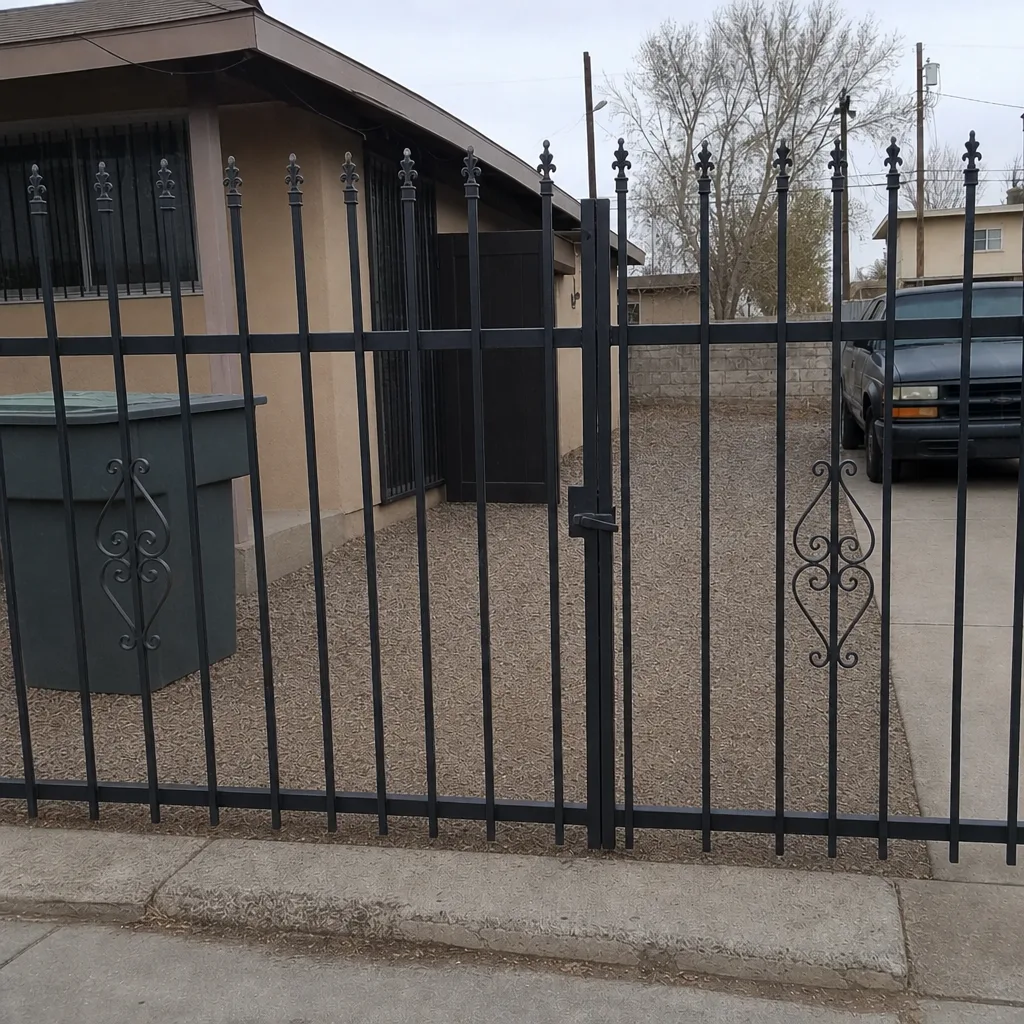
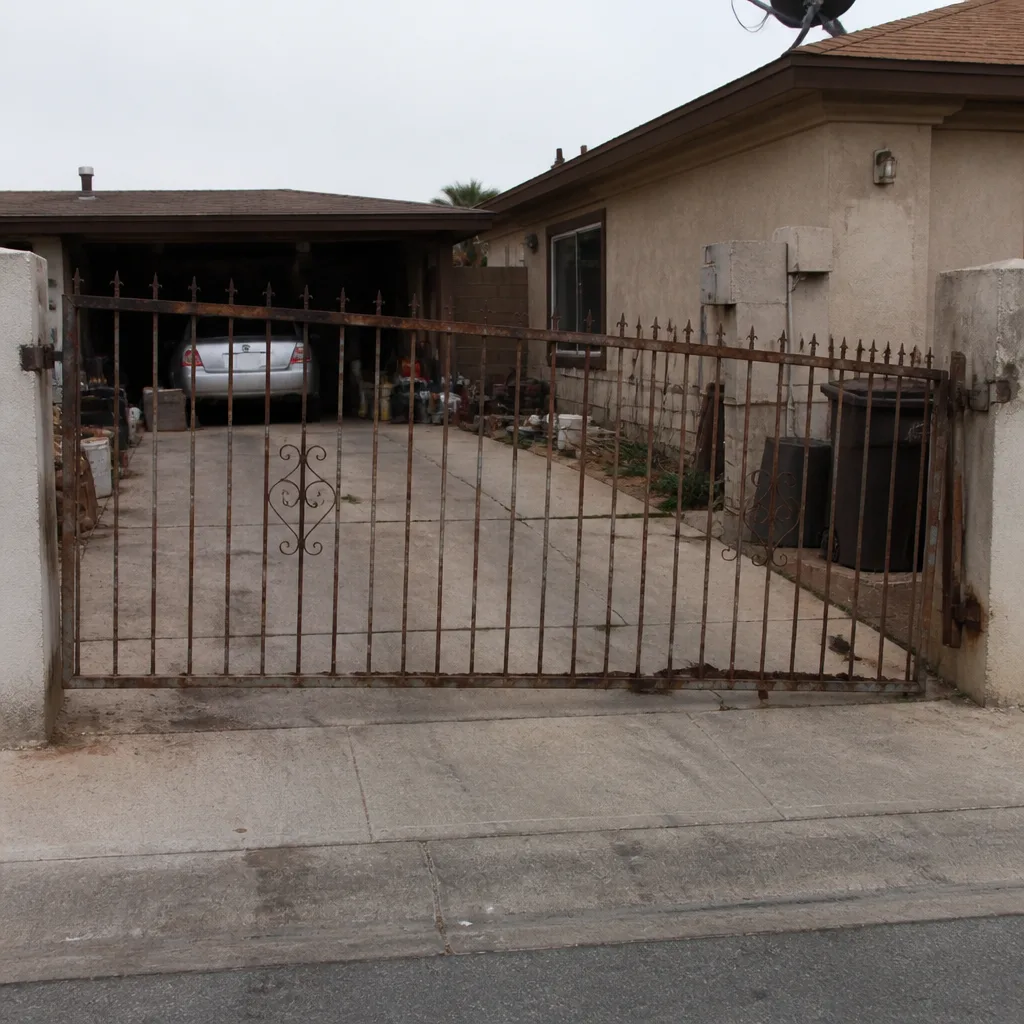
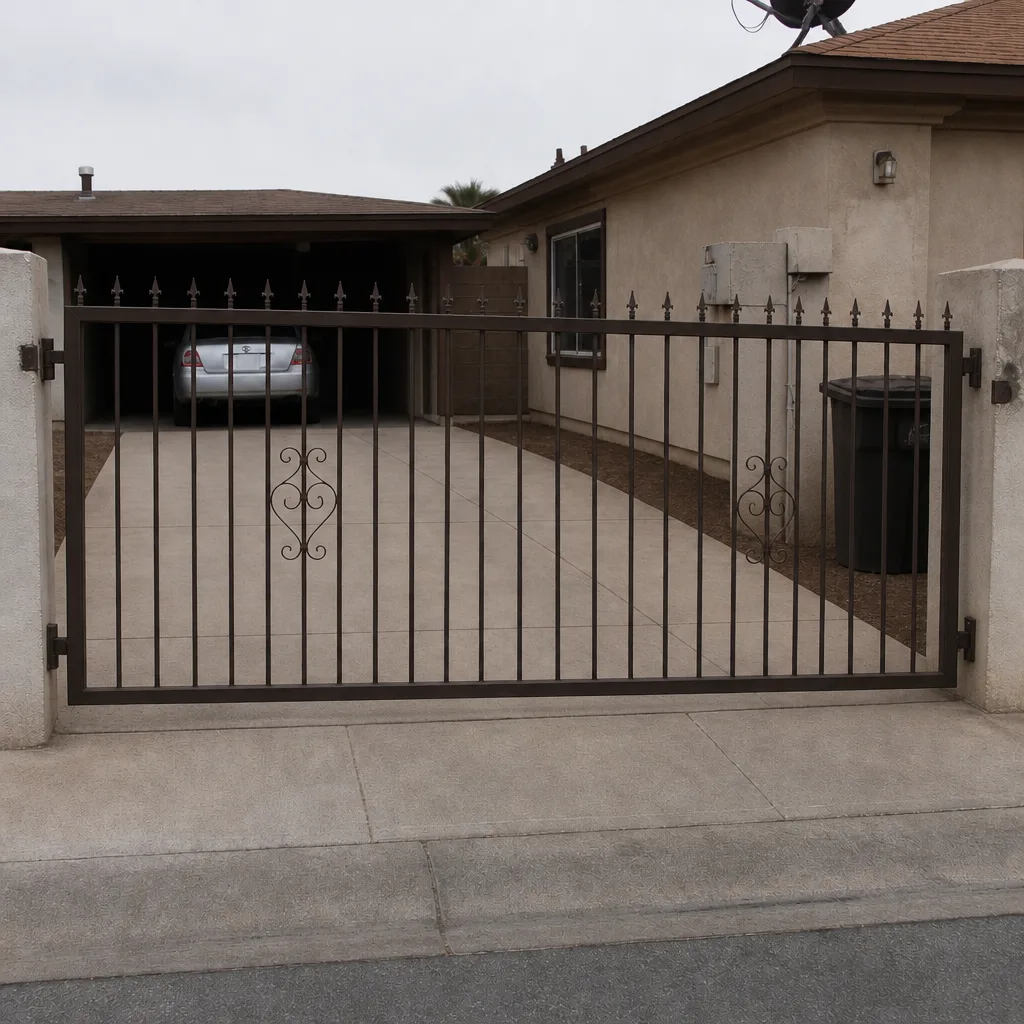
See the difference
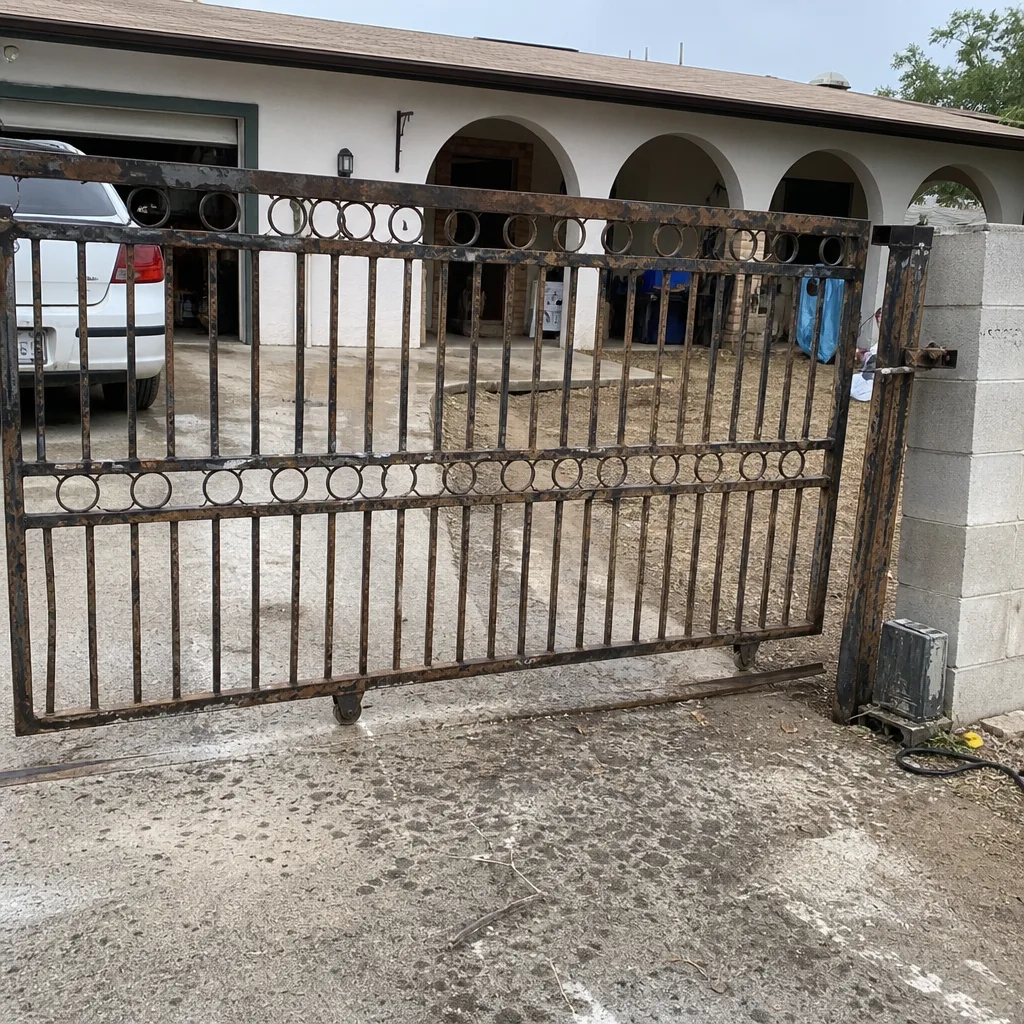 Before
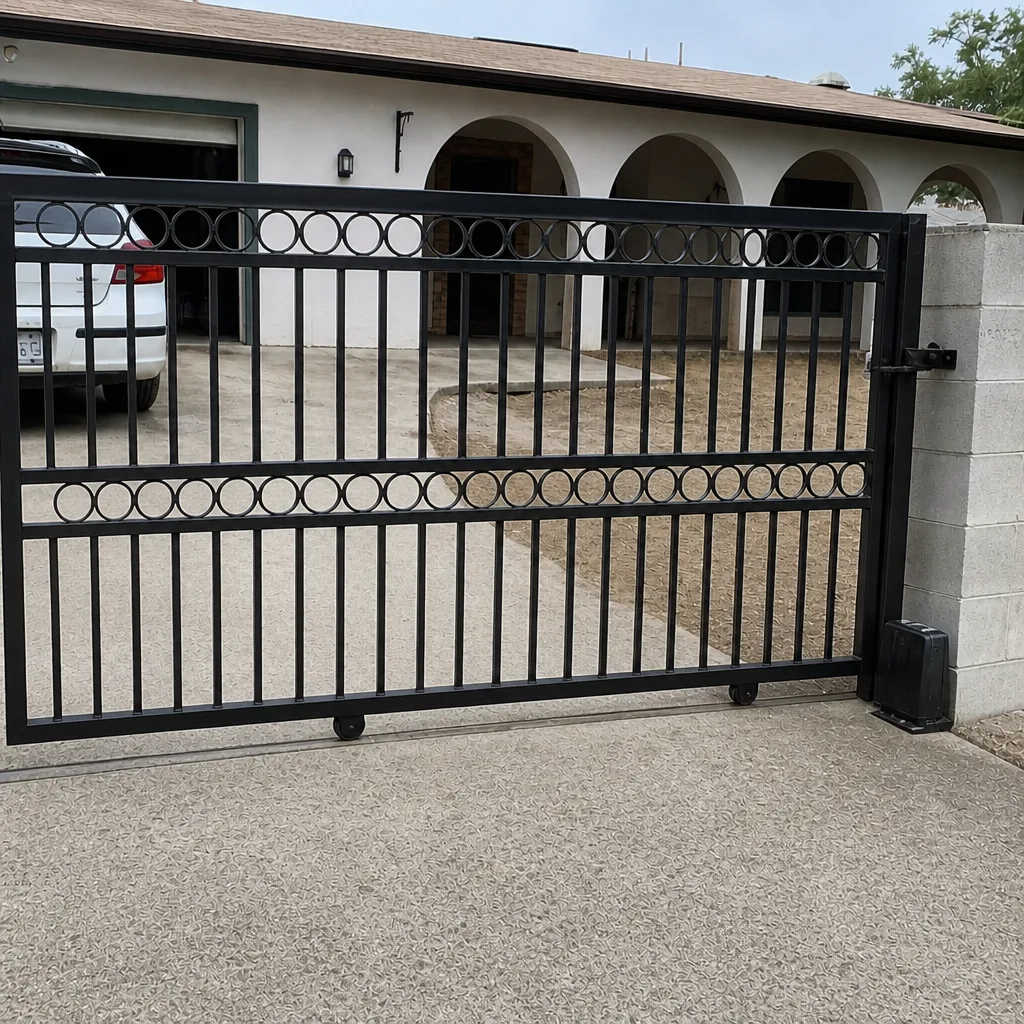 After
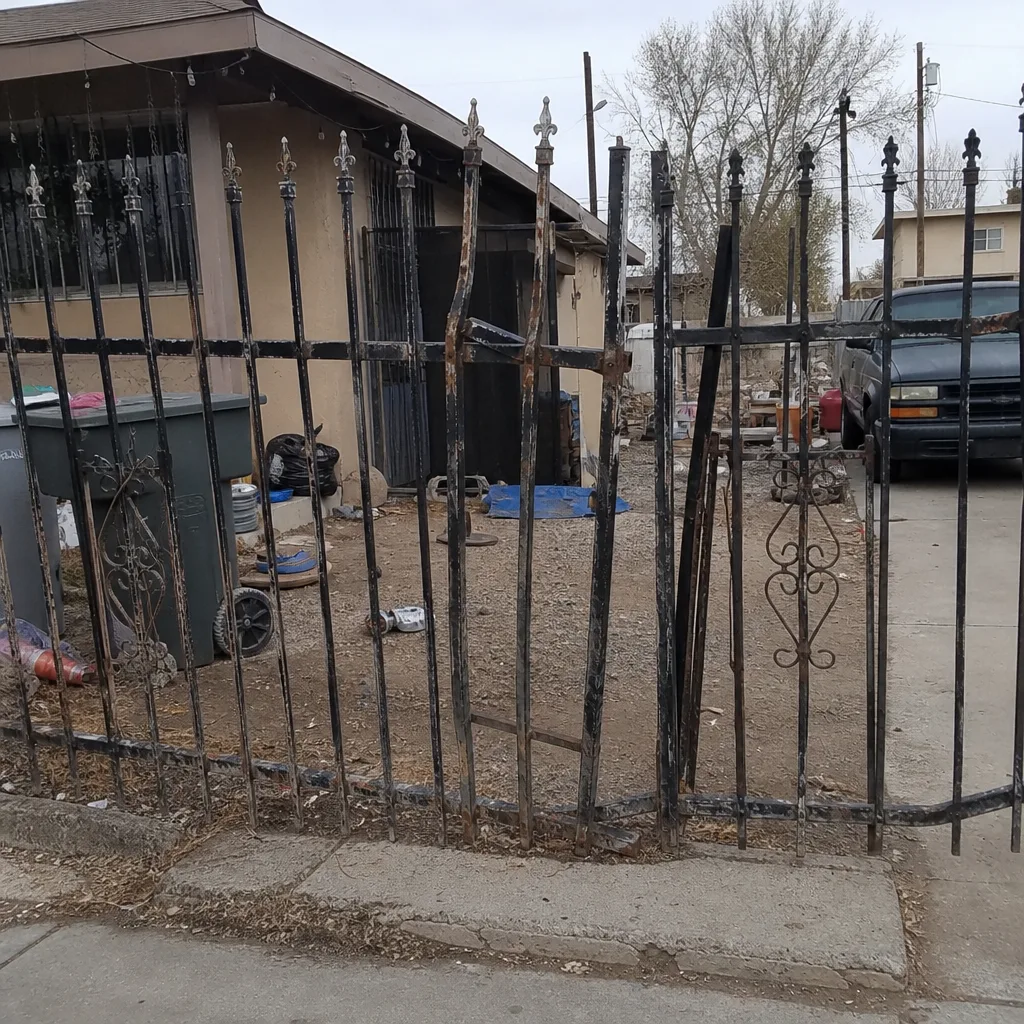 Before
 After
 Before
 After
Common Mistakes to Avoid
- Buying the part before the diagnosis. The most expensive mistake is buying a part based on the symptom rather than the cause. If your operator is a Linear and the gate stops mid-travel, the problem could be the battery, the limit switch, or the board, and swapping the board when the battery is dead wastes real money.
- Buying an operator without checking the torque rating. This is the North Las Vegas pattern. Match the model to the gate weight and length before you spend anything.
- Tightening the hinge post when the problem is the post itself. A gate sags in the hinge post. If the post is rotted or the weld has failed, tightening the bolts on top of it just hides a structural problem for another season and often voids a real fix later.
- Attempting spring or counterbalance work. Don’t. This is a category where we won’t offer a guide because the failure mode is injury.
- Burying a loop detector install in the wrong spot. The loop’s position and sensitivity have to be set to the actual driveway and soil, not the manual’s default. Getting this wrong the second time is a bigger job than the first.
- Doing a full install through a Homeowners Association without the approval. Read the HOA rules on the gate’s appearance before you order parts, and understand that approval usually runs before the install, not after.
- Skipping the model number on the call. Every tech would rather know the brand and model before arriving. It’s a free way to shorten the trip and sharpen the diagnosis.
When to Call a Professional
Call when the repair involves any of these, and call before you buy a part:
- Welding at the hinge post or anywhere on the gate frame
- Springs, counterbalance, or any stored tension in the mechanism
- Operator replacement on a gate where the gate weight and the new model’s torque rating haven’t been checked
- Loop detector installation, replacement, or programming
- Control board, access control, or DoorKing telephone entry wiring
- An HOA appearance requirement that needs a matched part or a full install
- A gate with a sag that’s getting worse month to month
Gatewood Fence & Gate North Las Vegas offers free estimates in North Las Vegas. Call (844) 761-9351 and you’ll get a live person, any hour. We’ll tell you honestly if you don’t need us, and if you do, the price is quoted and agreed before any work starts.
Frequently Asked Questions
Yes, for a specific set of repairs: battery replacement, remote pairing, tightening loose hinges and brackets, clearing debris from the travel path, replacing bumpers and slats. If the repair involves welding at the hinge post, springs, a control board, or a loop detector in the driveway, that’s the professional category and the honest answer is no.
It varies by repair, and the technician will quote and agree to the price before work begins. Small repairs like a battery or hinge adjustment run at the bottom of the range, while welding, operator replacement, or loop detector work runs higher. Call (844) 761-9351 for an exact quote – estimates are free, and we’ll tell you if it’s a job you can do yourself.
Almost always a torque rating mismatch. The replacement operator is under-rated for the gate’s weight or length, so it overheats and fails. This is the most common DIY operator mistake, and the fix is to match the model to the gate specs before purchasing, not after.
For repair and emergency calls, yes, same-day is often possible. Our calls are answered by a live person 24 hours a day, so dispatch happens right away. Installation and new builds are measured and scheduled, not same-day. Call (844) 761-9351 for scheduling or a free estimate.
We’re certified to service nine major brands, including Linear, Viking, Ghost Controls, and DoorKing. If you’re not sure which one you have, look for the model number on the operator housing, and we’ll tell you when you call.
Every job carries the 90-Day Done Right Promise in writing. If it doesn’t hold, one call brings us back and we make it right. That’s the piece that gets lost in the DIY version of the same repair. Call (844) 761-9351 if you’re not sure whether a repair is covered.
The Bottom Line
Some gate repairs belong in your own hands. Battery swaps, remote pairing, hinge tightening, bumper replacement, and minor slat work are genuinely DIY-appropriate for a careful homeowner, and doing them yourself is the smart call. The other category, including welding at the hinge post, spring work, operator replacement with a torque mismatch risk, loop detector work, and access control wiring, is where a half-finished job costs more than the original repair. The framework is simple: match the repair to the tool list, check the model number before you buy a part, and call for the structural pieces. If you need gate installation or a new operator, our team handles the full picture, from Gate Installation in North Las Vegas to Gate Motor & Opener in North Las Vegas, with upfront pricing and free second opinions on any written estimate.
For repair and emergency work, same-day availability is common, and for installation the plan is measured and scheduled. Either way, the price gets quoted and agreed before anyone lifts a tool, and the name on the invoice is Gatewood Fence & Gate North Las Vegas home.
Call (844) 761-9351 for a free estimate. Live person, any hour, no voicemail queue. If it’s a job you can do yourself, we’ll tell you, and if it’s a job that isn’t, you’ll know that before you spend a dollar.
Written by the team at Gatewood Fence & Gate North Las Vegas.