
Last updated November 17, 2026
 Wrought iron
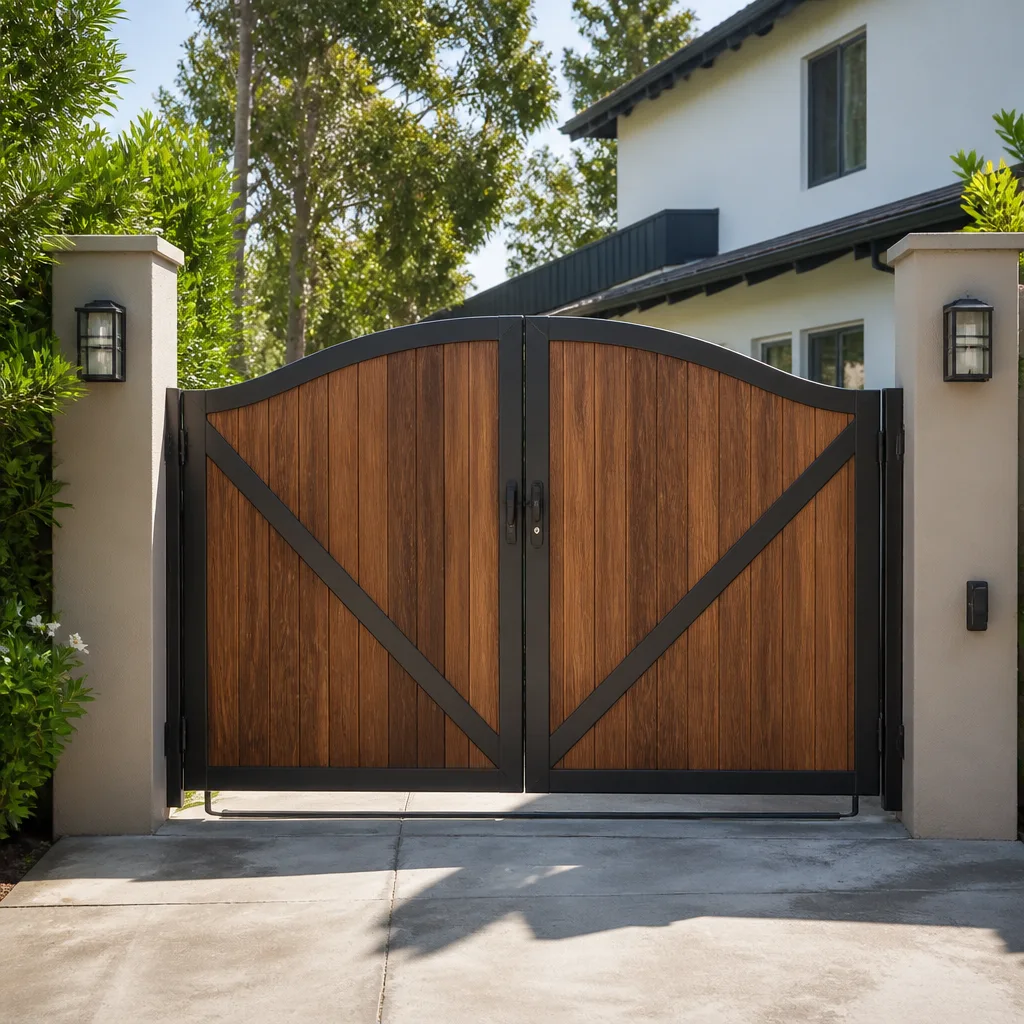 Wood & steel frame
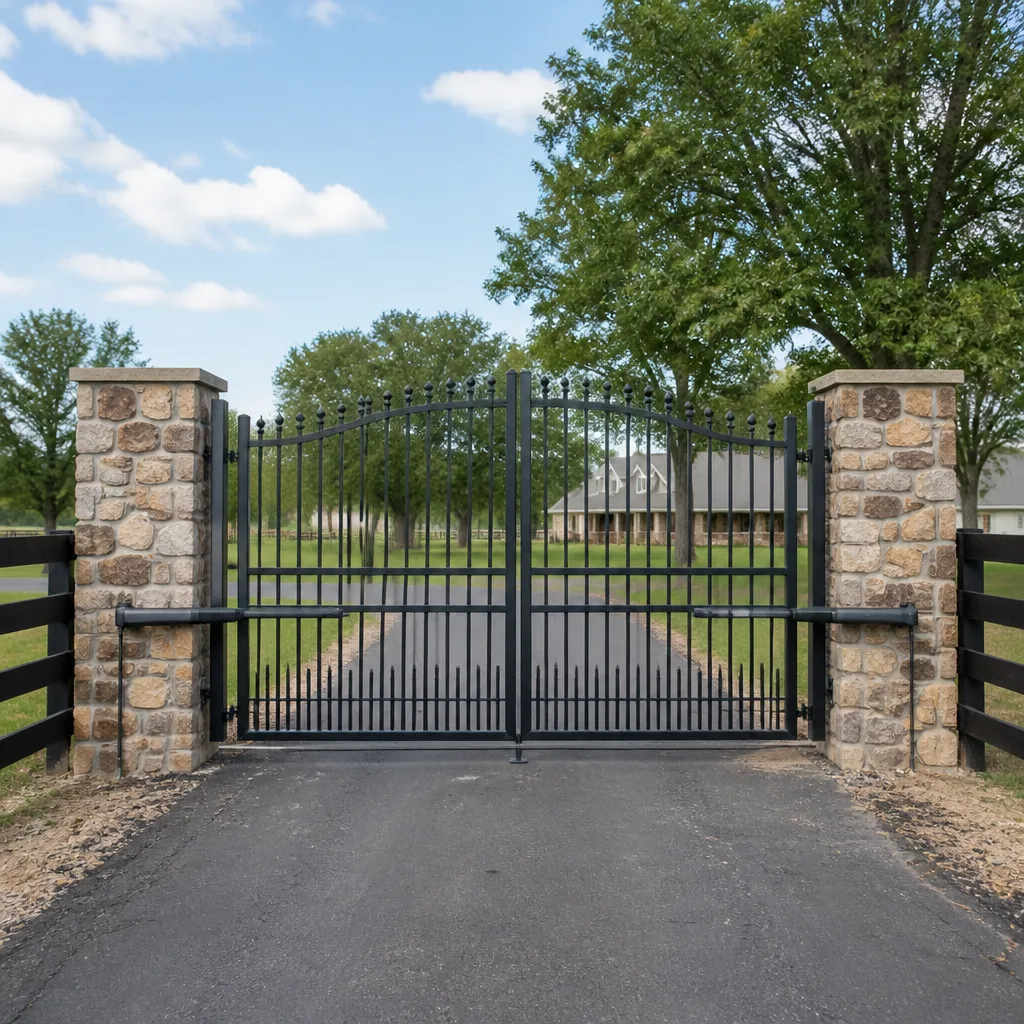 Farm & ranch
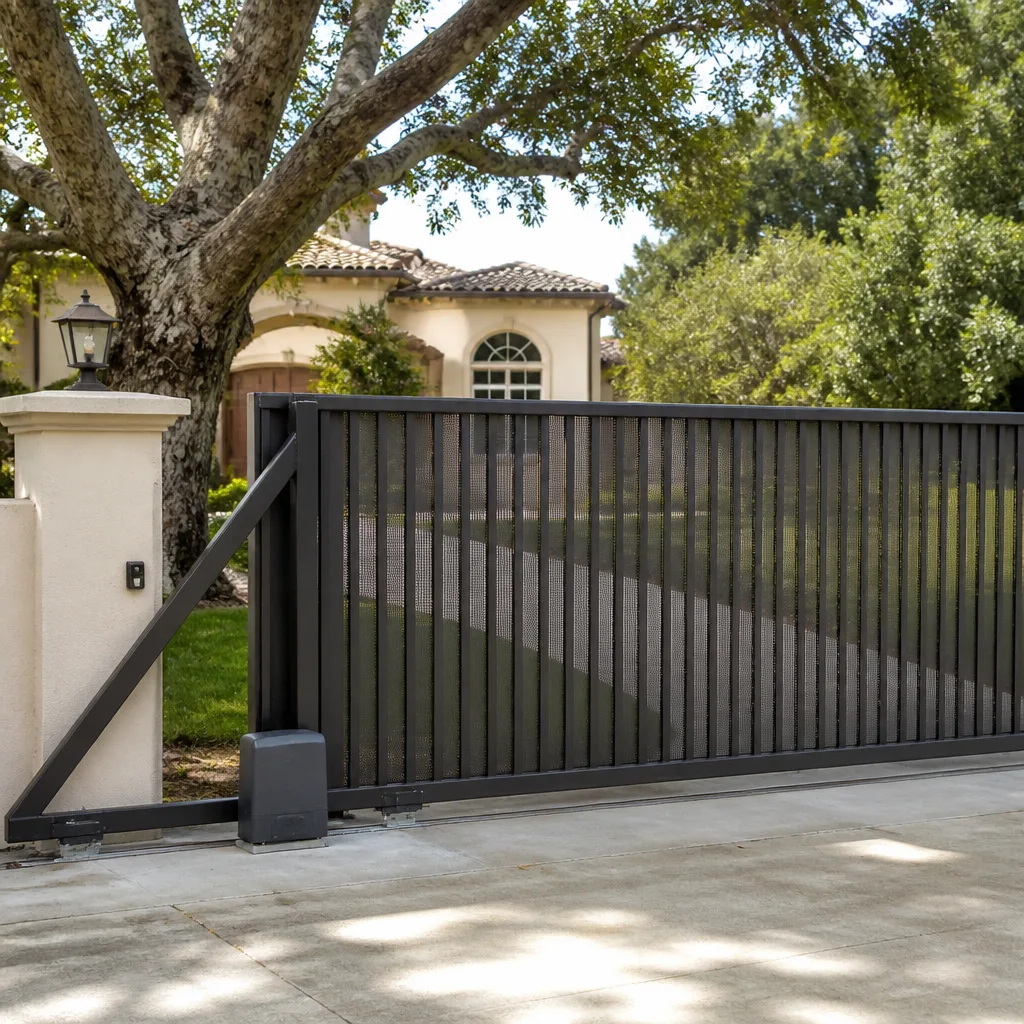 Sliding driveway gates
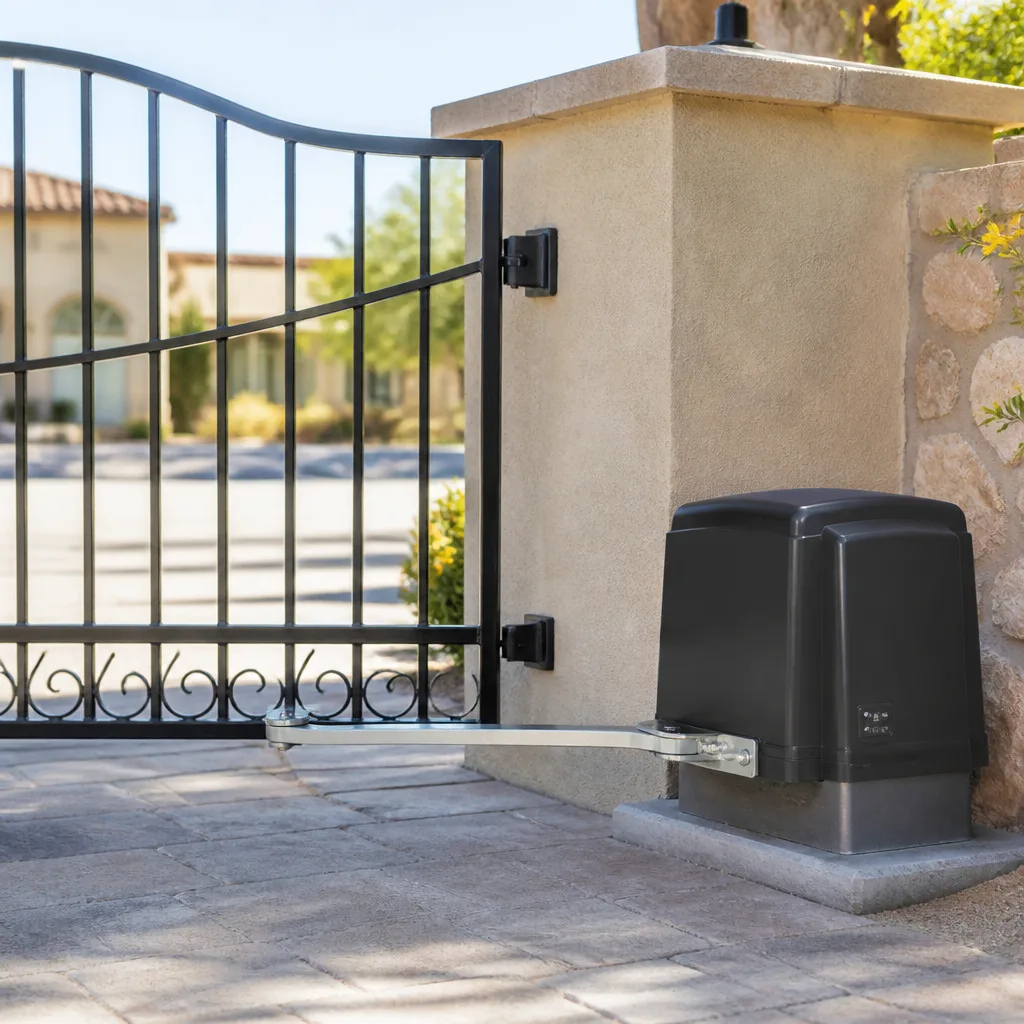 LiftMaster operators
Free on-site gate assessment - hinges, posts, and your LiftMaster or Nice gate operator checked before anything is quoted
The assessment is free and the quote is the invoice.
Get your free estimateDIY vs Professional Gate Installation: What’s Safe to Do Yourself
I have zero problem with a homeowner hanging a simple manual pedestrian gate on existing posts. That’s a weekend afternoon, a level, a helper, and a six-pack. What I don’t want to see is someone running 120V to a gate operator without a licensed electrician pulling the permit, because that’s a fire hazard and a failed home inspection waiting to happen. The line between “go ahead” and “put the tools down” isn’t about how handy you are. It’s about three things: line-voltage electrical work, concrete footings that have to pass a Clark County inspection, and gate weight heavy enough that a misconfigured operator becomes an entrapment risk. This guide walks you through exactly where that line sits for a North Las Vegas homeowner.
Quick Answer
A manual gate on existing, sound posts is a reasonable DIY project. A new gate that needs footings poured to code, or any powered gate operator, is not: the line-voltage electrical supply legally requires a licensed electrician and permit, and gates above roughly 250 pounds or with an automatic operator fall under UL 325 entrapment protection rules that most homeowners can’t verify on their own. In North Las Vegas, the permit and inspection trail is the real dividing line.
Styles & brands we work with
- Wrought iron
- Wood & steel frame
- Farm & ranch
- Sliding driveway gates
- LiftMaster operators
Table of Contents
- What Nevada law actually allows a homeowner to do
- The electrical line: low-voltage vs line-voltage
- Weight, size, and the UL 325 entrapment rules
- Footings, frost depth, and Clark County code
- The real cost comparison: DIY vs professional
- How to vet a gate contractor in Nevada
- Common mistakes to avoid
- When to call a professional
What Nevada law actually allows a homeowner to do
Nevada lets a homeowner perform work on their own primary residence without a contractor’s license. That’s the plain truth, and it’s why so many people in North Las Vegas tackle their own gate projects. The catch is that “own residence” work still has to meet building code and still has to pass inspection when a permit is required. Self-permitting is legal. Self-permitting and then skipping the inspection is not.
Where it gets murky is anything that touches the electrical system or the structural footprint. Nevada Revised Statutes draw a firm line around electrical work: a homeowner can generally pull a permit for their own single-family home, but the work itself is inspected against the National Electrical Code, and 120V circuits are not the place to learn on the job. For a powered gate operator, the operator itself plugs into a dedicated circuit run from the house or a pedestal. That circuit is electrical work. Full stop.
Here’s how the split usually breaks down for a North Las Vegas homeowner:
- Fully DIY-legal and reasonable: replacing a manual pedestrian gate leaf on existing posts, rehanging hardware, swapping hinges, adjusting a latch, painting, staining, minor welding on site if you weld.
- DIY-legal but risky: pouring new footings for a gate post, setting a wider driveway gate on new posts, building a custom gate from scratch.
- Not realistically DIY: installing any automatic gate operator, running the line-voltage power supply, configuring safety edges and photo eyes, tying into access control or a keypad.
In our experience, the driveway gate is where homeowners get in over their heads. A pedestrian gate swinging on a hinge is one thing. A 12-foot steel driveway gate that weighs 400 pounds and swings on a cantilever track is another animal entirely.
The electrical line: low-voltage vs line-voltage
This is the single most misunderstood part of gate installation, and it’s the one we get the most questions about in North Las Vegas. Powered gate operators use low-voltage control wiring (typically 12V or 24V DC) for the keypad, the safety edges, the photo eyes, and the limit switches. That low-voltage side is genuinely DIY-feasible for a careful homeowner. The problem is that the operator also needs a line-voltage power supply, usually 120V AC, run from a dedicated breaker to a weatherproof disconnect near the gate.
That 120V run is where the project stops being a homeowner job. It needs:
- A permit pulled with the city before any wire is run.
- A licensed electrician to install the circuit, the disconnect, and the grounding.
- A rough-in inspection before the trench is backfilled and a final inspection after.
- GFCI protection and proper conduit for the buried run, per NEC and local amendments.
I’ve seen homeowners trench 18 inches, run UF cable, backfill, and then discover the inspection wants conduit the whole way and a disconnect they didn’t plan for. Now the trench comes back open. In North Las Vegas, the summer ground bakes hard as concrete, and that second dig is nobody’s idea of a good Saturday. Get the electrical permit and inspection sorted before the first shovel hits dirt.
Meanwhile, the low-voltage side is where a handy homeowner can save real money. Pulling the control wire from the operator to a keypad pedestal, mounting the photo eyes, and dressing the cable neatly is all fair game. Just don’t energize anything until the electrician has signed off on the line-voltage side. If the whole electrical picture is more than you want to reason through, our Gate Motor & Opener in North Las Vegas service covers the operator and the wiring that feeds it.
Weight, size, and the UL 325 entrapment rules
UL 325 is the safety standard that governs automatic gate operators, and it exists because a moving gate can seriously hurt someone. The standard requires entrapment protection: photo eyes across the opening, safety edges on the closing side, and often a reversing sensor. None of that is optional on a residential automatic gate, and it’s not a suggestion that a homeowner can skip because the gate “looks fine.”
Where weight and size come in is that they change how hard it is to get the safety geometry right. A light aluminum gate on a short swing is forgiving. A heavy steel or ornamental iron gate on a long swing develops serious momentum, and the stopping distance on a reversing edge gets longer. If the photo eyes are mounted at the wrong height, or the safety edge isn’t wired into the operator’s reversing input, the gate will keep closing on an obstruction. That’s the definition of an entrapment hazard.
The practical thresholds we work with:
- Under roughly 250 pounds, manual, on sound posts: genuinely DIY territory. Hang it, shim it, tune the latch.
- Over 250 pounds, manual, new posts needed: the footing and post loading get serious. A sagging gate usually sags in the hinge post, not the middle, and a post that wasn’t set deep enough will let a heavy gate pull itself out of plumb within a season.
- Any automatic gate: UL 325 applies. Photo eyes, safety edges, and reversing logic must be installed and tested. This is where the vast majority of homeowners should hand off.
We service LiftMaster, FAAC, BFT, Linear, Viking, Ghost Controls, DoorKing, Elite, and Mighty Mule operators, and every one of them ships with a UL 325 compliance manual that tells you exactly what protection the install needs. Reading it is the easy part. Wiring and testing it correctly is where experience matters.
Footings, frost depth, and Clark County code
If your gate needs new posts, you’re into footing territory, and that’s where the Clark County code trail starts. A gate post carries more load than a fence post because the gate acts like a lever against it. A driveway gate that swings out puts the load on the hinge post in one direction, and a gate that swings in puts it on the other. Setting a gate post the same way you’d set a fence line post is a common and expensive mistake.
The variables that matter in North Las Vegas specifically:
- Soil: much of the valley sits on caliche, a calcium-carbonate hardpan that can be nearly as hard as concrete. Digging a footing here often means a breaker bar or a mini-excavator, not a post-hole digger. That reality alone swings the DIY cost math.
- Footing depth and diameter: gate posts need a wider, deeper footing than the fence posts around them, and the size scales with gate weight and width. The permit drawings or your contractor’s plan set will specify it for your gate.
- Concrete: a proper footing is poured, cured, and inspected before the gate goes on. Rushing the cure time is how posts end up out of plumb within a year.
Whether you need a permit at all depends on the scope. Swapping a gate leaf on existing posts generally doesn’t require one. Setting new posts, or installing an automatic operator, generally does. The City of North Las Vegas building department can tell you what applies to your specific project before you buy a single bag of concrete, and that phone call is free.
This is also where the “fix the panel without the post and you’ll fix it twice” rule lives. If you’re replacing a gate leaf, look hard at the posts before you hang anything. A North Las Vegas gate that’s been in the sun for 15 years may look solid and be hollowed out at the base by rust or by a footing that was never deep enough. Our Gate Repair in North Las Vegas service starts with the post, not the panel, for exactly this reason.
The real cost comparison: DIY vs professional
Here’s the part that surprises people. The DIY savings on a gate installation are usually smaller than homeowners expect, because the hidden line items – permits, concrete, hardware, and the operator itself – are the same whether you swing the hammer or someone else does. The only cost you’re actually avoiding is labor, and on a gate install the labor is a smaller slice of the pie than on a lot of other trades.
A realistic side-by-side for a typical North Las Vegas driveway gate project:
- Permit fees (electrical and/or building): $150 to $400 depending on what’s pulled. Same for DIY and professional. Often the biggest surprise line item.
- Concrete and footing materials: $80 to $250 for a driveway gate’s worth of posts and footings, more if caliche requires equipment rental.
- Gate hardware (hinges, latches, cantilever track, wheels): $150 to $500 depending on the gate type.
- Automatic operator (LiftMaster, FAAC, BFT, Linear, Viking, Ghost Controls, or similar): $400 to $1,500 for the unit alone. UL 325 safety edges and photo eyes add $100 to $300.
- Electrical rough-in by a licensed electrician: $400 to $900 for a dedicated circuit and disconnect, depending on run length.
- Professional installation labor: this is the variable. It’s the line item DIY actually removes, and it’s not the whole bill.
Before you tally anything, the price is quoted and agreed before any work starts. That’s the version of this you want no matter who installs the gate. When you add up the permit, the concrete, the electrician, the operator, and the safety edges, the “DIY savings” on a powered gate often shrinks to a few hundred dollars. And that’s before you count the value of your weekends and the risk of a failed inspection. A free second opinion on a written estimate is worth more than it sounds, because it tells you whether the number you’re comparing against is even right. Our Gate Installation in North Las Vegas service quotes the whole job, permits included, up front for exactly this reason.
How to vet a gate contractor in Nevada
If you decide to hand the job off, the vetting matters as much as the price. A fence company is not automatically qualified to install a powered gate. Fencing and automatic gates are related trades, but the operator wiring, the UL 325 safety testing, and the access control integration are their own skill set. Plenty of good fence installers have no business wiring a LiftMaster operator, and a few of them will try anyway.
What to check before you sign, in Nevada specifically:
- Nevada State Contractors Board license, and the classification. Look it up on the board’s public site. A license that covers fencing may not cover the electrical scope of a gate operator. Ask what classification they hold and confirm it matches the work.
- Insurance and bonding. Ask for the certificate, and check the effective dates. An expired policy is a real problem if something goes wrong.
- Whether they sub out the electrical. A serious gate installer brings in a licensed electrician for the 120V side and coordinates the permit. If they wave that off, walk.
- References from gate installs, not fence installs. Ask for the names and addresses of recent automatic gate customers. A gate contractor with real experience has them ready.
- A written price before work starts, and a written warranty. Get the scope, the permit responsibility, and the guarantee in writing. Our 90-Day Done Right Promise gets stamped on every job, and if something isn’t right, one call brings us back.
- Brand familiarity. Confirm they actually service and install the brand you’re getting, whether that’s FAAC, BFT, Viking, Ghost Controls, or something else.
The oldest accountability there is comes down to a name and an address. Locally owned and owner-operated, with a published address anyone can drive to and look someone in the eye – that’s the kind of contractor you can actually hold to a promise.
Common Mistakes to Avoid
- Running the 120V supply without a permit or electrician. This is the big one. It’s a fire hazard, it fails inspection, and it can void homeowner’s insurance if something goes wrong. Get the electrical work permitted and inspected by a licensed electrician, every time.
- Skipping the post inspection before hanging a new gate. A gate sags in the hinge post, not the middle. If the post is hollow or out of plumb, the new gate will follow it within a season, and you’ll be back where you started.
- Setting a driveway gate post like a fence post. Gate posts carry way more load. In North Las Vegas caliche, undersized footings and shallow digs are the most common reason a heavy gate pulls its post out of plumb within a year.
- Installing an automatic operator without UL 325 entrapment protection. Photo eyes and safety edges aren’t accessories. A gate that closes on an obstruction without reversing is a hazard, and the standard requires the protection for a reason.
- Mounting photo eyes at the wrong height or out of alignment. Even with the parts installed, an eye aimed at the wrong spot, or set too low where it catches the ground on a hot day, lets the gate close on someone. Test the reversing function by hand before you trust it.
- Hiring a fence company for a powered gate and assuming it’s covered. Ask about the license classification and the electrical scope in writing. A company that isn’t set up for gate operators can leave you with a permit problem and a non-compliant install.
- Backfilling the trench before the rough-in inspection. In North Las Vegas, that second dig in baked caliche is brutal. Get the inspection signed off before the shovel goes back in.
When to Call a Professional
Call a professional for any automatic gate operator, any new gate post that needs a footing, and any 120V electrical work. Those three things cross the line from “weekend project” to “permit, inspection, and liability.” Also call if your gate weighs more than roughly 250 pounds, if it swings over a driveway where a child could be sitting, or if you’re integrating a keypad, access control, or a phone-entry system. Those systems need to talk to the operator correctly, and getting the wiring wrong is how people end up locked out of their own property.
A manual pedestrian gate on solid existing posts is the one you can genuinely do yourself. If you’re unsure which side of the line your project falls on, Gatewood Fence & Gate North Las Vegas offers free estimates in North Las Vegas. Call (844) 761-9351 and describe what you’re planning. We’ll tell you straight whether it’s a DIY job or one that needs a licensed hand. You can also stop by the Gatewood Fence & Gate North Las Vegas home page to see what we do.
See the difference
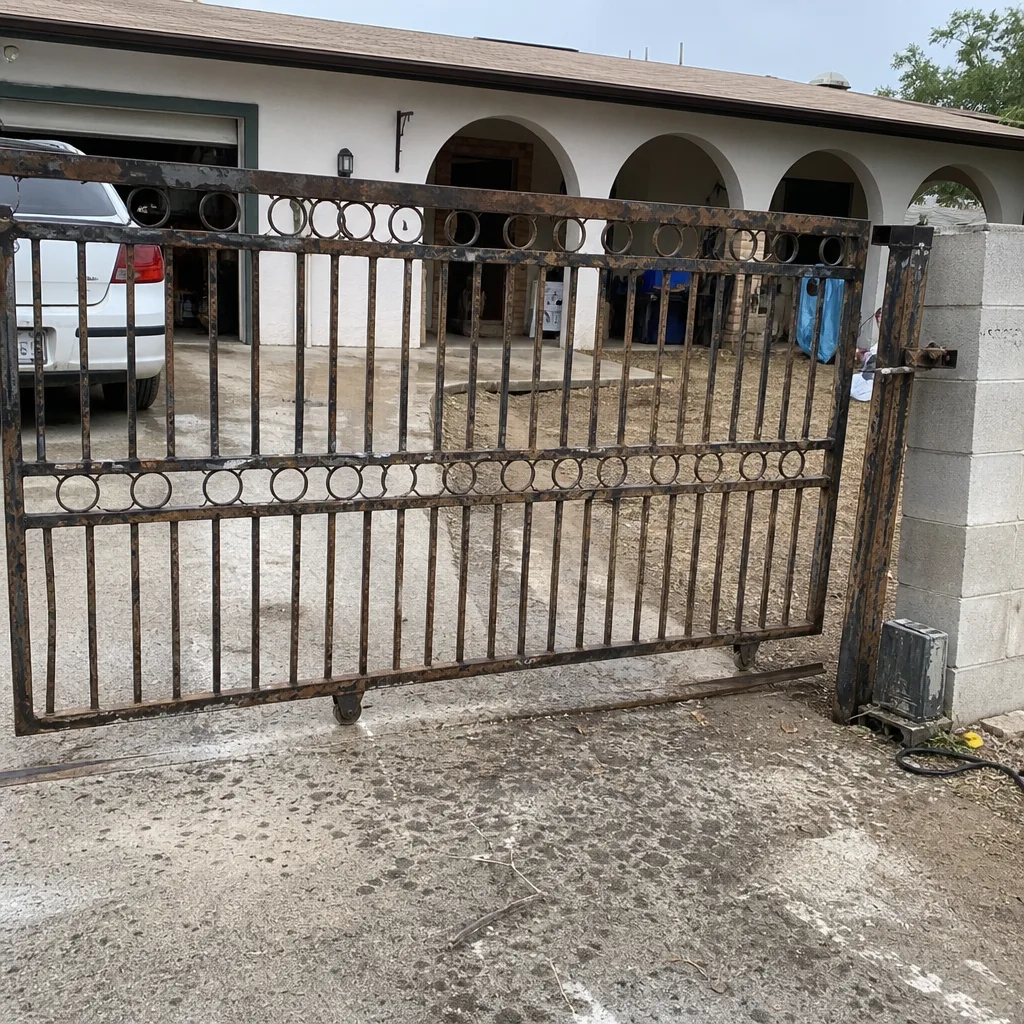 Before
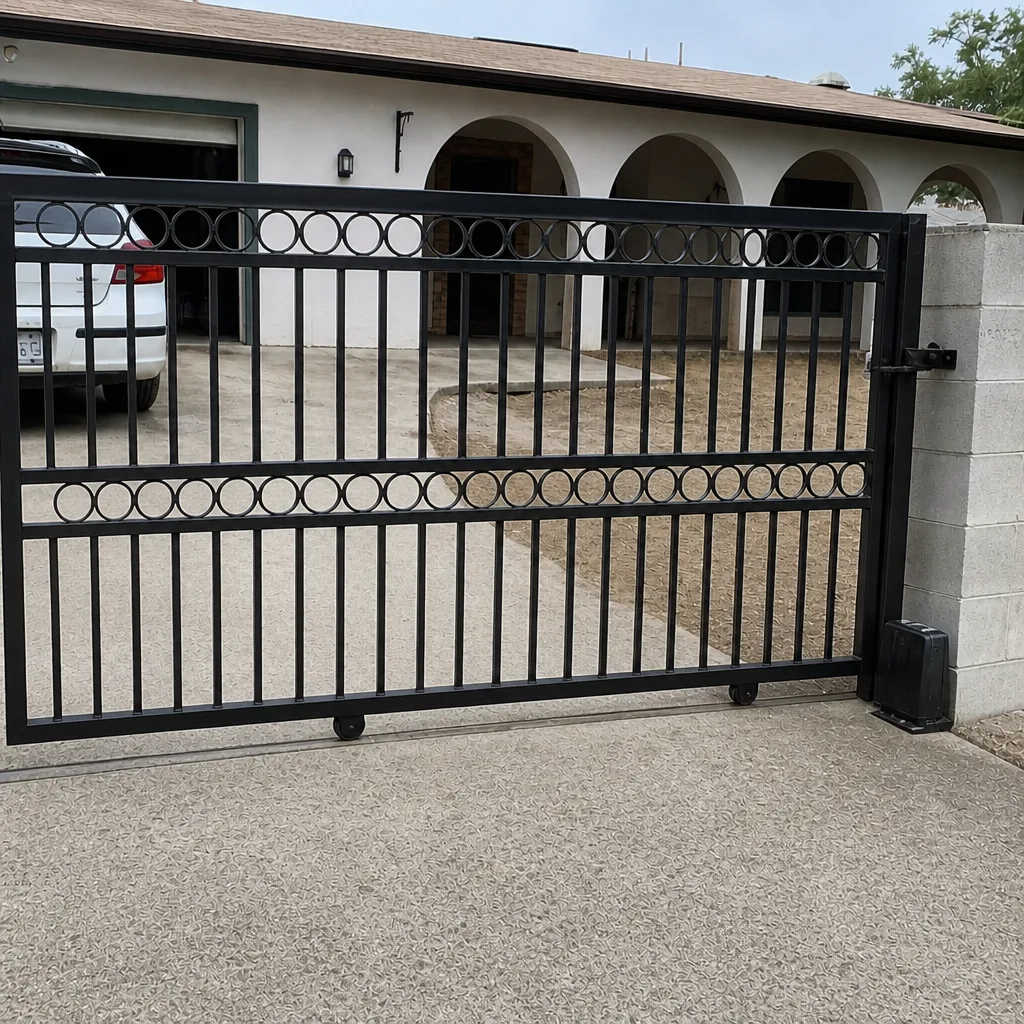 After
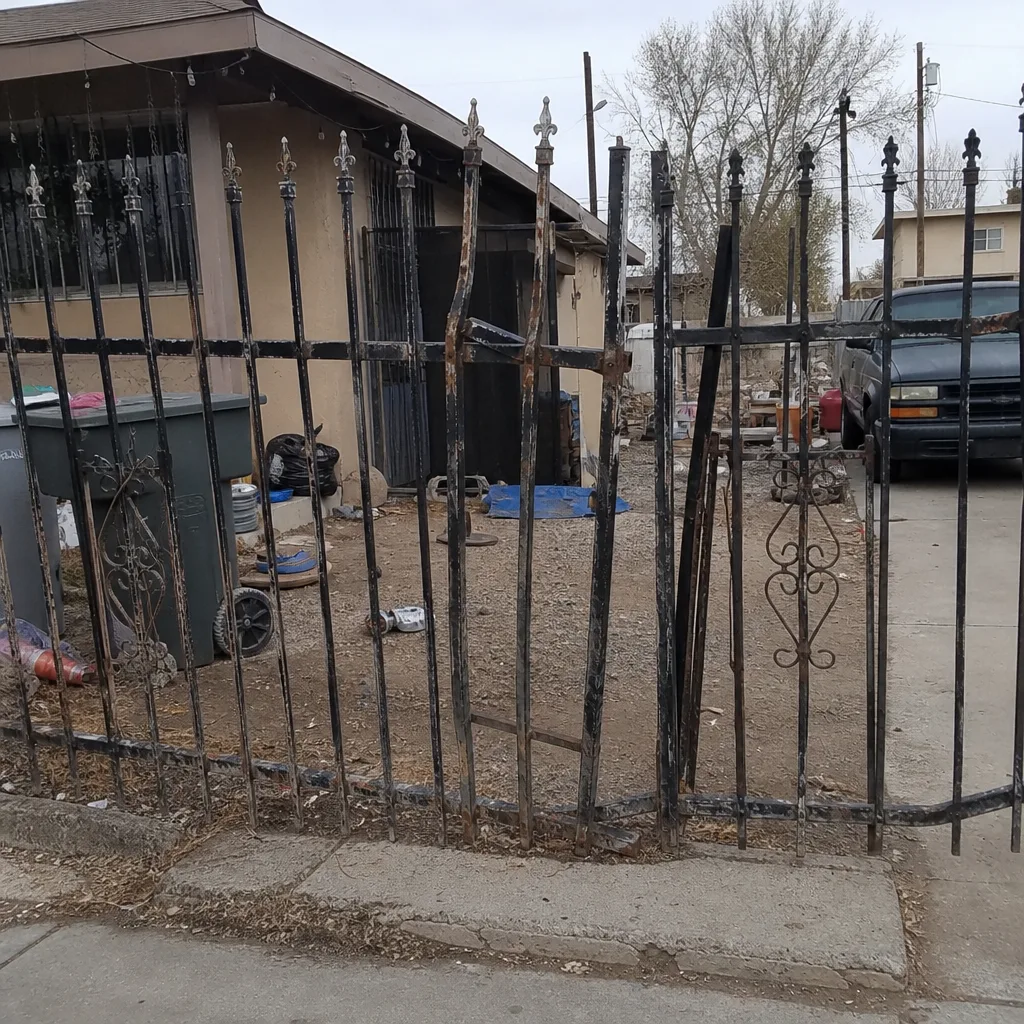 Before
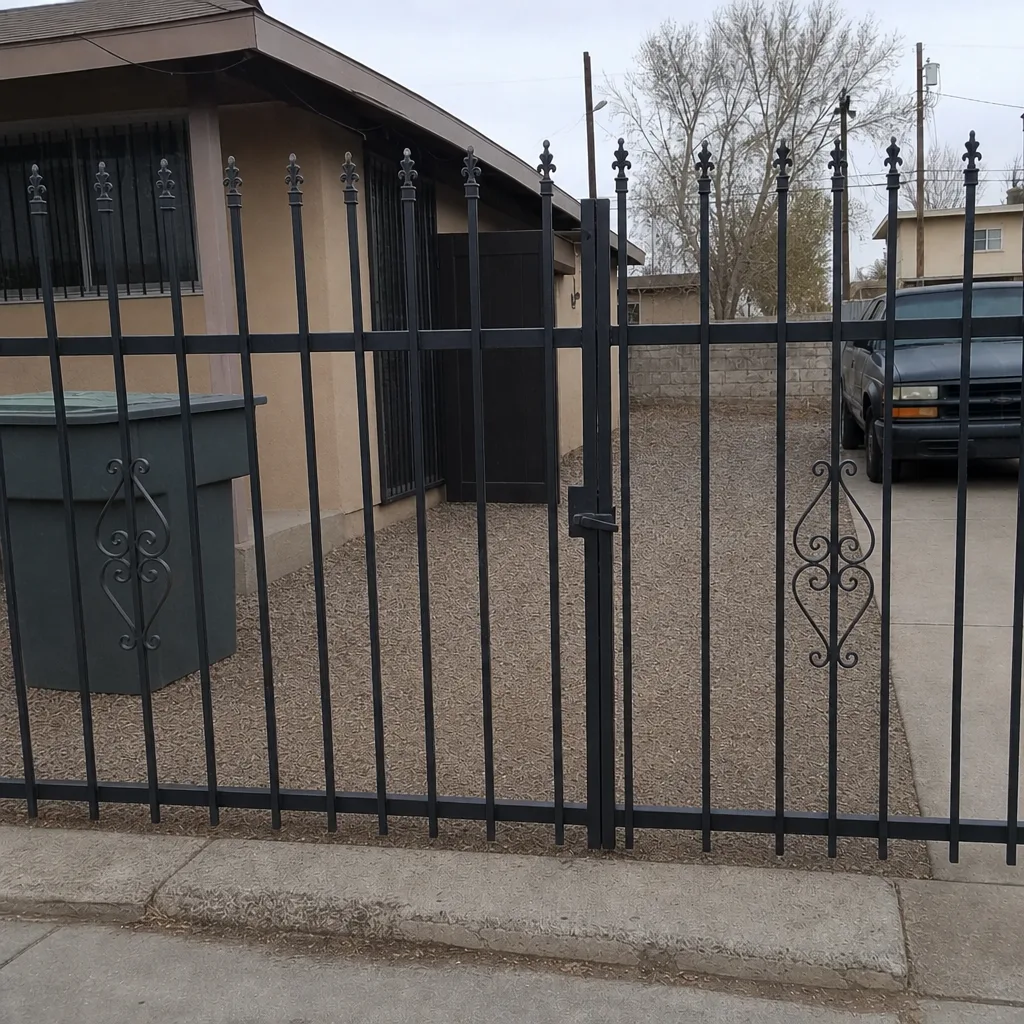 After
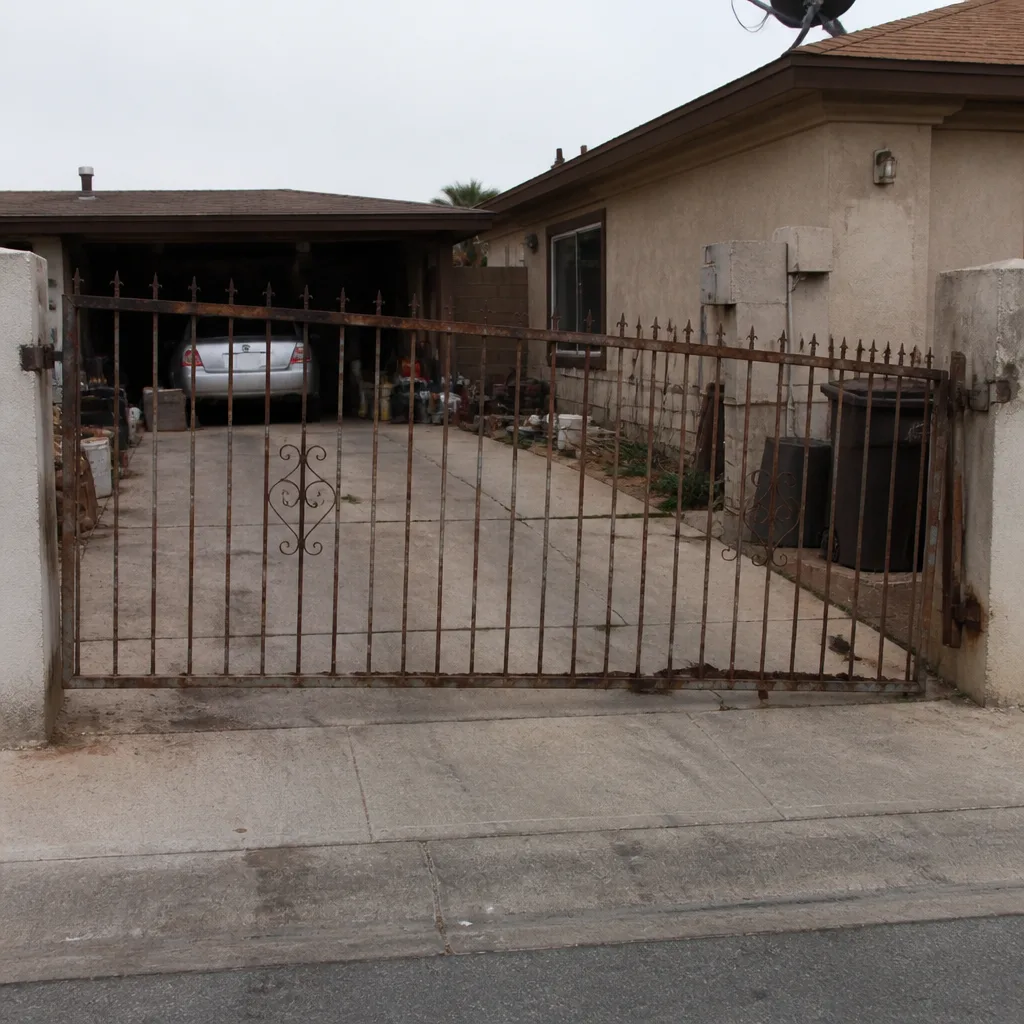 Before
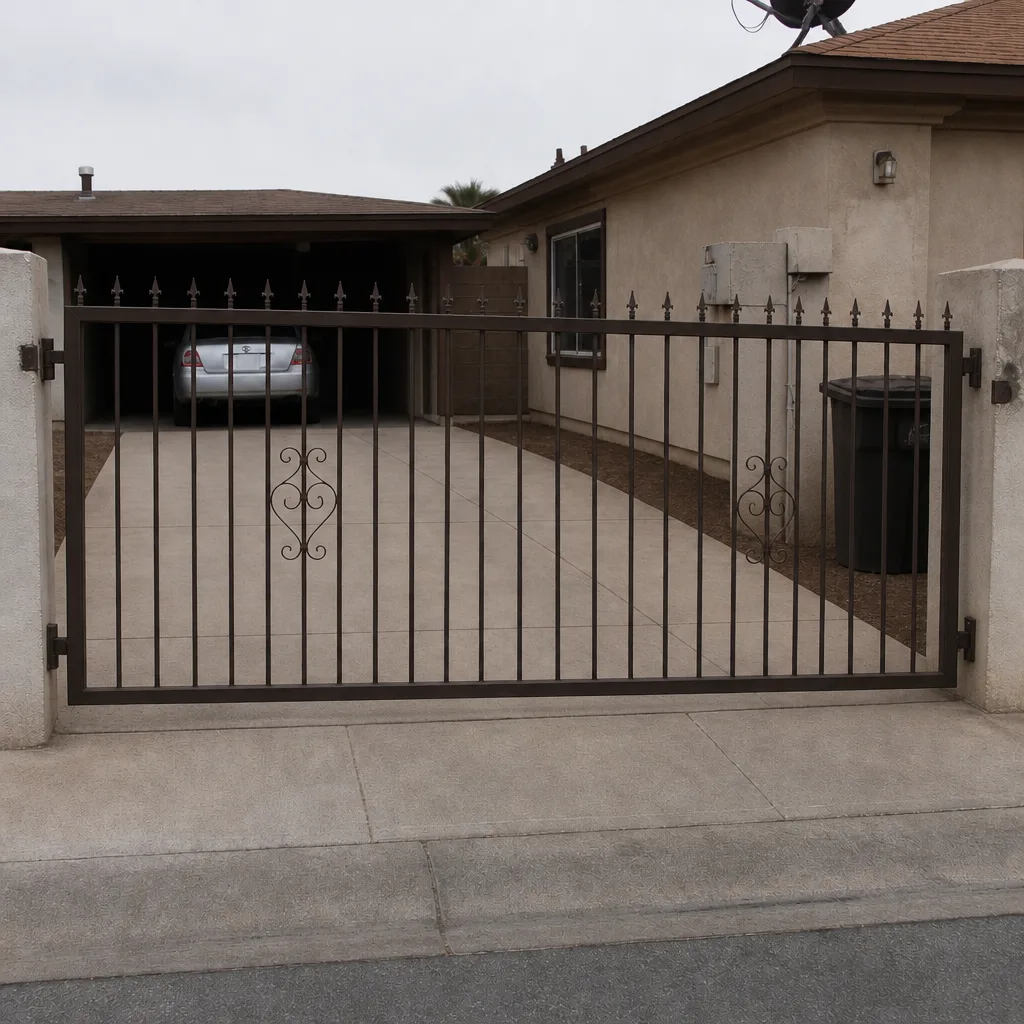 After
Frequently Asked Questions
Yes, for work on your own primary residence, but the work still has to meet code and pass inspection when a permit is required. Swapping a gate leaf on existing posts generally needs no permit. Setting new posts or installing an automatic operator generally does, and the line-voltage electrical side legally requires a licensed electrician.
No. A powered operator involves a 120V dedicated circuit, a permit, and UL 325 entrapment protection (photo eyes and safety edges) that has to be installed and tested correctly. The low-voltage control wiring is DIY-feasible, but the line-voltage supply is not. Call (844) 761-9351 for a free estimate if you’re weighing a powered gate.
The full project usually runs from about $1,500 for a simple manual gate on new posts up to $4,000 or more for a driveway gate with an automatic operator, electrical rough-in, and safety edges. Permit fees, concrete, and the operator are the same whether you do it yourself or hire it out, so the DIY savings are often only the labor. Call (844) 761-9351 for an exact quote – estimates are free.
Usually not for replacing a gate leaf on existing posts, but yes for new footings or any automatic operator. The City of North Las Vegas building department can confirm what applies to your project, and that call is free. Pull the permit before you dig or run wire, not after.
Roughly 250 pounds is where we’d suggest a professional hand. Below that, a manual gate on sound posts is reasonable DIY work. Above it, the footing and post loading get serious, and the risk of a post pulling out of plumb in North Las Vegas caliche goes up. A gate over that weight that needs new posts is a pro job.
Verify the Nevada State Contractors Board license and its classification on the board’s public site, confirm insurance and bonding with current certificates, ask for references from gate installs specifically, and get the price and warranty in writing before work starts. Ask whether they bring in a licensed electrician for the 120V side – a serious gate contractor will. Call (844) 761-9351 for a free second opinion on any written estimate.
The Bottom Line
The decision isn’t about whether you’re handy. It’s about three things: line-voltage electrical work, footings that need to pass a Clark County inspection, and gate weight heavy enough to create a real entrapment risk. A manual pedestrian gate on solid existing posts is a fair DIY project. A new driveway gate with a footing, or any automatic operator, is one to hand off. The DIY savings you’re chasing are usually the labor line and not much else, because permits, concrete, and the operator cost the same either way. In North Las Vegas, get the permit and the electrician lined up before the first shovel moves. If you’re unsure which side of the line your project sits on, we’re happy to tell you straight.
Written by the team at Gatewood Fence & Gate North Las Vegas.
Ready to get a straight answer on your gate project? Call Gatewood Fence & Gate North Las Vegas at (844) 761-9351 for a free estimate. A live person answers around the clock, and we’ll tell you exactly what your install needs – permits, electrical, and all.