
Last updated November 17, 2026
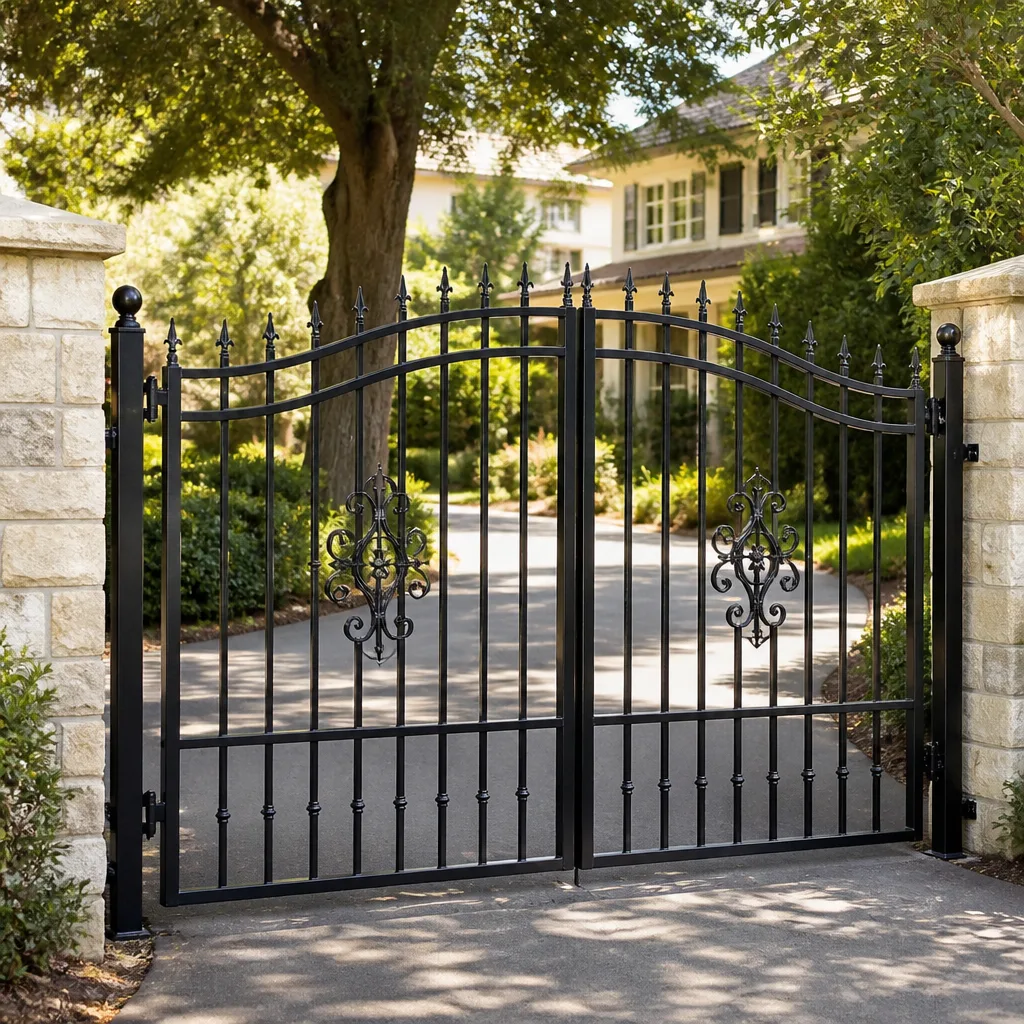 Wrought iron
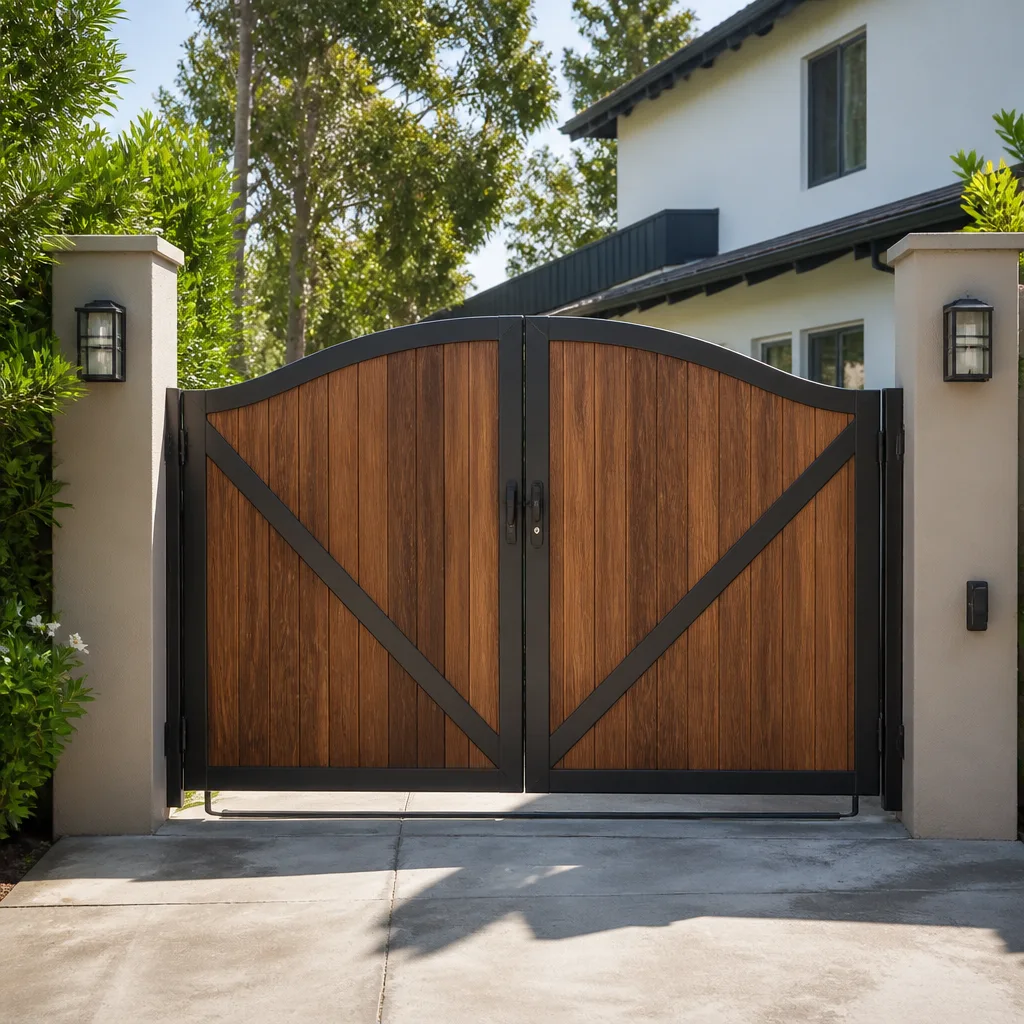 Wood & steel frame
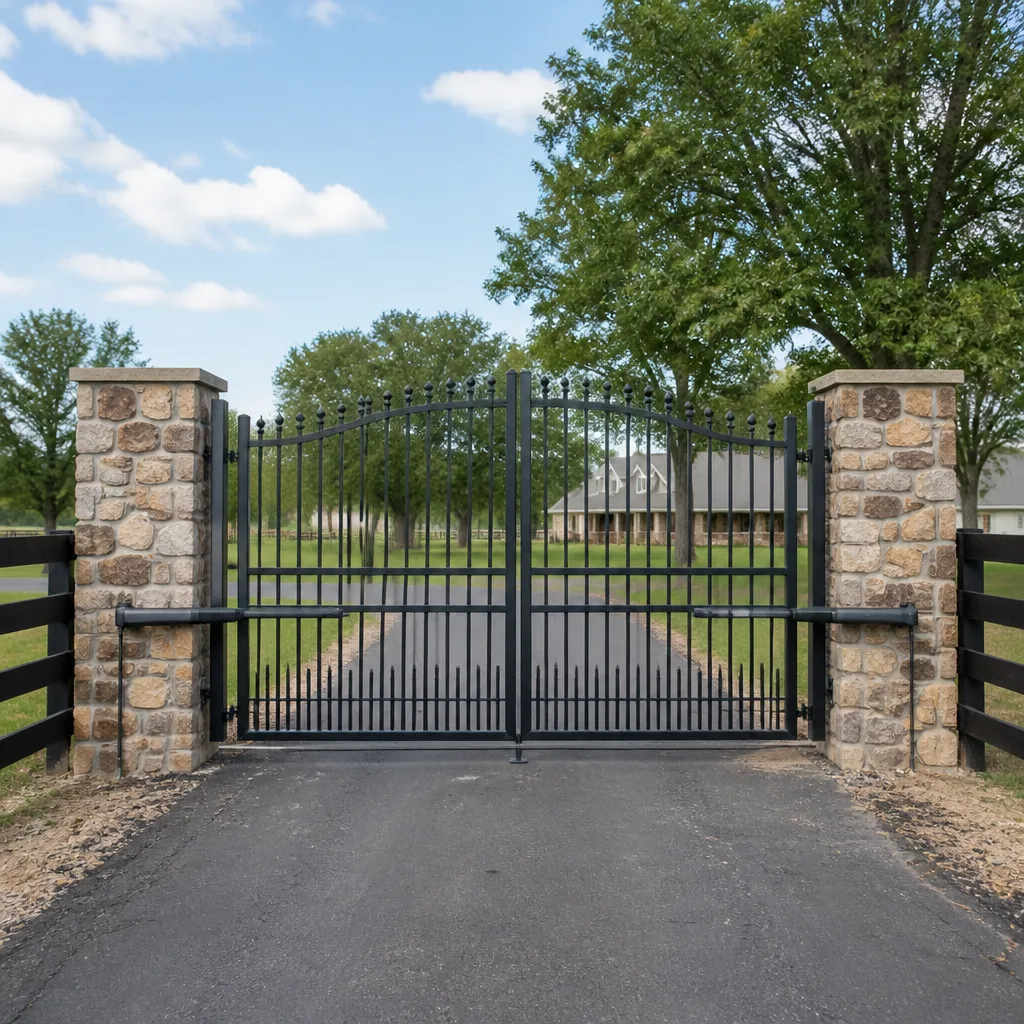 Farm & ranch
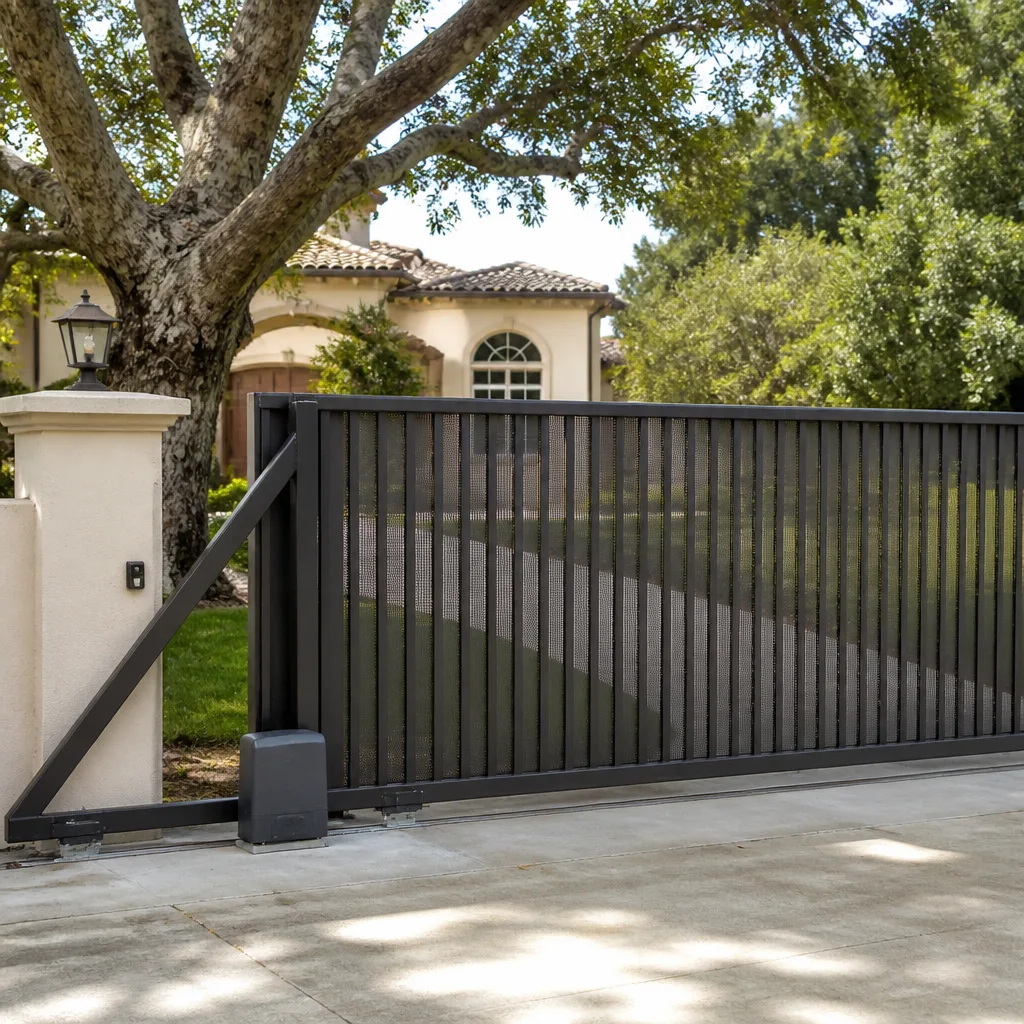 Sliding driveway gates
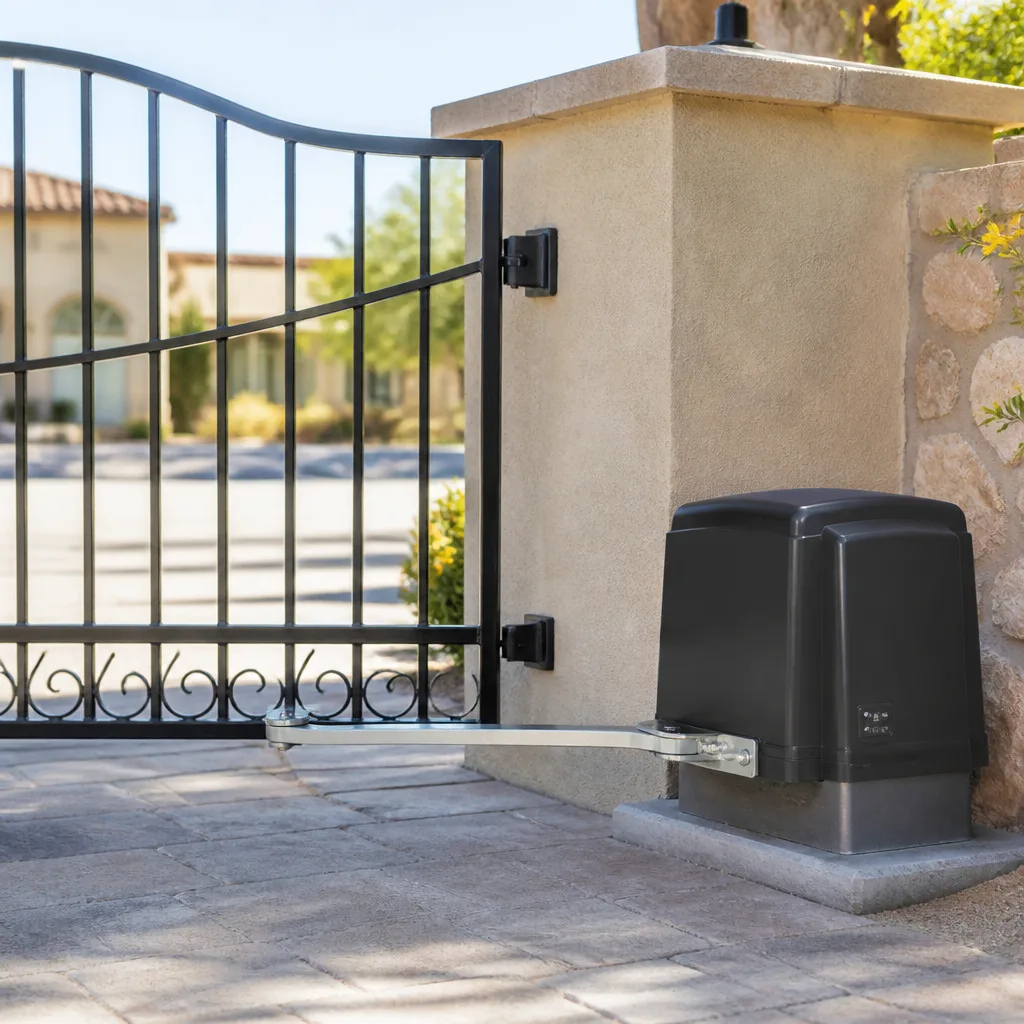 LiftMaster operators
Free on-site gate assessment - hinges, posts, and your LiftMaster or Nice gate operator checked before anything is quoted
The assessment is free and the quote is the invoice.
Get your free estimateGate Parts & Welding Warning Signs Every Homeowner Should Know
Paint bubbling along a weld seam is not a cosmetic issue. It’s rust working from the inside out, and by the time you can see it on the surface, the metal underneath is already compromised. In our experience across North Las Vegas, the gate that drops off a hinge at 2 a.m. almost always showed a sign somebody walked past for months. This guide covers the five indicators that mean a pro should look at your gate this week, what different lean patterns actually say about which part is failing, how to spot hairline cracks in a weld joint with nothing but your eyes, and what “stiff,” “loose,” and “intermittent” really mean for hardware that’s reaching end of life.
Quick Answer
The warning signs that a gate needs professional attention are visible rust pushing paint off a weld seam, lean in one direction that points to a specific failing component, hairline cracks at weld joints, hardware that binds or clunks, and a gate that no longer closes on its own. Any one of these means get it looked at now rather than next season. Most of the serious failures we see in North Las Vegas were readable months before the gate actually failed.
Styles & brands we work with
- Wrought iron
- Wood & steel frame
- Farm & ranch
- Sliding driveway gates
- LiftMaster operators
Table of Contents
- The Five Visual Indicators That Mean Call This Week
- What Gate Lean Patterns Tell You About Which Part Is Failing
- Why a Cold-Only Squeak Means Something Different Than an Always Squeak
- How to Find Hairline Cracks in Weld Joints Without Any Tools
- Stiff, Loose, and Intermittent: What Hardware Behavior Really Means
- On-Site Welding vs. Replacement: What We Look For
- How North Las Vegas Heat and Wind Accelerate Gate Wear
- What Homeowners Can Check Safely and What to Leave Alone
The Five Visual Indicators That Mean Call This Week
Not every scratch is a problem. But five specific things tell us a gate is closer to failure than the homeowner realizes. We look for these on every call in North Las Vegas, and they’ve held up on everything from a small Ghost Controls driveway gate on a half-acre to a full commercial swing gate on a ranchette outside the valley.
The five indicators:
- Paint bubbling or flaking along a weld seam. That’s rust forming from the inside. The weld is where water pools and where the metal cools differently than the surrounding tube, so it corrodes first. By the time you see the bubble, the seam has lost real thickness.
- Rust bleeding from a hinge or post cap. Water sits in the pocket. When it turns orange and starts staining the concrete or the post face, the metal is thinner than it looks.
- A gate that no longer latches without a shove. The frame has moved, and the latch isn’t the problem.
- Visible lean in the post. Even a quarter-inch over the height of the post is worth a look, because a steel post that’s shifting at the base is usually a soil or footing issue underneath.
- Any crack you can see at a weld joint. Hairline cracks at a weld start tiny and they don’t stay tiny. A crack in a weld is a structural question, not a paint question.
Any single one of these is reason enough to get a professional set of eyes on the gate. The gate that’s about to drop is not the one with a squeak. It’s the one with two of these five at once.
What Gate Lean Patterns Tell You About Which Part Is Failing
Not all lean is the same problem. When a homeowner tells us their gate is leaning, we ask two questions before we ever open the truck: which way is it leaning, and did it lean slowly or all at once. The pattern narrows the diagnosis to one component almost every time.
Lean toward the hinge post, top of gate tilted back
The hinge post has moved. Either the post has shifted in the soil, or the bolts holding the hinges to the post have wallowed out the holes. In North Las Vegas, this shows up on posts set in caliche-heavy soil where water pools at the base during monsoon season and washes out the footing.
Lean away from the hinge post, top of gate tilted forward
The gate frame has twisted. Something on the inside of the gate has failed, usually the diagonal brace or an internal weld, and the opposite corner is sagging under the span. This is the one that gets worse fastest.
Lean to one side along the latch edge
The latch post has moved, not the gate. These often get read as “the gate sags” when honestly the latch post is the problem, and fixing the gate without addressing the post will only buy you a few months. Fix the panel without the post and you’ll fix it twice.
Heel-to-toe lean
The gate walks inward or outward at the bottom. Usually a footing issue or a hinge that’s worn into an egg shape. We’ve seen this on older swing gates where the lower hinge has been taking the load of the whole panel for too many summers.
Whichever pattern you see, the fix starts at the post and works inward. A gate sags in the hinge post, not in the middle, and that’s where we start.
Why a Cold-Only Squeak Means Something Different Than an Always Squeak
A gate that squeaks only when it’s cold is telling you something completely different than one that squeaks at noon in August. Most homeowners lump them together. They shouldn’t.
Cold-only squeak. Metal contracts in the cold. A gate that squeaks only on winter mornings in North Las Vegas, when the desert drops into the thirties overnight, is telling you the tolerances in the hinge are tightening up. The bushing or bearing is worn enough that expansion and contraction cross a threshold. It’s not urgent yet, but it means the hinge is closer to end of life than it was a year ago.
Always squeak. That’s metal rubbing metal without lubricant or with a worn bearing that’s already metal-on-metal. Every day you run it is another day of wear. A gate that squeaks all the time is telling you the moving parts need attention now.
Squeak only at one point in the swing arc. That’s a bent hinge pin, a warped gate, or a gate that’s rubbing the post at one spot. Usually a small correction, but it turns into a bent actuator arm on an automatic gate if you leave it.
Squeak that started after a storm. Something moved. Probably the post in saturated soil, possibly the gate frame took a wind load. Worth a look before the next wind.
Squeaks are cheap to fix and expensive to ignore. Grease the hinge if it’s just dry. If the sound is metal-on-metal or the gate is dragging, that’s a call.
How to Find Hairline Cracks in Weld Joints Without Any Tools
You can spot most weld cracks with nothing but your eyes and a flashlight, if you know the sightline technique. We teach it to homeowners who want to check their gate between service visits. It takes about five minutes per gate.
- Get down to the weld’s own height. Cracks at a weld seam are almost invisible from above, because the weld is a raised bead and the crack hides in the shadow of the raised edge. Crouch or kneel so your eye is level with the joint.
- Shine a light along the weld, not at it. Hold the flashlight so the beam grazes the joint from one side. A crack casts a shadow that a straight-on light will hide.
- Walk the whole weld, both sides. Every joint gets a full pass on both faces. Cracks starting at the toe of the weld (where the bead meets the tube) are the ones that matter most.
- Look for black lines and paint lifting. A crack that’s been there a while will have a thin dark line and often a hairline of rust pushing paint up right along it. That’s a crack. Not a scratch.
- Tap the tube with a screwdriver handle. A solid weld rings. A weld with a crack underneath thuds duller. Compare against a known-good joint on the same gate.
Do this while the gate is closed, then again with the gate partway open, because a crack opens when the joint is under load and closes when it isn’t. If you find a crack, stop using the gate and call us. A crack in a load-bearing weld is not a homeowner repair, and a gate that fails under load can drop a panel on a person or a car.
Stiff, Loose, and Intermittent: What Hardware Behavior Really Means
Three words describe almost every end-of-life hardware call we take in North Las Vegas. Each one points at a different structural story.
Stiff. The gate resists the swing. That’s almost always a hinge. Either a bearing is dry and galled, the hinge pin is bent, or something in the frame has warped enough that the swing is out of plane. On an automatic gate, stiff hardware can burn out a Linear or Viking actuator because the motor is working against a load it wasn’t sized for. Fix the hinge before you fix the operator.
Loose. The gate wobbles at a hinge, or the post wobbles at the footing. Loose at the hinge means the bolts have wallowed the holes or the hinge itself has opened up. Loose at the post means the concrete footing has cracked or the soil has settled, and that’s a bigger job. A “loose” post that nobody addresses is how gate panels end up against a car bumper.
Intermittent. The gate works sometimes and not others. This is the one that gets misdiagnosed the most. Intermittent usually means a limit switch, a photo-eye, an actuator that’s binding at one point in travel, or a control board that’s getting confused by a sensor reading it doesn’t like. You can’t fix intermittent by throwing parts at it. You have to catch it in the act, and that’s what a service call is for.
Stiff and loose are warnings. Intermittent is a symptom. All three are readable, and none get better with another season of use.
On-Site Welding vs. Replacement: What We Look For
When a gate has a cracked weld or a failed joint, most companies want to replace the panel. We don’t. In our experience, the majority of gates we see in North Las Vegas can be repaired in the driveway with on-site welding, and that keeps the existing frame, hinges, and finish in place. Replacement should be the exception, not the default.
Here’s what tips the decision:
- Repair is usually right when: the crack is at a single weld joint, the surrounding tubes are still solid, the post is sound, and the finish is intact enough to accept a welded repair and a coat of paint.
- Replacement gets considered when: rust has thinned the tube to the point where a welded patch just moves the failure to the next joint, the entire bottom rail is gone, or the frame has twisted beyond straightening.
- On an automatic gate, the operator matters too. A DoorKing or Mighty Mule operator sized for a lighter gate can’t be hung on a repaired gate that’s now heavier than it was. That’s a conversation before the repair, not after.
On-site welding keeps the gate in your yard, on your schedule, and out of a truck. It also means the person who diagnoses the joint is the person who fixes it, so nothing gets lost in translation. If you want to understand the broader repair side, our Gate Repair in North Las Vegas page covers what we handle on a service call. If your gate is newer or you’re weighing a fresh install against a repair, the Gate Installation in North Las Vegas page lays out what that involves.
How North Las Vegas Heat and Wind Accelerate Gate Wear
Our climate is hard on gates in specific ways that homeowners from wetter parts of the country don’t expect. Three things happen here that shorten the window between “looks fine” and “needs a call.”
Heat cycling. North Las Vegas swings from overnight lows near freezing in January to 110-plus in July. That 80-plus-degree swing on steel gates expands and contracts the frame every day of the year. Every expansion cycle works on every weld joint and every hinge pin. Over a decade, that’s a lot of cycles.
Monsoon soil movement. When the summer storms hit, soil that’s been baked dry for months can move fast, and posts that were set perfectly can shift in a single season. That’s how a gate that’s been fine for years suddenly starts leaning. It’s not usually the gate. It’s what the post is sitting in.
Wind load. A solid-panel gate takes a hard wind load during monsoon season. A gate with a crack in a weld that looked stable all spring can fail under a 40-mile-an-hour gust. If your gate has any visible weld issue, get it looked at before monsoon season, in this part of the valley.
If your gate has a motor and you’re noticing new strain, our Gate Motor & Opener in North Las Vegas page covers how the operator and the structure interact, because they do. A motor that’s being asked to push a warped gate is a motor that’s on borrowed time.
What Homeowners Can Check Safely and What to Leave Alone
There’s a real split between what a homeowner can safely check and what needs a trained professional. Crouching down to look at a weld with a flashlight is safe. Climbing a gate frame to reach a top hinge, or attempting to weld a cracked joint yourself, is not worth the risk. A gate panel weighs hundreds of pounds, and a failure under load can drop a panel on you or someone walking through.
Safe for the homeowner:
- Visual check of weld seams (crouched, both sides, light grazing the joint)
- Listening for squeaks and clunks during a full swing
- Checking that the gate latches without a shove
- Clearing debris from the track or swing path
- Noticing new lean or wobble at the post
Leave to a professional:
- Any welding, including a small crack repair
- Any work on a loaded gate spring, counterweight, or torsion bar
- Hinge replacement on heavier steel gates
- Post footing work, including resetting a moving post
- Any gate motor or actuator repair
If the gate has an automatic operator, anything on the safety edges (photo-eyes and resistance sensors) is professional work. Those sensors are what stop the gate on a child or a pet. They’re not a homeowner adjustment.
Common Mistakes to Avoid
- Fixing the panel without fixing the post. A sagging gate fixed from the top of the frame will sag again within a season. The failure telegraphs from the base up, so we always start at the footing.
- Painting over rust on a weld. Paint locks in moisture and hides the growing corrosion. You want the rust removed and the surface treated, not sealed under a fresh coat.
- Assuming an intermittent clunk is the motor. It’s usually a hinge binding at one point in travel. Throwing an operator at a mechanical problem just buys you a more expensive repair later.
- Waiting for a lean to “settle down.” A leaning gate in North Las Vegas stays leaning until the footing is addressed. It doesn’t self-correct.
- Running a stiff automatic gate until the motor fails. Every cycle on a binding hinge shortens the life of a Linear, Viking, or DoorKing operator by real hours. Stiff hardware gets fixed before the motor does.
- Bypassing a safety edge to “see if that’s the problem.” Safety sensors aren’t a diagnostic tool. Bypassing them puts a person at risk.
- Hiring the phone quote you can’t verify. If you can’t drive to the shop, look at the truck, and read the license number, you don’t know who’s coming to your gate. That goes for repairs in the older neighborhoods around North Las Vegas just as much as out on the acreage.
See the difference
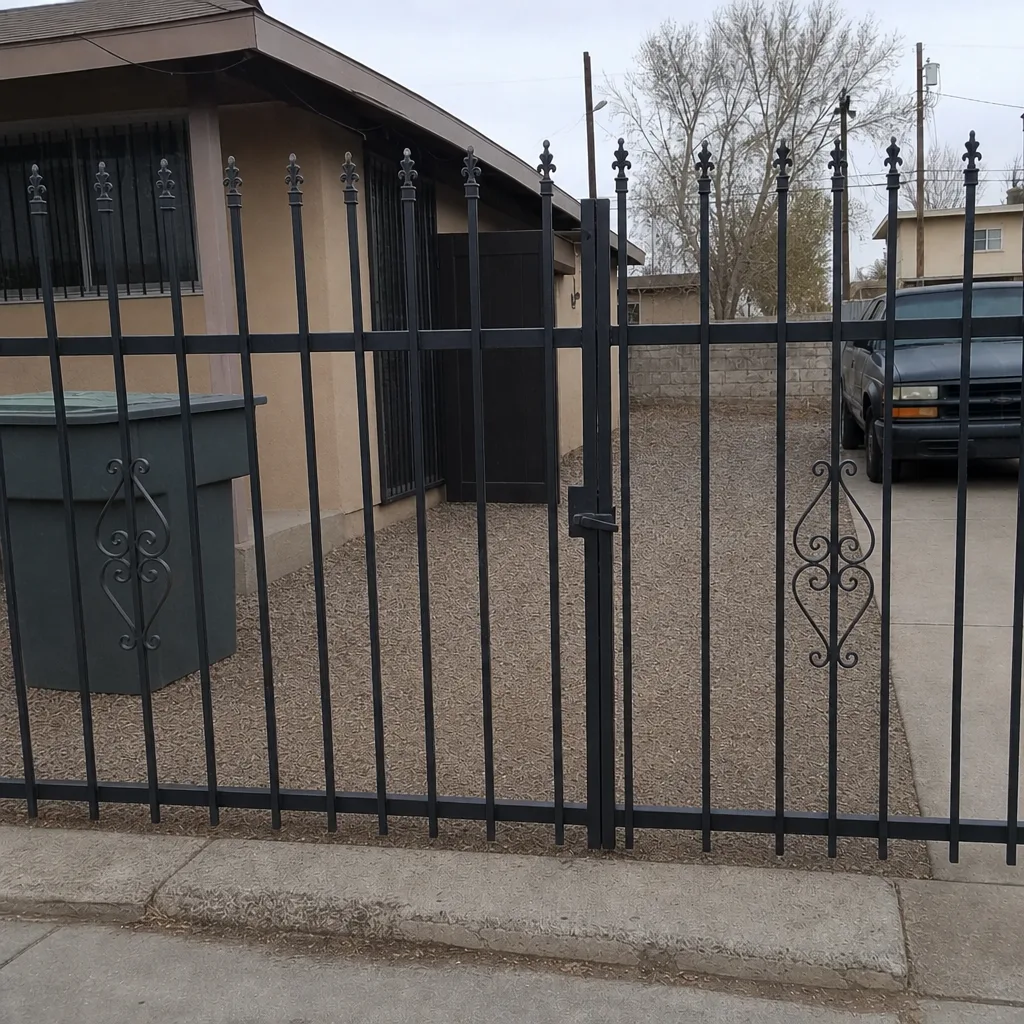
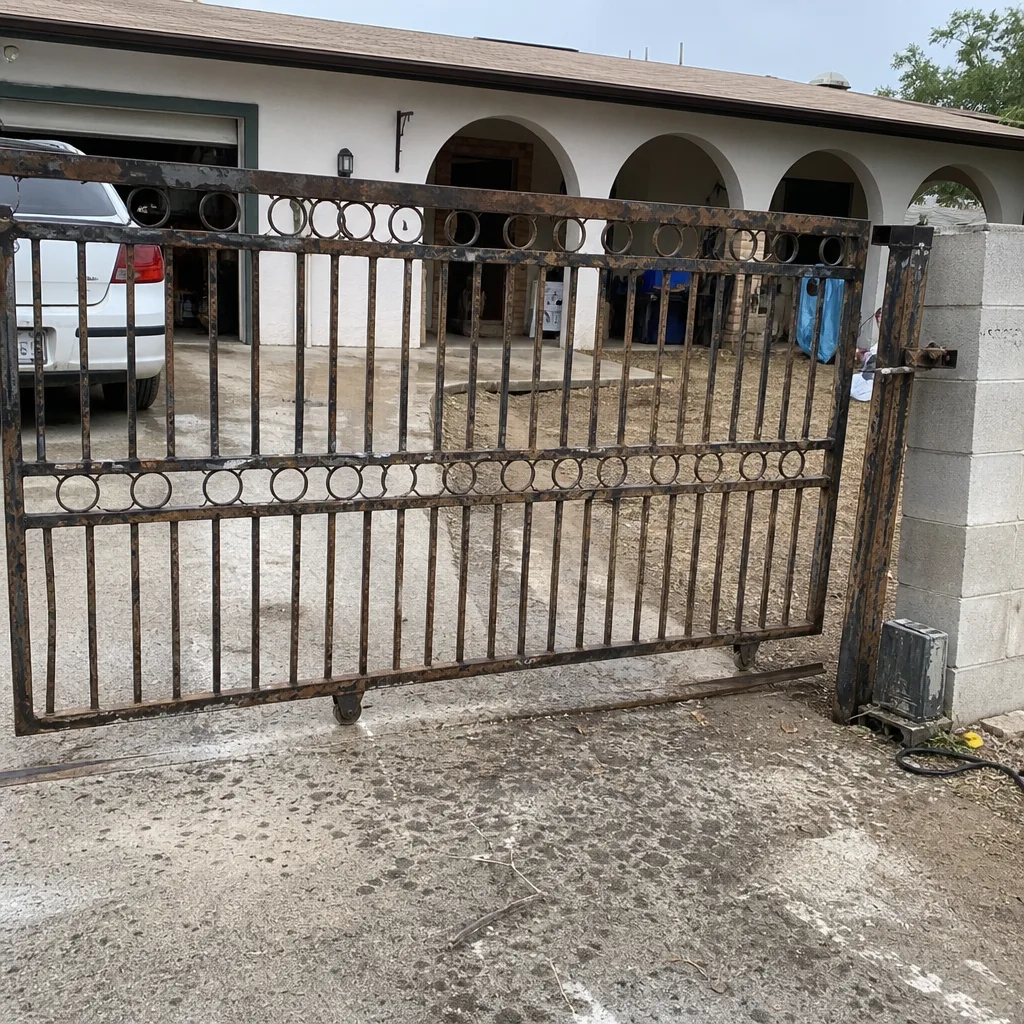 Before
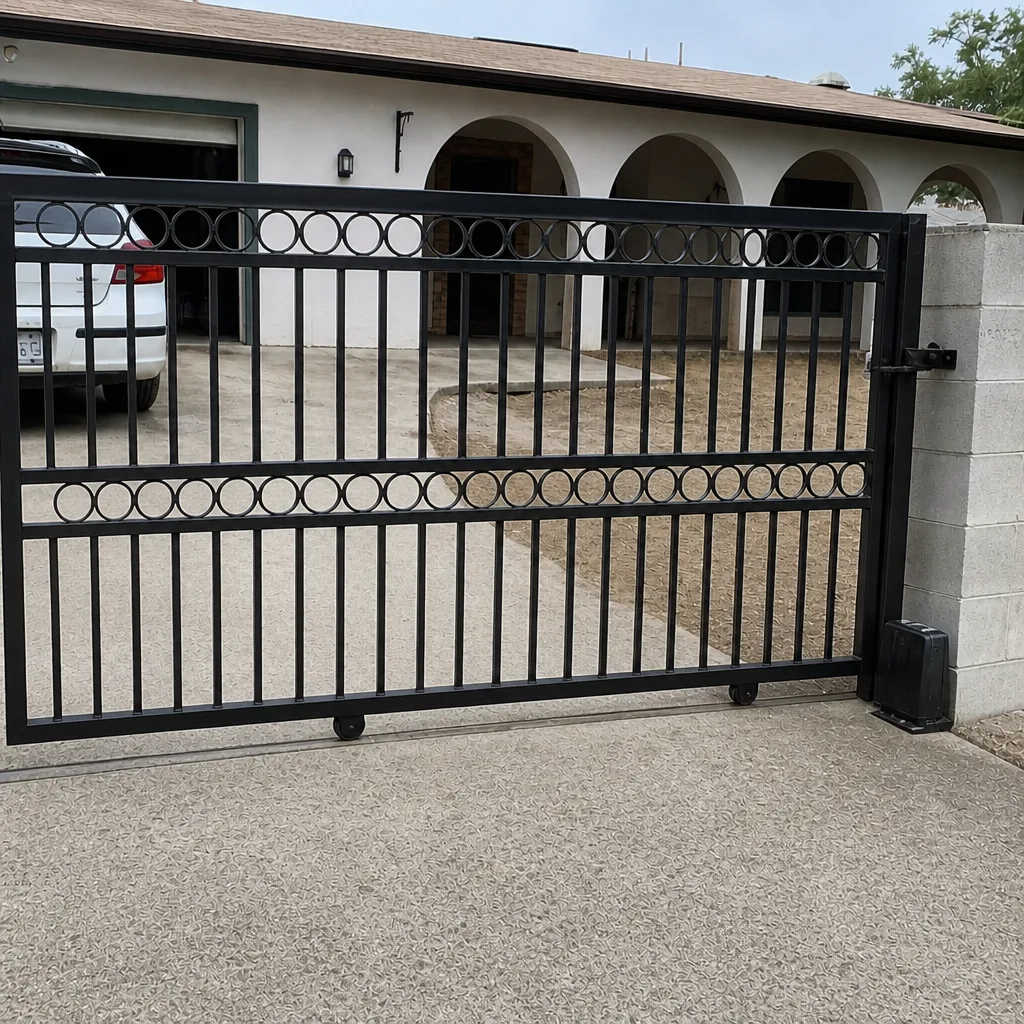 After
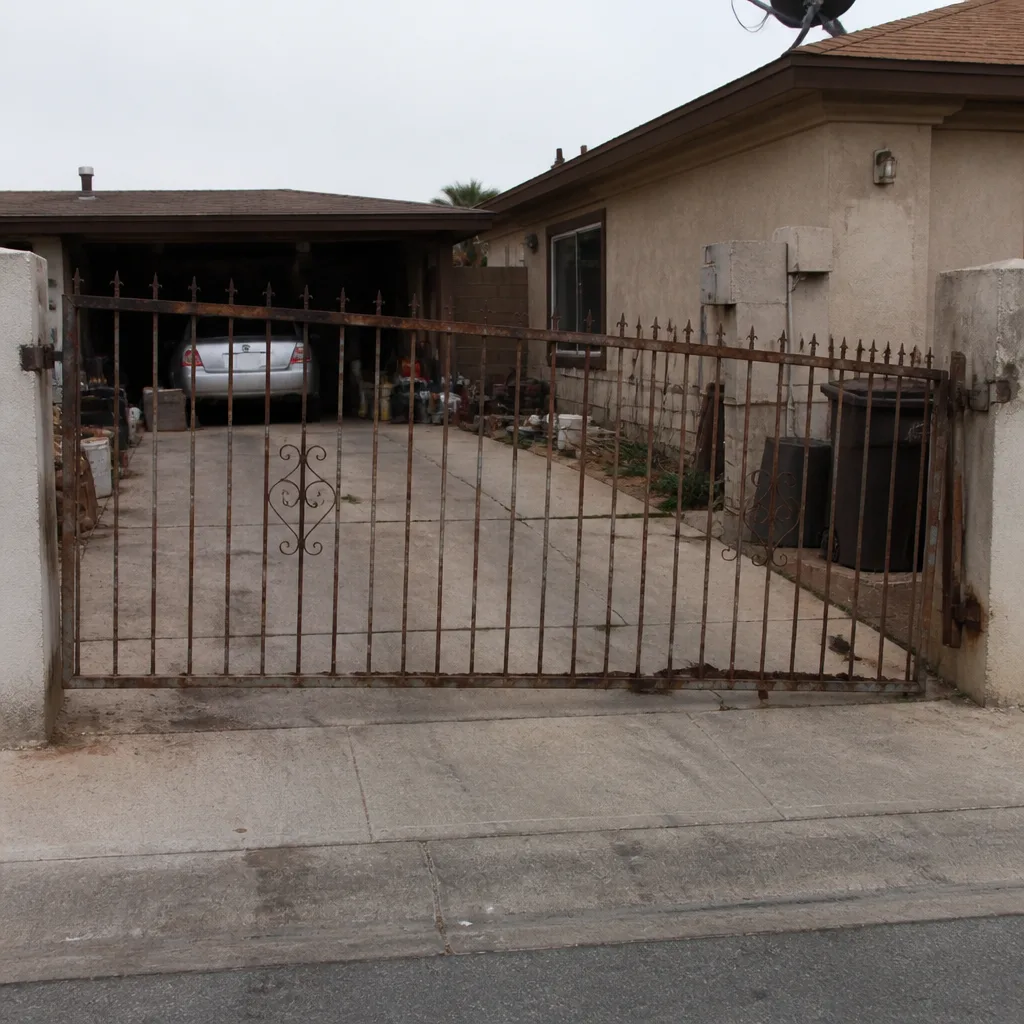
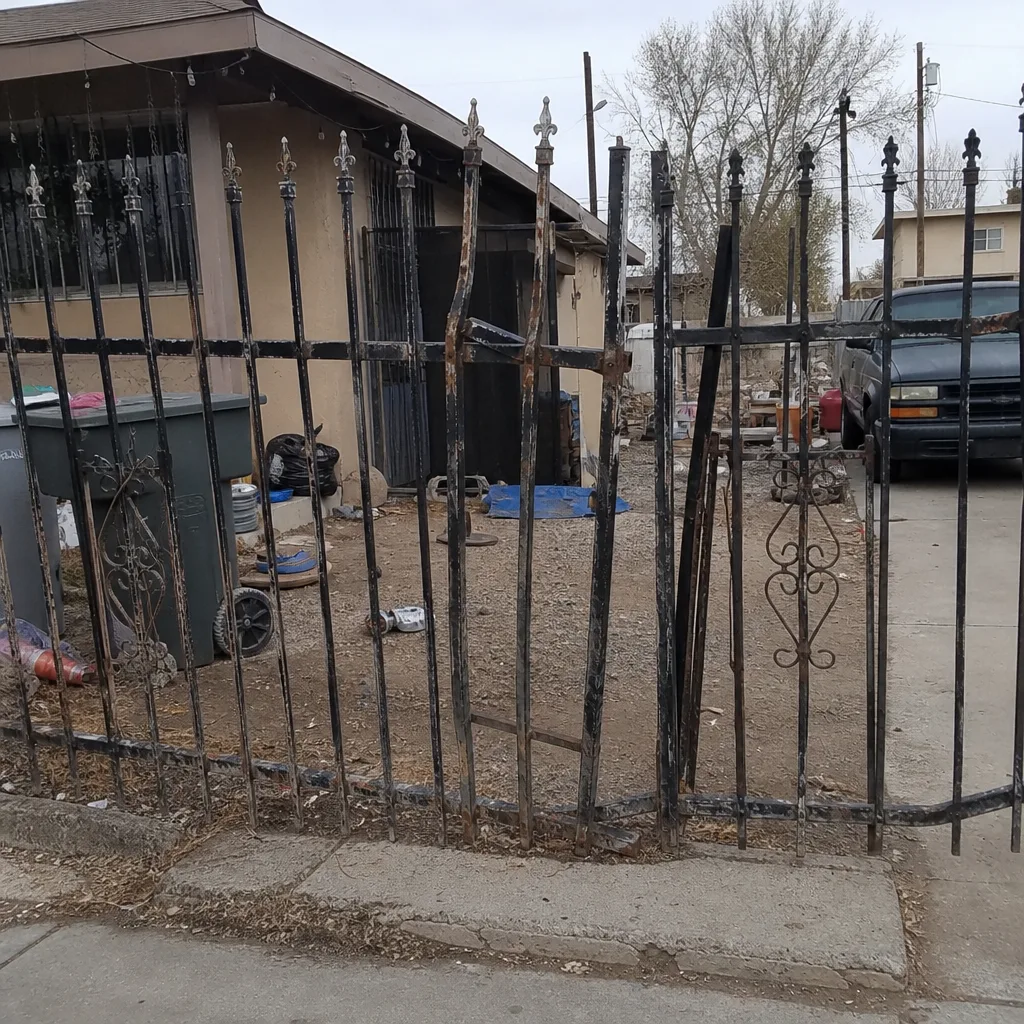 Before
 After
 Before
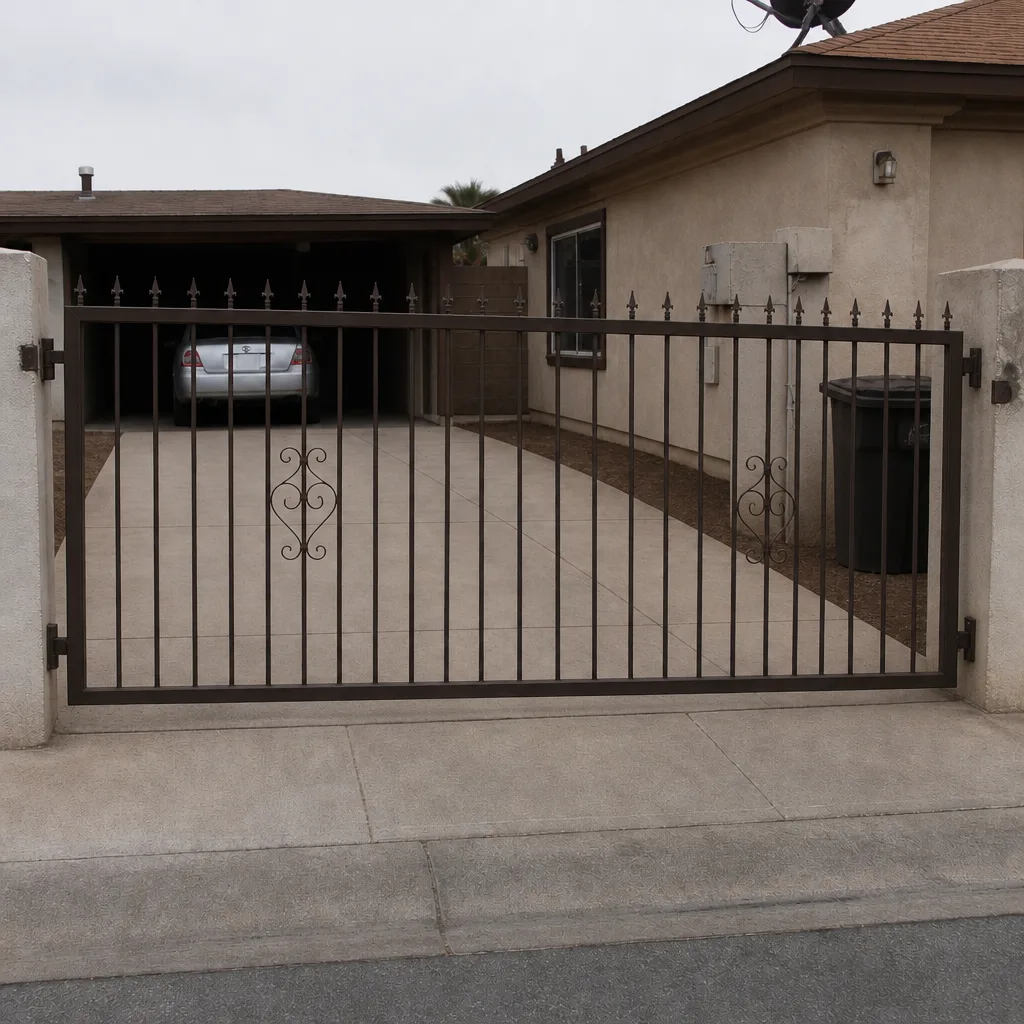 After
When to Call a Professional
Call us when you see any of the five visual indicators, when you hear a cold-only squeak turning into an always squeak, when the gate wobbles at the post, or when a motor is doing noticeably more work to open the same gate it used to open easily. Call when you’ve found a weld crack, even a thin one, or when a gate that used to work has started failing in a way you can’t reproduce. If a gate is automatic and the safety edge is misbehaving, call before you run the gate again.
Gatewood Fence & Gate North Las Vegas offers free estimates in North Las Vegas. A live person answers the phone 24 hours a day, and our technicians bring up to 25 years of experience to every call. Call (844) 761-9351 and let’s take a look.
Frequently Asked Questions
Weld repairs on a residential gate typically run in the low hundreds depending on whether it’s a single joint or a full rail repair, and we quote a fixed price before the work starts. We also offer $40 off any repair over $200, and there’s no trip charge inside the county. Call (844) 761-9351 for an exact quote; estimates are free.
Yes. We weld on site in the driveway, which keeps the gate in place and cuts out the transport time and risk. It’s the reason we can usually repair a gate that a replacement-focused company would swap out. Call (844) 761-9351 and we’ll come look.
Look at which way the top tilts. If it tilts toward the hinge post, the post has likely moved. If it tilts away from the hinge post, the gate frame has twisted. Either way, get it checked before the next wind or rain. Call (844) 761-9351 for a free estimate.
A dry-hinge squeak isn’t. A metal-on-metal squeak that’s constant, or one that started after a storm, is worth a call because it often points to a worn hinge or something in the frame moving. Call (844) 761-9351 and we’ll tell you over the phone whether it can wait.
Yes. We service nine major brands including Linear, Viking, Ghost Controls, and DoorKing. If the gate is stiff or binding, we look at the hardware first, because a motor working against a mechanical problem is a motor on borrowed time. Call (844) 761-9351 for a free estimate.
If the repair isn’t right within 90 days, we come back and make it right. It’s stamped in writing on every job, and it applies to on-site weld repairs, hardware repairs, and post work. Call (844) 761-9351 to book a free estimate.
The Bottom Line
Gate failure is almost never sudden. It telegraphs itself in bubbling paint, a hairline crack at a weld toe, a lean that points at a specific part, or a squeak that changed character. The five visual indicators and the lean-pattern read are the fastest way to know whether to call this week or keep watching. On-site welding means the fix can happen in your own driveway, usually without replacing the panel. If you’re not sure what you’re seeing, get a second opinion before the next monsoon season. That’s the shortest path from “looks fine” to “still fine” in a North Las Vegas yard. If you want a feel for who we are and how we work, start at the Gatewood Fence & Gate North Las Vegas home page.
Contact Us
If your gate is showing any of the signs in this guide, don’t wait for it to fail. Call Gatewood Fence & Gate North Las Vegas at (844) 761-9351 for a free estimate. A live person answers the phone 24 hours a day, estimates are upfront and agreed before work starts, and every job carries the 90-Day Done Right Promise in writing. The name is on the shop, and the shop is down the road. That’s the oldest accountability there is.
Written by the team at Gatewood Fence & Gate North Las Vegas.