
Last updated November 17, 2026
 Wrought iron
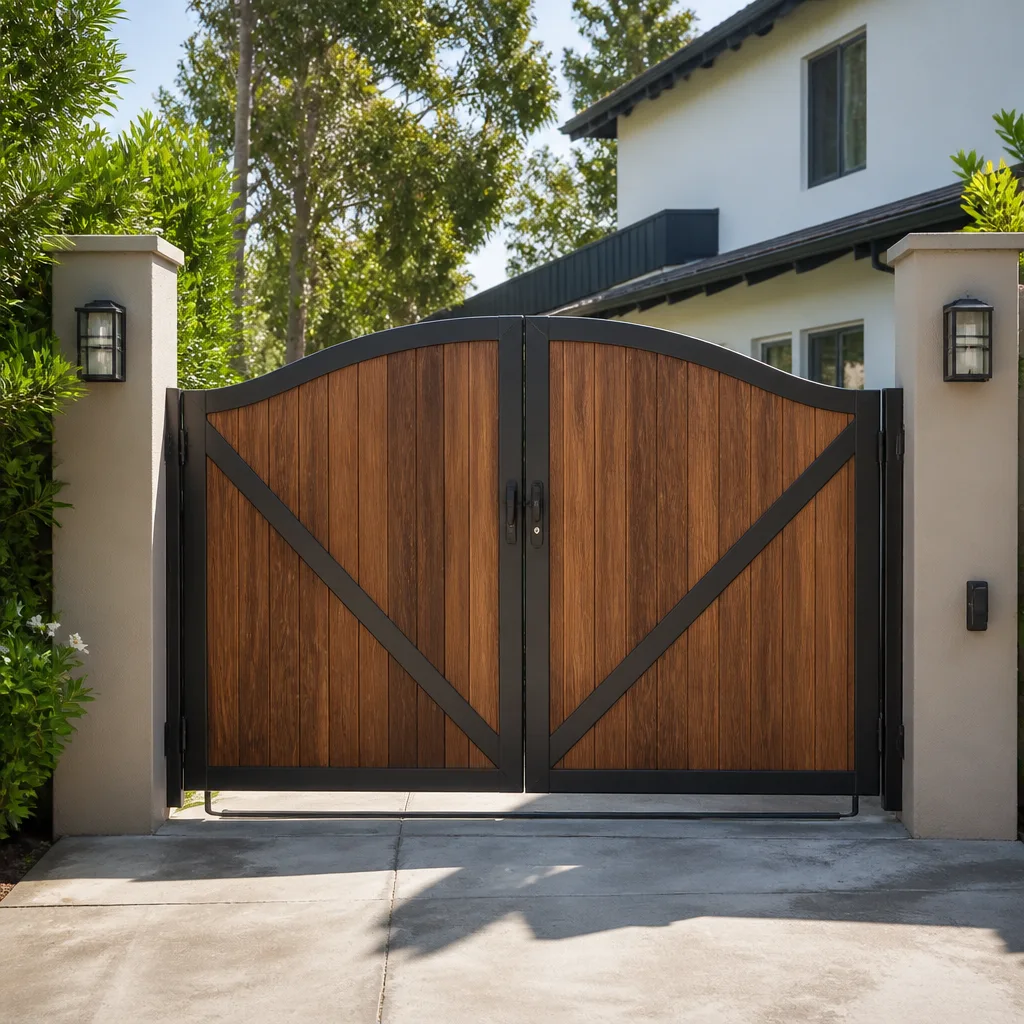 Wood & steel frame
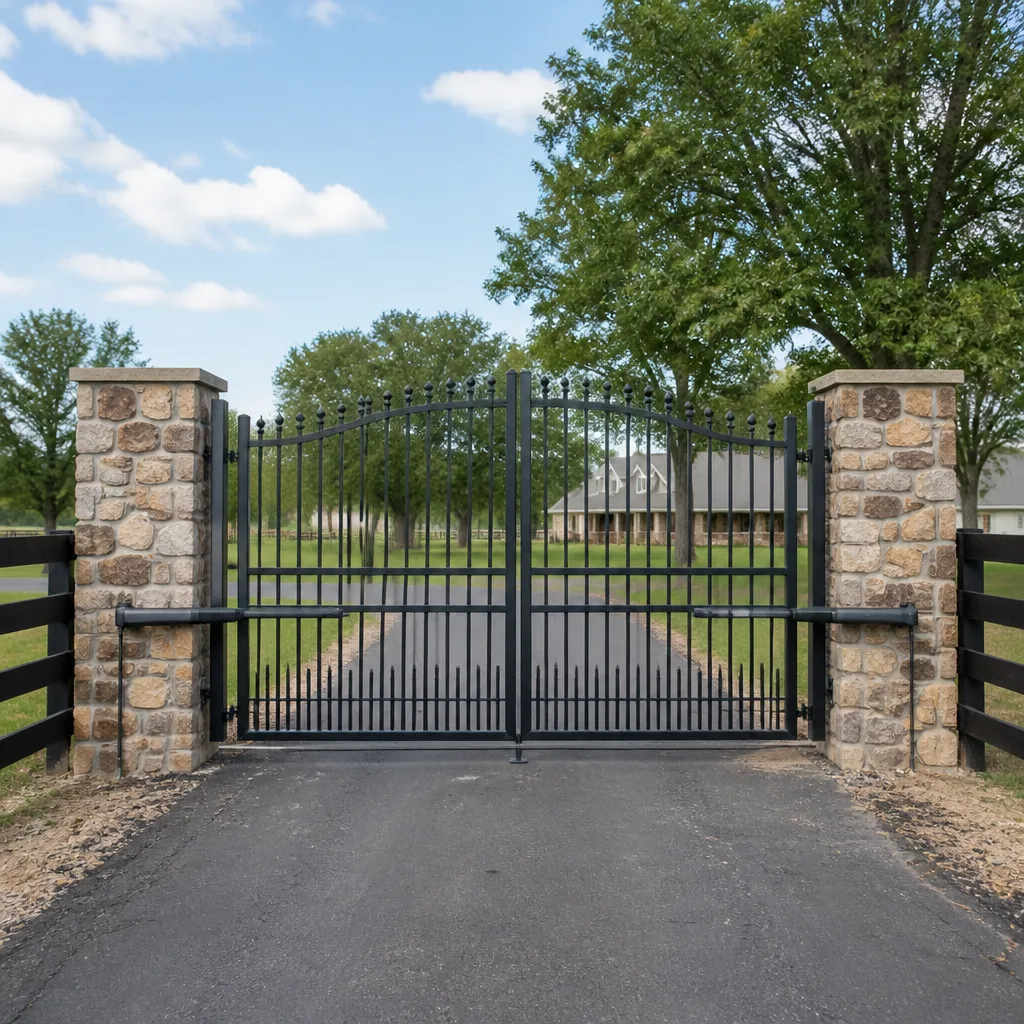 Farm & ranch
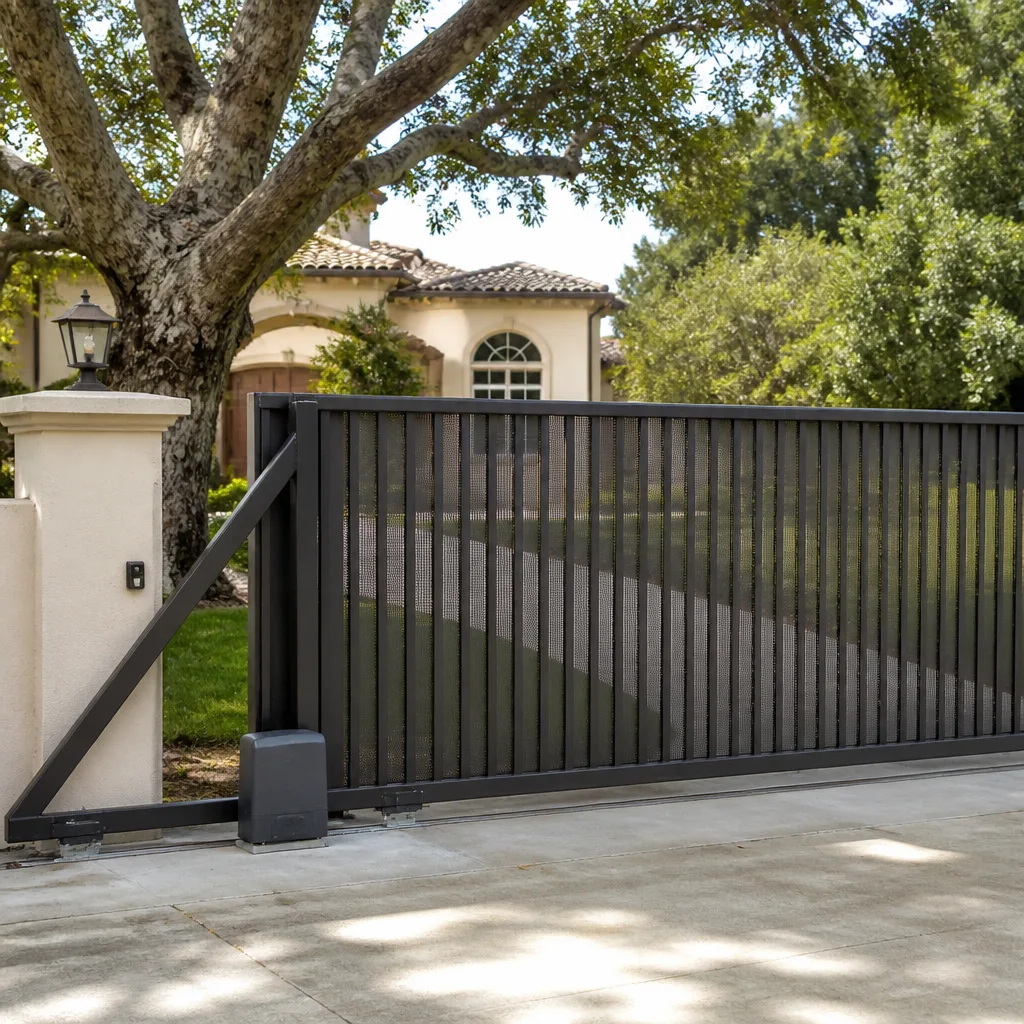 Sliding driveway gates
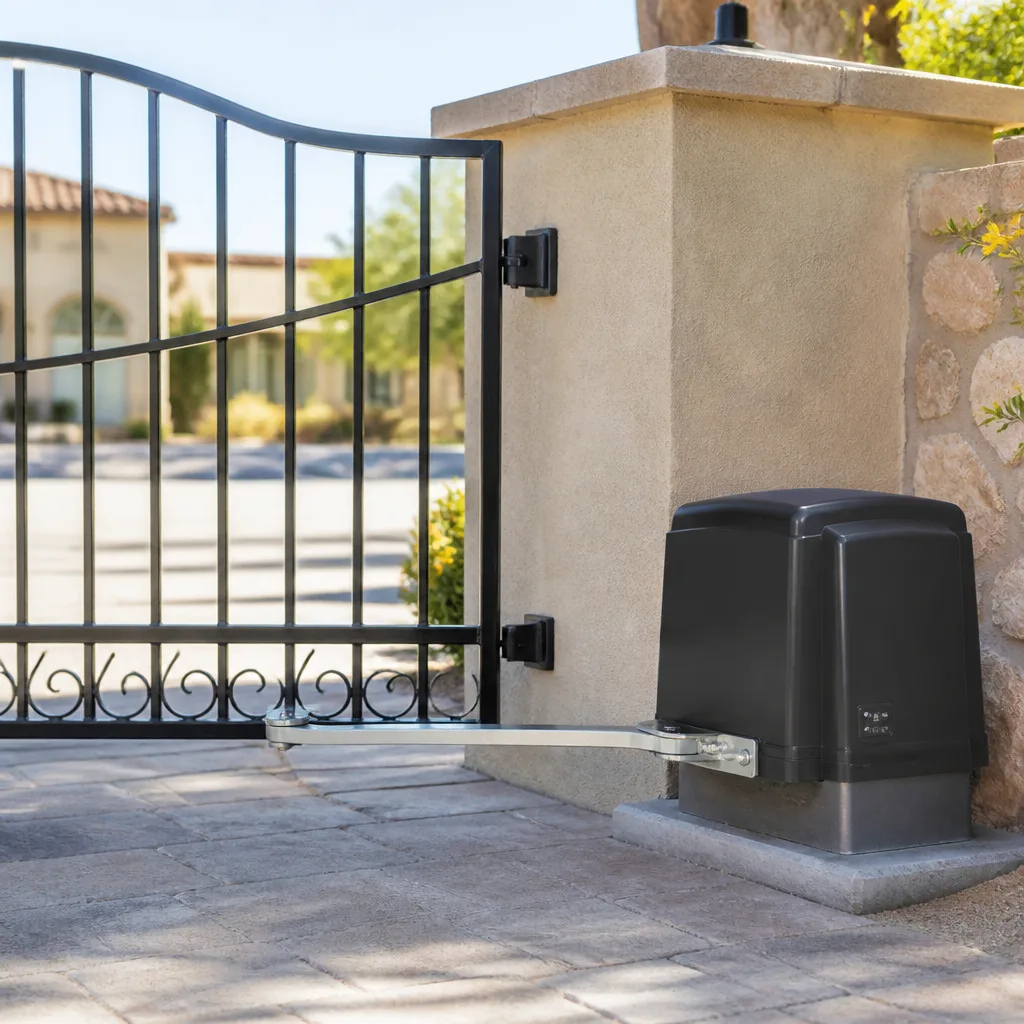 LiftMaster operators
Free on-site gate assessment - hinges, posts, and your LiftMaster or Nice gate operator checked before anything is quoted
The assessment is free and the quote is the invoice.
Get your free estimateGate Repair Emergency Preparedness Guide for North Las Vegas Homes
The call Hal dreads most isn’t the complicated repair. It’s the homeowner whose gate failed closed, whose manual release is rusted solid because nobody has touched it in years, and who has an ambulance idling on the street outside because the driveway is blocked. That situation is preventable with about 20 minutes of prep work done once, on a calm afternoon, before anything actually goes wrong. Most North Las Vegas homeowners have no plan for a gate stuck open and no plan for a gate stuck closed. This guide is about building that plan: testing your manual release, keeping the right numbers written down, understanding your battery backup, and knowing exactly what to say when you call for help at midnight on a holiday weekend.
Quick Answer
A gate emergency is manageable if you’ve prepared three things in advance: a tested manual release, your operator’s override code written down somewhere other than your phone, and two phone numbers posted where you can find them in the dark. The manual release on most residential operators is a lever, key, or pull handle that disconnects the motor so you can move the gate by hand. Test it twice a year, keep it lubricated, and know where it is before you need it. If your gate is stuck and you can’t free it safely, call (844) 761-9351 and a live person will answer, day or night.
Styles & brands we work with
- Wrought iron
- Wood & steel frame
- Farm & ranch
- Sliding driveway gates
- LiftMaster operators
Table of Contents
- Why North Las Vegas Gates Fail at the Worst Possible Time
- How to Find and Test the Manual Release on Five Common Operator Brands
- The Two-Number Rule: What to Write Down Before You Need It
- Power Outage Protocol: Testing Your Battery Backup
- How to Hold a Gate Open or Closed Safely While You Wait
- What to Have Ready When You Call for Emergency Gate Service
- The Seasonal Gate Check for Desert Heat, Monsoon Wind, and Winter Cold
Why North Las Vegas Gates Fail at the Worst Possible Time
Gates in North Las Vegas live a harder life than gates in most of the country, and the failure modes show it. The combination of summer heat, blowing dust, and the occasional hard monsoon gust works on every moving part at once. We see it across the valley, but especially in neighborhoods like Aliante, Eldorado, and the older tracts off Carey Avenue where the original operators are now well past their expected service life.
Heat is the big one. Metal expands, seals dry out, and control boards run hotter inside a closed housing in July than most manufacturers designed for. Dust gets into hinges and rollers and turns into a grinding paste that wears bushings down faster than anything back East. Then the wind arrives in August and September and finds every loose bracket and fatigued weld on the property. In our experience, the gate that fails during a windstorm was already failing quietly for months.
Add the maintenance history most homes carry. A gate gets installed, works fine for a decade, and nobody ever lubes the hinge post or checks the operator’s battery until something stops moving. Then it stops at the worst possible moment: as you’re leaving for work, as a family member is trying to get in, or as an emergency vehicle needs through. That’s not bad luck. It’s an untested system doing exactly what untested systems do.
The North Las Vegas angle matters because the heat and dust here accelerate every one of those wear points. A hinge that would last three years in a milder climate may need attention in eighteen months here. Planning for failure isn’t pessimism; it’s the realistic posture for a desert gate.
How to Find and Test the Manual Release on Five Common Operator Brands
The manual release is the single most important thing on your gate you’ve probably never touched. It’s the mechanism that disconnects the motor so a human can push the gate open by hand. Every residential operator has one. If it’s seized, you have no fallback when the power or the motor fails, and that’s when a stuck gate becomes a real problem.
Here’s how to find and test the release on the brands we service most often in North Las Vegas. The exact location varies by model, so match the brand and then read the label inside the housing if it’s not obvious.
- LiftMaster. Look for a release lever or a keyed handle near the operator housing on the gate side, or a pull cord on some models. Turn or pull the release, then push the gate by hand. It should move freely. If it resists or feels gritty, the release or the gate’s hinges need attention.
- FAAC. Many FAAC swing operators use a manual release key inserted into a lock on the housing. Turn the key, listen for the motor to disengage, and swing the gate. Underground and articulated models have their own release points, so confirm yours against the housing label.
- BFT. BFT operators typically use a lever or keyed release on the side of the unit. The release should click clearly when it disengages. Test it, then re-engage the motor and run the gate through a full open and close to confirm it reconnected properly.
- Mighty Mule. These often use a release key or a pull handle depending on the model. On the common swing models, insert the key, disengage, and push. Many Mighty Mule owners never test this and find the release frozen when they need it most.
- Linear. Linear slide and swing operators usually have a release lever or chain hoist option. Test the lever, confirm the gate slides or swings by hand, and re-engage.
Two rules apply to all of them. Test the release twice a year, and lubricate it with the same care you’d give any moving part. A release that won’t move is worse than no release at all, because you’ll waste precious minutes on it in the dark. If yours is stuck, that’s a job for a technician, not for a pry bar. For anything beyond a simple test, our Gate Motor & Opener in North Las Vegas service is the place to start.
The Two-Number Rule: What to Write Down Before You Need It
Here’s what we tell every homeowner who asks how to prepare: write down two numbers and put them somewhere that isn’t your phone. The first is your gate contractor’s after-hours number. The second is your keypad or operator override code, plus the master code if you changed it and still have it.
Why not your phone? Because the scenarios where you need these numbers fastest are exactly the scenarios where phones fail. The battery is dead. The phone is in the car on the other side of the gate. The screen is cracked from the drop that started this whole mess. A number you can only find by unlocking a phone you can’t reach is not a number you have.
Put them on a card taped inside a kitchen cabinet, on the inside of the garage door frame, or in the glove box. Somewhere a family member or a neighbor could find it too. Then make sure at least one other adult in the house knows where it is and what it’s for.
- The after-hours number for your gate repair company, written in ink, not saved to a device.
- Your keypad access code and any operator override code, in case the keypad itself fails.
- The name and number of your gate company’s regular office, so a neighbor or family member can call if you can’t.
- One backup number, like a trusted neighbor who has a key to something useful.
That’s the whole rule. Two numbers, one card, one place everyone can find it. It sounds almost too simple to matter until the night you actually need it. When that night comes, a live person answers at Gate Repair in North Las Vegas around the clock, so the number on your card reaches a human, not a voicemail box.
Power Outage Protocol: Testing Your Battery Backup
If your operator has a battery backup, it’s the thing buying you time during an outage. Most residential gate operators offer one, and many homeowners either don’t know they have it or have never tested it. A backup battery that died two summers ago gives you exactly nothing when the grid drops.
Here’s how to test it, the way we’d walk a homeowner through it on the phone.
- Confirm you have one. Open the operator housing and look for a battery, or check the label. LiftMaster, FAAC, and BFT all offer battery backup options; not every installed unit has one.
- Test on a calm day with nothing on the schedule. With the gate closed and the system in normal operation, cut power at the breaker that feeds the operator. Many units have a dedicated breaker or a switch; if not, use the panel. Be careful and don’t touch anything you’re not sure about.
- Cycle the gate once or twice. A healthy backup should open and close the gate at least once, sometimes several times, depending on capacity and gate weight. If it barely moves or stalls, the battery is weak.
- Restore power and confirm normal operation. Flip the breaker back, then run a full cycle. If the gate behaves oddly, the operator may need a reset.
If the battery fails the test, replace it. These are consumables, and in North Las Vegas heat they age faster than the label suggests. A battery that’s past its service life can fail right at the moment of an outage, which is the whole point of having one. If you’re not sure how to test yours safely, or the operator is a brand you don’t recognize, call us before the next storm. For power-related repairs, our gate motor and opener service covers the brands we see most in this valley.
One more thing: battery backup is not a substitute for a tested manual release. If the battery is dead and the release is seized, you’re stuck. Test both.
How to Hold a Gate Open or Closed Safely While You Wait
Sometimes you can’t wait for a repair. The gate needs to stay open for a delivery, or closed for security overnight, and help isn’t arriving for a day. This is where people do damage to their operators by forcing things. A gate propped wrong can bend a track, strip a gear, or overload a motor that was fine before you started.
The safe approach is to disconnect the operator from the gate first, then hold the gate with something that isn’t the operator. Here’s the general approach:
- Use the manual release. Disengage the motor so it’s no longer fighting you. This protects the operator from being back-driven against its will.
- Chock or strap the gate. For a swing gate, a sandbag, wedge, or strap to a fixed post works. For a slide gate, a chock under the leading edge or a strap to a post. The goal is to hold the gate in position, not to force it.
- Avoid propping against the operator housing. Leaning weight on the control box or arm can crack housings or bend brackets. Hold the gate, not the motor.
- Don’t leave a held gate unattended for long. A gate propped open overnight is a security gap; a gate propped closed with a strap can work loose in the wind. Re-check it as often as you can.
- If holding it closed is protecting something important, consider a temporary chain and padlock through the gate frame and post rather than relying on the operator’s lock.
None of this is a fix. It’s a bridge until the real repair. If a gate is sagging, dragging, or visibly moving under load in a way it shouldn’t, don’t wait. Our gate repair team in North Las Vegas can take a look and tell you what’s safe to do in the meantime.
What to Have Ready When You Call for Emergency Gate Service
The single biggest factor in getting help fast is the information you hand over on that first call. A technician who knows what brand, model, and symptom they’re walking into arrives with the right parts and the right plan. A technician who doesn’t has to make a return trip. That difference can be hours.
Have this ready before you dial, or at least within the first minute of the call:
- The gate’s brand and model, printed on the operator housing or the label inside it.
- What the gate is doing: stuck open, stuck closed, cycling repeatedly, making a grinding noise, or unresponsive.
- Whether the power is on and whether the breaker is tripped.
- Whether the manual release has been tried and what happened.
- Whether the battery backup was tested and what it showed.
- Your address and any access instructions (gate code, dog in the yard, side entrance).
- Whether anyone or anything is trapped, and if a vehicle or a person is blocked.
- Anything you’ve already tried, so we don’t repeat it.
When you call (844) 761-9351, a live person answers day or night. Not a voicemail box, not a queue. The more of the list above you can give, the better prepared the person who shows up will be. That’s true whether it’s a routine repair or a genuine emergency. If you’ve already had an estimate from another company and want a second set of eyes, that second opinion is free. We’d rather you make an informed choice than a rushed one.
The Seasonal Gate Check for Desert Heat, Monsoon Wind, and Winter Cold
A gate in North Las Vegas deals with three seasons that each stress different parts. A short check before each one catches most failures before they become emergencies.
Before summer heat. Test the manual release and check the operator battery. Heat shortens battery life and cooks control boards, and it’s the season when a failed gate matters most because the house needs to stay secure. Lubricate hinges and rollers with a dry lubricant that won’t attract dust.
Before monsoon wind. Walk the gate and look for loose brackets, sagging hinge posts, and any weld that’s showing a crack. A gate that’s already fatigued will fail in the first hard gust. If a hinge post is moving in the ground, that’s a repair, not a lubricant problem. This is the check most people skip, and it’s the one that prevents the 2 a.m. stuck-open call.
Before winter cold. Cold snaps are short here but they’re hard on batteries and on any operator that’s already marginal. Run a full open-and-close cycle and listen for grinding or hesitation. If the gate sounds different than it did in October, get it looked at before the next cold night.
Two of these checks a year, done at the right time, cover most of what fails. The prep work from earlier in this guide – the manual release test, the two numbers, the battery check – all lives inside these seasonal checks. Do them in the same afternoon and you’ve covered the whole plan.
Common Mistakes to Avoid
- Never testing the manual release. If it’s never been moved, it may be seized by the time you need it. Test it twice a year and lubricate it.
- Keeping the only copies of your codes and numbers on your phone. The scenario where you need them fastest is the one where your phone is dead or out of reach. Write them down.
- Forcing a stuck gate against the operator. Pushing hard on a gate whose motor is engaged can strip gears and bend tracks. Disengage first, then move it by hand.
- Assuming the battery backup works. A battery that’s several summers old may fail the exact test you’re relying on. Test it, then replace it if it’s weak.
- Calling a national outfit that quotes one price on the phone and charges another at the door. The homeowner burned by that experience usually calls a local shop the second time. Here, the price is quoted and agreed before any work starts.
- Skipping the monsoon check because “it never fails here.” It does fail here, and the gates that fail are the ones with a hinge post already moving or a weld already cracked.
- Waiting for a small problem to become an emergency. A gate that cycles twice before it opens, squeals, or drags is telling you something. Fix it in daylight, not at midnight.
See the difference
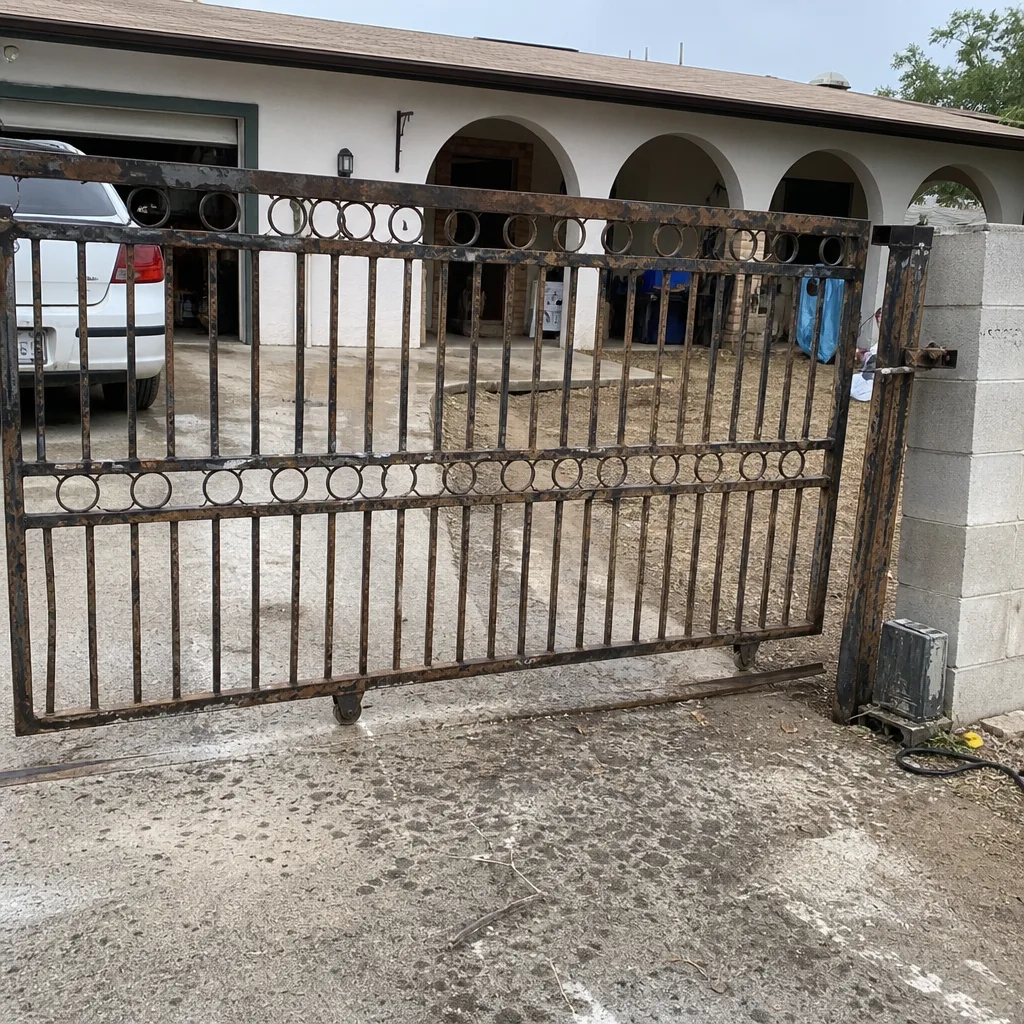 Before
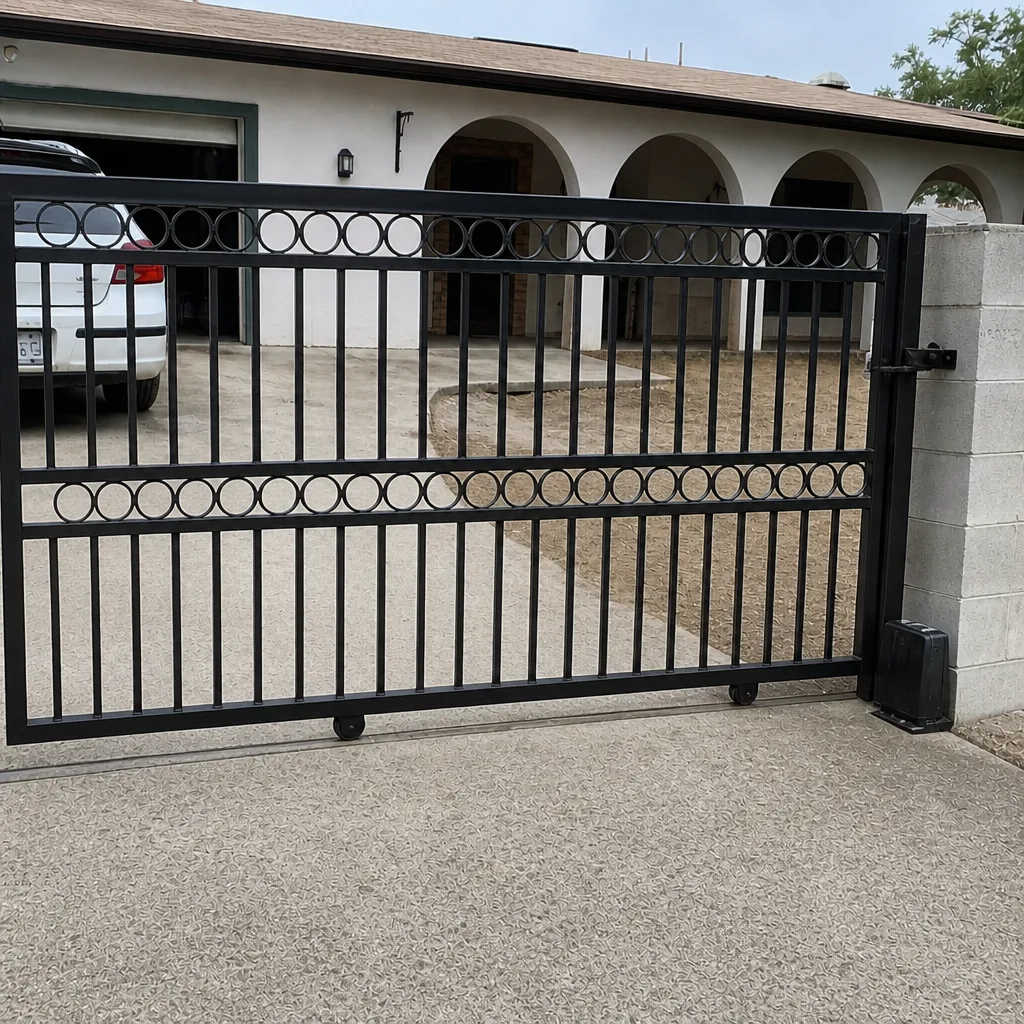 After
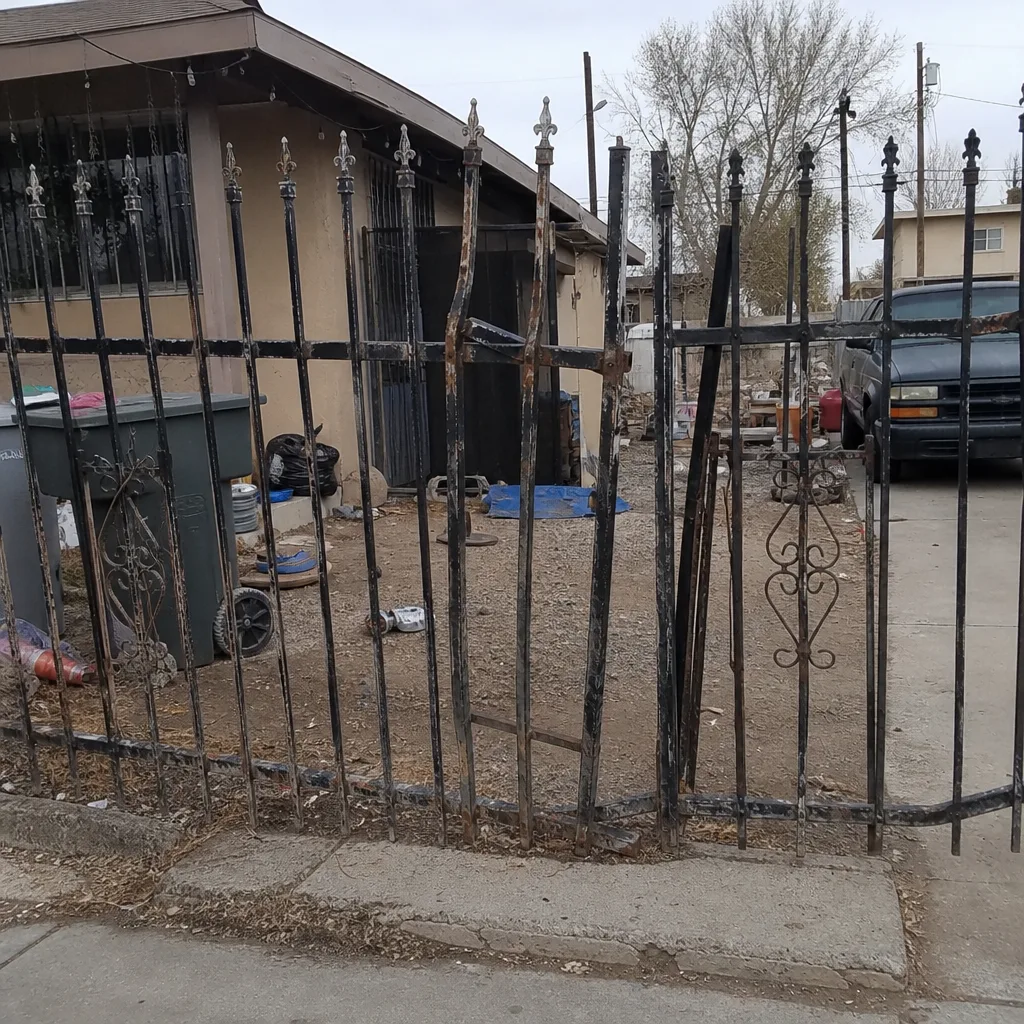 Before
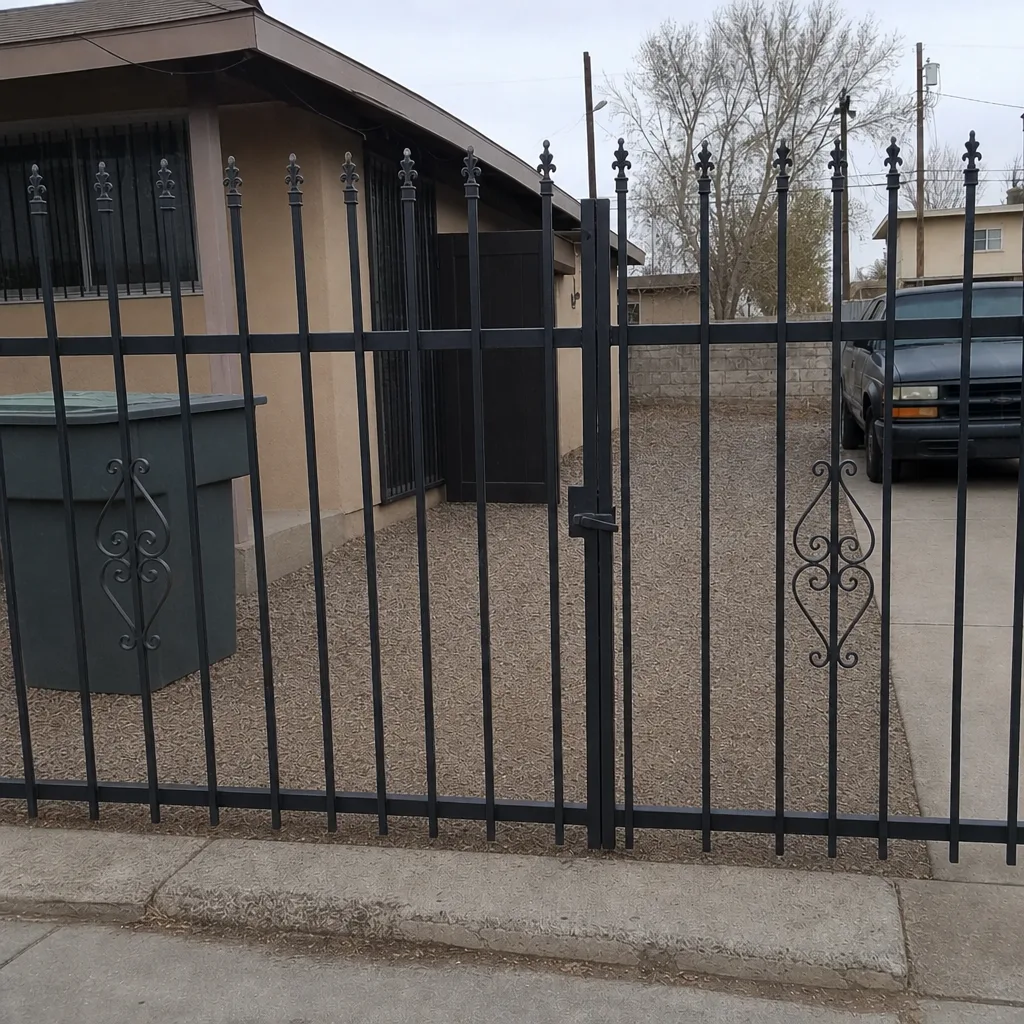 After
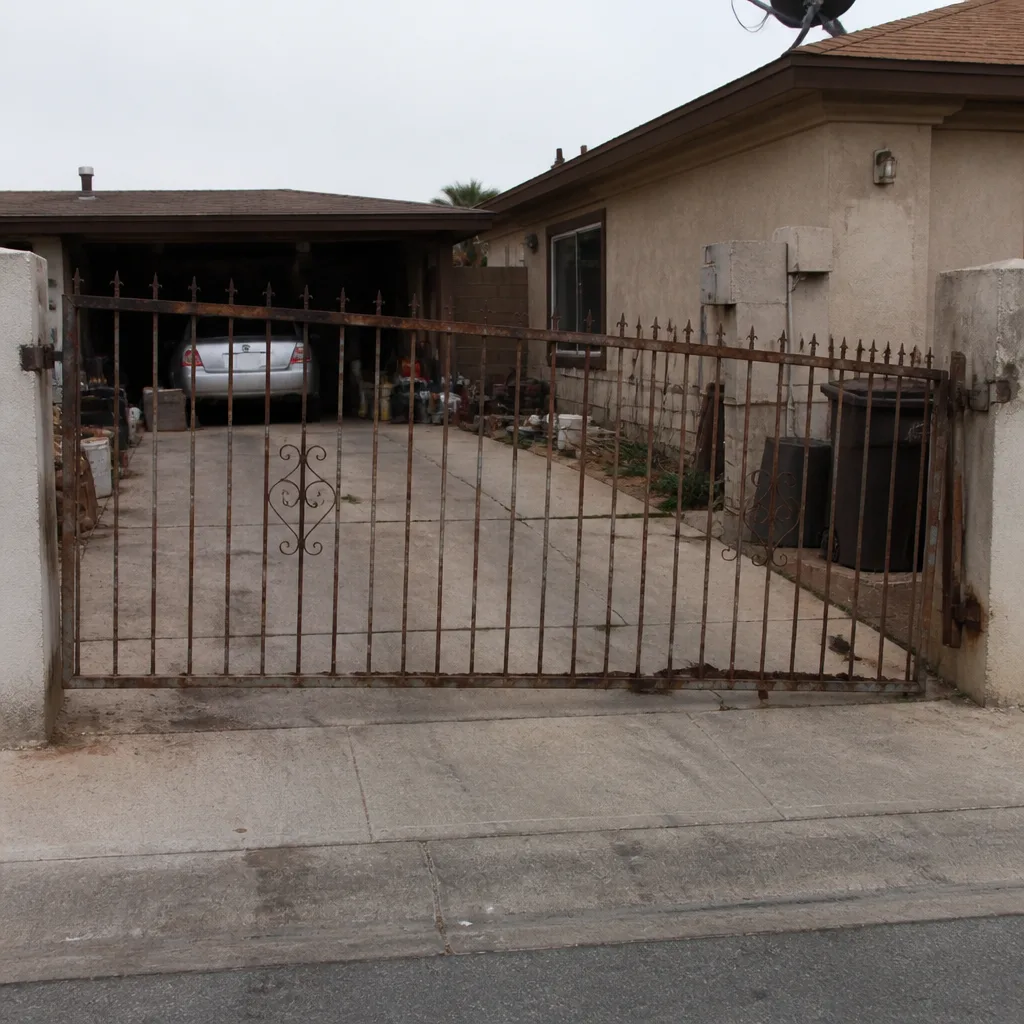 Before
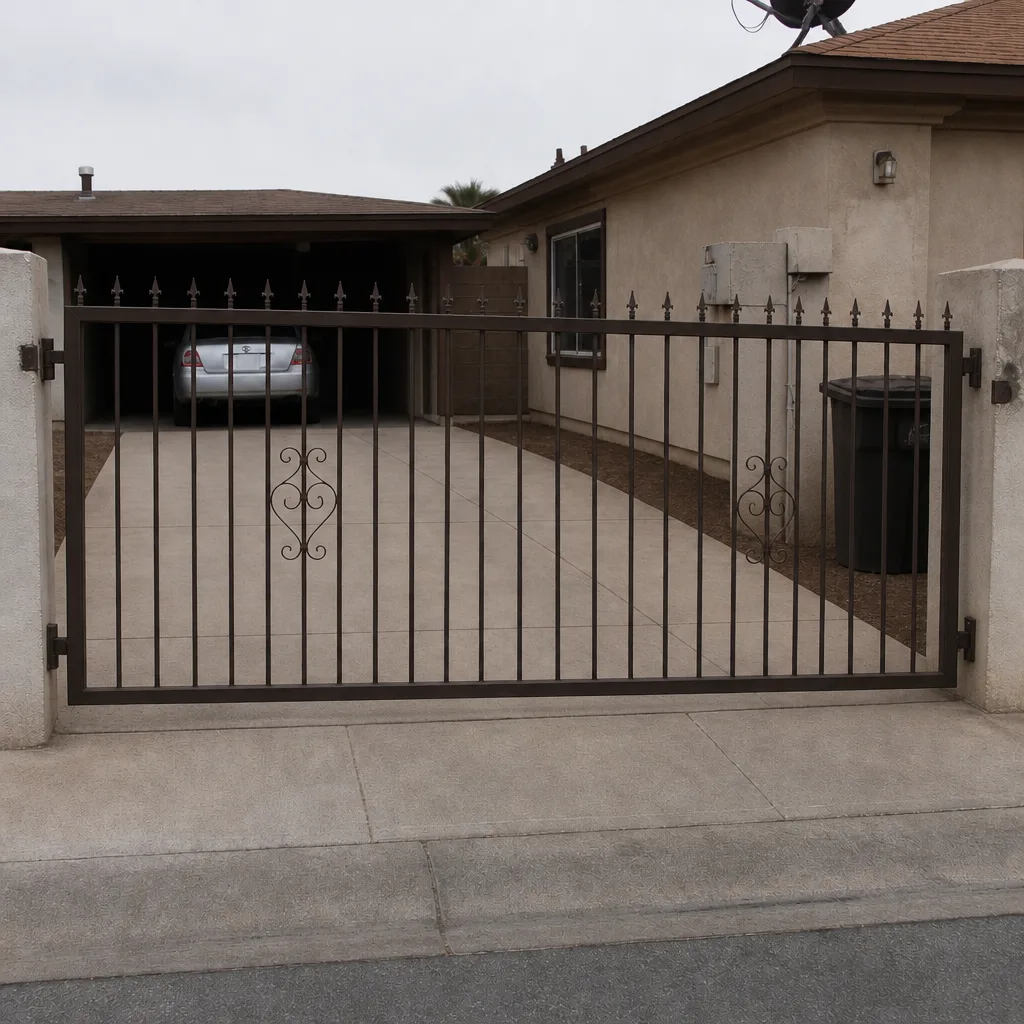 After
When to Call a Professional
Some gate problems are genuinely dangerous to touch. A sagging hinge post that’s moving in the ground, a gate that won’t stay put under load, a motor that’s overheating or smoking, or anything involving the electrical panel or the operator’s wiring is a call-a-professional situation – not a YouTube project. Beyond safety, an experienced eye often catches the real cause rather than the symptom. That sag isn’t in the panel; it’s in the hinge post, and fixing the panel without the post means fixing it twice.
Gatewood Fence & Gate North Las Vegas offers free estimates in North Las Vegas. Call (844) 761-9351. A live person answers 24 hours a day, seven days a week. Every job carries the 90-Day Done Right Promise in writing, and our technicians have up to 25 years of experience. If a gate needs repair rather than replacement, we’ll tell you – on the driveway, where we can weld it and keep it there. And if you’ve already got a written estimate from someone else, that second opinion is free.
Frequently Asked Questions
Use the manual release on the operator. The release disconnects the motor so you can push the gate open by hand. Find it first, test it now, and lubricate it. If your operator has a battery backup, it may run the gate on its own during a short outage, but the release is your fallback. If the release is stuck, don’t force it with a pry bar – call (844) 761-9351 and a live person will help you sort out next steps.
Have the gate’s brand and model, what it’s doing, whether the power is on, whether you’ve tried the manual release, and your address with any access instructions. The more detail you give, the better prepared the technician is when they arrive. Call (844) 761-9351 anytime; someone answers around the clock.
Cut power at the breaker that feeds the operator, then cycle the gate once or twice. A healthy battery moves it at least once. If the gate barely moves or stalls, the battery is weak and should be replaced. In the North Las Vegas heat, batteries age faster than the label suggests. If you’re not comfortable testing it yourself, call (844) 761-9351 for a hand.
In most cases, yes – that’s the whole idea. We weld on site and repair the gate rather than hauling it off. A gate that’s sagging usually has a hinge-post problem, and the fix is to address the post, not the panel. For a full breakdown of what we repair, see our Gate Repair in North Las Vegas page. Free estimates on every call.
Use the manual release to disconnect the motor, then push the gate open by hand. If the release is seized and you can’t free it safely, call (844) 761-9351. In a true emergency involving first responders blocked at the gate, get on the phone and tell them the situation so they can help. Don’t force a motor that’s still engaged.
Cost depends on the failure: a stuck release, a bent track, a dead battery, and a broken hinge post are different jobs. What we can promise is that the price is quoted and agreed before any work starts – no surprises at the door. We offer $40 off any repair over $200, no trip charge inside the county, and a permanent 10% discount for seniors and veterans. Call (844) 761-9351 for an exact quote; estimates are free.
Yes. Along with repair, we handle new gate installation and access control. Installation and new setup are measured, ordered, and scheduled – not a same-day call – so plan a free measure and a written price. Start with our Gate Installation in North Las Vegas page, or call (844) 761-9351.
The Bottom Line
A gate emergency in North Las Vegas is rarely about luck. It’s about whether the manual release was tested, whether the two numbers were written down somewhere that isn’t a phone, whether the battery backup was checked before the outage, and whether the seasonal check happened before monsoon wind or summer heat. Twenty minutes of prep done once covers most of it. The rest is knowing who to call and having the details ready when you do. For a free estimate or a second opinion on a written one, call Gatewood Fence & Gate North Las Vegas home at (844) 761-9351. A live person answers around the clock, and every job carries the 90-Day Done Right Promise in writing.
Written by the team at Gatewood Fence & Gate North Las Vegas.