
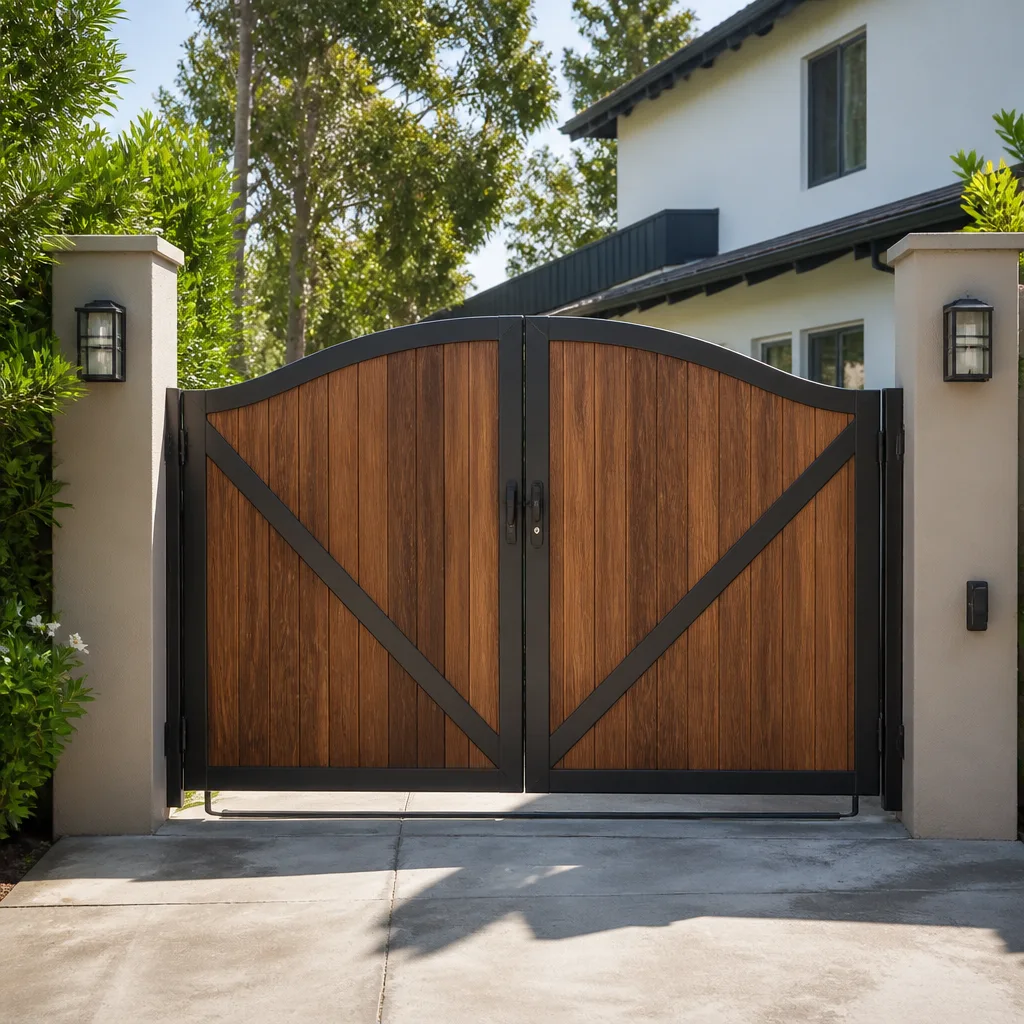
 Wood & steel frame
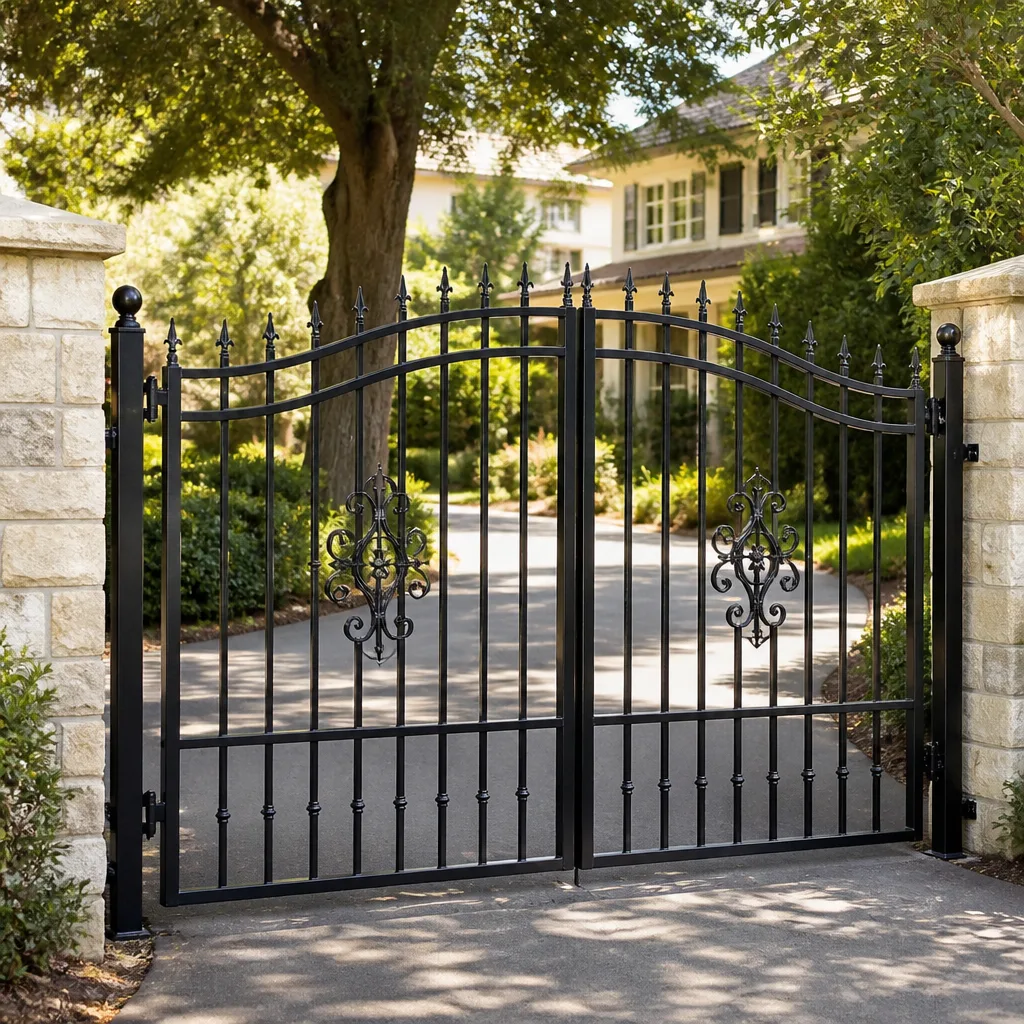 Wrought iron
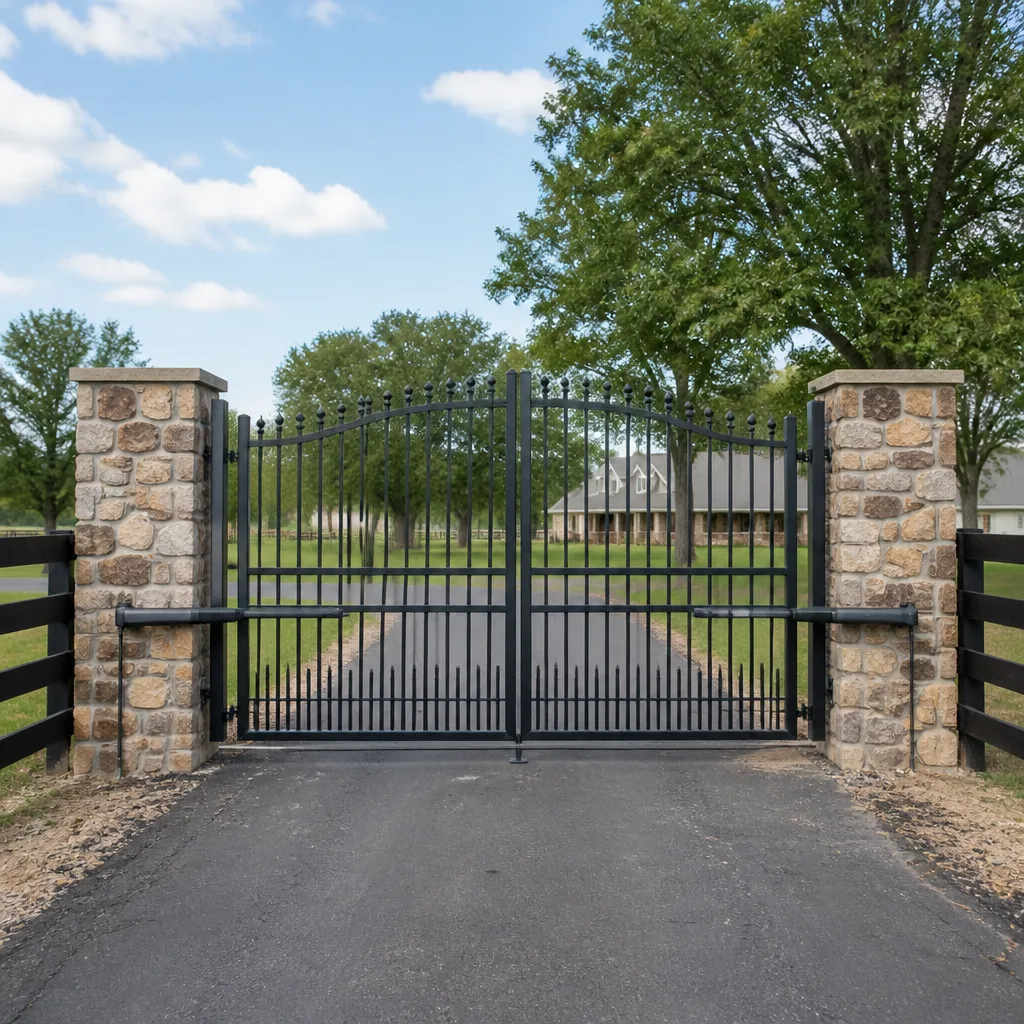 Farm & ranch
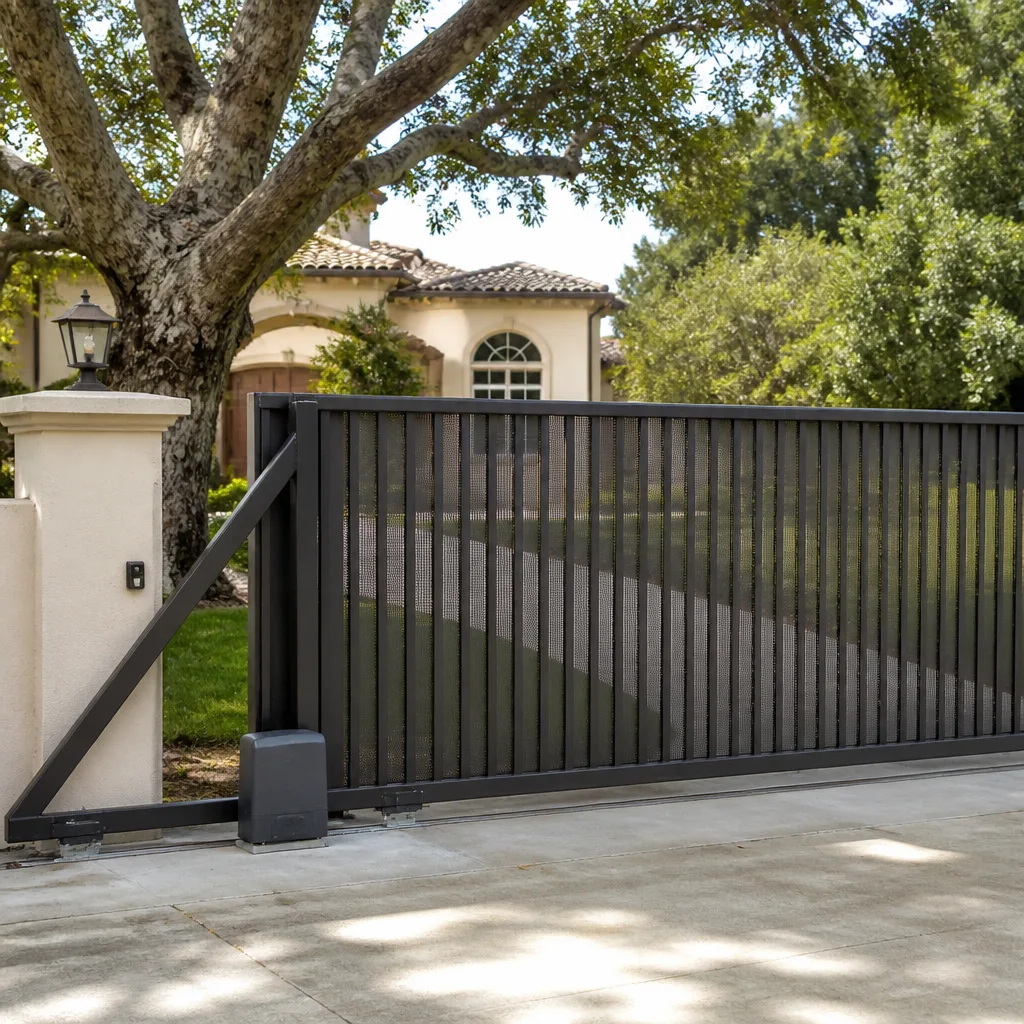 Sliding driveway gates
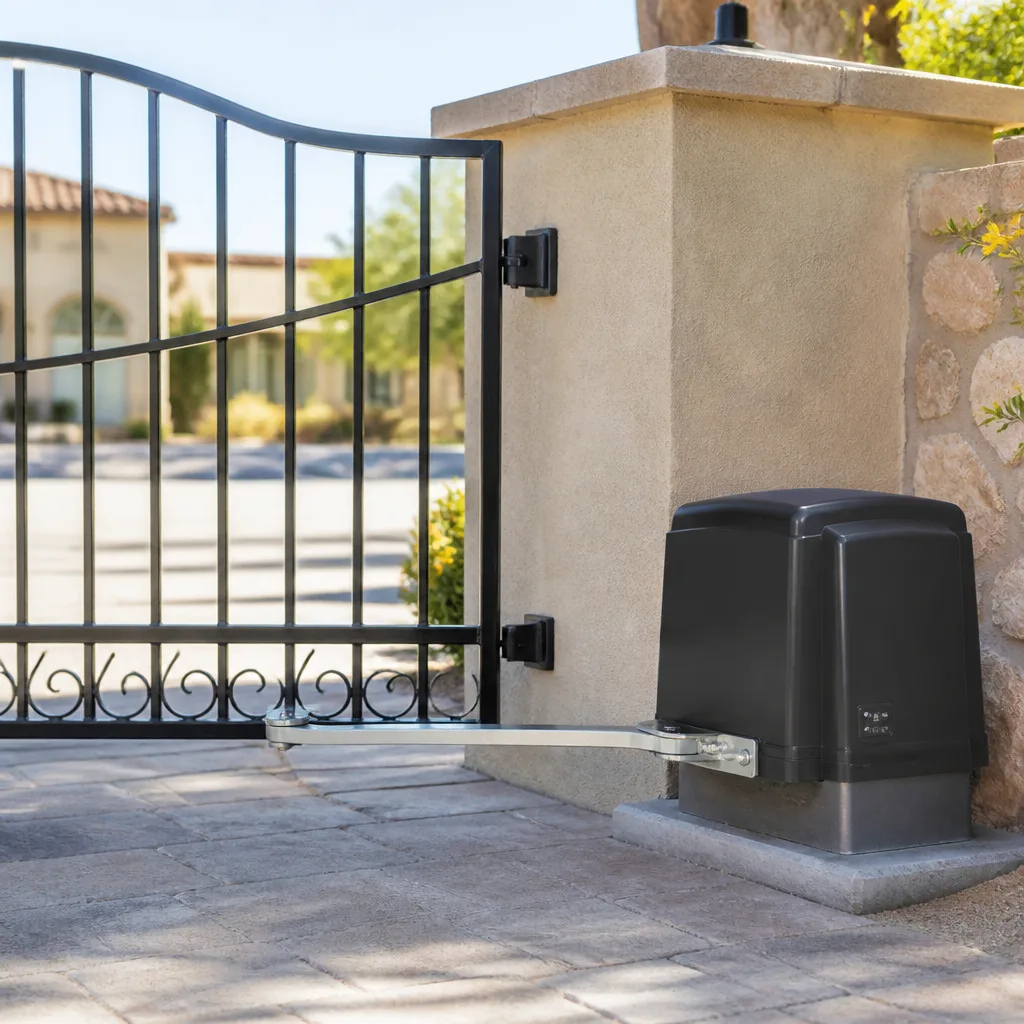 LiftMaster operators
Free on-site gate assessment - hinges, posts, and your LiftMaster or Nice gate operator checked before anything is quoted
The assessment is free and the quote is the invoice.
Get your free estimateStyles & brands we work with
- Wrought iron
- Wood & steel frame
- Farm & ranch
- Sliding driveway gates
- LiftMaster operators
See the difference
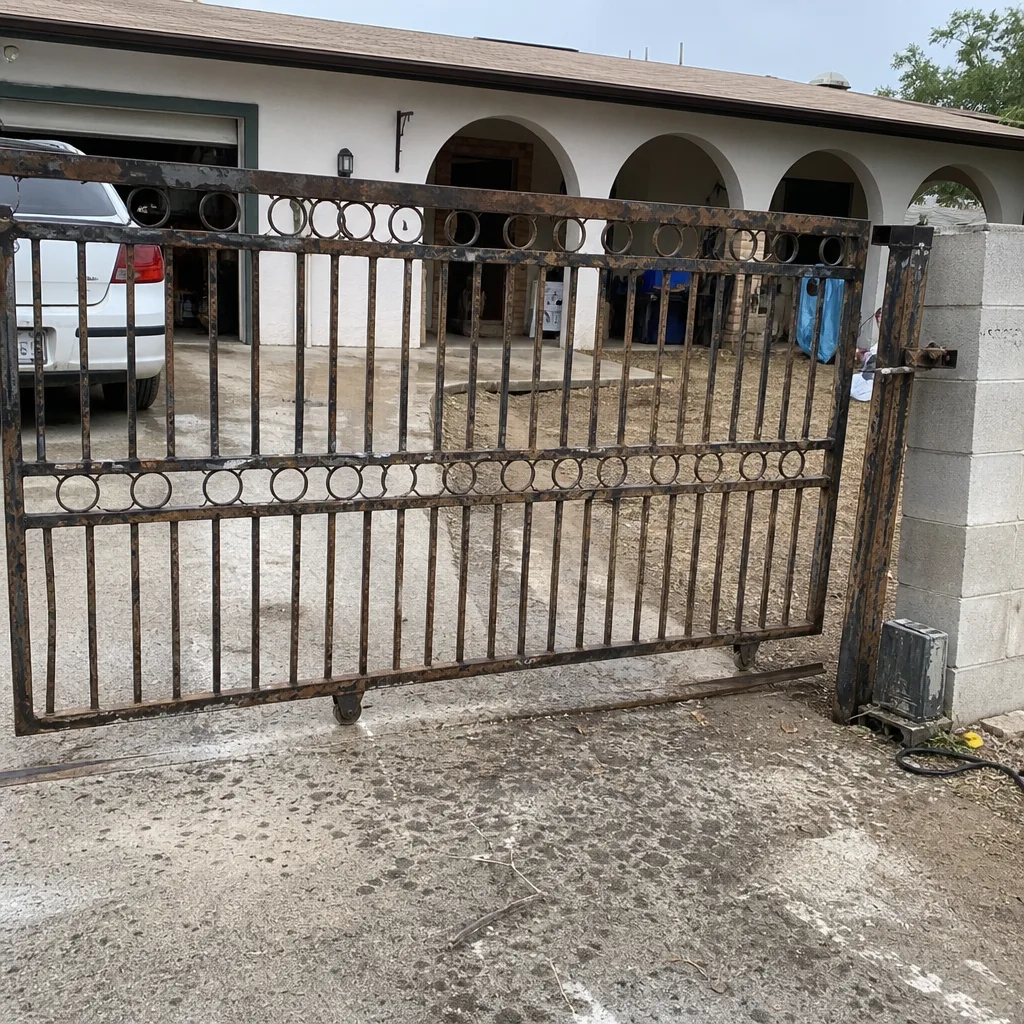 Before
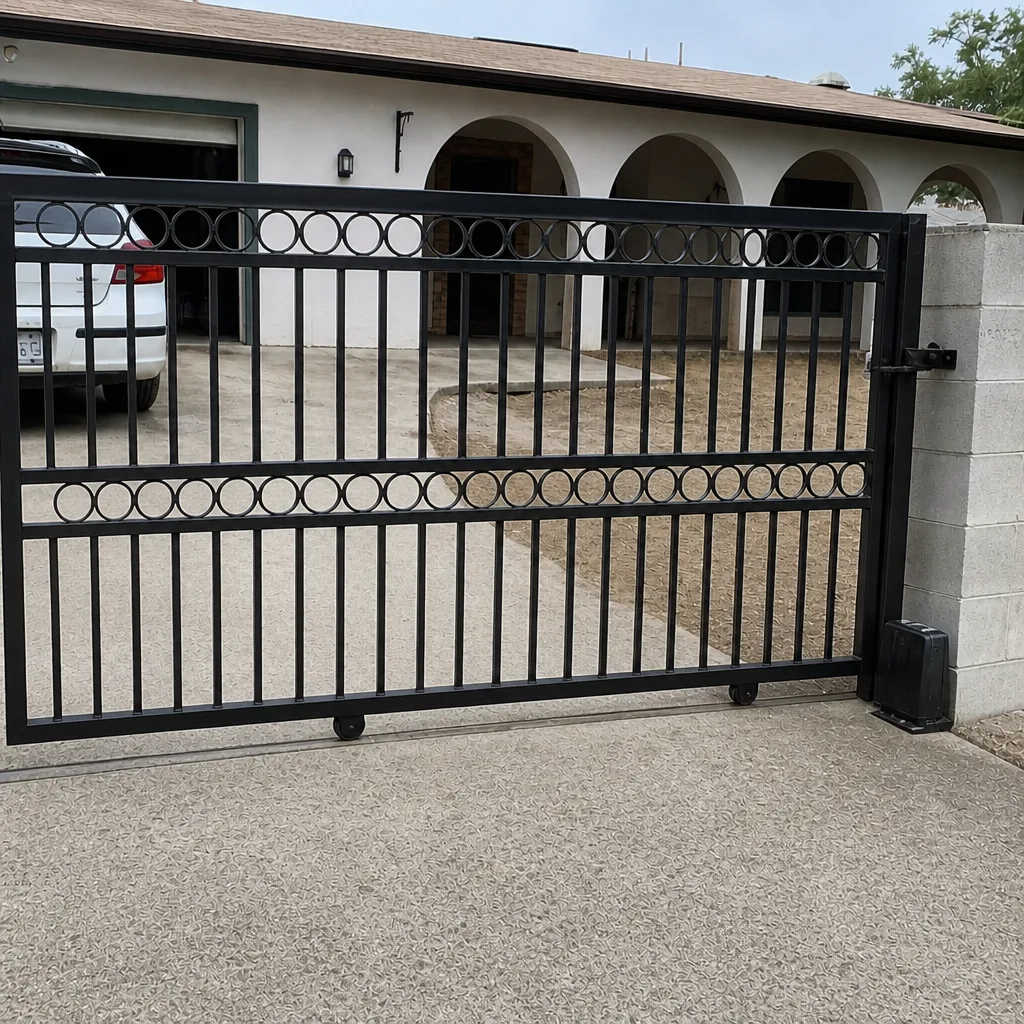 After
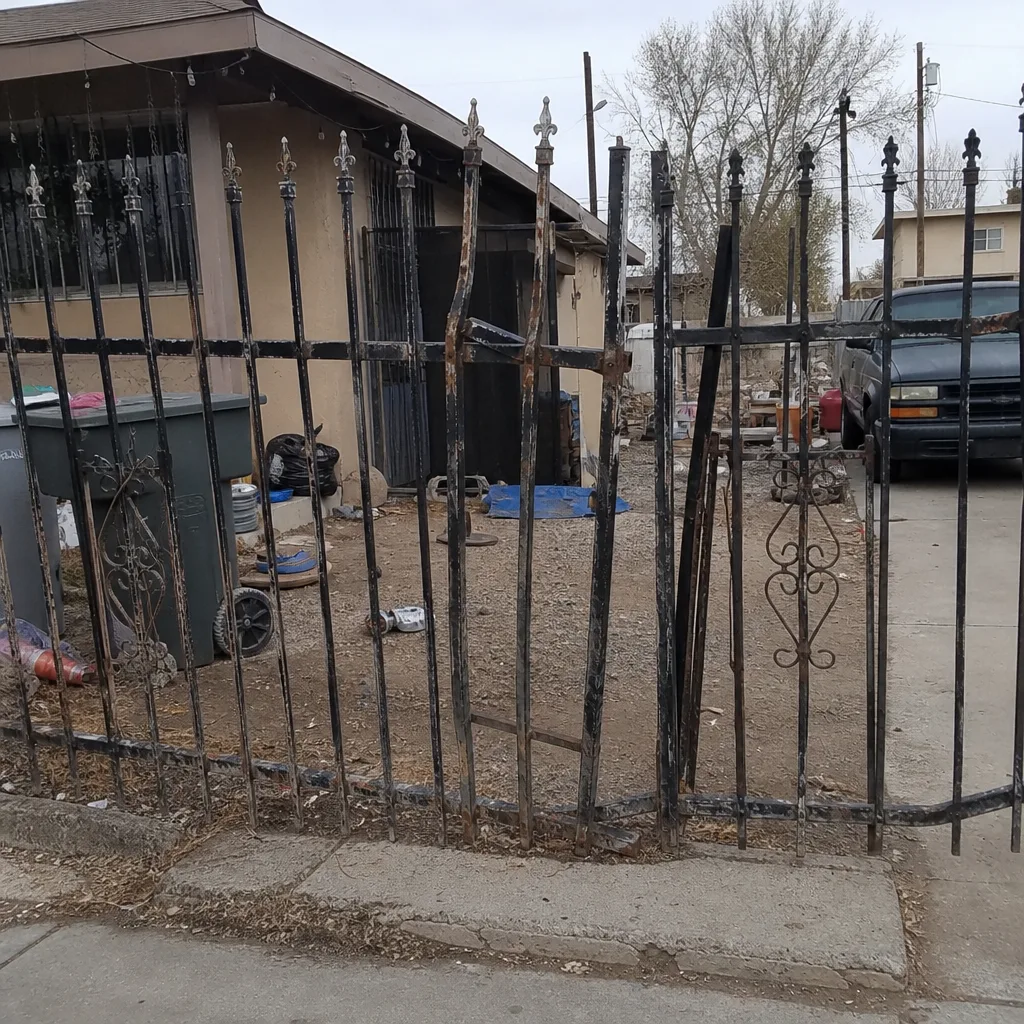 Before
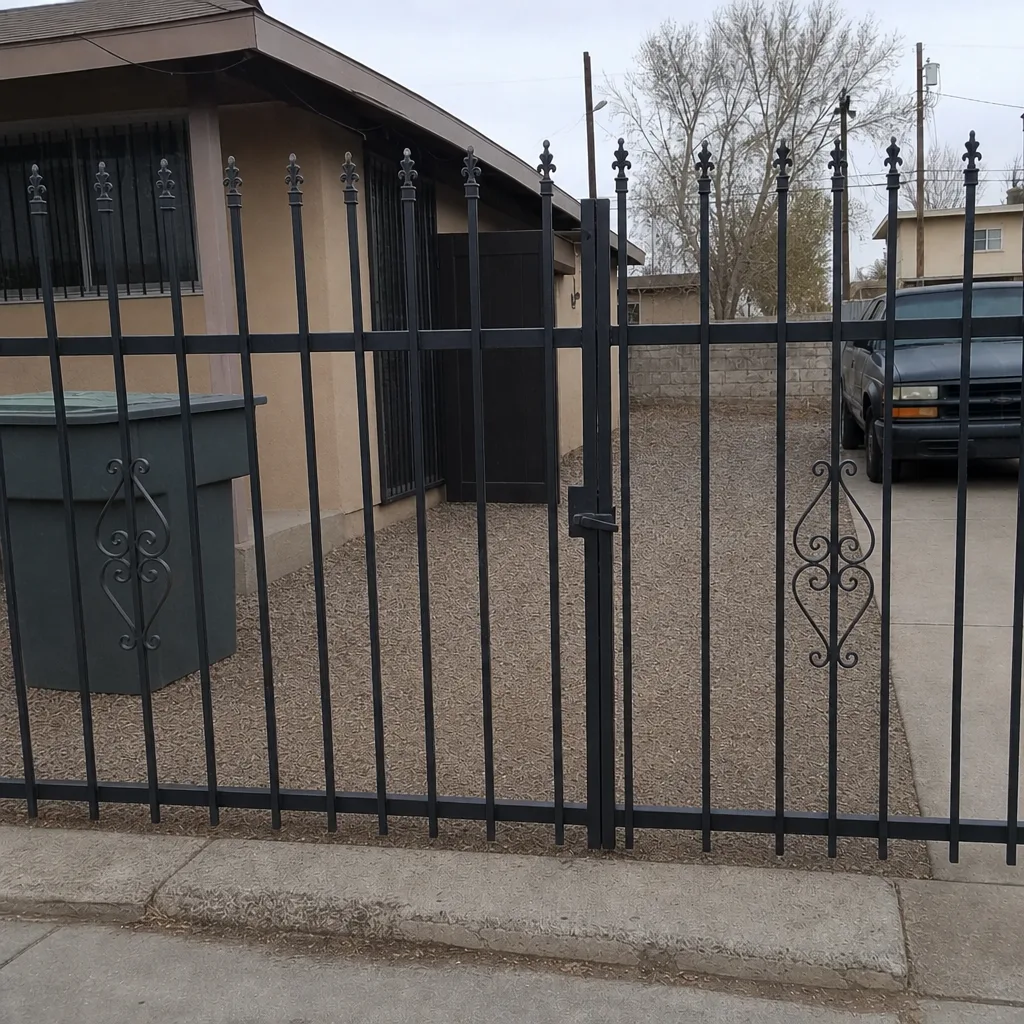 After
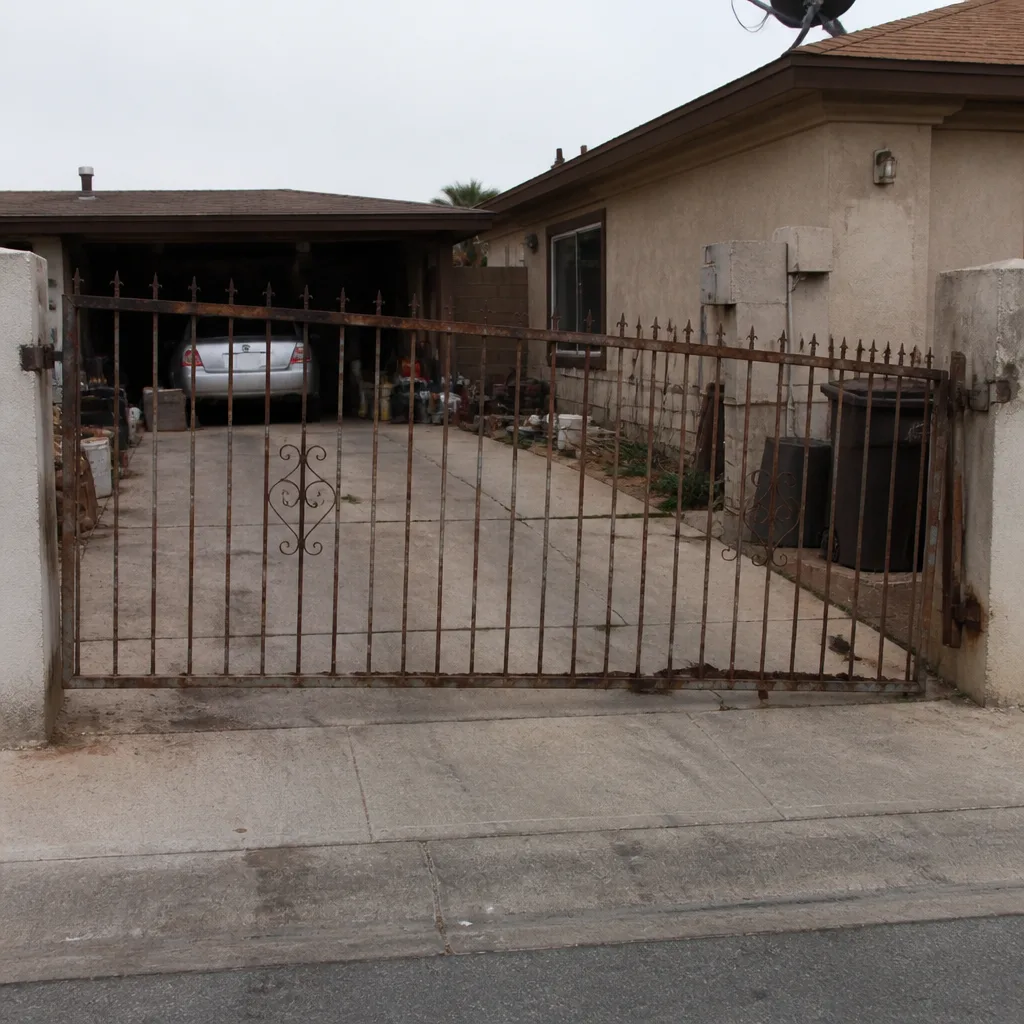 Before
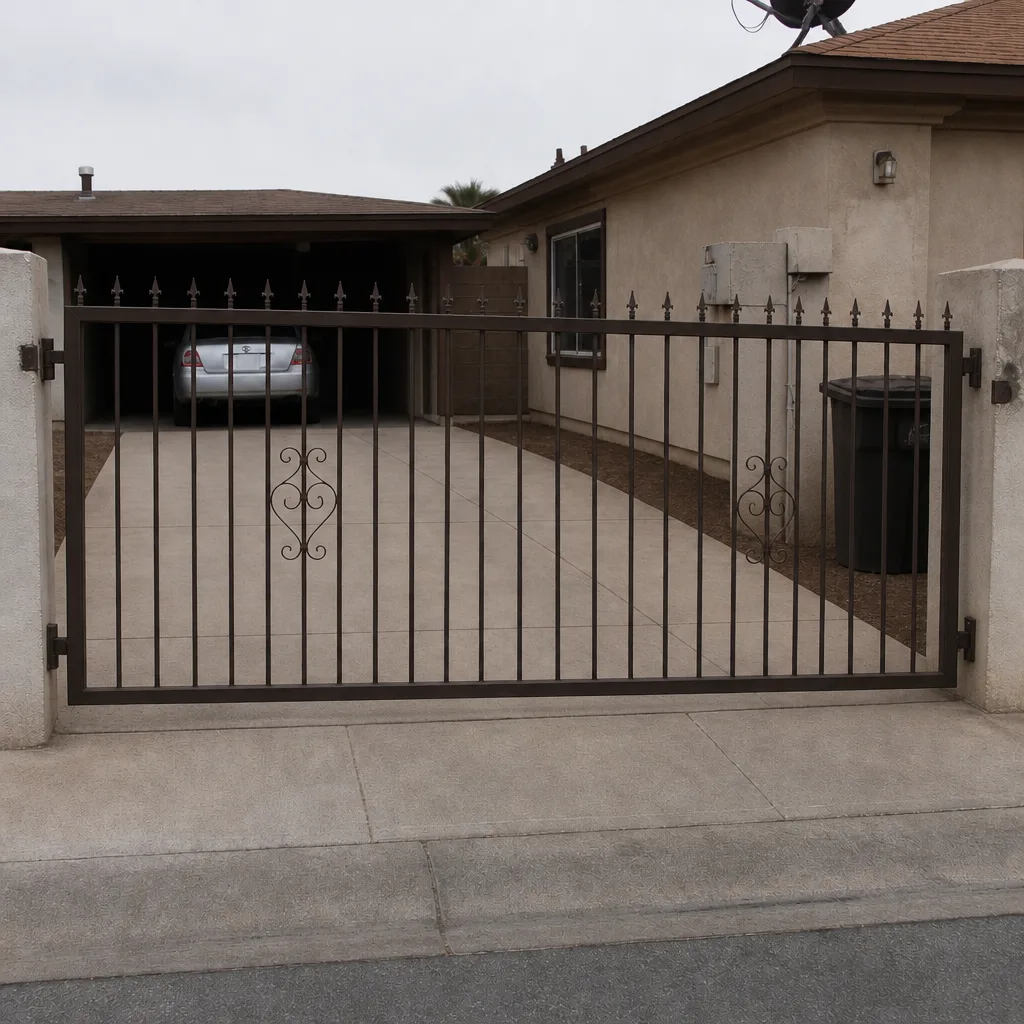 After
Solar Gate Opener vs Electric in North Las Vegas: Which One Actually Holds Up Here?
Choose electric unless you’re powering a low-traffic gate on a remote northern lot where trenching a line costs more than the whole opener. For most driveways in North Las Vegas, hardwired electric wins on total cost of ownership over five years, mostly because the desert heat kills solar batteries long before the panel ever pays you back. If you want the honest side-by-side for your specific gate, call (844) 761-9351 and we’ll walk it through with you.
This isn’t a knock on solar. It’s a climate reality. The same sun that makes solar sound obvious here is the thing quietly wrecking the battery tucked under the panel.
Why Solar Sounds Right in North Las Vegas (And Where It Goes Wrong)
North Las Vegas gets over 294 sunny days a year. On paper that’s the best solar argument in the country. Plenty of folks in Aliante and Eldorado started asking about solar openers for exactly that reason, and I don’t blame them. No trench, no conduit, no electrician, no tearing up a finished driveway.
Here’s what the spec sheet doesn’t tell you. Most solar gate openers run on a sealed gel or AGM battery rated for 3 to 5 years. That rating assumes a mild climate. Above 95°F ambient, that same battery loses capacity fast, and in North Las Vegas a battery sitting in an unshaded steel control enclosure can hit 120°F on an August afternoon. That’s not a guess. It’s what we find when we open those boxes.
We see it constantly in North Las Vegas: the operator quits inside two years, the homeowner assumes the whole unit is dead, and it’s the battery that cooked. Rated cycle life cut in half or worse, and the panel was doing its job the entire time.
What actually happens to a solar battery here
- Months 0-12: works fine. Panel charges, gate cycles, everyone’s happy.
- Months 12-24: cycle time stretches out. Gate gets sluggish on cloudy mornings or after a dust storm coats the panel.
- Months 18-24: most solar opener batteries in this climate are due for replacement, versus the 3-5 years the label promised.
A replacement gel battery runs roughly $90-$180 depending on brand and amp-hour rating, plus the visit. Do that twice in five years and the “free” sun starts looking less free.
Where Solar Genuinely Wins in North Las Vegas
There’s a real case for solar, and it’s not marketing. It’s arithmetic.
Picture a property on the northern edges of the valley, out past the dense tract-home grid, with a gate a long way from the house. Running trench and conduit to that gate can easily cost $1,200 or more once you count the trenching, the wire, the conduit, and the electrician. A solar kit for the same gate might run $800 installed. The solar side wins before you even talk about batteries, and a couple of battery swaps don’t change that.
The catch is cycle count. Solar makes sense when the gate opens once or twice a day for one or two cars. Low draw, plenty of time to recharge, battery stays happier. That’s the scenario where solar is the right call, and we’ll tell you so when we see it.
If you’re comparing hardware for a gate like this, our Gate Motor & Opener in North Las Vegas page covers the brand lineup and what fits which gate type.
The Busy Household Case: When Electric Is the Clear Answer
A house with teenagers, two working vehicles, and a delivery driver or two rolling through is running 20-plus cycles a day. That’s where solar falls apart in North Las Vegas, and not just in summer.
Winter here is mild, but it isn’t always sunny. Overcast stretches happen, and the panel output drops. Then there’s the dust. A haboob or even a good wind event coats the panel, and output falls off until somebody climbs up and cleans it. Do you want to be the one remembering to wash the solar panel so your gate opens? Most people don’t.
A hardwired electric operator draws from the grid and just works. That reliability is worth more than the trench cost for a busy driveway.
Side-by-side, five-year view
| Factor | Solar Opener | Electric Opener |
|---|---|---|
| Upfront install | ~$800 kit (no trench) | ~$1,200+ if trenching is needed |
| Battery replacement interval (NLV heat) | Every 18-24 months | None; runs off grid |
| Battery cost each time | ~$90-$180 | $0 |
| Reliability on overcast/dust days | Slows or stalls until recharged | Unaffected |
| Best for | Low-cycle, remote, hard-to-trench gates | Busy driveways, everyday households |
Add two battery swaps over five years to a solar install that already cost $800 and you’re pushing past what the electric run would have cost, with none of the grid reliability. That math flips back in solar’s favor only when the trench number gets big.
The HOA Wrinkle Nobody Warns You About
North Las Vegas has a lot of HOA communities, and Aliante in particular keeps a tight uniform look. Some CC&Rs restrict visible rooftop or fence-top solar panels. That means your solar gate opener may need an architectural variance approved before anybody touches the gate.
We’ve seen homeowners buy the kit, mount it, and then get a letter. The right move is to check your CC&Rs and get the variance in writing first. A repair specialist who knows the local HOAs will flag this before you spend a dime, which is exactly what we do. If the panel has to go on an unshaded fence-top spot anyway, you’ve also just given the battery a front-row seat to the afternoon sun that was already the enemy.
Most of the gates we work on in these communities are the original builder-grade steel and vinyl units from the 2000s, now 15 to 20 years old. Many of those are due for an operator or hinge replacement at the same time, so it’s a good moment to think about which power source makes sense for the next decade, not just this season. If you’re weighing brands, the fleet here covers the majors, including DoorKing for access-controlled entries and Mighty Mule and Ghost Controls for residential swing gates.
What We Check Before You Decide
We won’t guess at your situation. We come out, look at the gate, look at the power source, and give you the honest breakdown on-site. No trip charge inside the county, and a free second opinion on any written estimate you already have.
- Count your daily cycles. Watch the gate for a few days. One or two cars a day points toward solar; 20-plus points hardwired.
- Measure the trench distance. How far is the gate from the nearest power? On the northern edges of the valley, that distance often decides it.
- Check your CC&Rs. Confirm whether your HOA allows visible solar panels and whether a variance is required.
- Look at shade and mounting. An unshaded steel enclosure is a battery killer in this heat. Shade over the control box changes the battery math.
- Compare five-year cost, not sticker price. Include realistic battery replacement intervals for your exact install spot.
If the opener itself is the failing piece and power isn’t the question, our Gate Motor & Opener page covers the repair and replacement side directly.
A Word on Safety
Gate openers and their batteries involve live electrical connections and stored energy, and swing or slide gates carry real pinch and crush force. Don’t climb onto a gate to test wiring or swap a battery while the operator is live. That’s a job for a trained, background-checked technician who knows how to isolate the power first. We’d rather you call than get hurt, and that’s the plain truth.
FAQs
Only for low-cycle gates on remote lots where trenching a power line costs more than the solar kit itself. For a busy household running 20-plus cycles a day, a hardwired electric opener is more reliable here and usually cheaper over five years once you count faster battery replacement in the desert heat.
Expect every 18 to 24 months here, not the 3 to 5 years on the label. An unshaded steel enclosure can push the battery past 120°F in summer, and heat above 95°F cuts battery life fast. Call us for an exact quote if yours is starting to slow down.
Yes, in most cases, if there’s a power source to run to the gate. It usually means trenching a line and swapping the control setup, and we’ll price both the trench and the conversion before you commit. Estimates are free.
Maybe, but some Aliante-area CC&Rs restrict visible rooftop or fence-top panels, so you may need an architectural variance first. Check your rules and get approval in writing before work starts. Call (844) 761-9351 and we’ll help you sort out what’s likely to pass.
Bottom Line
Solar makes sense on a remote gate you don’t cycle much. For almost everyone else in North Las Vegas, electric is the durable, cheaper-over-time choice, and the desert heat is the reason. If you’d rather have it looked at than guess, Gatewood Fence & Gate North Las Vegas offers a no-pressure assessment in North Las Vegas, with upfront pricing and the 90-Day Done Right Promise in writing. Call (844) 761-9351 for a free estimate and we’ll give you the honest numbers for your gate, including realistic battery intervals if you go solar.
Written by the team at Gatewood Fence & Gate North Las Vegas, serving North Las Vegas, NV.