
Last updated November 17, 2026
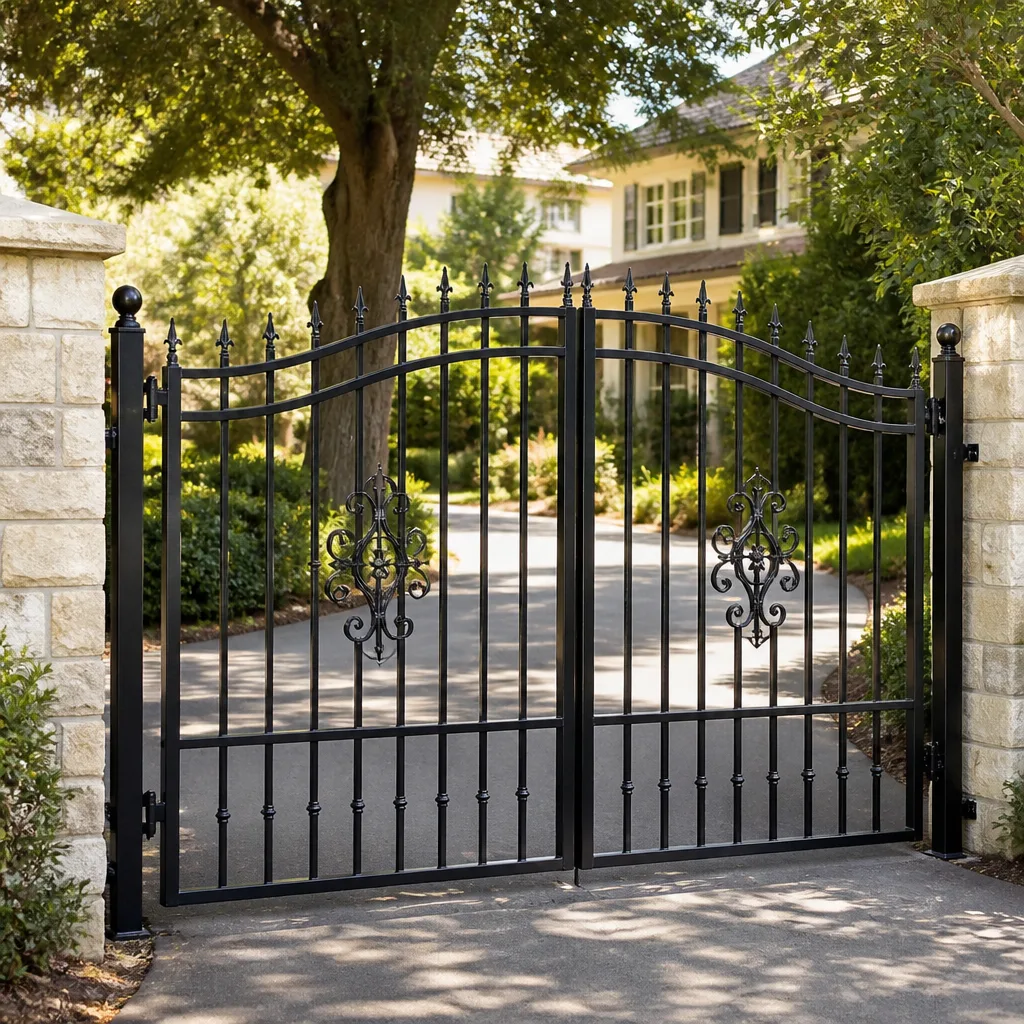 Wrought iron
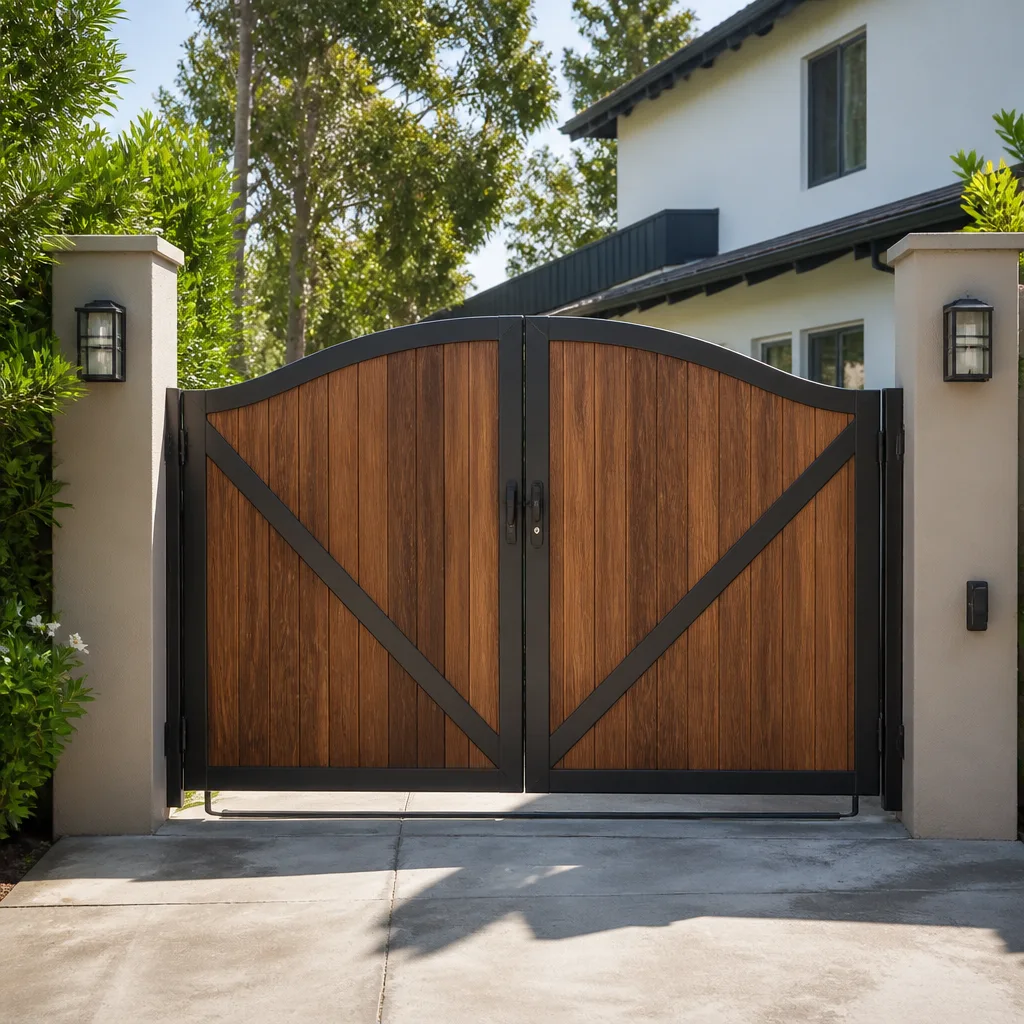 Wood & steel frame
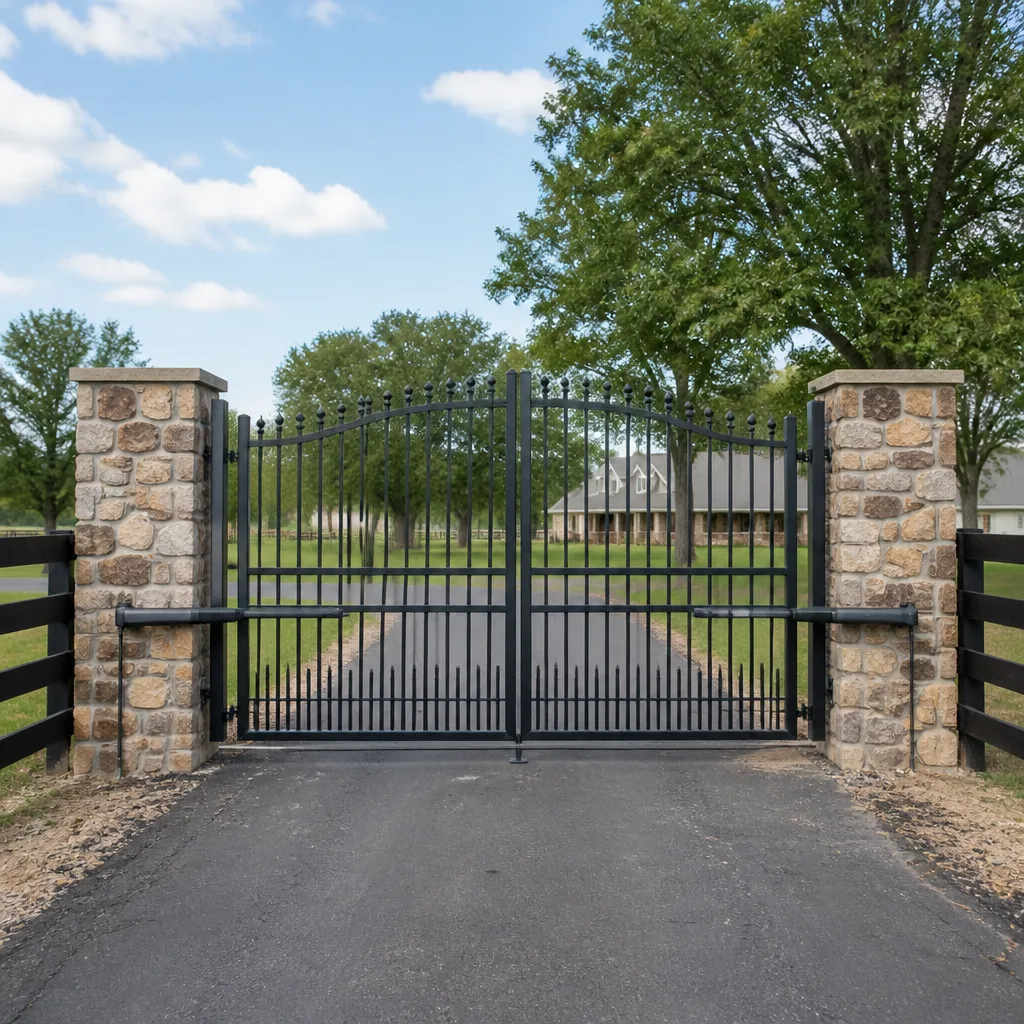 Farm & ranch
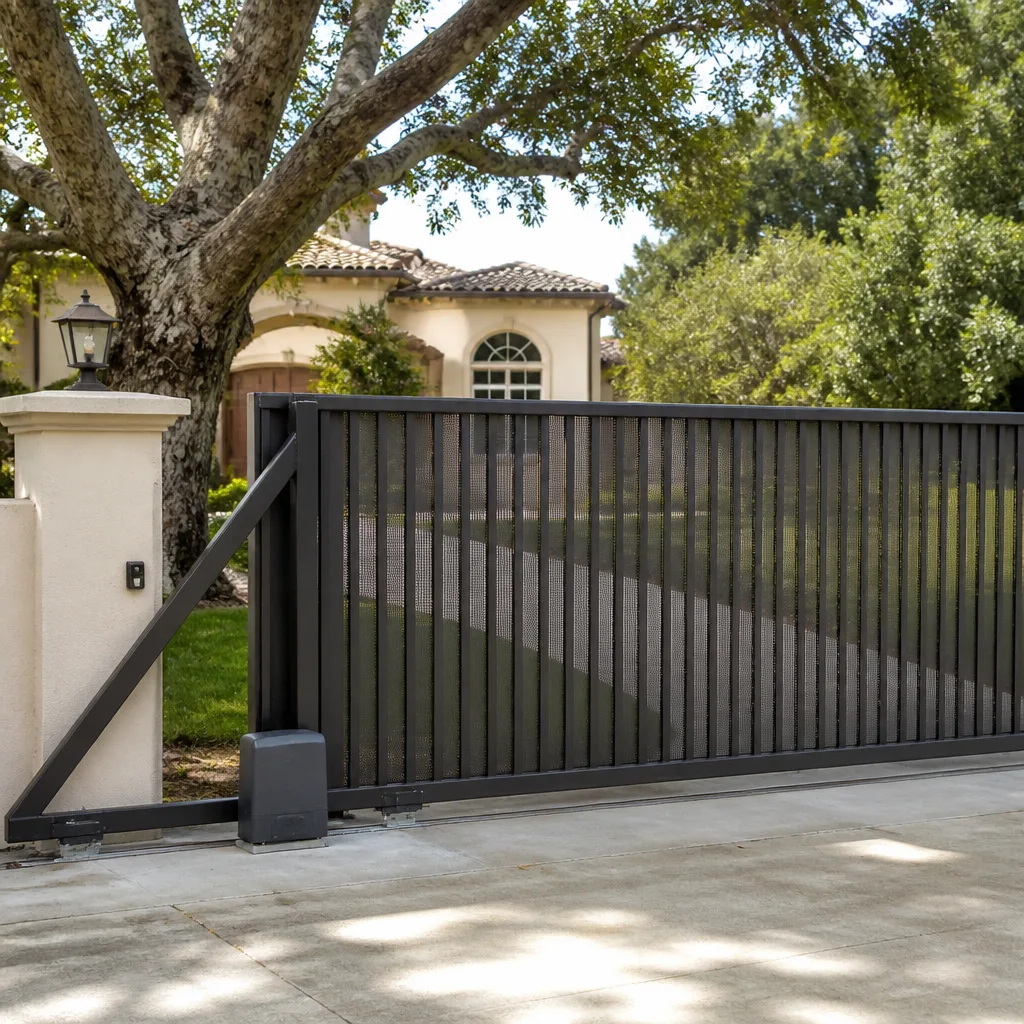 Sliding driveway gates
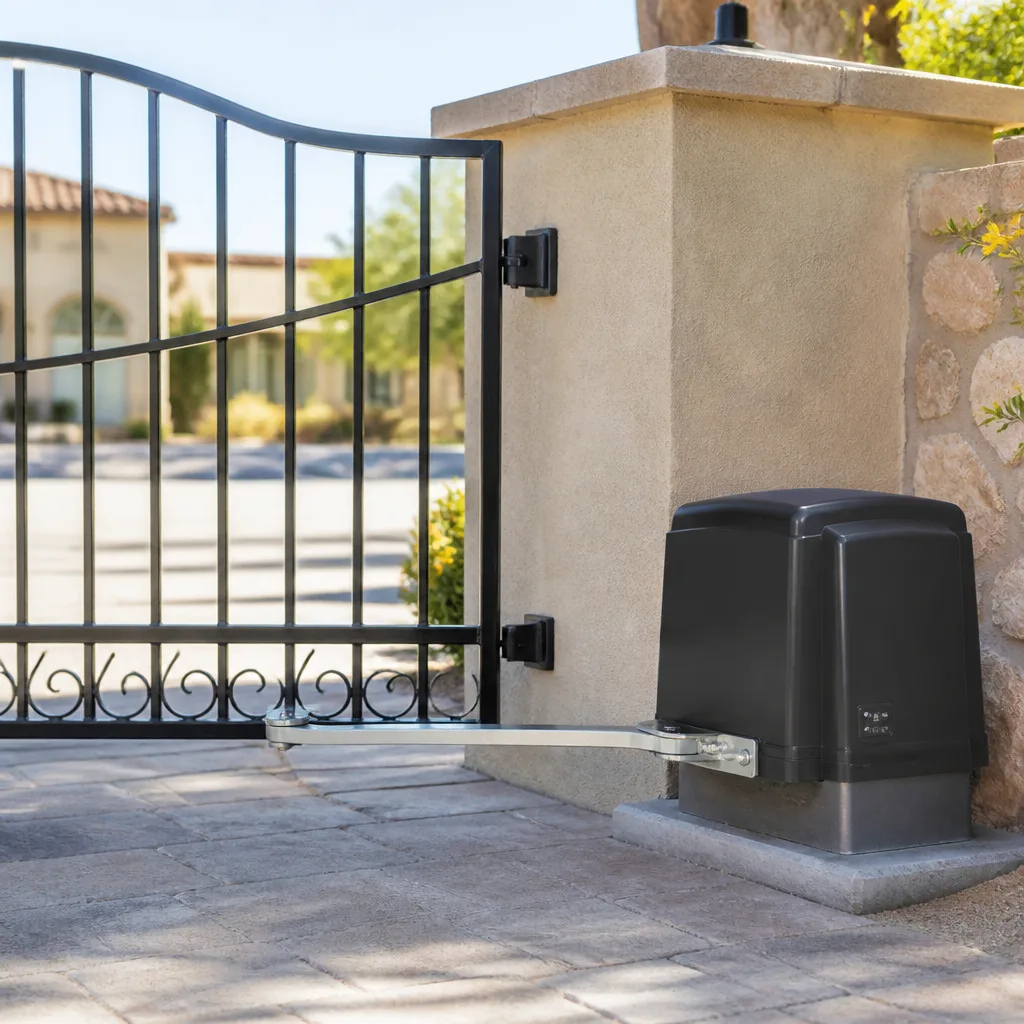 LiftMaster operators
Free on-site gate assessment - hinges, posts, and your LiftMaster or Nice gate operator checked before anything is quoted
The assessment is free and the quote is the invoice.
Get your free estimateGate Repair Troubleshooting: Common Problems and How to Fix Them
A gate that grinds when it opens isn’t necessarily a motor problem. We’ve watched homeowners spend $600 on a new operator when the real culprit was a $12 roller that had gone flat, and nobody bothered to look at the rail first. That’s the thing about a failing gate: nine times out of ten it’s already telling you exactly what’s wrong. A hinge groans because the post is moving. A motor flashes a fault code because voltage is sagging at the transformer. A bottom rail drags because the frame has racked. This guide teaches you to read those signals instead of guessing. We’ll cover symptom-to-cause diagnosis, fault codes, hinge versus post failure, and what’s hiding underground. All of it written from North Las Vegas, where heat and shifting caliche soil make gates fail in ways a northern installer wouldn’t recognize.
Quick Answer
Most gate failures come down to one of four systems: the hinges and posts (sagging, noise, dragging), the operator and motor (fault codes, slow movement, random reversals), the power supply (low voltage at the transformer), or the foundation (sunken footings and shifting post bases). Diagnose which system is speaking before you replace anything. A grinding gate is usually a mechanical or alignment problem, not a motor one, and a gate that stops halfway is often a safety-edge or voltage issue rather than a dead operator.
Styles & brands we work with
- Wrought iron
- Wood & steel frame
- Farm & ranch
- Sliding driveway gates
- LiftMaster operators
Table of Contents
- Start With a Symptom-to-Cause Diagnostic Tree
- How to Read Fault Codes on Common Gate Operators
- Hinge Failure vs. Post Movement: Why the Difference Matters
- What Racking Looks Like and the Three Frame Conditions Behind It
- When the Visible Problem Is Covering for an Underground One
- Repair or Replace? How to Tell Which Gate You’re Looking At
- North Las Vegas Seasonal Failures Nobody Warns You About
- Common Mistakes to Avoid
- When to Call a Professional
- Frequently Asked Questions
Start With a Symptom-to-Cause Diagnostic Tree
Before you touch a thing, listen to the gate. The sound and motion it makes when it fails point to a specific system. Here’s the diagnostic tree we use when we pull up to a driveway where the gate just “stopped working.”
- Loud grinding or squealing during travel: Look at the rollers, the track (if it’s a sliding gate), and the hinge pins first. A flat roller or a dry hinge will scream long before a motor dies. Check the rail surface for gouges and the swing arc for debris.
- Slow movement: On a swing gate, that usually means a failing operator capacitor or low voltage at the transformer. On a sliding gate, it’s often a binding track or a slipping chain. Slow is a power or mechanical problem, not a control-board problem.
- Full stop, no motion at all: Check power to the operator first, then the safety edges and photo-eyes. A tripped photocell will halt a gate as surely as a dead motor. If the operator hums but doesn’t move, the capacitor or the gearbox is the suspect.
- Partial open, stops halfway: This is almost always a limit-switch setting, a safety-edge obstruction, or a torque setting that’s too low for the load. On Linear and Viking swing operators, a mis-set open limit will stop the arm mid-travel every time.
- Random reversals: The gate opens, then reverses for no reason. Photo-eyes out of alignment, a nicked safety-edge wire, or a loose connection at the control board. On a DoorKing, a bad loop detector can trigger phantom reversals that look like a motor fault.
In our experience, half of the “dead operator” calls we run in North Las Vegas resolve at step one or two. The motor is fine. The rail was never cleaned, or the rollers were shot, or the hinges hadn’t seen a drop of lubricant in years. Fix the small thing and the big thing goes away.
How to Read Fault Codes on Common Gate Operators
Modern operators tell you what’s wrong if you know how to ask. Every major residential brand uses a small LED array or an LCD on the back of the control box. Most blink in patterns. Learning to read those blinks saves you a service call, and when you do call us, telling us the code cuts the diagnosis time in half. We’re certified to service nine major gate brands, including LiftMaster, FAAC, BFT, Linear, Viking, Ghost Controls, DoorKing, Elite, and Mighty Mule.
Here’s how the five most common residential operators speak:
- LiftMaster (swing and slide): A diagnostic LED on the control board typically blinks a count. Two blinks often points to a photo-eye or safety-device fault; three to four blinks frequently indicate a limit or travel problem; five flashes commonly flag a motor or control-board issue. Count the blinks between pauses, not the total.
- Linear: The LDCO series usually shows a specific error on the LCD, often a code starting with “E.” A low-voltage or battery error is the most common around here during summer heat. Cross-reference the code against the sticker on the inside of the control-box cover.
- Viking: Viking’s control boards often use a separate diagnostic LED that shows different flash rates for power, safety-device, and motor faults. Slow blink usually means normal. Fast blink means a fault. Steady on often means a safety reversal.
- DoorKing (typically commercial-grade, common on gated properties): Model 600 and similar units display error codes on a digital readout. Codes in the 1x and 2x range tend to indicate loop or safety-device issues; higher codes often point to operator faults. Save the code before you touch anything.
- Ghost Controls: The solar-friendly Ghost Controls operators usually use a pattern of beeps and a small LED. Continuous beeping during travel is almost always a safety-beam or low-battery signal. Ghost Controls systems that run on solar are especially prone to voltage sag in winter months.
No matter which brand, the first thing to record is the exact code before you cut power. Codes clear when you cycle the unit. Write the number down or photograph it. When you call, that photo tells us whether to bring a control board, a capacitor, or a new operator on the truck.
If fault codes aren’t your language, our Gate Motor & Opener in North Las Vegas service covers everything from fault-code diagnosis to motor replacement. A trained eye reads the code in five minutes.
Hinge Failure vs. Post Movement: Why the Difference Matters
This is where most DIY gate repairs go wrong, and where a lot of one-and-done contractors go wrong too. A gate sags in the hinge post, not in the middle. That’s where the failure starts. But there are two very different reasons a gate sags, and treating them the same way guarantees a comeback call.
Hinge failure is a worn hinge pin, a bent strap, or a hinge plate that’s pulling out of the post. You’ll see this when the gate hangs straight but drops when it swings, or when you can move the gate up and down at the hinge side. The fix is welding on new hinges or replacing the worn hardware. If the post itself is solid, you’re done. That’s a repair we do in your driveway.
Post movement is a completely different animal. The hinge is fine. The post is leaning, rotating, or sinking. You’ll see this as a widening gap at the top of the hinge side, a gate that used to close flush and now rubs the latch, or a hinge plate that keeps loosening no matter how often you tighten it. Fix the panel without the post and you’ll fix it twice.
Here’s the check that separates them:
- Open the gate a quarter of the way and stop. Look straight down the hinge side.
- If the post is plumb and the gate lists, it’s a hinge problem.
- If the post leans and the gate follows the post, it’s a post problem.
- If both are off, you have both problems, and the post has to be addressed first.
- Push the gate gently from the closed position toward the driveway. If the whole post moves, it’s underground.
In North Las Vegas, we see post movement a lot in older neighborhoods where the soil is caliche-heavy and the original install used short footings. Heat dries the soil, it contracts, then the summer monsoon rain swells it, and a post that was fine in March is leaning by August. Repacking a hinge on a moving post will hold for a few weeks and then fail again. That’s the comeback we’re trying not to have.
What Racking Looks Like and the Three Frame Conditions Behind It
A racked gate isn’t bent. It’s a rectangle that’s no longer square. One corner has pulled, and the gate twists as it travels. You’ll usually see it as a bottom rail that drags on the driveway even though the latch lines up, or a diagonal gap at the top corner that shouldn’t be there. Hold a framing square up to a racked gate and the gap at one corner will be obvious.
Three frame conditions cause racking:
- Failed welds at a corner joint: On welded aluminum and steel gates, a corner weld that has cracked or was never fully penetrated will let the frame flex. You may see rust streaks or paint cracking right at the joint. On-site welding is the real fix here, in your driveway, not a haul-off.
- Loose fasteners on a bolt-together frame: Some gates are assembled with bolts and brackets. Vibration from an operator or wind will loosen them one at a time. Check every corner and re-torque to spec, but also check whether the bolts have wallowed out their holes.
- A twisted or bent bottom rail: Impact from a vehicle, a dropped load, or just years of sag will bend the bottom rail out of plane, and a bent bottom rail acts like a hinge point for the whole frame. If the rail is bowed even half an inch, the frame will rack.
Racking is the condition we see most often mis-diagnosed as “the gate needs a new operator.” A racked gate fights the operator, and the operator eventually gives up. A technician who replaces the motor without addressing the frame gets blamed when the new motor fails a few months later. That’s not a motor failing. That’s the frame refusing to let the motor work. If you want a real repair, look at the frame condition before you touch the electronics.
For deeper work on the gate structure itself, our Gate Repair in North Las Vegas service is where we do the welding, hinge replacement, and frame straightening. If the gate is beyond economical repair, we’ll tell you straight and point you toward the right path.
When the Visible Problem Is Covering for an Underground One
Here’s the pattern we see more than almost anything else in North Las Vegas: a gate that has been re-hung three times in five years. Every time, the hinge or the latch gets tightened up, the gate works for a season, and then it starts dragging again. The homeowner thinks the gate is “just tired.” What’s actually happening is that the problem is underground, and no amount of welding above it is going to fix it.
Three underground conditions do this:
- Sunken footings: The original footing was too shallow or the ground underneath has washed out. The post hasn’t fallen, it’s just slowly sinking at one corner. You’ll see the post base plate losing contact with the concrete or the concrete itself showing a gap at the soil line.
- Corroded conduit: Power or low-voltage wiring for the operator runs through underground conduit. That conduit cracks or fills with water, corrosion builds at the connections, and the operator starts showing intermittent faults. Voltage at the motor sags. The operator looks “weak” but the real problem is a conductor buried two feet down.
- Shifting post bases: On gravel, sand, or the caliche soil that’s common on the north side of the valley, a post base can shift laterally over a few years. That shift moves the gate, which then fights the latch, which then loosens the hinges, which brings the gate back out of adjustment. The whole cascade starts at the base.
The tell for all three is the same: the problem keeps coming back in the same spot. A gate that keeps going out of alignment at the latch is telling you the post is moving. A gate operator that keeps throwing voltage codes in wet weather is telling you the conduit is compromised. Fix the underground and the above-ground stays fixed.
Repair or Replace? How to Tell Which Gate You’re Looking At
We repair far more gates than we replace because we look at the gate first and the price tag second. Plenty of gates that look “done” are one weld, one hinge set, and one good alignment away from another decade of service. And plenty of gates that look fine are genuinely tired, with rust through the frame, cracks at multiple joints, and hardware that’s no longer stocked by anyone. Here’s how to tell the two apart.
- Count the failing joints. One bad weld or one failing hinge is a repair. Three or more, especially at load-bearing corners, starts to look like a frame that’s finished.
- Look at the post bases. If the posts are sound and the footing is intact, repair is usually the smarter money. If the posts are moving and the concrete is cracked through, the gate is not the expense.
- Check the operator age against the gate age. A brand-new operator on a twenty-year-old gate is a mismatch waiting to happen. Don’t let a technician sell you a motor to compensate for a frame that needs welding.
- Verify the hardware is still serviceable. Common hinges and rollers are usually in stock or sourced in a couple of days. Obscure specialty hardware from a maker that stopped supporting the model five years ago changes the math.
- Ask the tech to put the recommendation in writing. A written estimate gives you time to compare. We offer a free second opinion on any written estimate, because we’ve seen plenty of quotes that were three times what the actual repair should cost.
If the rehab is more than the repair, we say so. If it’s not, we fix it on site. Our Gate Installation in North Las Vegas service handles the new-gate side when replacement is the honest answer, and we’ll tell you plainly when it is.
North Las Vegas Seasonal Failures Nobody Warns You About
Gates fail differently in North Las Vegas than they do anywhere with a real winter. Our summer heat does things to hardware that installers from cooler climates don’t plan for. Here are the patterns we work around every year in neighborhoods across the valley.
- Spring hinge and roller failures in May and June: The first 105-degree week after a mild spring is when we get the most calls. Metal that has taken on moisture all winter dries fast, lubricant cooks out of hinge pins, and rollers flat-spot on gates that haven’t moved much. In the Aliante and Eldorado areas, we routinely run spring tune-up calls on gates that were fine in March.
- Shifting posts after monsoon season: The late-summer thunderstorms that roll through the valley in July and August swell caliche and clay soils. Posts that were plumb in June often lean by October. We check post plumb on every service call between August and November, because it’s the cheapest time to catch a moving post before it racks the gate.
- Operator voltage faults in cold snaps: North Las Vegas is warm, not tropical. A hard freeze surprises operators that were fine all summer, especially solar-charged Ghost Controls units running on aging batteries. Fault codes on those units in December and January are almost always voltage, not the motor.
- Wind-blown debris in rolling tracks: The spring and fall wind events on the north side of the valley pack dust and tumbleweed debris into sliding-gate tracks. A single pea-sized rock in the track will make an operator seem weak. Clear the track before you call it in.
- Sun-faded photo-eyes and safety edges: After a few years of valley sun, the plastic housings on photo-eyes and safety edges go brittle and crack. Those hairline cracks let in dust and moisture and cause phantom reversals. If a gate reverses for no reason and every other check passes, look at the photo-eye housings.
When we do a diagnostic in North Las Vegas, we’re not just looking at the gate in front of us. We’re thinking about the next July, the next freeze, and the next wind event. That’s what a repair that lasts actually looks like.
Common Mistakes to Avoid
- Greasing a hinge that has already failed. If the pin is bent or the strap is stretched, oil just makes the failure messier. Check for movement before you lubricate. A hinge that’s loose is past the lube stage.
- Adjusting the limit switch on an operator to compensate for a racked gate. A gate that stops halfway because the frame is fighting the operator will look “fixed” for a week and then fail in a new spot. If the gate is racked, the frame has to come first.
- Replacing the operator when the rollers or track are the actual problem. We’ve seen homeowners in North Las Vegas spend $600 or more on a new LiftMaster operator only to have the same grinding noise a week later. Check the rail first. Always.
- Using a bigger bolt to fix a loosening hinge plate. A hinge that keeps backing out is telling you the post is moving. Going to a larger fastener just delays the diagnosis. Fix the post, not the bolt.
- Ignoring fault codes and clearing them by cutting power. The code is the diagnosis. If you cycle power before you write down the code, you throw away the one clue the operator was willing to give you.
- Skipping the safety edges “since the gate works fine otherwise.” Safety edges and photo-eyes are the only thing between a moving gate and a person or a car. A gate that reverses without a reason is a gate that’s about to reverse on someone.
- Hiring the first national outfit that answers in a call center. We hear this every week: quote on the phone, higher price at the door, and no one to call after. Ask for a written estimate before the work starts and check whether the person doing the work is the same person you spoke to.
When to Call a Professional
Some of the work in this guide is safe for a confident homeowner: cleaning the track, checking the post plumb, writing down fault codes, clearing debris from the swing arc. The rest isn’t. High-tension springs on swinging gates and any operator tied to a spring-loaded arm can cause serious injury if you release load without the right tooling. Welding on a hinge or a corner joint on a loaded gate frame is a two-person job with the right equipment. Anything that involves 120-volt wiring, a control board, or an underground conduit run should be handled by someone trained and insured for it. We don’t hand out DIY steps for those for a reason.
If your gate is welded, spring-driven, wired to a control board, or attached to a post that’s moving, call us. Gatewood Fence & Gate North Las Vegas offers free estimates in North Las Vegas and the surrounding valley. We answer the phone with a live person around the clock, and every job carries our 90-Day Done Right Promise in writing. Call (844) 761-9351 for an exact quote.
Frequently Asked Questions
Gate repair in North Las Vegas typically ranges from a $150-$350 service call for hinge, roller, and alignment work up to $400-$900 for operator, control-board, or motor repairs, and more if there’s framework or post work involved. The price is quoted and agreed before any work starts, and a free second opinion is available on any written estimate. Call (844) 761-9351 for an exact quote. Estimates are free.
Maybe on the diagnostic side, not on the repair side. Stop-halfway faults usually come from a limit-switch setting, a safety-edge obstruction, or a torque setting that’s too low, and all three require direct contact with the operator’s control board and travel hardware. Safety edges and springs are genuinely dangerous components. Diagnose it, write down the fault code, and let someone trained for it do the adjustment. Call (844) 761-9351 if you’re not sure which system is failing – we’ll talk you through it on the phone.
A gate that keeps going out of alignment is telling you the post is moving, not the hinge. The hinge is the first part to show the symptom, but the source is a sunken footing, a shifting post base, or a racked frame. Re-hanging the gate without addressing the post will hold for a few weeks and then fail in the same spot. This is a common pattern in North Las Vegas on caliche-heavy soil after the summer monsoons. Call (844) 761-9351 to have us check the post plumb before the alignment gets re-done a third time.
Yes. The first 105-degree week of the year reliably triggers a spike in hinge, roller, and operator-capacitor failures across the valley, and the monsoon season that follows swells soil and moves posts. Late-summer and early-fall are the busiest repair windows for North Las Vegas gates. A spring tune-up that lubricates hinges, checks roller condition, and confirms post plumb saves you the emergency call. Call (844) 761-9351 to schedule a free estimate.
On-site, in your driveway, including welding. On-site welding on hinges, frames, and post brackets is how we avoid the haul-off and swap-parts approach that runs up the bill. The gate stays where it lives and the work happens in front of you. If the honest answer is replacement, we say so before you’ve spent a dollar on a repair that won’t last. Call (844) 761-9351 for a free estimate.
Both. We service LiftMaster, FAAC, BFT, Linear, Viking, Ghost Controls, DoorKing, Elite, and Mighty Mule operators, including safety edges, photo-eyes, control boards, and low-voltage wiring. If the problem is electrical at the panel or underground at the conduit, we diagnose it and tell you straight whether it’s a gate issue or an electrical one. Call (844) 761-9351 – live person, around the clock.
The Bottom Line
Nine times out of ten, a gate that “just stopped working” is telling you exactly what’s wrong. Grinding is a mechanical problem. Slow is a power problem. Stopping halfway is a safety or setting problem. Random reversals come from sensors. If your gate is doing the same thing in the same place three times, the source is underground. Diagnose the system before you replace the part. Read the fault code before you clear it. Check the post before you re-hang the gate. And when the work is welding, spring-loaded, or wired to a control board, get someone trained and insured on it.
If you’re in North Las Vegas and you’d rather not do the diagnosis yourself, we’re one call away.
We’re Gatewood Fence & Gate North Las Vegas. Our technicians have up to 25 years of experience, we’re certified to service the major gate brands, every job carries our 90-Day Done Right Promise in writing, and a live person answers the phone around the clock. Standing offers include $40 off any repair over $200, no trip charge inside the county, a free second opinion on any written estimate, and a permanent 10% discount for seniors and veterans. Call (844) 761-9351 for a free estimate, or start at our Gatewood Fence & Gate North Las Vegas home page and work your way to the right service from there.
Written by the team at Gatewood Fence & Gate North Las Vegas.
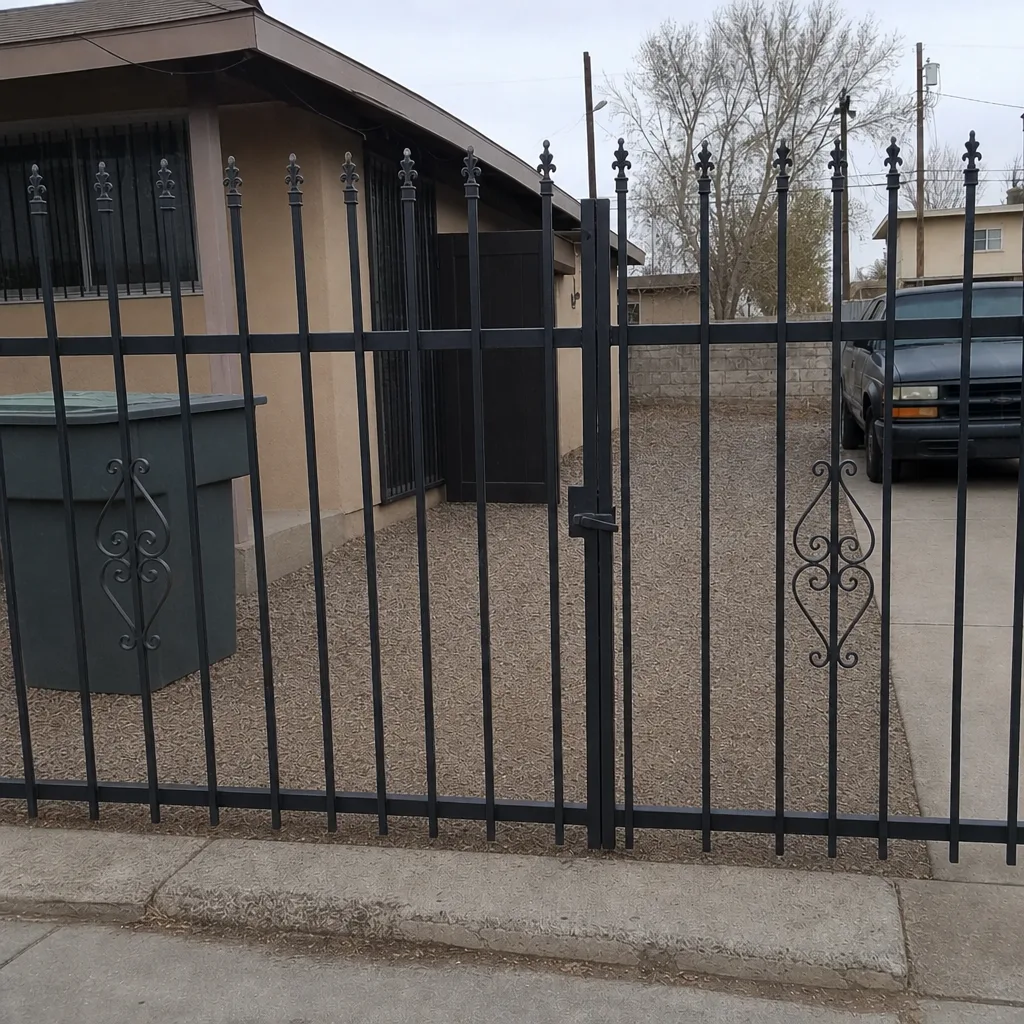
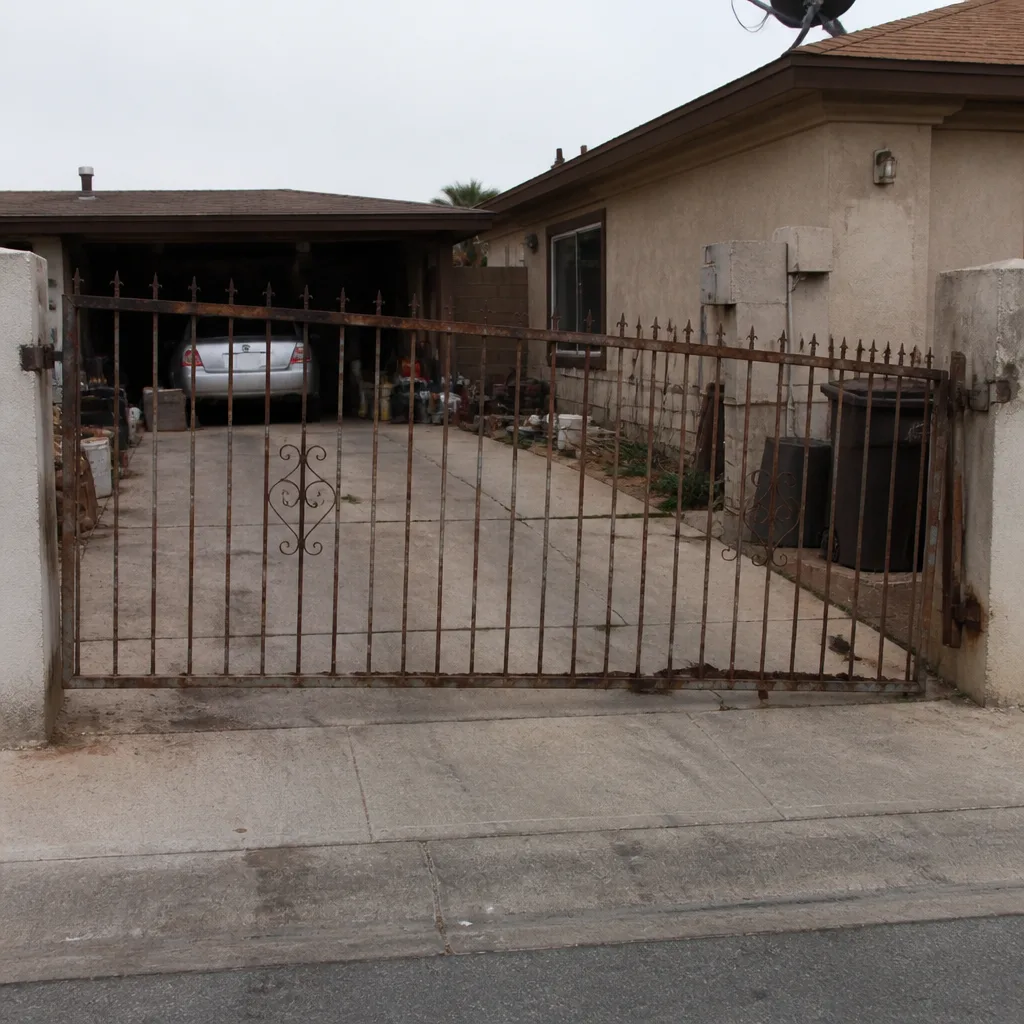
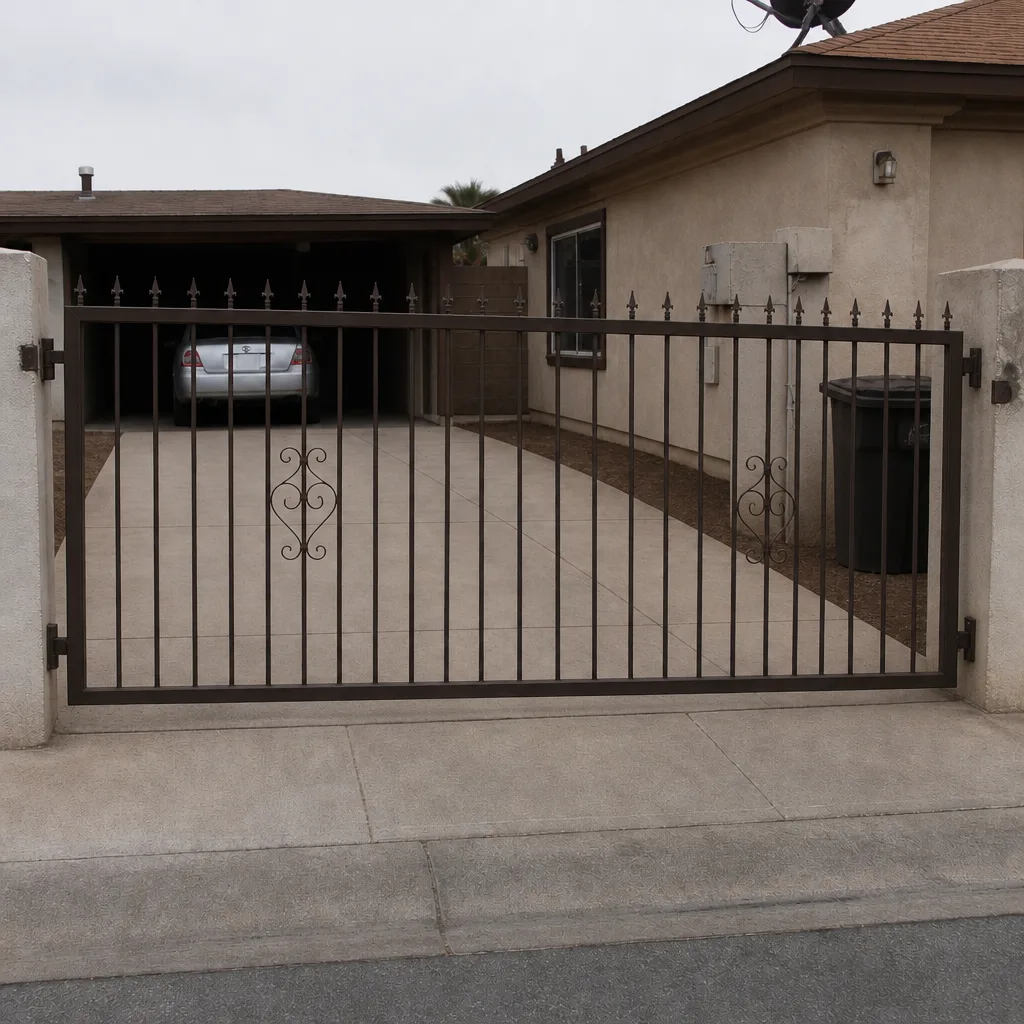
See the difference
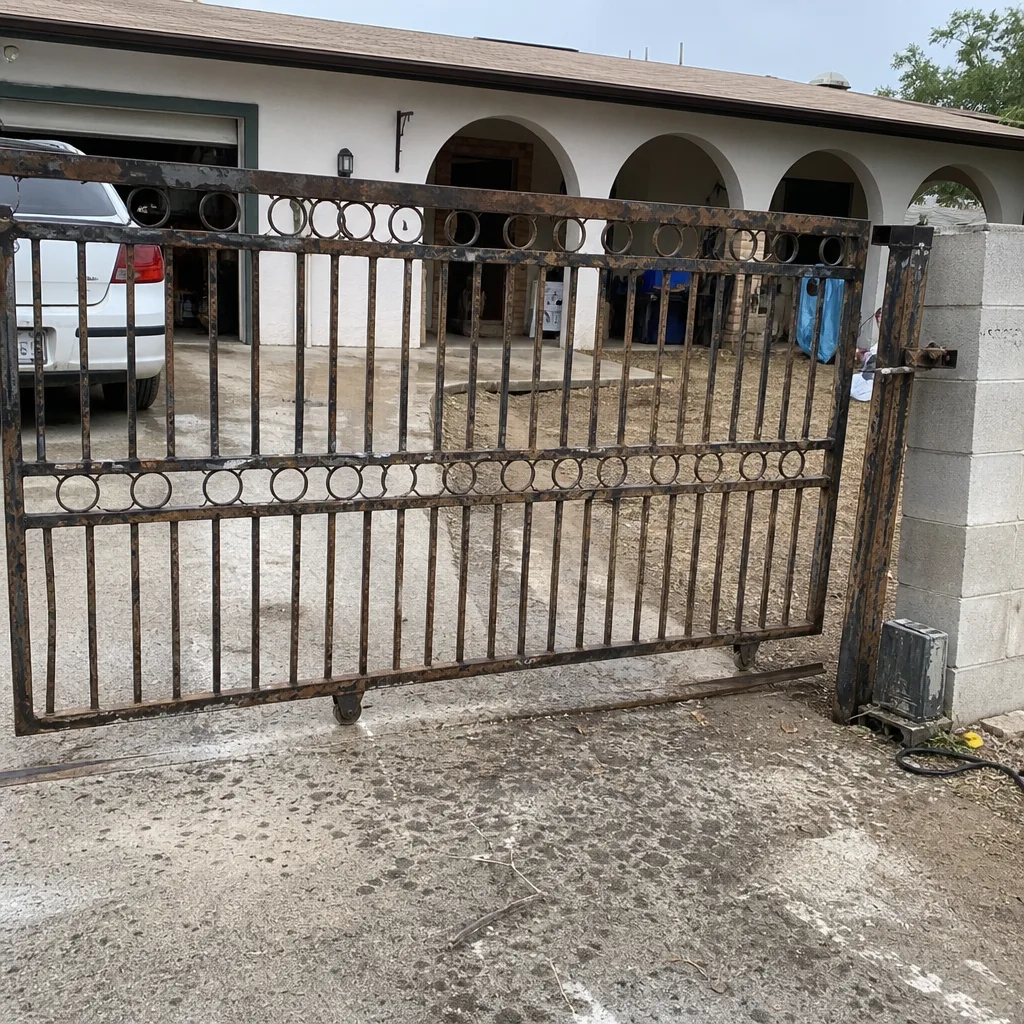 Before
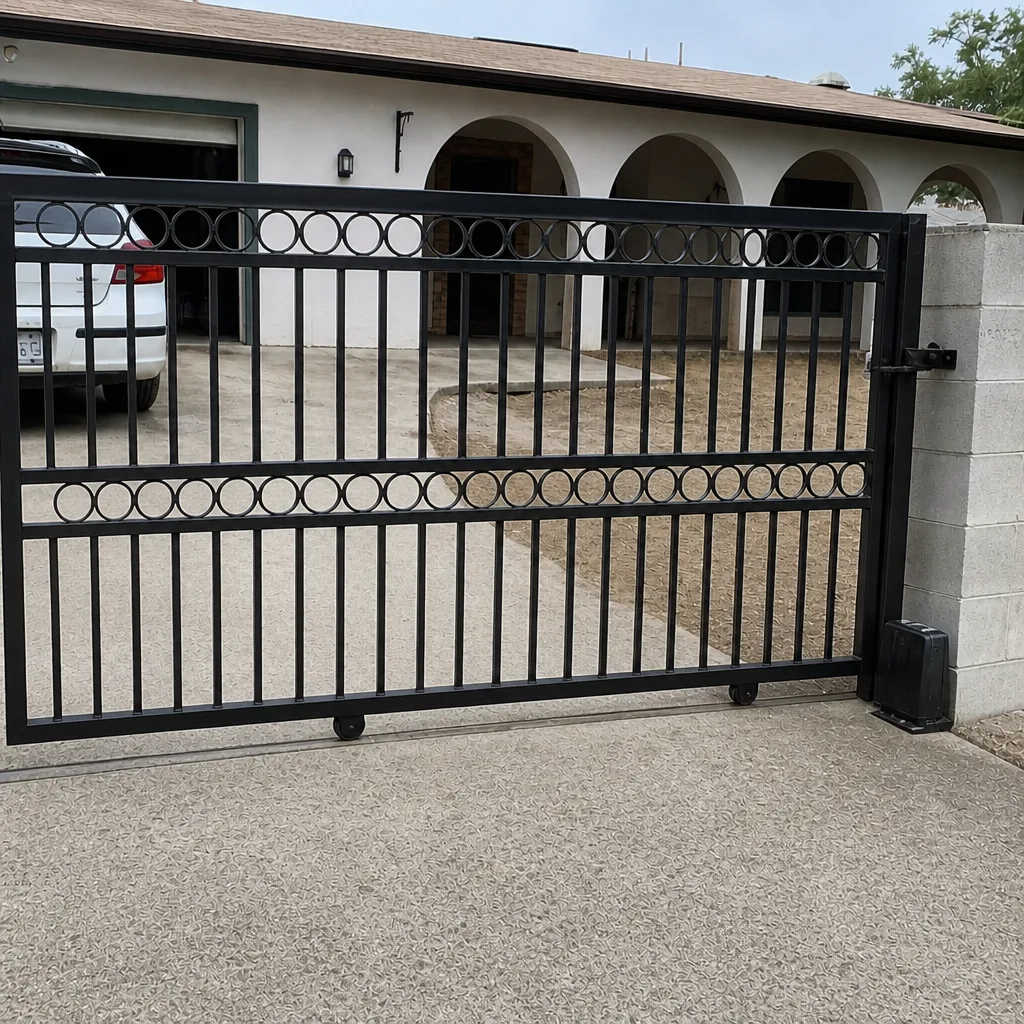 After
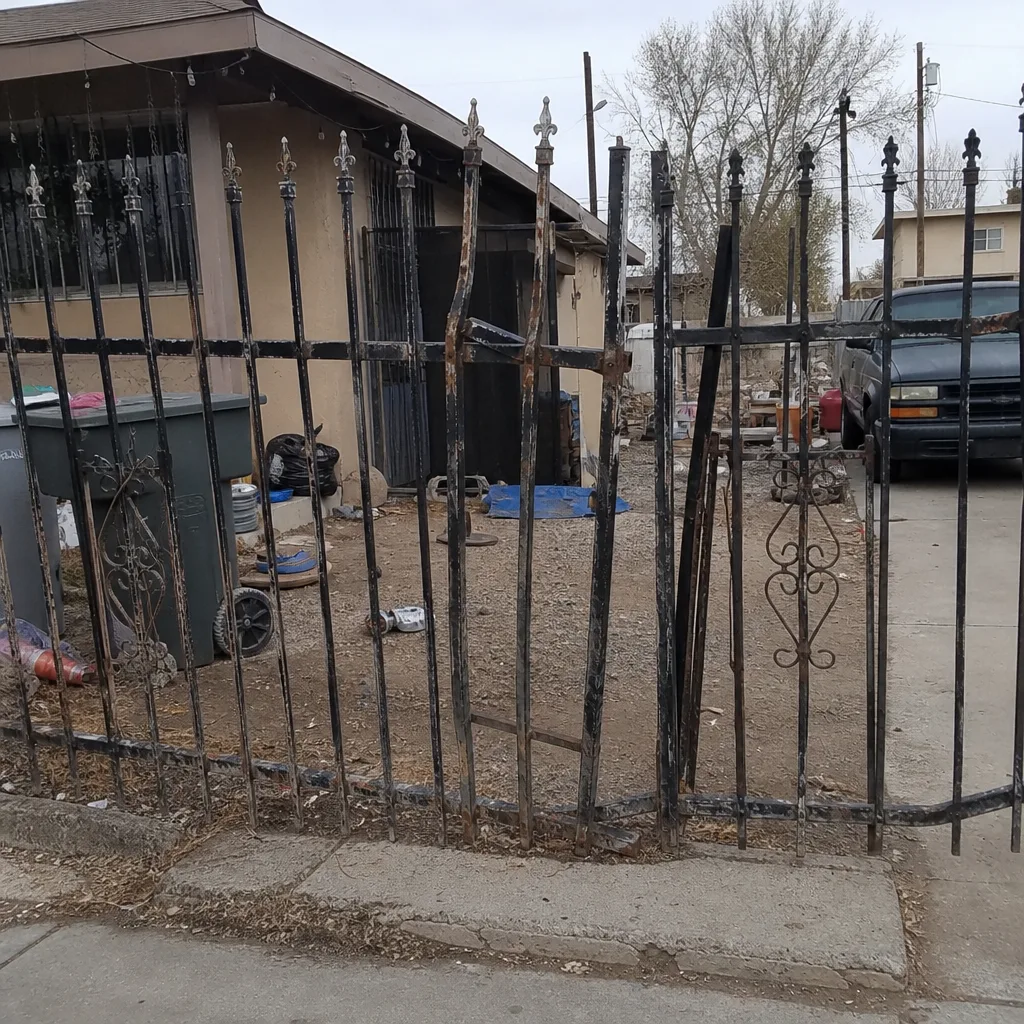 Before
 After
 Before
 After