
Last updated November 17, 2026
 Wrought iron
 Wood & steel frame
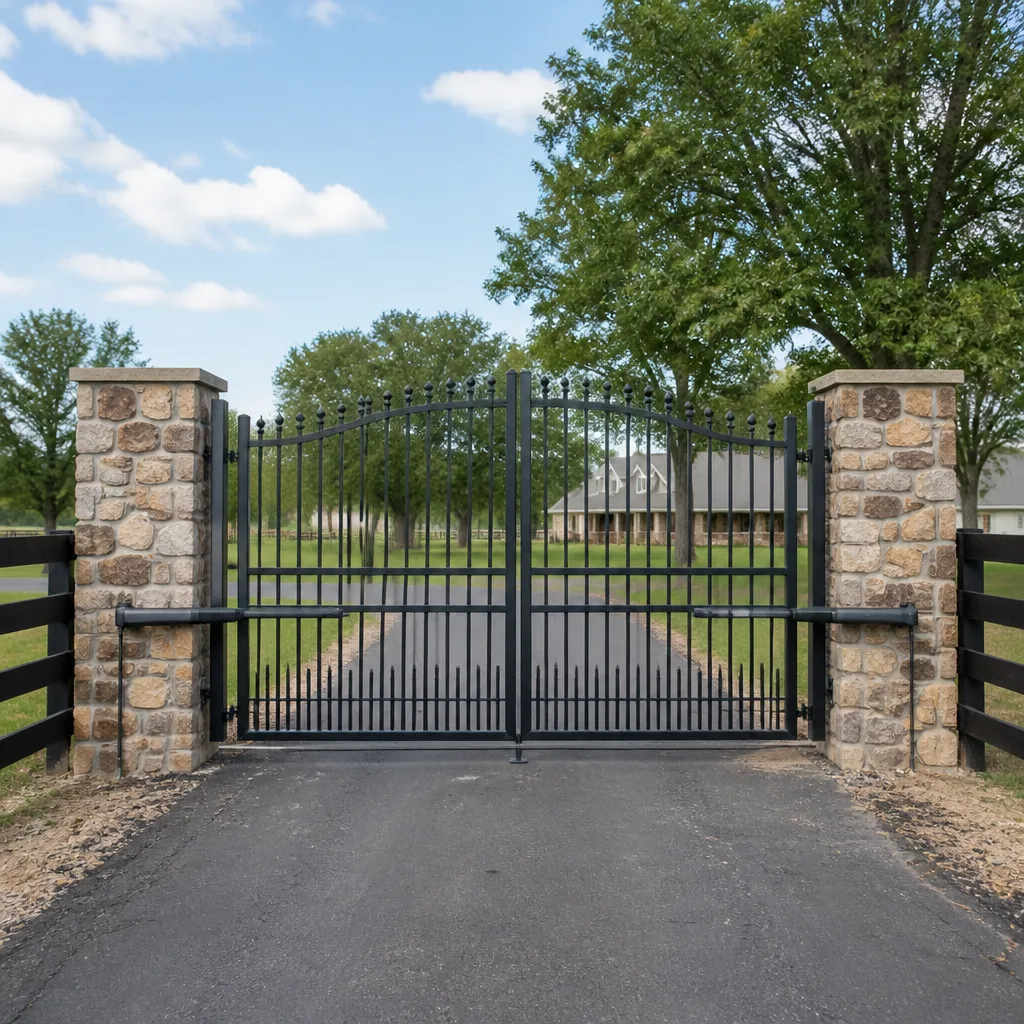 Farm & ranch
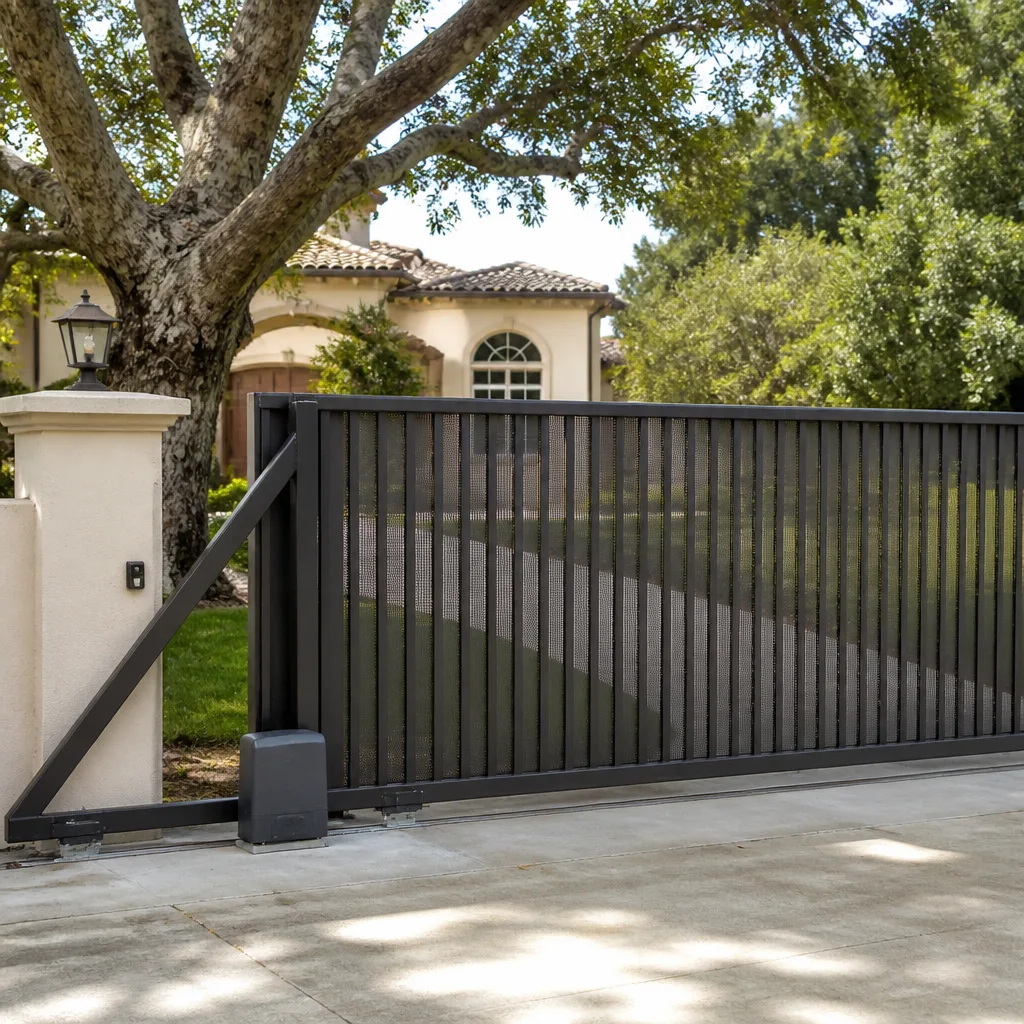 Sliding driveway gates
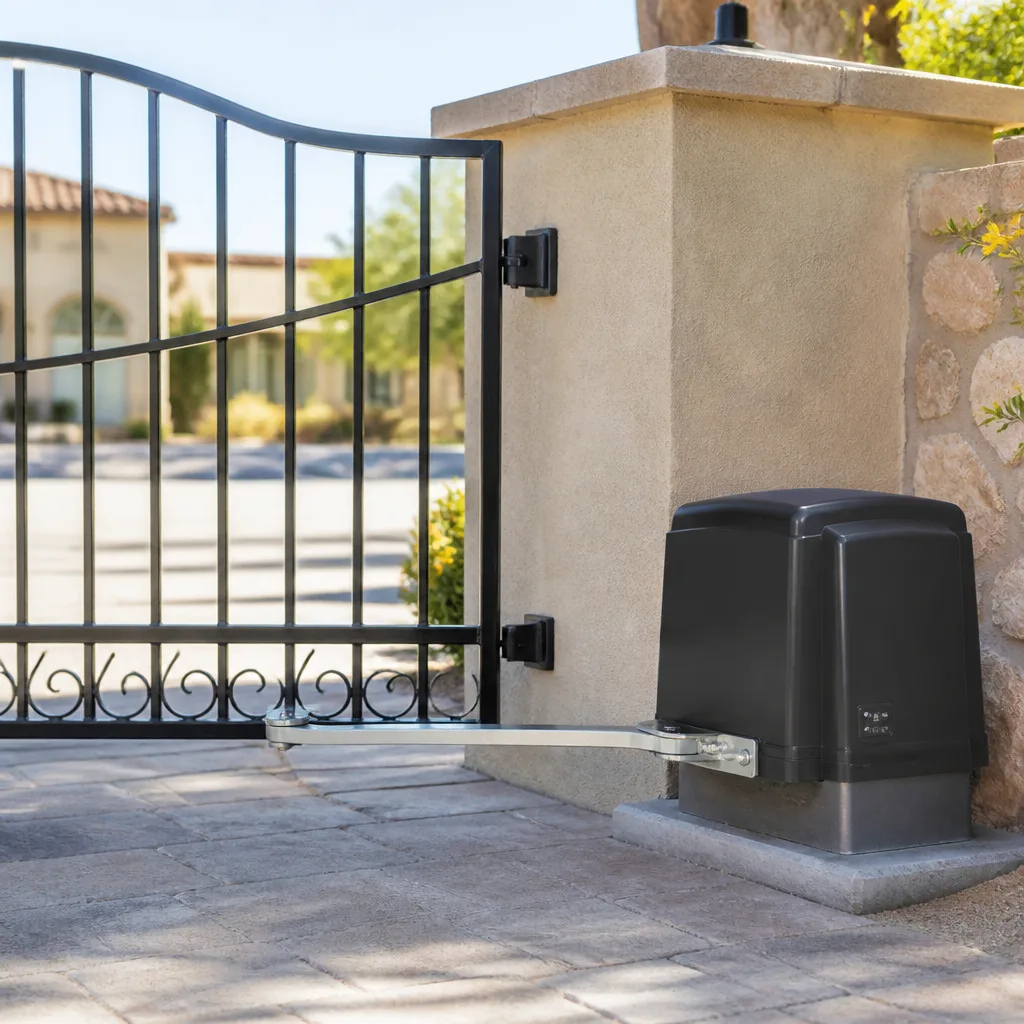 LiftMaster operators
Free on-site gate assessment - hinges, posts, and your LiftMaster or Nice gate operator checked before anything is quoted
The assessment is free and the quote is the invoice.
Get your free estimateGate Repair Maintenance Schedule: What to Do and When
Summer in North Las Vegas runs gate motors harder than almost any climate in the country. A 115-degree July afternoon pushes an operator past the duty-cycle rating it was engineered for, and it keeps running past it for three solid months. By September, most homeowners have no idea their motor has been cooking since June, or that the grease on their roller chain turned to varnish back in July. This guide gives you a maintenance calendar built for this desert, not copied from a national home-improvement site. You’ll learn what to check each season, which lubricants survive 110-degree heat, how to test battery backup before the cells degrade, and what to write down so a repair tech gets a real history instead of a shrug.
Quick Answer
Run a full gate inspection four times a year in North Las Vegas: in March before the spring winds, in May before peak heat, in August before the monsoon push, and in November before the first freeze. Between those checkpoints, lubricate the roller chain and hinges monthly, test the safety sensors weekly, and load-test the battery backup twice a year. The jobs change with the season because the weather does, and a schedule that ignores that is worse than no schedule at all.
Styles & brands we work with
- Wrought iron
- Wood & steel frame
- Farm & ranch
- Sliding driveway gates
- LiftMaster operators
Table of Contents
- Why a North Las Vegas Gate Needs Its Own Maintenance Calendar
- The March Checkpoint: Pre-Wind-Season Inspection
- The May Checkpoint: Getting Ready for Peak Heat
- The August Checkpoint: Monsoon and Dust-Storm Prep
- The November Checkpoint: Winter Freeze and Cold-Morning Checks
- Which Lubricants Survive 110-Degree Heat (and Which Turn to Varnish)
- How to Test Battery Backup Before Summer Degrades the Cells
- What to Log Every Time You Do Maintenance
Why a North Las Vegas Gate Needs Its Own Maintenance Calendar
Most maintenance advice you’ll find online was written for a mild climate with four even seasons and moderate humidity. That advice falls apart here. North Las Vegas throws a specific sequence of stress at a gate every year: spring gusts that gust past 40 mph through the open desert corridors, a summer that parks above 105 degrees for weeks, monsoon storms that arrive with wind and blowing dust, and winter mornings cold enough to stiffen grease and shrink metal.
Each of those events attacks a different part of the gate. Wind loads the hinge posts and the latch alignment. Heat destroys rubber seals, cooks motor windings, and dries out every grease fitting on the property. Monsoon dust works its way into the roller chain and the operator housing. Freeze mornings reveal every clearance that was set too tight in the summer. If you’re running the same checklist in March that you ran in October, you’re servicing the wrong parts of the gate.
We’ve watched this play out across the valley. In a neighborhood like Aliante, where gates sit on open lots with little tree cover, the wind exposure is brutal and the hinge posts take a beating every spring. Closer in around Rancho, older gates with original hardware show the heat damage first because the seals have already been through a decade of summers. The schedule has to match the exposure, and in North Las Vegas the exposure changes month to month.
This is where a repair-first approach pays off. Catching a worn hinge pin in March is a five-minute fix. Catching it in July, after the post has worked loose and the weld has cracked, is a weld job. Gatewood Fence & Gate North Las Vegas home exists for exactly that reason: fix the small thing before the climate turns it into a big one.
The March Checkpoint: Pre-Wind-Season Inspection
March is the most important maintenance month on the North Las Vegas calendar. The spring wind arrives whether you’re ready or not, and it finds every loose fastener, every hairline weld crack, and every hinge pin that’s been quietly wearing since last fall. Do this inspection before the gusts start, not after the gate has blown off its track.
Work through it in this order:
- Check every hinge and hinge post. Grab the gate at the latch end and lift. Any vertical play means a worn hinge pin or a hinge that’s pulling out of the post. A gate sags in the hinge post, not in the middle, and that’s where the inspection starts.
- Inspect the welds. Look at every weld joint on the frame, especially where the hinges attach and where the vertical pickets meet the rails. Rust streaks are a telltale sign of a crack underneath. This is the inspection that decides whether you need a mobile weld repair or just a bolt tightening.
- Test the latch alignment. Wind pushes a gate out of square. Close it and look at the gap at the latch. If it’s tight at the top and gaping at the bottom, the post has shifted and needs attention before the wind makes it worse.
- Check the post footings. Walk the fence line and push on each post. A post that moves in the ground is a post that will fail in the first big gust.
- Clear the track or the swing arc. Blown debris, gravel, and tumbleweeds collect over winter. Clear it now so the gate isn’t fighting an obstruction all spring.
This is also the checkpoint where we recommend a full look at the operator’s mounting hardware. Wind torque works on a motor mount the same way it works on a hinge, and a loose mount will chew through a gearbox fast. If something on the operator looks off in March, you have time to schedule the fix before the season turns. That’s the smarter path than waiting for a breakdown and calling for emergency service. A gate repair in North Las Vegas that’s scheduled in calm weather beats one that’s forced in a windstorm.
The May Checkpoint: Getting Ready for Peak Heat
May is the last comfortable window before the heat locks in. Everything you do this month is about helping the motor and the moving parts survive three months of 105 to 115-degree days. Summer runs a North Las Vegas gate motor harder than almost any climate in the country, and by September most homeowners have no idea their operator has been running hot for months.
The May list:
- Lubricate the roller chain with a high-temp chain lube, not a general-purpose oil. The right product stays put above 110 degrees. The wrong one cooks off by July and leaves the chain running dry.
- Grease every fitting on the hinges, the roller carriers, and the operator. Every grease fitting on the property gets attention now, before the heat dries them out.
- Check the operator’s duty cycle. Look up the rated duty cycle for your motor. If your gate cycles more than that on a hot day, the operator is working beyond spec, and summer is when that catches up. On a Linear or a Viking unit the duty cycle is usually printed right on the control board housing.
- Clear the vents and check thermal protection. A motor that can’t shed heat will trip its thermal cutout and stop mid-cycle. Make sure the housing vents are clear of dust and lint.
- Test the safety edges and photo-eyes. Heat and dust degrade optics. A photo-eye that worked all winter can go blind in the summer glare. Test both the closing safety edge and the reversing sensors with a real obstruction, not just your hand.
- Load-test the battery backup. Do it now, while the cells are still healthy. Instructions are in a section below.
If your operator is already showing signs of struggling – stopping halfway, humming without moving, or tripping the breaker – May is the time to have it looked at, not August. A gate motor and opener in North Las Vegas that’s overheating in summer is telling you something, and it’s cheaper to hear it now.
The August Checkpoint: Monsoon and Dust-Storm Prep
The North Las Vegas monsoon season brings wind, blowing dust, and the occasional flash downpour. Dust is the quiet destroyer. It works into the roller chain, the operator gearing, and the photo-eye lenses, and it does it fast. The August checkpoint is about cleaning, re-lubricating, and confirming nothing has come loose during the summer heat.
Do these tasks in order:
- Blow out the operator housing. Compressed air, low pressure, from the vent side. Get the accumulated dust out before it becomes grinding paste in the gearbox.
- Deep-clean the roller chain and re-lube. The dust that settled in July has now mixed with whatever lubricant survived. Clean it off and start fresh with your high-temp lube.
- Wipe the photo-eye lenses. Dust fogs them much faster than most people expect. Clean lenses prevent false reversals and phantom stops.
- Re-torque every accessible bolt. Summer heat expands and contracts metal. A bolt that was tight in May can be loose in August. Grab your torque wrench and hit the operator mounts, the hinge plates, and the frame bolts.
- Check the gate’s swing path for monsoon debris. The same wind that blows tumbleweeds across the road will pack them against the gate or into the track. Clear them before they stall the motor.
- Confirm the drain path. If your gate is on a low spot or a driveway that pools, confirm water isn’t standing against the post footing after a storm.
This is the checkpoint where the difference between well-maintained and neglected shows up in the motor. A Gatewood customer told us once that his gate stopped dead in a dust storm. The photo-eyes had been fogged with dust for weeks and one finally reversed on a false signal. Ten minutes of cleaning in August would have prevented a service call in September. That’s the whole point of the schedule.
One more thing about August: this is when rubber seals are at their worst. The weatherstripping on the gate, the seals on the operator housing, and the rubber bumpers all cook through the summer and turn brittle. Touch them in August and in November and you’ll feel the difference. Replace what’s cracked before the winter cold makes it shatter.
The November Checkpoint: Winter Freeze and Cold-Morning Checks
North Las Vegas winters are mild by national standards, but the valley still sees freezing mornings that matter to a gate. Cold shrinks metal, stiffens grease, and stiffens the rubber seals that had already taken a beating over summer. The November checkpoint is about clearing the way for a cold start on the first frosty morning.
What to do:
- Switch to a cold-weather grease on the hinges and the roller chain. Warm-weather lube that’s perfect in August can stiffen below freezing and put extra load on the motor on a cold first cycle.
- Inspect the rubber seals and bumpers and replace anything that’s cracked from the summer. Seal failure in the fall is a spring failure you haven’t seen yet.
- Check the gate’s clearance on all sides. Cold contracts metal, but a gate that was set too tight in summer can still bind when the framing shrinks. Open and close the gate by hand when it’s cold and feel for any drag.
- Look for cracks in the post footing. A freeze-thaw cycle opens cracks that summer heat made but didn’t reveal. A footing crack in December becomes a leaning post in March.
- Test the operator through a full open and close cycle on a cold morning, ideally before the sun is up. That’s when the grease is at its stiffest and any weakness in the motor will show. If the motor labors on a cold start, it will likely fail on the next cold start too.
- Confirm the battery backup held up over summer. Run the load test again. A battery that was fine in May will often show its age after a summer of heat.
If your gate has a DoorKing or Ghost Controls operator, pay attention to the control board’s fault memory. These boards log the events that happened in the last cycle or two, and a cold morning is where you’ll see the codes that tell you what’s coming. We’ve found that reading the fault log in November catches more problems than waiting for a service call in January.
Which Lubricants Survive 110-Degree Heat (and Which Turn to Varnish)
The single most common maintenance mistake we see on North Las Vegas gates is the wrong lubricant. A homeowner buys a general-purpose product off the shelf, sprays it down the chain, and by July the chain is running dry. What happened is the base oil boiled off and left a hard varnish residue behind, and that varnish is worse than bare metal because it traps grit and holds it against the rollers.
Here’s what survives and what doesn’t:
- High-temperature chain lube (survives): Look for a synthetic product rated for at least 250 degrees. These hold their base oil far above what a North Las Vegas gate will ever see. This is the default for roller chains.
- White lithium grease (mixed): Fine for hinges and pivot points, but it separates and can dry to a chalky film in extreme heat. It’s not the best choice for the chain itself.
- Silicone spray (survives, but not for load-bearing parts): Good for rubber seals and photo-eye lens housings. Useless as a chain lube because it doesn’t carry load.
- General-purpose WD-40 (turns to varnish): It’s a solvent, not a lubricant. It’ll displace water and it’ll look shiny for a day, but it leaves nothing behind that survives the summer.
- Motor oil (turns to varnish): It runs off hot metal. It ends up on your driveway and not on the chain.
- Old engine grease (turns to varnish): Cheap, but it hardens and traps dust, and that’s the worst outcome on a dusty monsoon day.
The safe rule: match the product to the temperature it will see. If the product doesn’t say what temperature it’s rated for, it probably isn’t rated for anything hotter than a garage. In North Las Vegas, every lube point on your gate is rated for a summer that most of the country never sees.
How to Test Battery Backup Before Summer Degrades the Cells
Battery backup is the part of the gate that fails silently. The gate runs fine on mains power, nobody notices the battery is dead, and then a power outage hits and the gate won’t open. Worse, a battery that’s been degraded by summer heat can drag the whole charging circuit down with it. Test it twice a year, in May before the heat and in November after it.
Here’s how we recommend you test, in order:
- Find the battery compartment on the operator. It’s usually a slide-off cover or a small access panel. Do this with the gate closed and the power still on, so you can see the control board’s charge indicator.
- Note the resting voltage with a multimeter across the battery terminals. Let the system sit a few minutes after the last cycle. A healthy 12-volt battery should read somewhere near 12.6 to 12.8 volts at rest.
- Kill the mains power at the breaker – this is the important step, because a resting voltage means nothing under load. With the power off, run the gate through a full open and close cycle.
- Watch the voltage during the cycle. A healthy battery will hold above about 11.5 volts under load. If it drops toward 11 or below during the cycle, the battery is weak and needs replacement before it strands you.
- Look for heat damage while the compartment is open. A swollen or bulging battery case is a sign the summer heat has cooked the cells. It should be replaced regardless of voltage.
- Restore power and confirm the control board shows a charge. If the board doesn’t register that the battery is charging, the charger circuit itself needs attention.
That number – 11.5 volts under load – is the practical “good enough” test for a North Las Vegas gate. A resting voltage alone will fool you into thinking a tired battery is fine. Under load it isn’t. If you’re not comfortable with a multimeter, that’s fine; a repair tech can run the load test in a few minutes on a service call.
What to Log Every Time You Do Maintenance
The single best thing you can do for the long-term health of a gate is keep a log. It turns a mystery into a diagnostic history. When a repair tech shows up to a gate that’s misbehaving and you can hand over a record of every lubricant, every test, and every part you’ve touched, the diagnosis is faster and the repair is more precise. That’s good for the gate and good for your wallet.
What to write down each time:
- Date and what you did. “Lubricated chain with high-temp synthetic, checked hinge play, no issues.” Two lines is enough.
- Any part you noticed was wearing. Even if you didn’t fix it, note it. “Rear hinge pin has slight play” becomes a task for the next checkpoint.
- The battery test result. Resting voltage and load voltage. You’ll see the trend before the battery fails.
- The cycle count if your operator displays it. On a Linear or Viking control, it’s often on the LED display. Note it so you can see how hard the motor is working.
- Any fault codes. Write the code and what the gate was doing when it happened. Fault codes are the operator’s way of telling you what it doesn’t like.
- What you changed on the control board or the operator. A limit switch adjustment, a photo-eye alignment, a part swap. Note it.
Keep the log in a plastic bag zip-tied inside the operator housing or taped inside the gate post, in the same place every time. If you’re the only one who maintains the gate, the log is for you. If you’re ever going to sell the property, that log is a real asset. A buyer likes to see the gate has a history.
If a repair tech ever asks “when did you last service this gate,” the answer shouldn’t be a shrug. It should be a page of notes. That’s what gate installation in North Las Vegas looks like when the installer sets it up for the long run: the maintenance log is part of the handoff, not an afterthought.
Common Mistakes to Avoid
- Running the same checklist all year. The wind-season tasks and the monsoon tasks are different jobs. A single generic spring-cleaning list leaves the summer operator exposure untouched, and that’s the failure most North Las Vegas gates actually have.
- Using WD-40 as a chain lube. It looks clean and it feels slippery for a day. By July it’s a varnish trap for grit, and the chain wears faster than if you’d left it alone.
- Testing the battery at rest only. A rested battery can read 12.6 volts and still be dead under load. The load test is the test. Skipping it is how people discover their backup doesn’t work during a power outage.
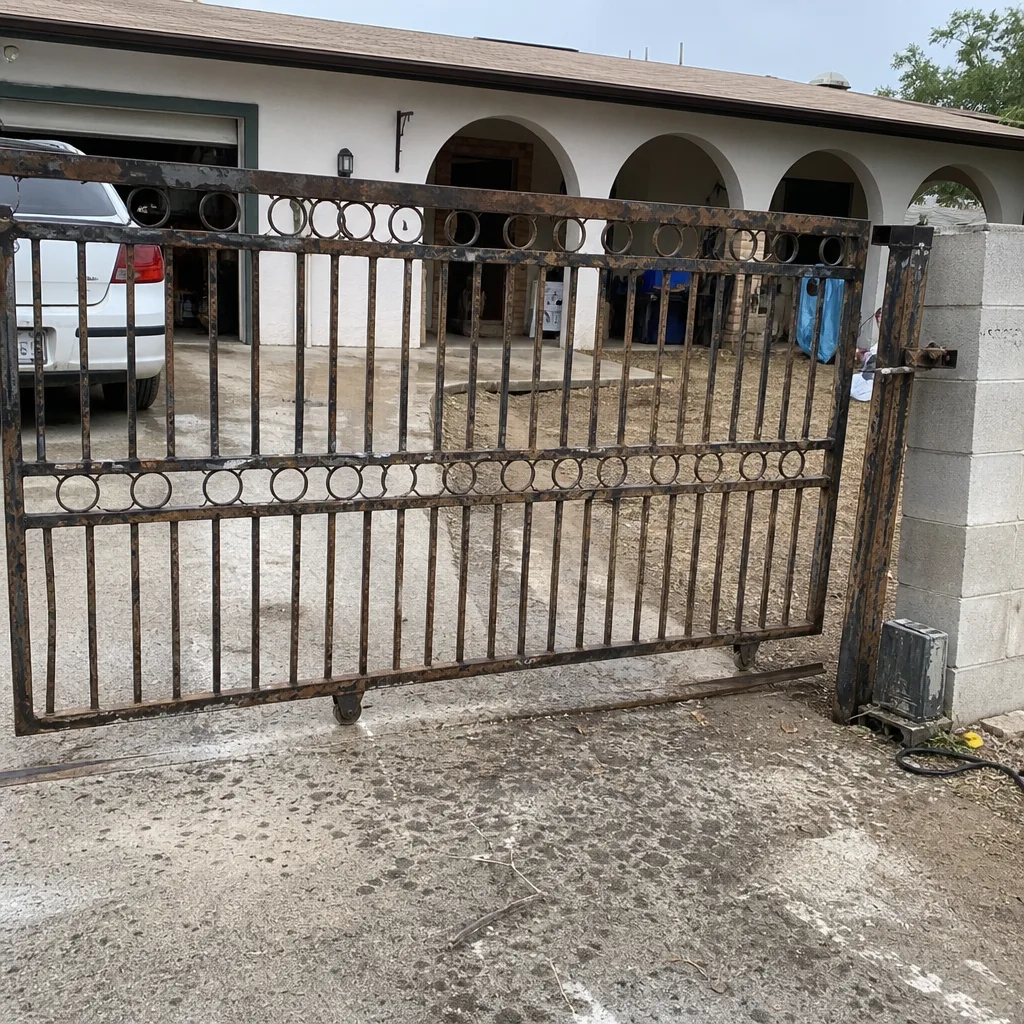
- Fixing the panel without the post. We’ve seen dozens of gates in North Las Vegas where somebody bolted a new panel to an old, loose hinge post. Fix the panel without the post and you’ll fix it twice. The post is the foundation, and it has to come first.
- Waiting for a breakdown to schedule maintenance. A gate that trips the breaker on a 110-degree afternoon has already been telling you something for weeks. A scheduled check is cheaper than an emergency call.
- Ignoring the operator’s fault log. Modern operators log their own problems. Ignoring those codes doesn’t make them go away, and it wastes the cheapest diagnostic tool the gate has.
- Skipping the post-footing inspection. A footing that has cracked over winter freeze-thaw is the root cause behind half the gate failures we see in North Las Vegas the following spring. That crack is invisible until it opens up into a lean.
See the difference
 Before
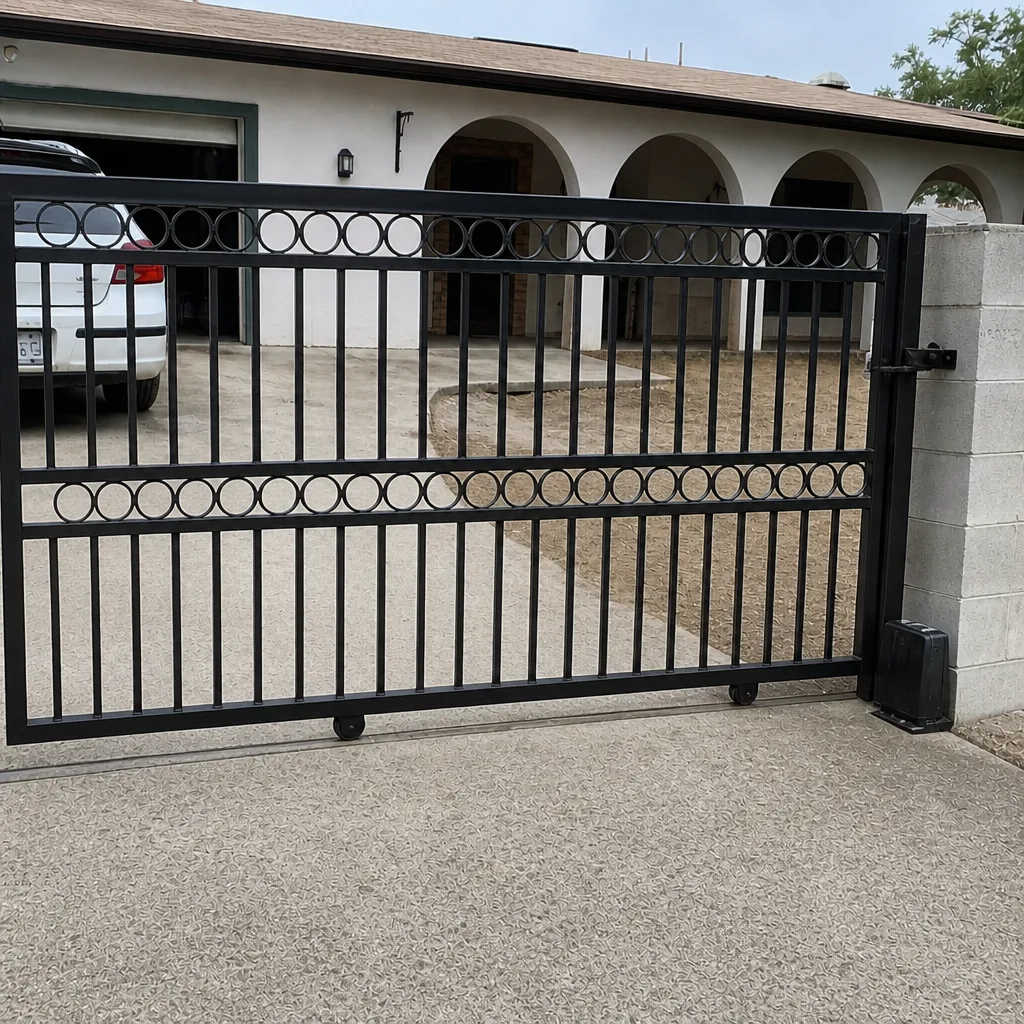 After
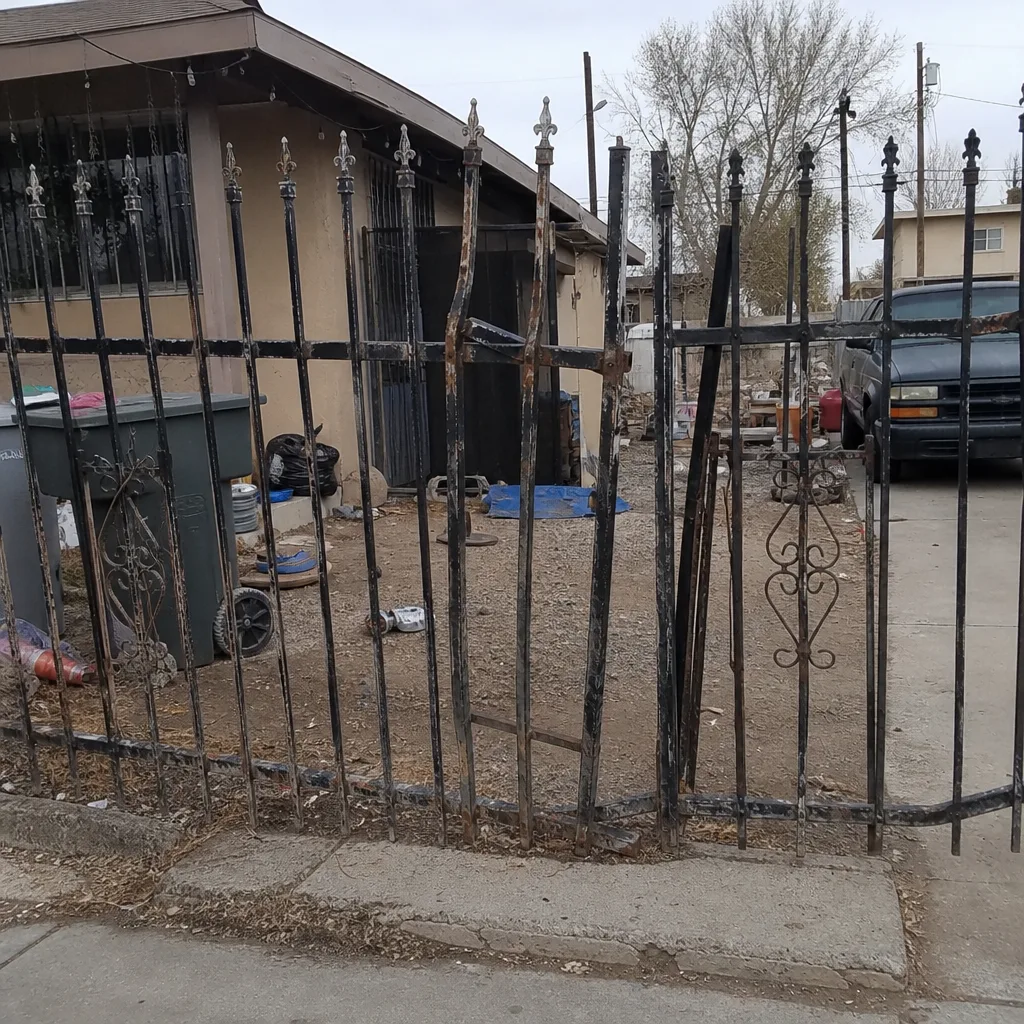 Before
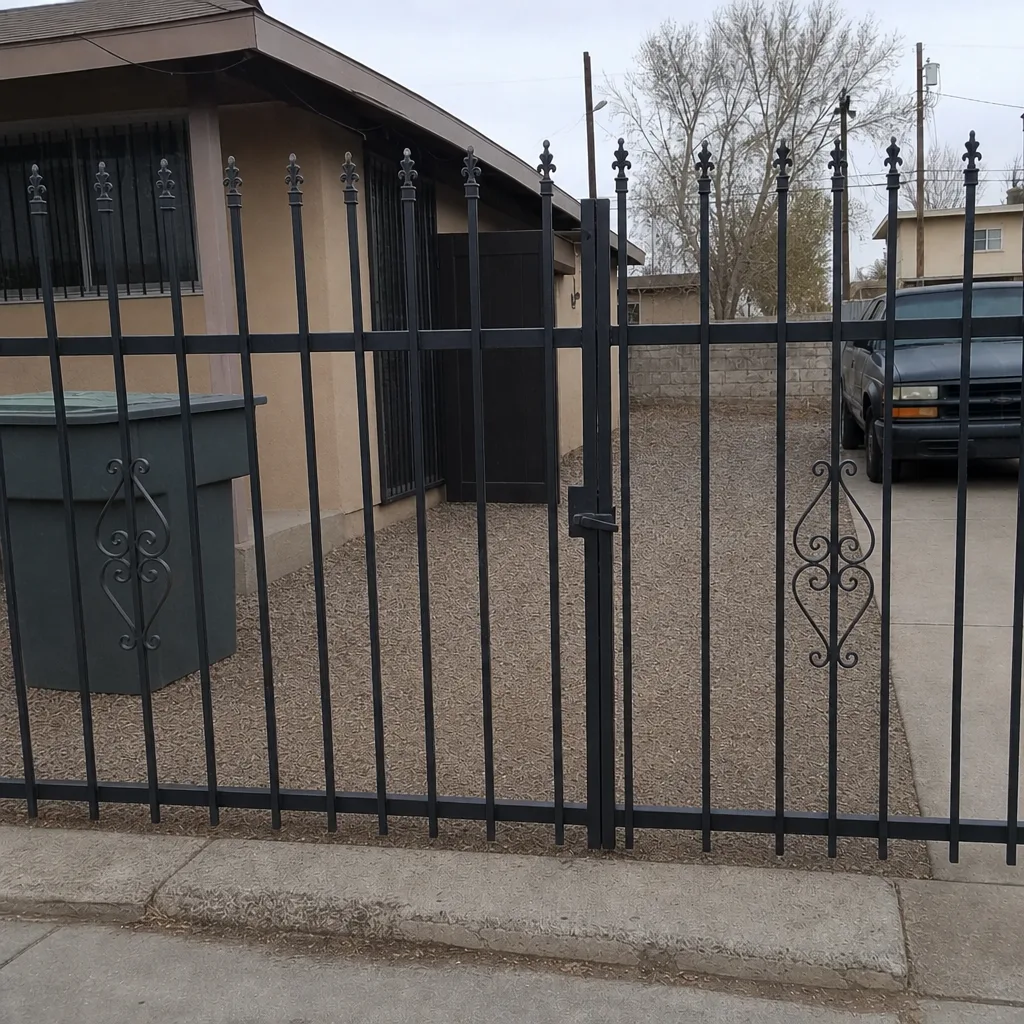 After
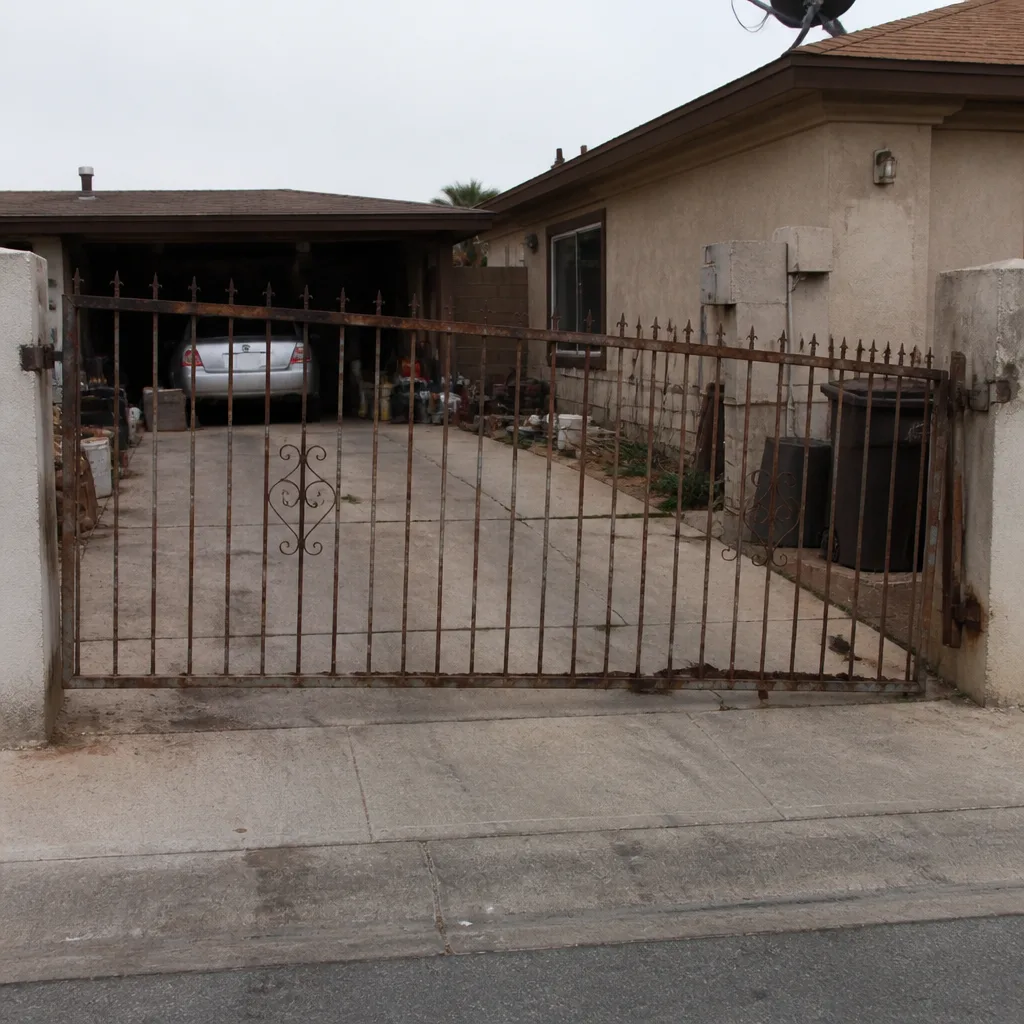 Before
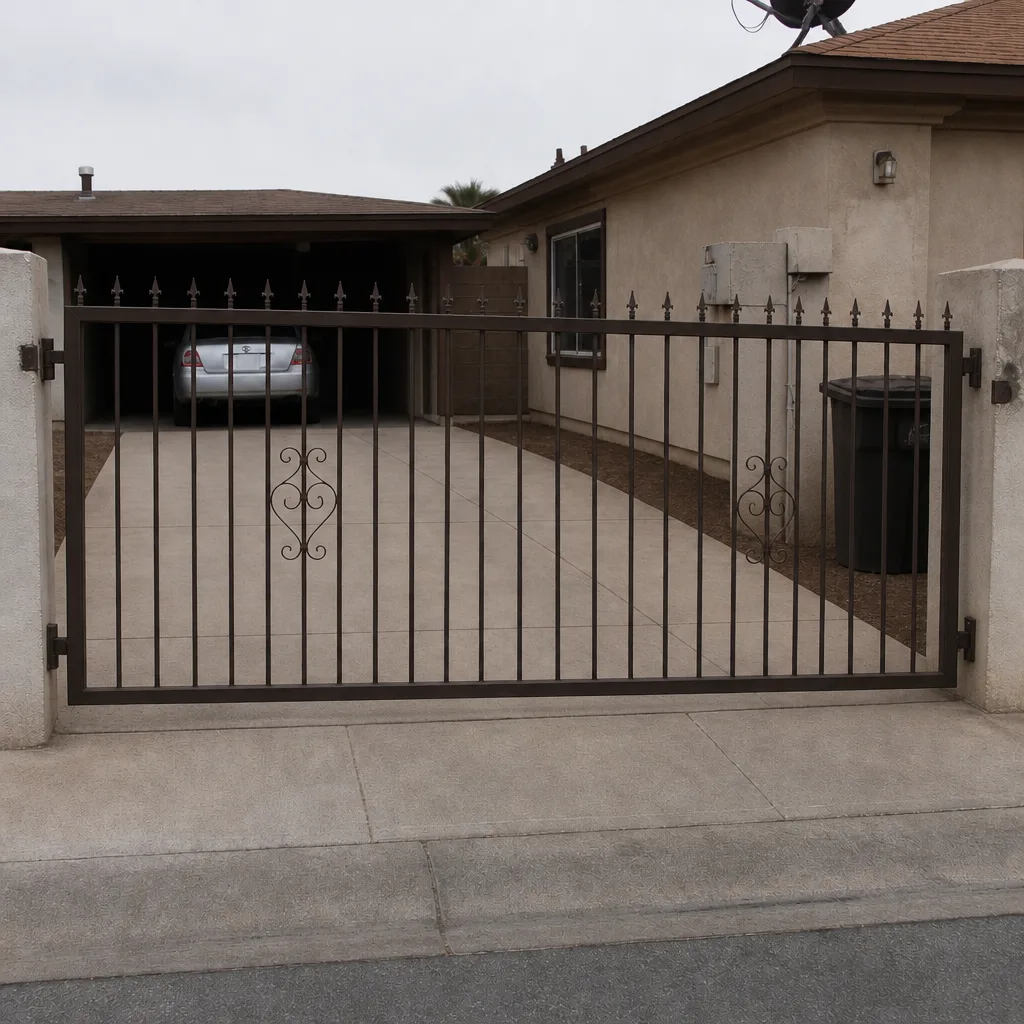 After
When to Call a Professional
Some maintenance is a homeowner job: lubricating the chain, wiping the photo-eyes, writing in the log. Other jobs have a line you don’t want to cross. Call a professional when you see a crack or a rust line at a weld joint, when the gate has developed enough play at the hinge to sag, when the operator trips the breaker or stops mid-cycle, or when the post footing has moved. Gate springs, the operator’s internal wiring, and any on-site welding work are all genuine safety items – a failing spring or a mis-tensioned torsion rod can hurt someone badly, and the heat in your electrical panel is not a place for a homeowner with a screwdriver. A trained tech has the tools and the experience to see what’s actually failed and what needs to be done.
Gatewood Fence & Gate North Las Vegas offers free estimates in North Las Vegas – call (844) 761-9351. Our technicians have up to 25 years of experience, and every repair carries our 90-Day Done Right Promise in writing. If it isn’t done right, we come back and we make it right.
Frequently Asked Questions
Four full checkpoints a year – March, May, August, and November – with monthly lubrication and weekly safety-sensor testing in between. The four seasonal checkpoints match the four North Las Vegas weather events that stress a gate: spring wind, peak heat, monsoon dust, and winter freeze. Call (844) 761-9351 for a free estimate on a professional inspection.
Plan for roughly 20 degrees on the cold side and above 115 degrees on the hot side. It’s the hot side that matters most, because an operator pushing past its duty-cycle rating in July runs hotter than its manufacturer designed for. If your motor is running hot and stopping mid-cycle, that’s a signal to get it looked at before summer.
A high-temperature synthetic chain lube rated well above 110 degrees. General-purpose oil, WD-40, and motor oil all fail in North Las Vegas heat, and the varnish residue they leave behind is worse for the chain than no lube at all. Call us if you want the specific product we recommend, and we’ll tell you.
Test it under load, not at rest. Kill the mains power, run a full open and close cycle, and watch the voltage. A healthy battery holds above about 11.5 volts during the cycle; if it drops lower, replace it. Do this in May and again in November, because summer degrades the cells and you’ll only notice during an outage.
The routine tasks – lubrication, photo-eye cleaning, battery testing, logging – are homeowner jobs. The repairs are not: hinge welding, post repair, spring work, and anything electrical inside the operator should be handled by a trained tech. Any physical repair carries risk you don’t want to take on. Call (844) 761-9351 and we’ll tell you honestly which is which.
We repair every part of the gate and operator: hinge welding on site, hinge post repair, spring and latch work, motor and control board service, and access control. We service nine major brands including Linear, Viking, Ghost Controls, and DoorKing. Call (844) 761-9351 for a free estimate.
The Bottom Line
The right maintenance schedule for a North Las Vegas gate follows the weather, not a generic calendar. March is wind prep, May is heat prep, August is monsoon prep, and November is freeze prep. Lubricate with a high-temp product monthly, load-test the battery twice a year, and log every task. Catch the hinge pin and the footing crack early, before the climate turns a five-minute fix into a weld job. If you ever want a professional eye on it, or you’ve found a problem you don’t want to handle, Gatewood Fence & Gate North Las Vegas is here with free estimates and upfront pricing. Call (844) 761-9351 and we’ll walk it with you. A live person answers, 24/7, and every repair carries the 90-Day Done Right Promise in writing.
Written by the team at Gatewood Fence & Gate North Las Vegas.