
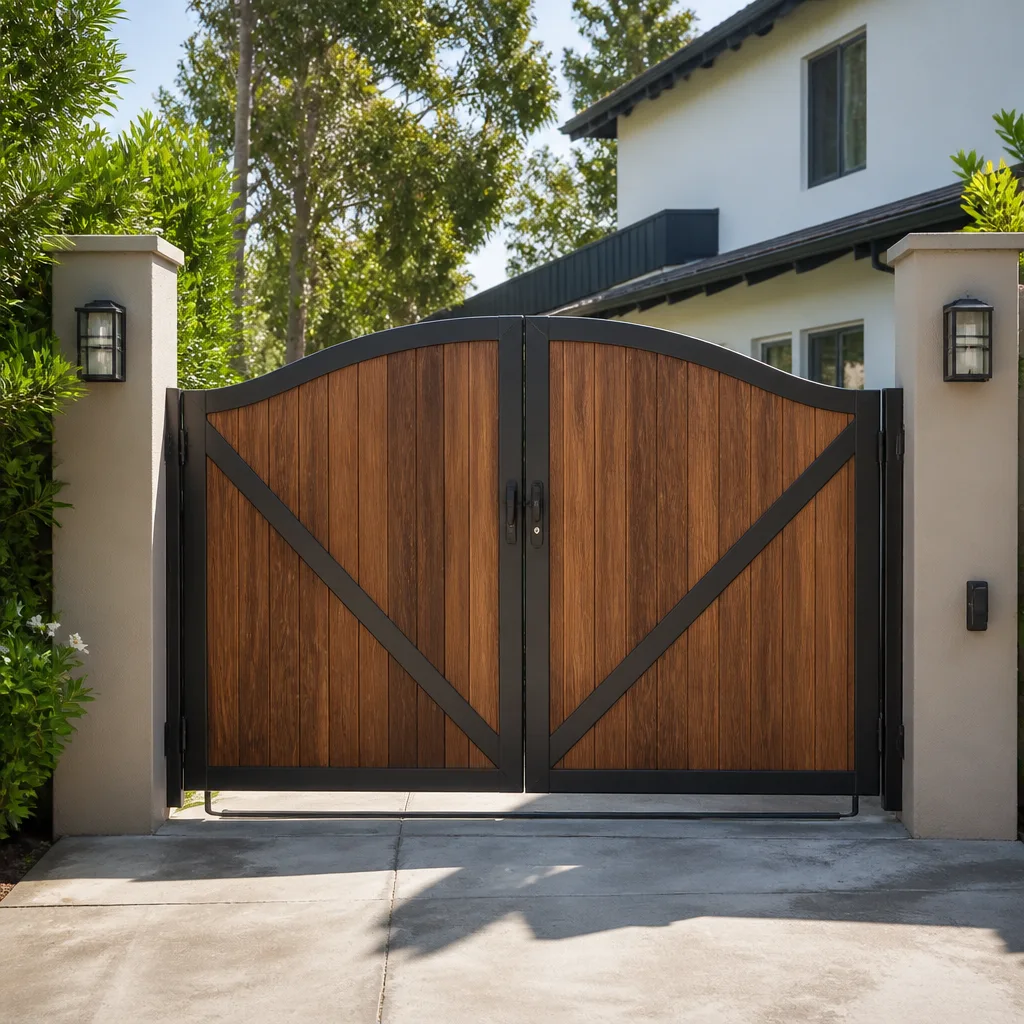
 Wood & steel frame
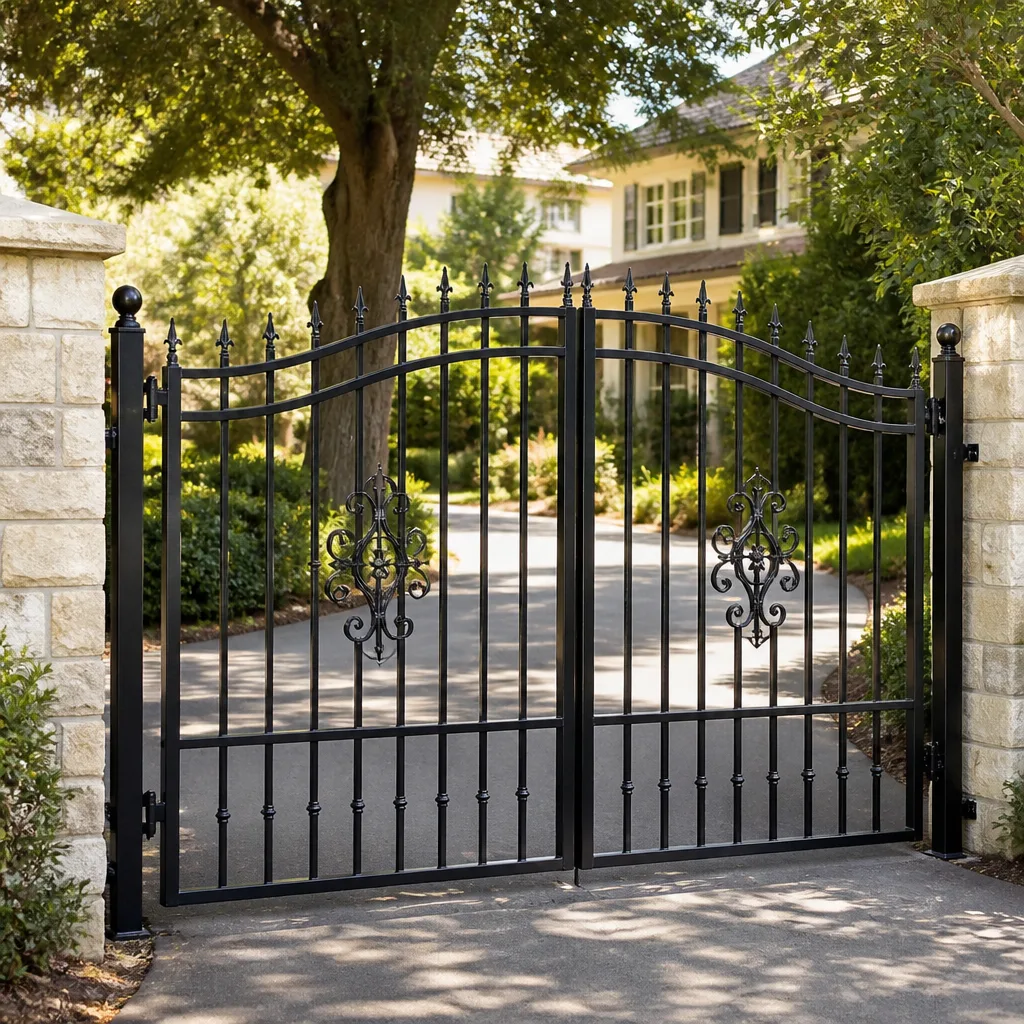 Wrought iron
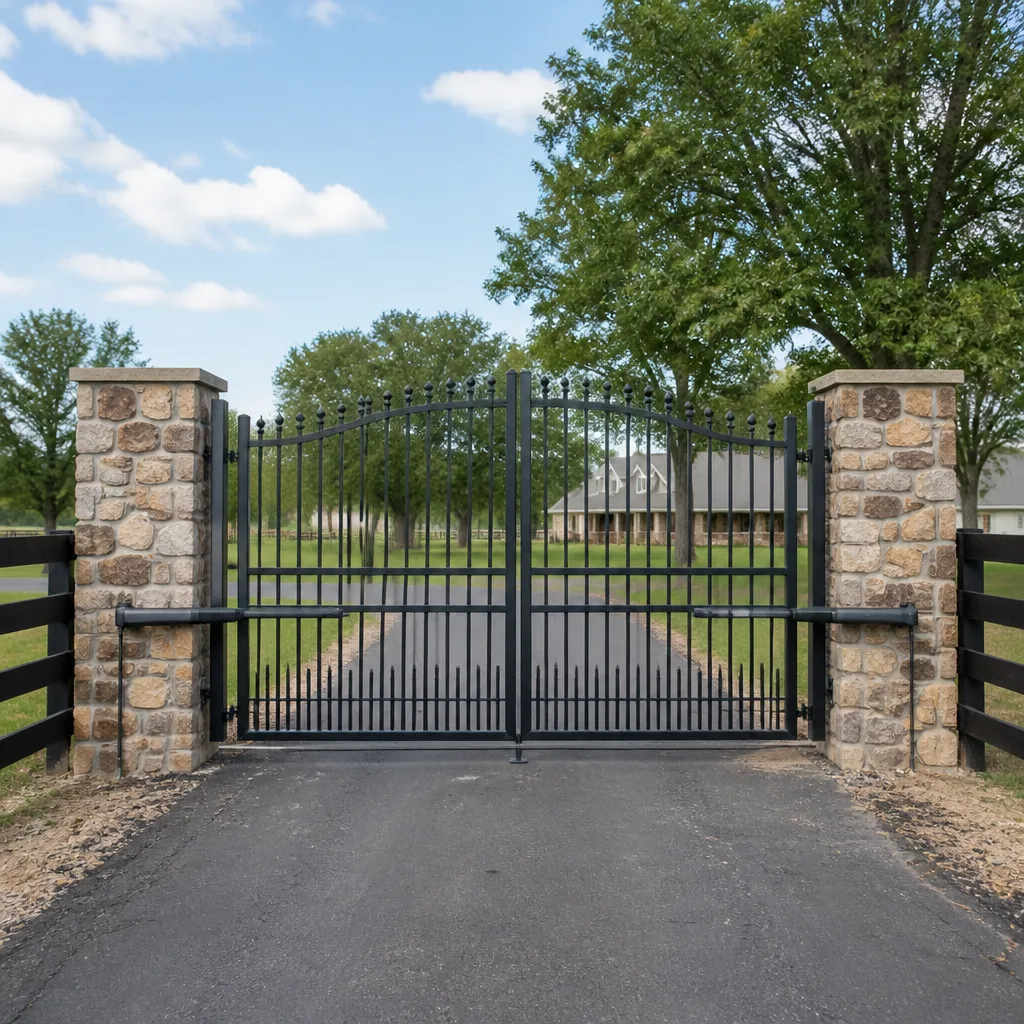 Farm & ranch
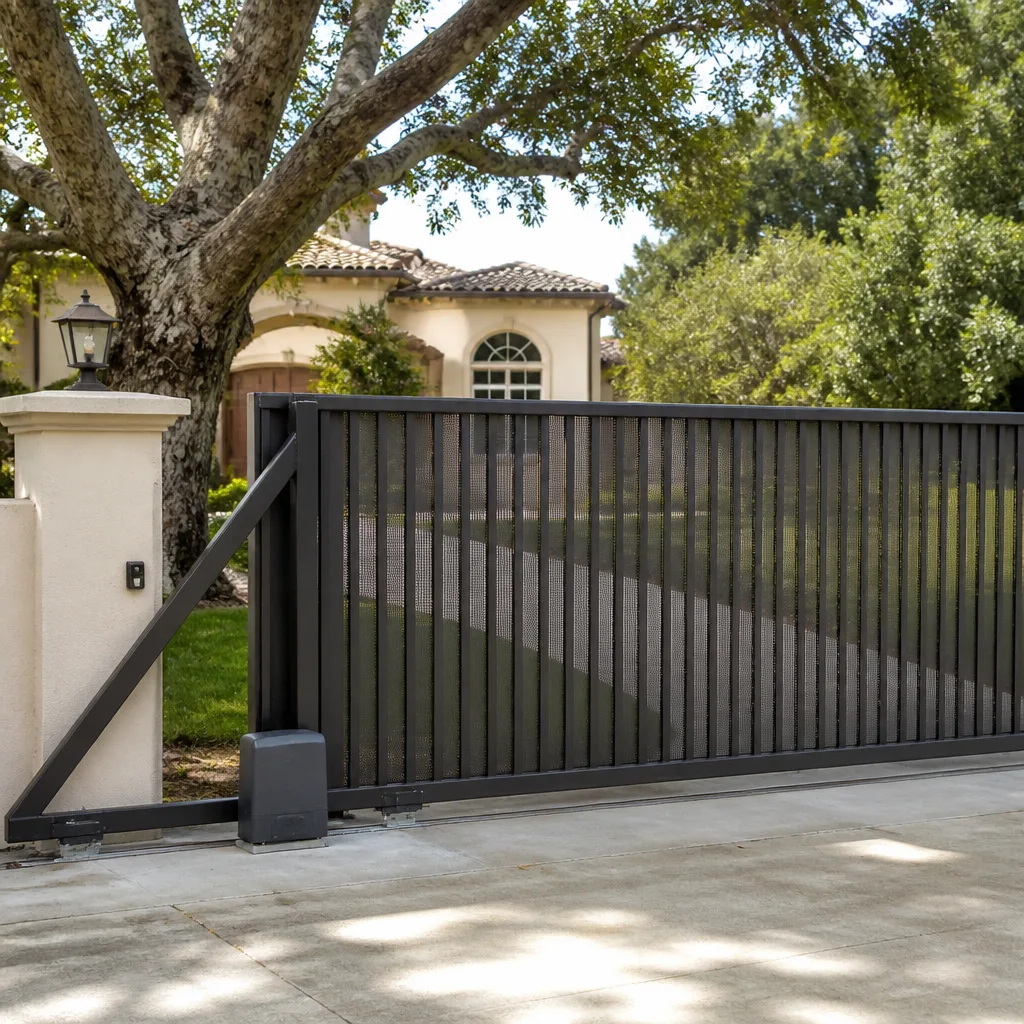 Sliding driveway gates
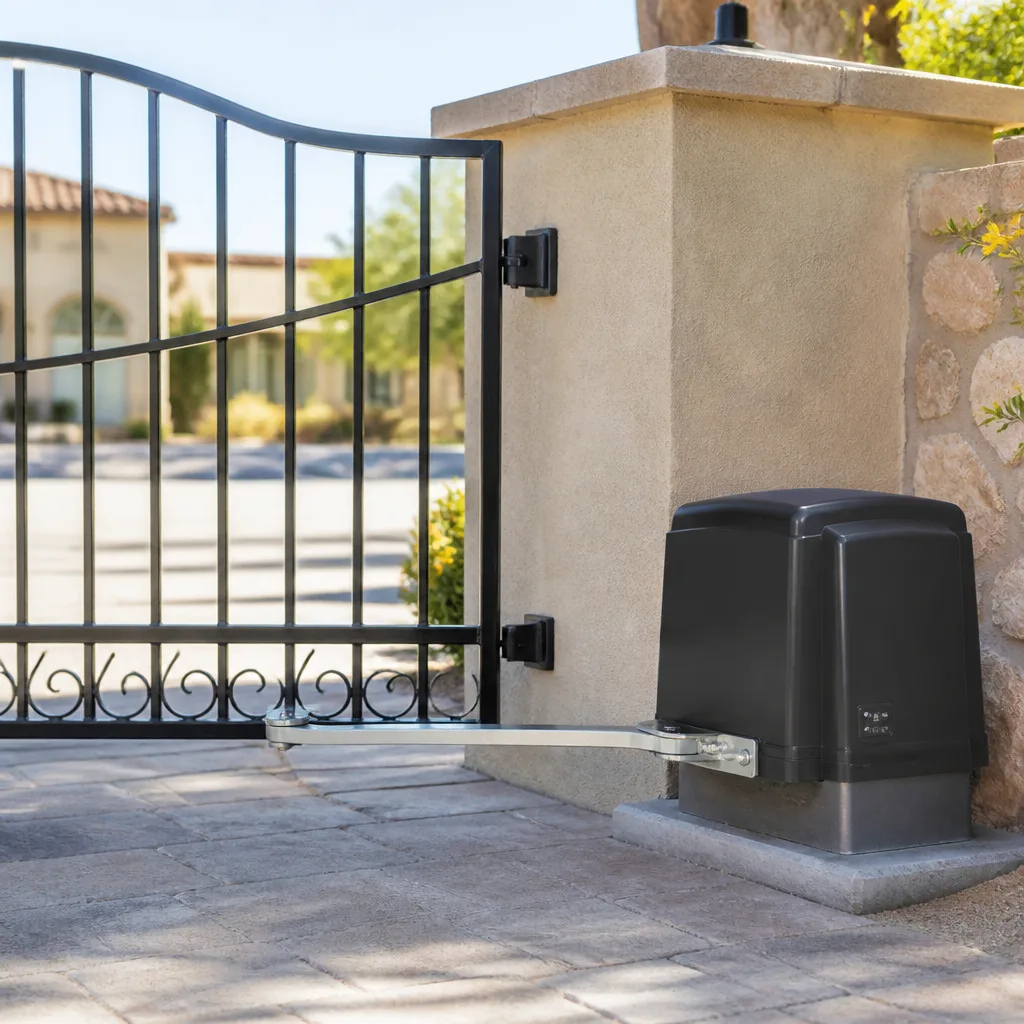 LiftMaster operators
Free on-site gate assessment - hinges, posts, and your LiftMaster or Nice gate operator checked before anything is quoted
The assessment is free and the quote is the invoice.
Get your free estimateStyles & brands we work with
- Wrought iron
- Wood & steel frame
- Farm & ranch
- Sliding driveway gates
- LiftMaster operators
See the difference
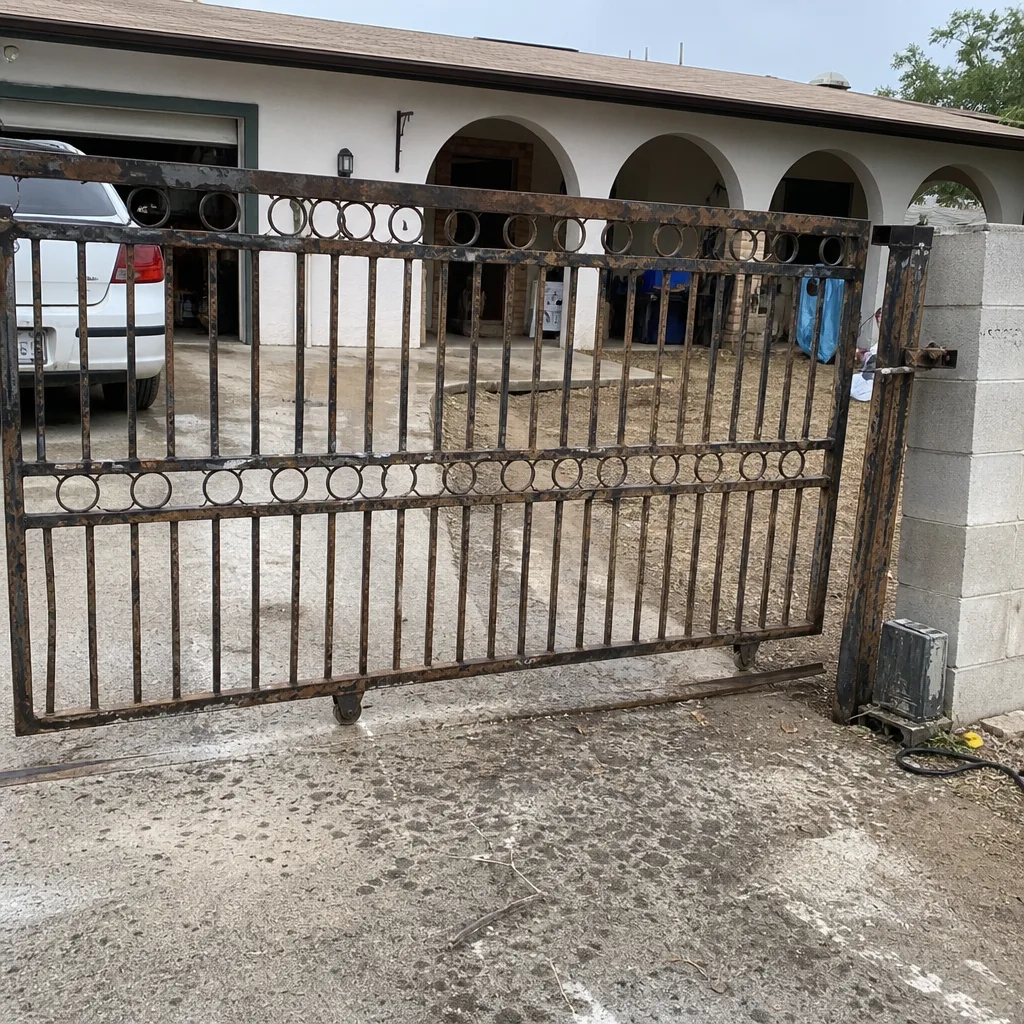 Before
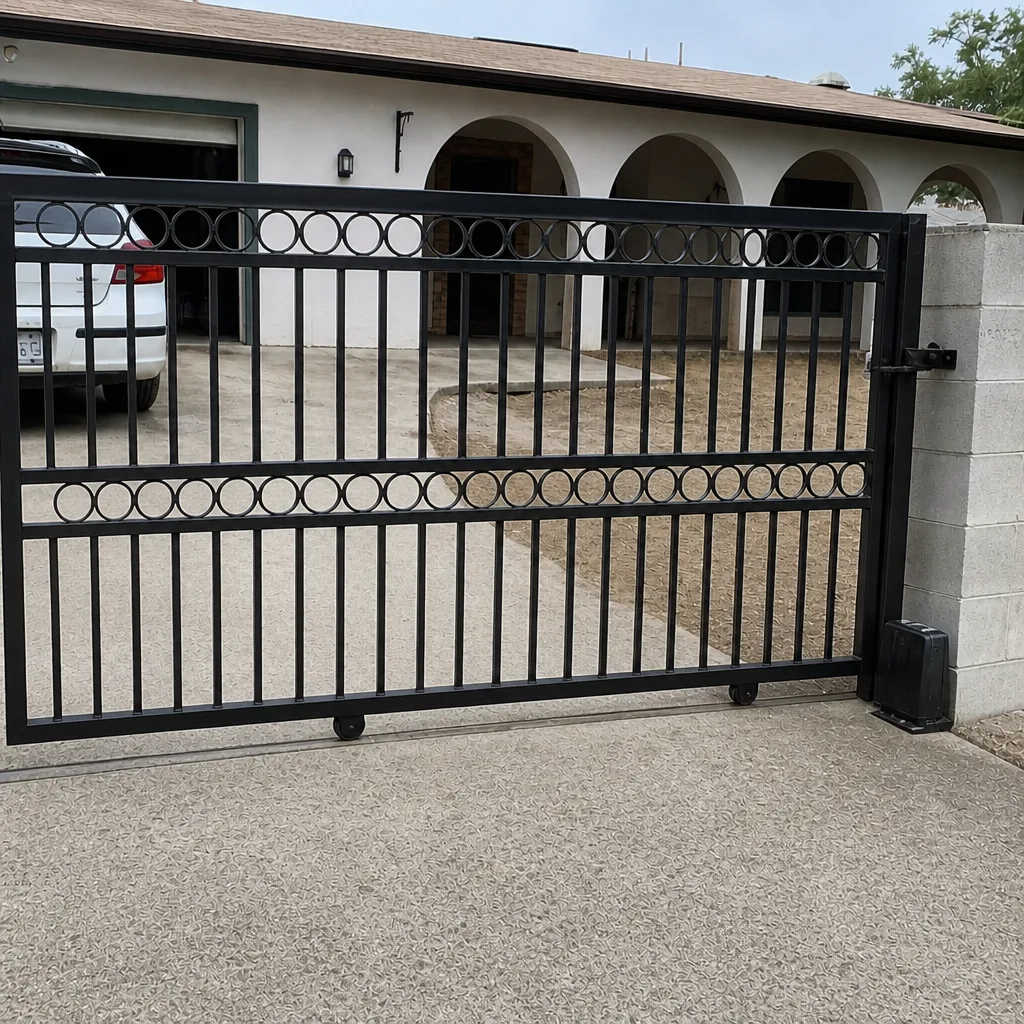 After
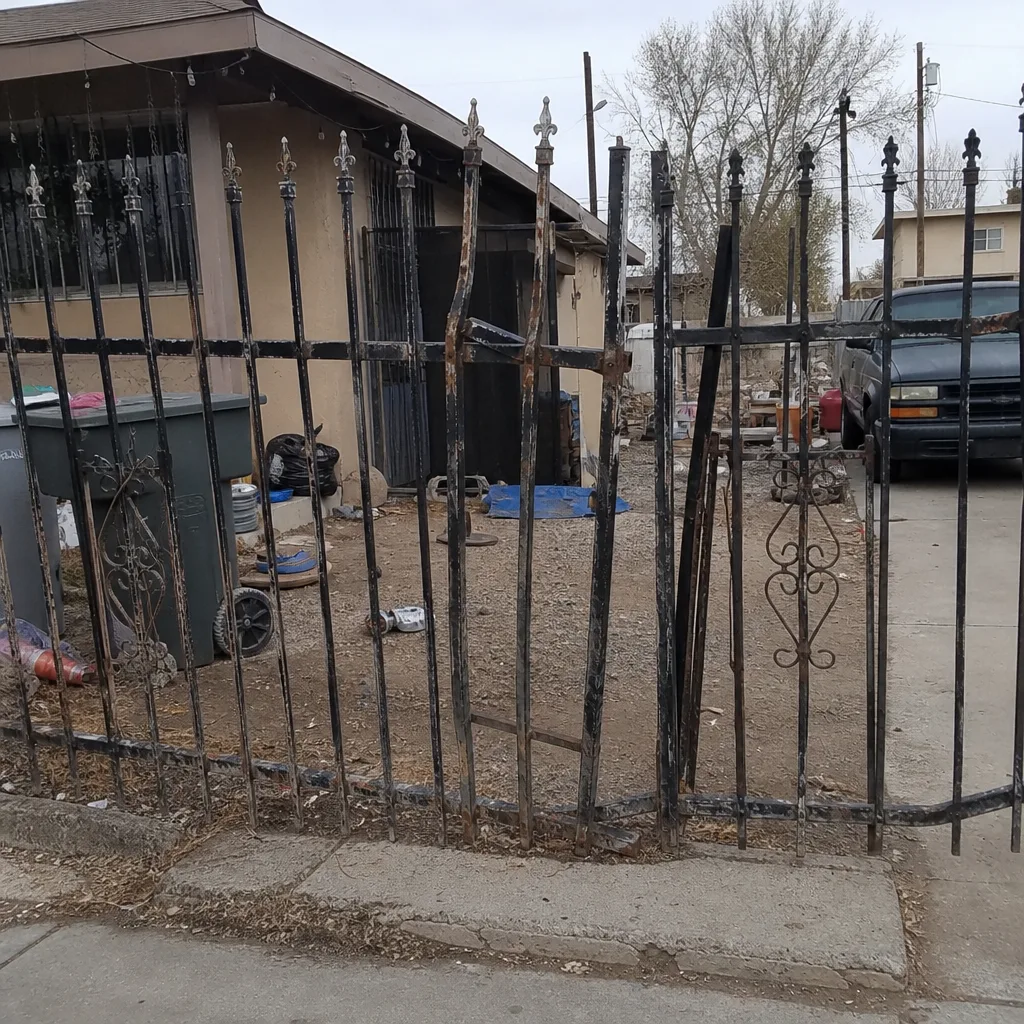 Before
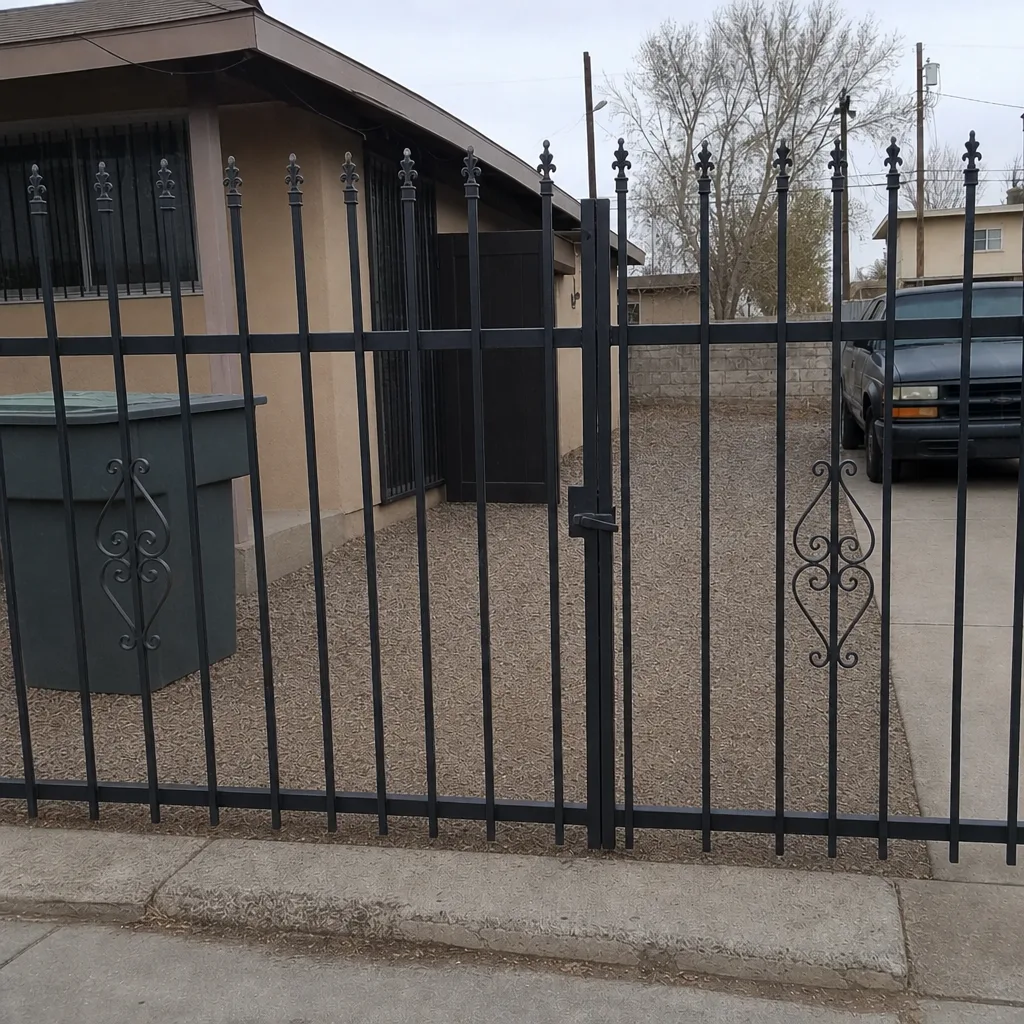 After
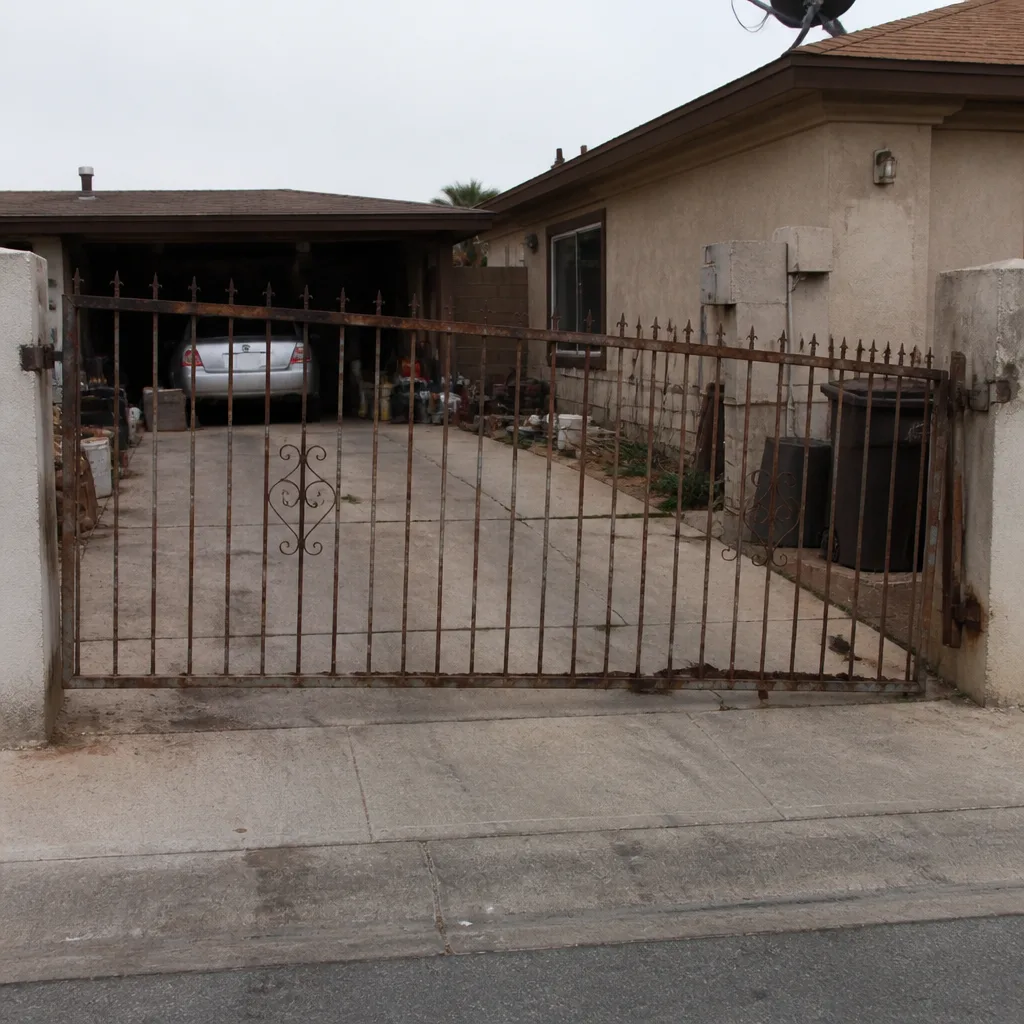 Before
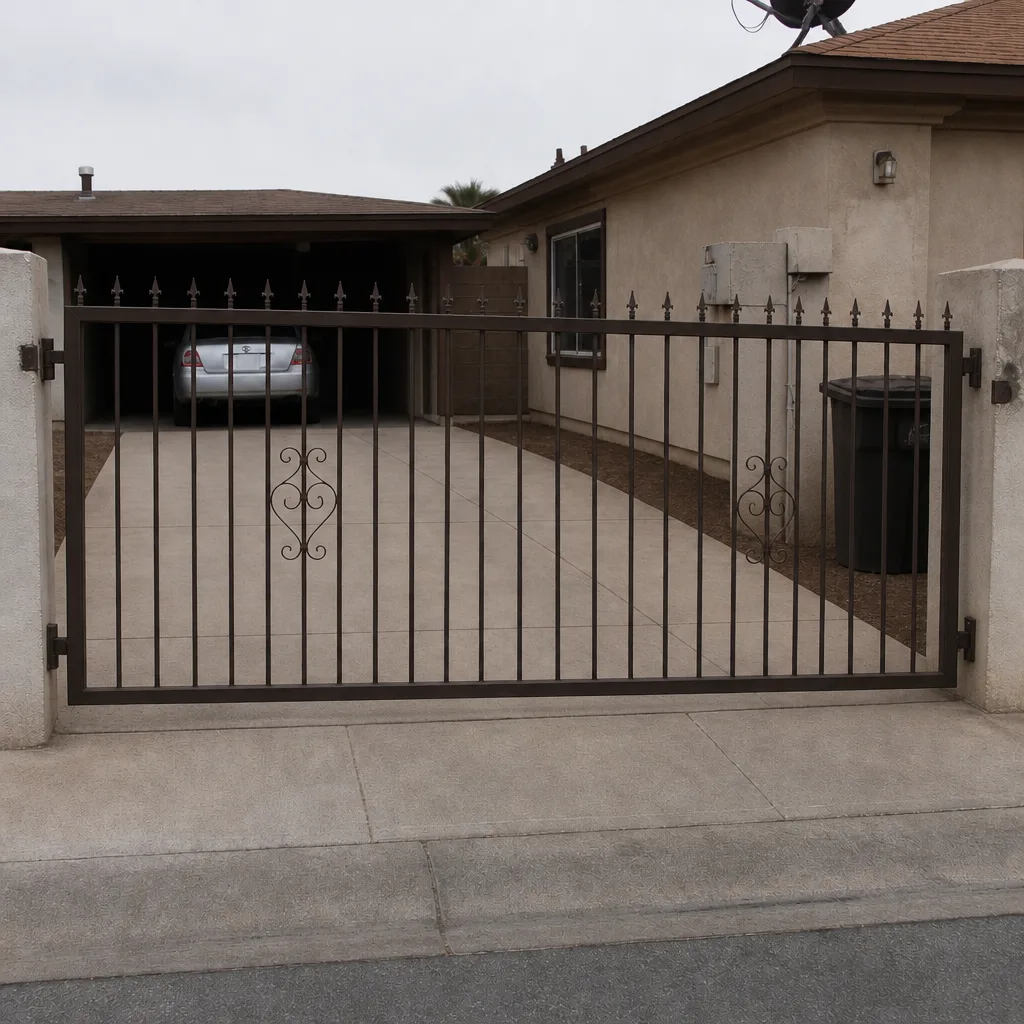 After
How Does an Automatic Gate Opener Work in North Las Vegas, NV?
An automatic gate opener is four parts working as one system: a motor that moves the gate, a control board that decides what the motor does, limit switches that tell the board where the gate should stop, and safety sensors that stop it if something crosses the path. When a gate misbehaves, one of those four is almost always the cause. In a North Las Vegas summer, the control board and the sensor eyes are the first to fail – the afternoon sun cooks the control box and windblown desert dust coats the beam. Call Gate Motor & Opener service at (844) 761-9351 for a free second opinion on any written estimate before you replace a part that may only need adjusting.
The Four Parts of a Gate Opener, and What Fails First Here
Most homeowners don’t need to know torque ratings or gear ratios. They need to know which part is misbehaving so they can tell whether a repair is a small adjustment or a bigger replacement. Here’s the plain-language version.
- The motor (operator): It moves the gate along its arm or track. When the motor is failing, the gate strains, hums without moving, or moves in jerks. In North Las Vegas heat, motor windings and gear grease cook over a summer or two of 110-degree afternoons, especially on operators with the control box facing the sun.
- The control board (the brain): It takes the signal from your remote and sends power to the motor. Boards fail from heat, power surges, and dust settling onto the circuits. A board that fails usually leaves the gate dead or doing strange half-cycles. This is where the door sensor and remote receiver live on most modern units.
- The limit switches (the stops): They tell the board exactly where the gate should stop opening and closing. Over 15 to 20 summers of thermal cycling, a gate’s frame and hinges shift a fraction of an inch, the limit switches drift out of calibration, and suddenly the gate reverses before it fully opens or won’t close all the way. A gate that reverses early is almost always a limit-switch story, not a board failure.
- The safety sensors (the eyes): A beam runs across the gate’s path, and if it’s broken while the gate is closing, the gate reverses. Here in North Las Vegas, that beam gets silted in by dust, and after a monsoon haboob it’s coated. Silt on a sensor eye breaks the beam constantly, so the gate stops mid-close or won’t close at all. This one looks like a board problem but usually isn’t.
The Fifth Layer: The Remote and Radio Receiver
The remote you keep in the truck isn’t magic; it’s a radio signal picked up by a receiver wired to the control board. Which is why a gate that “won’t respond to the remote” can be a receiver problem, a dead remote battery, or interference from the environment. North Las Vegas’s newer commercial corridors and ongoing construction zones put off more radio frequency noise than a quiet residential street. That noise can mimic a board failure or a sensor problem when the real issue is a weak receiver channel or a crowded frequency. The good news: swapping a receiver or reprogramming a remote is quick and inexpensive compared to replacing a control board. Checking the simplest thing first is how you avoid paying for a part you didn’t need.
Why North Las Vegas Gates Age Faster Than the Labels Say
This is the part most guides miss. Our technicians have up to 25 years of experience, and in this valley the environment does more damage than the calendar. UV exposure breaks down vinyl infill and plastic control-box housings. Intense summer heat bakes the circuit boards and motor grease. And the windblown desert dust – plus an occasional monsoon haboob – jams tracks and wears hinges faster than in milder climates. We regularly see operators fail after only a few years in communities like Aliante because the control box faces the afternoon sun with no shade. It’s also why so many Eastside and north-edge homes built during the 2000s boom now need hinge and operator replacement at the same time: the builder-grade units have all hit their limit together.
Matching the community style matters too
In Aliante and similar HOAs, gate repairs often need to match the community’s uniform style and color. A generic replacement board or a mismatched bracket can trigger an HOA fix-it letter you didn’t plan for. We keep that in mind on every call.
What a component-level diagnosis saves you
Knowing which of the five layers is at fault is the difference between a small adjustment, a mid-range board, and a whole operator replacement. A gate that stops closing because a dust-coated sensor is the cheap fix. A dead gate with a cooked board is the middle. A motor that strains even with a fresh board and clean sensors needs the operator. When you understand the system, you ask better questions and don’t get sold an operator for a sensor problem. That’s the whole point.
Common Local Scenarios We See on North Las Vegas Driveways
These come up so often they’re worth naming directly.
- Gate reverses before it fully opens. Limit switches drifted out of calibration on an older gate that’s cycled through 15+ summers.
- Gate won’t close and the lights blink on the operator. A dust-silted sensor eye is breaking the beam. Cleaning the lenses often fixes it.
- Gate is dead, no response to remote or keypad. Usually a control board, sometimes a tripped breaker or a failed transformer. Checking the board first saves guesswork.
- Gate hums but won’t move. A failing motor, a seized hinge, or a jammed track from packed desert grit. The hinge post is where sag starts, so that’s where we look first.
- Remote works only from certain angles. Receiver or remote battery issue, sometimes radio interference near new commercial build-outs.
How We Diagnose a Gate Opener, Step by Step
- Listen first. The sound the operator makes tells us whether the motor is struggling or the board is refusing to send power.
- Check the eyes. A dirty or misaligned safety sensor breaks the beam and stops the gate – the cheapest fix on the list.
- Test the limits. We run the gate open and closed by hand and watch where it reverses or stalls to isolate limit-switch drift.
- Check the board and receiver. We verify power, look for heat damage, and test the remote signal before condemning a board.
- Inspect the gate itself. A sagging gate overloads a healthy operator. A hinge post fix often solves what looks like a motor failure.
- Give you the price before we touch anything. No-hassle upfront pricing, and $40 off any repair over $200.
Every job carries the 90-Day Done Right Promise in writing – if it’s not right, one call brings us back. We’re locally owned and owner-operated, and we’re certified to service nine major gate brands, including LiftMaster, DoorKing, Elite, and Mighty Mule. If you’d like the full picture of repair and replacement options, see our Gate Motor & Opener page.
FAQs
Nine times out of ten it’s a safety sensor problem: the beam is broken or the eyes are misaligned or coated in dust, so the board refuses to close. In North Las Vegas that dust builds up fast. Clean the sensor lenses first – if that doesn’t do it, give us a call at (844) 761-9351 and we’ll take a look.
Most repairs run from a small adjustment to a mid-range board to a full operator replacement, depending on which component failed. A sensor cleaning or limit-switch adjustment is the low end; a control board sits in the middle; a motor or operator replacement is the high end. We give you a free second opinion on any written estimate before you commit, and there’s $40 off any repair over $200. Call (844) 761-9351 for an exact quote.
Often, yes – a live person answers the phone 24/7, so call and we’ll tell you what’s possible for your address today. We’s a locally owned shop and we keep our schedule honest about when someone will actually show up.
Repair is usually cheaper if the motor is working and only the board, sensors, or limits have failed. Replacement makes sense when the operator itself has failed after years of heat stress. The repair-first approach means we fix what we can before we recommend a swap. Call (844) 761-9351 and we’ll walk you through the options for your specific gate.
Usually heat and sun. In North Las Vegas, an operator with the control box facing the afternoon sun can cook a board in a few summers, especially in newer communities like Aliante where there’s no shade. Positioning and a shade cover can help.
If you’d rather have it looked at than figured out alone, Gatewood Fence & Gate North Las Vegas offers a no-pressure assessment across North Las Vegas. We’ll tell you which part is actually failing and what it costs before anything gets touched. Call (844) 761-9351 for a free estimate.
Written by the team at Gatewood Fence & Gate North Las Vegas, serving North Las Vegas, NV.